
Artifacts
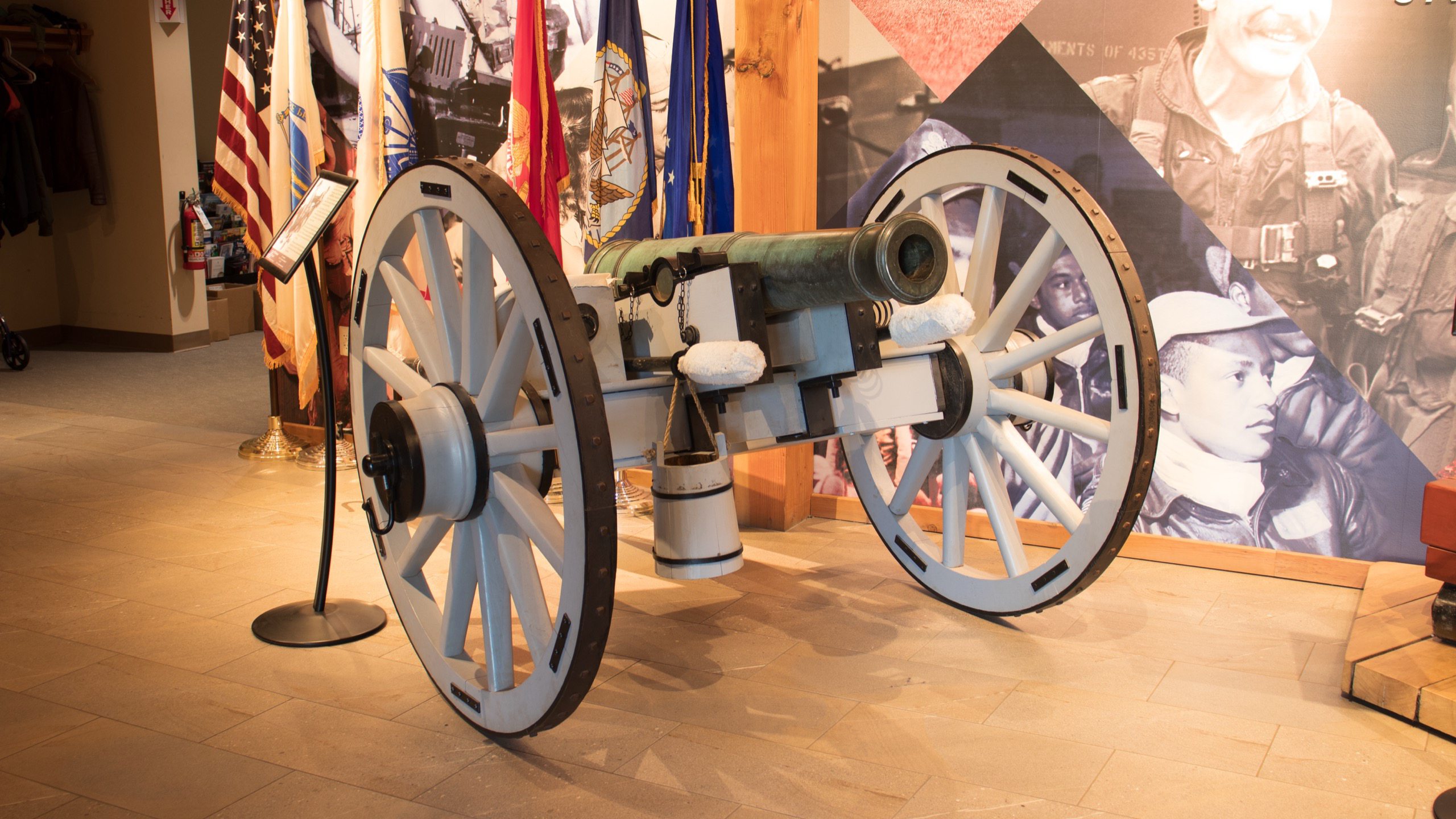
Byers Foundry 6-Pound Cannon
United States | Circa 1795 | Early American Republic
| General Information | |
|---|---|
| Model | 6-Pound Cannon |
| Class | Artillery |
| Type | Cannon |
| Use | Military |
| Era | 1700-1799 |
| Gallery Focus | Post Revolutionary War |
| Manufacturer | Byers Foundry |
| Year | 1795 |
| Country | United States |
| Ownership | CF Inc. |
| Gallery Location | Lobby |
| Status | Operational, Offline |
Additional Photos
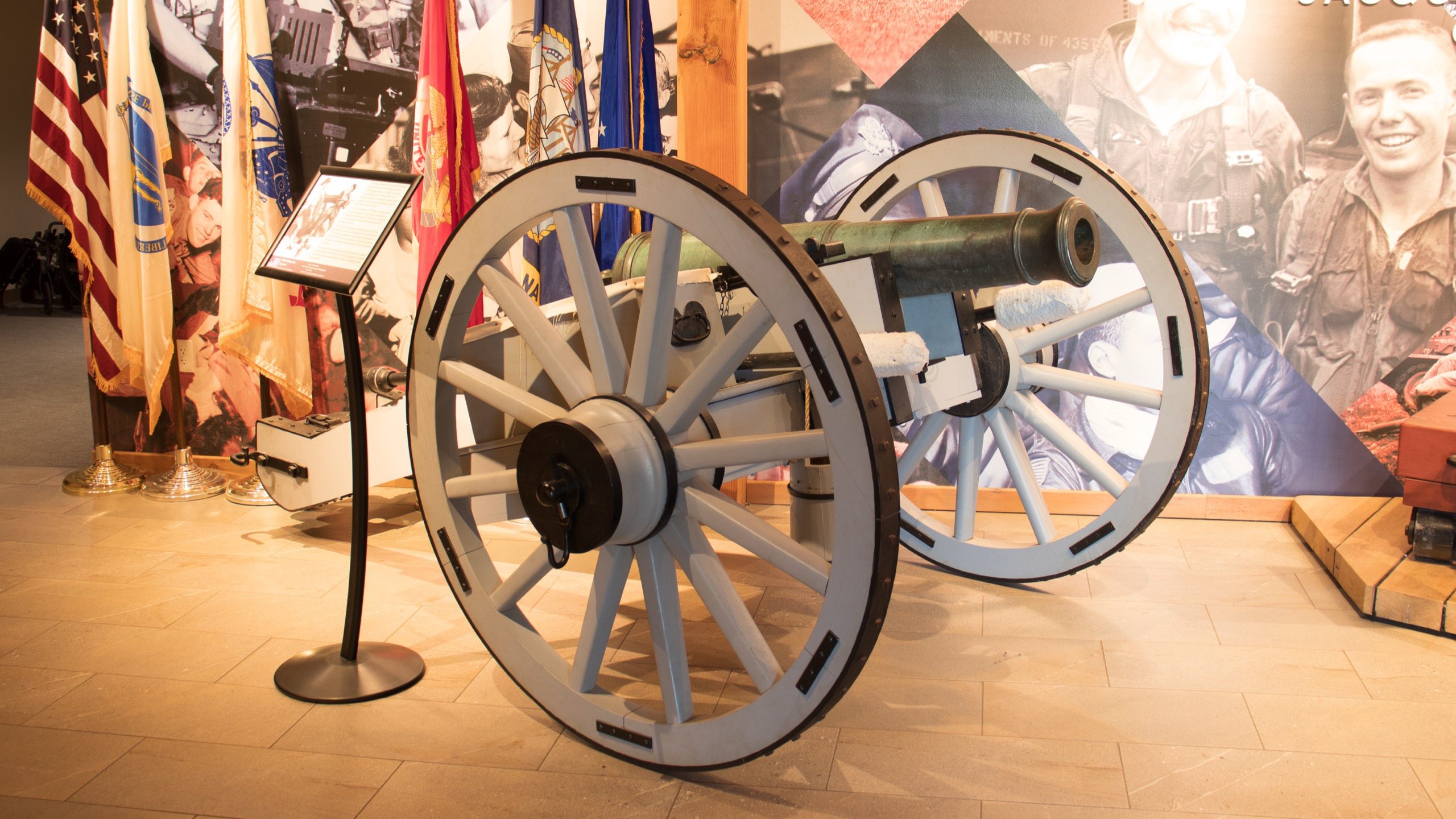
This exceptionally rare American bronze 6-pounder cannon represents an important chapter in the development of American artillery manufacturing during the nation’s earliest years. Cast by James Byers for the State of New York around 1795, the cannon is among the earliest surviving examples of American-made bronze artillery produced following independence.
An experienced brass founder, Byers became involved in supplying the Continental Army with desperately needed artillery during the American Revolution. In 1776, he established a cannon foundry in Philadelphia with support from Pennsylvania’s Council of Safety. His craftsmanship attracted the attention of revolutionary leaders, including General Henry Knox and John Adams, who recognized the importance of developing America’s domestic weapons production.
During the war, shortages of suitable metal presented enormous challenges. Byers helped address these shortages by melting down existing bronze cannons and recasting the metal into new artillery pieces for American forces. Although British occupation disrupted his Philadelphia operations in 1777, Byers continued manufacturing artillery and military supplies after the Revolution.
By the 1790s, Byers was operating in Springfield, Massachusetts, supplying artillery to the newly independent nation. This smoothbore, muzzle-loading cannon was designed to fire a six-pound iron projectile and weighs approximately 666 pounds.
The barrel bears a distinctive engraved “SNY” monogram identifying the State of New York, along with a prominent numeral “6” indicating its caliber designation. These original markings provide an important connection to early American state military procurement.
Displayed in the American Heritage Museum’s Entry Lobby, this remarkable surviving cannon illustrates the ingenuity of America’s earliest military manufacturers and the transformation of a nation dependent upon foreign weapons into one capable of producing its own artillery.