
Artifacts
Maxim-Nordenfelt QF 1-Pounder Pom Pom
United States / United Kingdom | 1880s–1918 | Spanish-American War & Early Naval Warfare
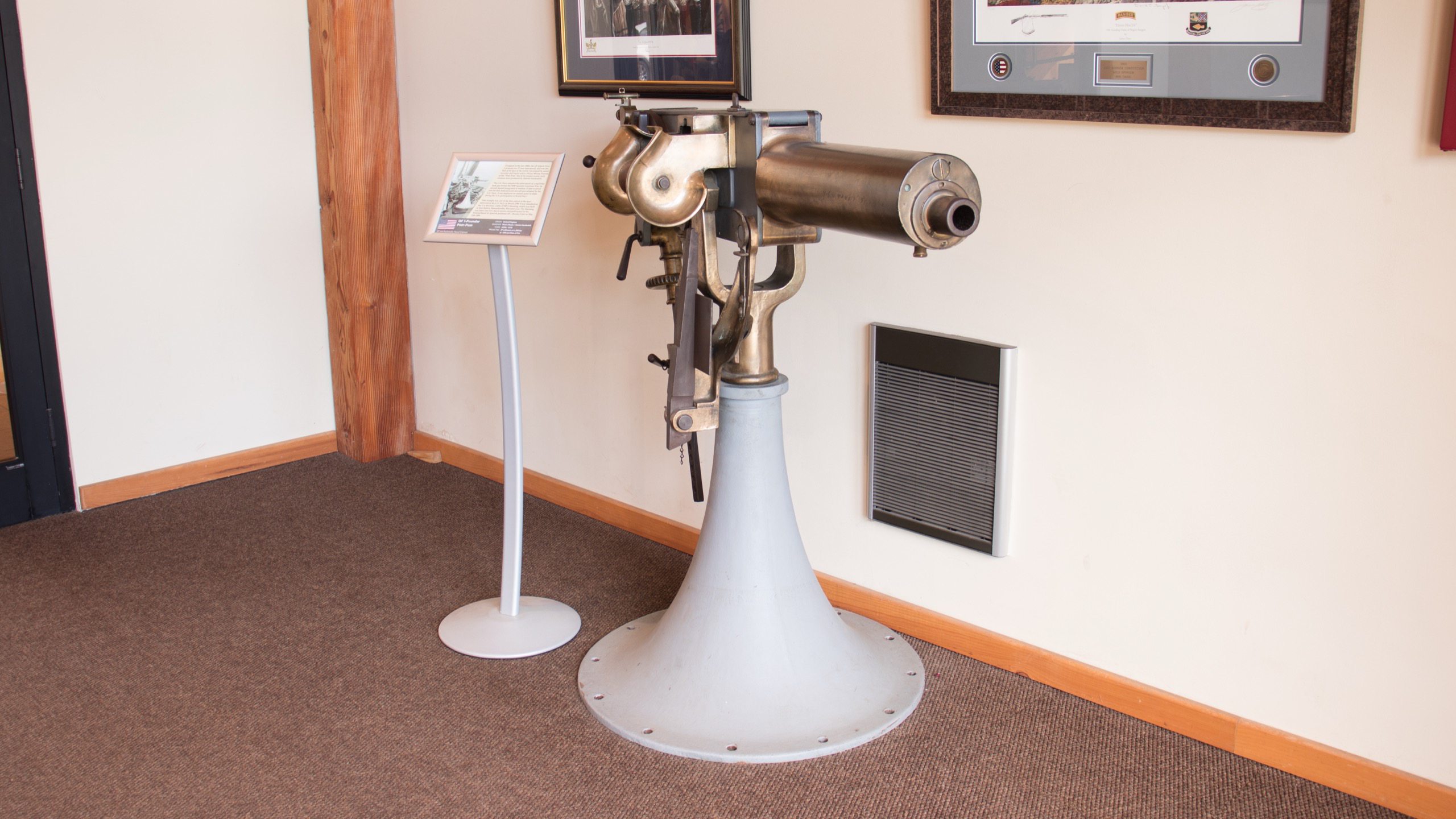
| General Information | |
|---|---|
| Model | QF 1-Pounder 37mm Pom-Pom |
| Class | Artillery |
| Type | Naval Deck Gun |
| Use | Military |
| Era | 1900-1913 |
| Gallery Focus | Early 20th Century |
| Manufacturer | Maxim-Nordenfelt |
| Year | 1906 |
| Country | United States |
| Ownership | CF Inc. |
| Gallery Location | Lobby |
| Status | Operational, Offline |
Additional Photos
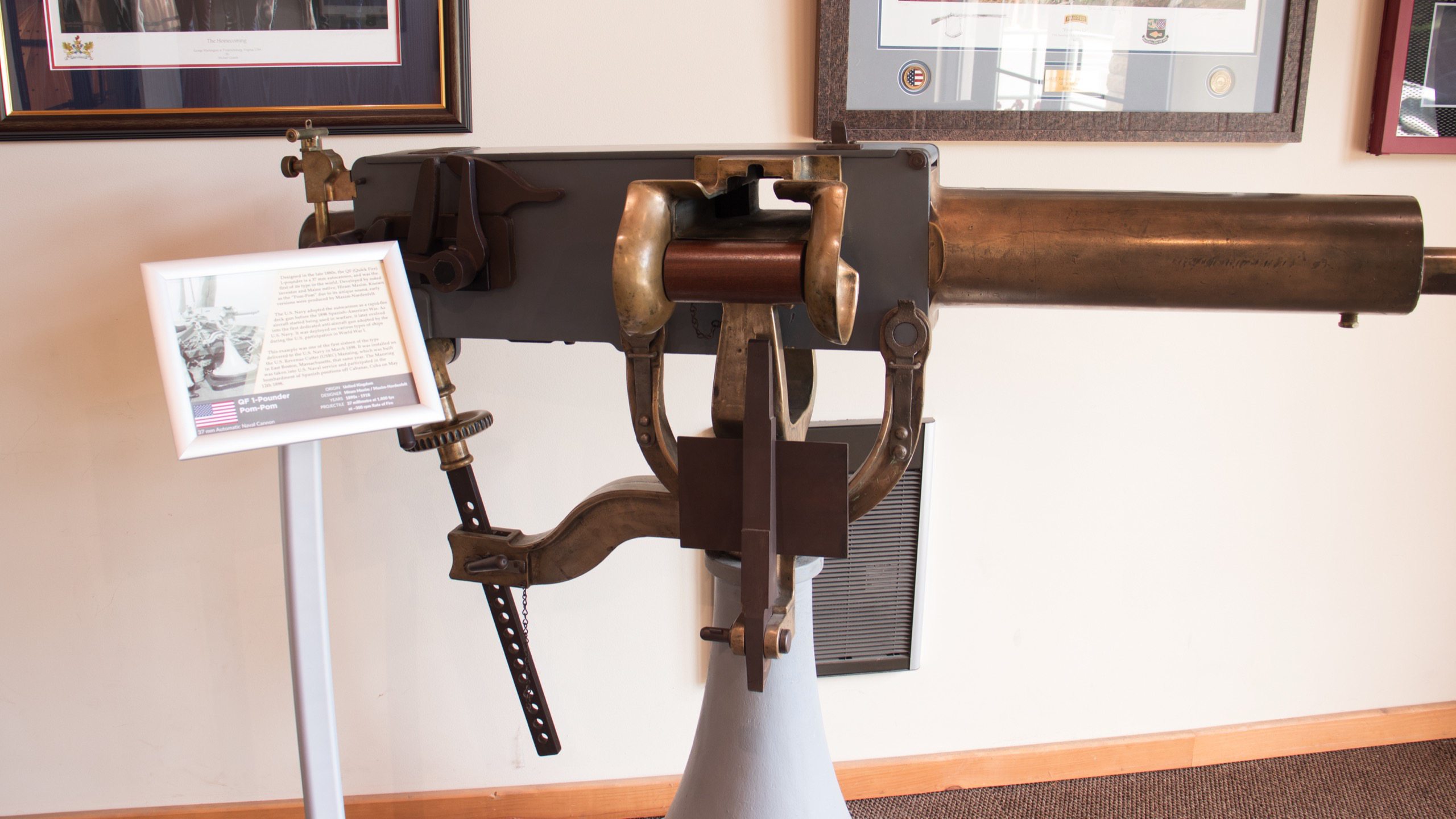
The Maxim-Nordenfelt Quick-Firing (QF) 1-Pounder, nicknamed the “Pom-Pom” for the distinctive rhythmic sound of its automatic fire, represents a significant advancement in naval weapons technology. Developed in the late 1880s by Maine-born inventor Hiram Stevens Maxim, this revolutionary 37mm cannon adapted the recoil-operated mechanism of his famous machine gun to fire explosive projectiles weighing approximately one pound.
Unlike earlier manually operated rapid-fire weapons, the Pom-Pom used the recoil energy from each shot to automatically reload and fire the next round. Ammunition was supplied through fabric belts, while a water-filled jacket surrounding the barrel prevented overheating during sustained firing. Capable of approximately 300 rounds per minute, the weapon provided unprecedented firepower against small, fast-moving naval targets.
The United States Navy adopted the Pom-Pom shortly before the Spanish-American War of 1898. According to the museum’s collection records, this particular gun was among the first sixteen delivered to the U.S. Navy in March 1898. It was installed aboard the U.S. Revenue Cutter Manning, constructed that same year by Atlantic Works in East Boston, Massachusetts.
Temporarily transferred to U.S. Navy control during the war, Manning conducted blockade and escort operations along the Cuban coast. On May 12, 1898, the cutter participated in an engagement against Spanish positions near Cabañas, Cuba, connecting this historic weapon to America’s emergence as a major naval power.
The Pom-Pom’s design subsequently influenced the development of automatic naval artillery and early anti-aircraft defenses during World War I.
Displayed in the American Heritage Museum’s Entry Lobby, this rare surviving autocannon illustrates the transition from nineteenth-century naval artillery to the rapid-firing automatic weapons that transformed warfare in the twentieth century.