Artifacts
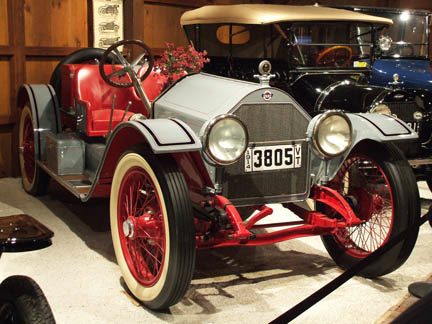
1914 Stutz Bearcat Series E
The Bearcat is the most memorable model built by Stutz. The name lasted from 1914 through 1934. *Viewable during special events. See our events calendar.
| General Information | |
|---|---|
| Model | Stutz Bearcat Series E |
| Class | Vehicle |
| Type | Automobile, Sport |
| Use | Civilian |
| Era | 1900-1919 |
| Gallery Focus | Brass Era |
| Manufacturer | Stutz |
| Year | 1914 |
| Country | United States |
| Ownership | CF Trust |
| Gallery Location | Vintage Automobile Collection |
| Status | Operational, Online |
Harry C. Stutz invented a rear-axle-mounted transmission, known today as a transaxle, and in 1910 set up a company to build it. In 1911 Stutz built a car and brought it to the inaugural running of the Indy 500. The Stutz took 11th place, averaging 68.25 mph. Duplicate cars were for sale with a 50 horsepower (hp) Wisconsin engine and a right hand drive steering wheel. The car was offered in Roadster, Tonneau, and Touring models each priced at $2000.
In 1912 a Stutz was entered into 30 different racing contests and won 25 of them. In the 5 years following 1912, production went from 266 to 2,207 cars. This increase was because of the brands successful racing team.
The Bearcat is the most memorable model built by Stutz. The name lasted from 1914 through 1934. The Bearcat was the car used in Erwin “Cannon Ball” Baker’s record setting coast-to-coast drive, inspiration for the later Cannonball Run outlaw race and movies. Baker drove his Bearcat from California to New York in eleven days, seven hours, and fifteen minutes.