Artifacts
Fairchild PT-19A Recruit "Tuskegee"
United States | 1944–1945 | World War II – Tuskegee Airmen Flight Training
| General Information | |
|---|---|
| Model | PT-19A Recruit (M62) |
| Class | Aircraft |
| Type | Trainer |
| Use | Military |
| Era | 1940-1945 |
| Gallery Focus | WWII Homefront |
| Manufacturer | Fairchild |
| Year | 1942 |
| Country | United States |
| Ownership | Donor, Pending Donation |
| Gallery Location | N/A |
| Status | Restoration |
The Fairchild PT-19A Recruit played an important role in preparing American military aviators for combat during World War II. Among the thousands of pilots who trained in this rugged aircraft were the pioneering African American airmen who overcame segregation and discrimination to become known as the Tuskegee Airmen. The American Heritage Museum’s PT-19A is one of the exceptionally rare surviving aircraft with documented service in this historic training program.
Developed by Fairchild Aircraft of Hagerstown, Maryland, the PT-19 first flew in 1939 as a modern alternative to the biplane trainers then dominating American military aviation. Its low-wing monoplane configuration, open tandem cockpits, and more demanding flight characteristics better prepared students for the advanced military aircraft they would eventually operate. The PT-19A variant featured a 200-horsepower Ranger L-440 inverted six-cylinder engine, a fabric-covered steel-tube fuselage, and wooden wings. Simple, reliable, and economical to operate, the aircraft became a mainstay of the U.S. Army Air Forces’ primary flight training program.
The Museum’s Fairchild PT-19A, U.S. Army Air Forces serial number 43-31512, has an extraordinary connection to the Tuskegee Airmen. Manufactured under license by Aeronca Aircraft Corporation in Middletown, Ohio, the aircraft was accepted into military service on February 6, 1944. Just six days later, it was assigned to the primary pilot training program at Tuskegee, Alabama.
At Moton Field, African American aviation cadets received their initial military flight instruction under the supervision of civilian and military instructors. Flying aircraft including the PT-17 Stearman and PT-19A, students mastered takeoffs, landings, navigation, aerobatics, and emergency procedures before advancing to more sophisticated aircraft at nearby Tuskegee Army Air Field.
The Tuskegee Airmen ultimately distinguished themselves in both combat and military service, particularly through the accomplishments of the 99th Fighter Squadron and 332nd Fighter Group, whose famous Red Tail fighters escorted Allied bombers over Europe. Their achievements challenged deeply entrenched racial prejudice and helped advance the movement toward integration of the United States Armed Forces.
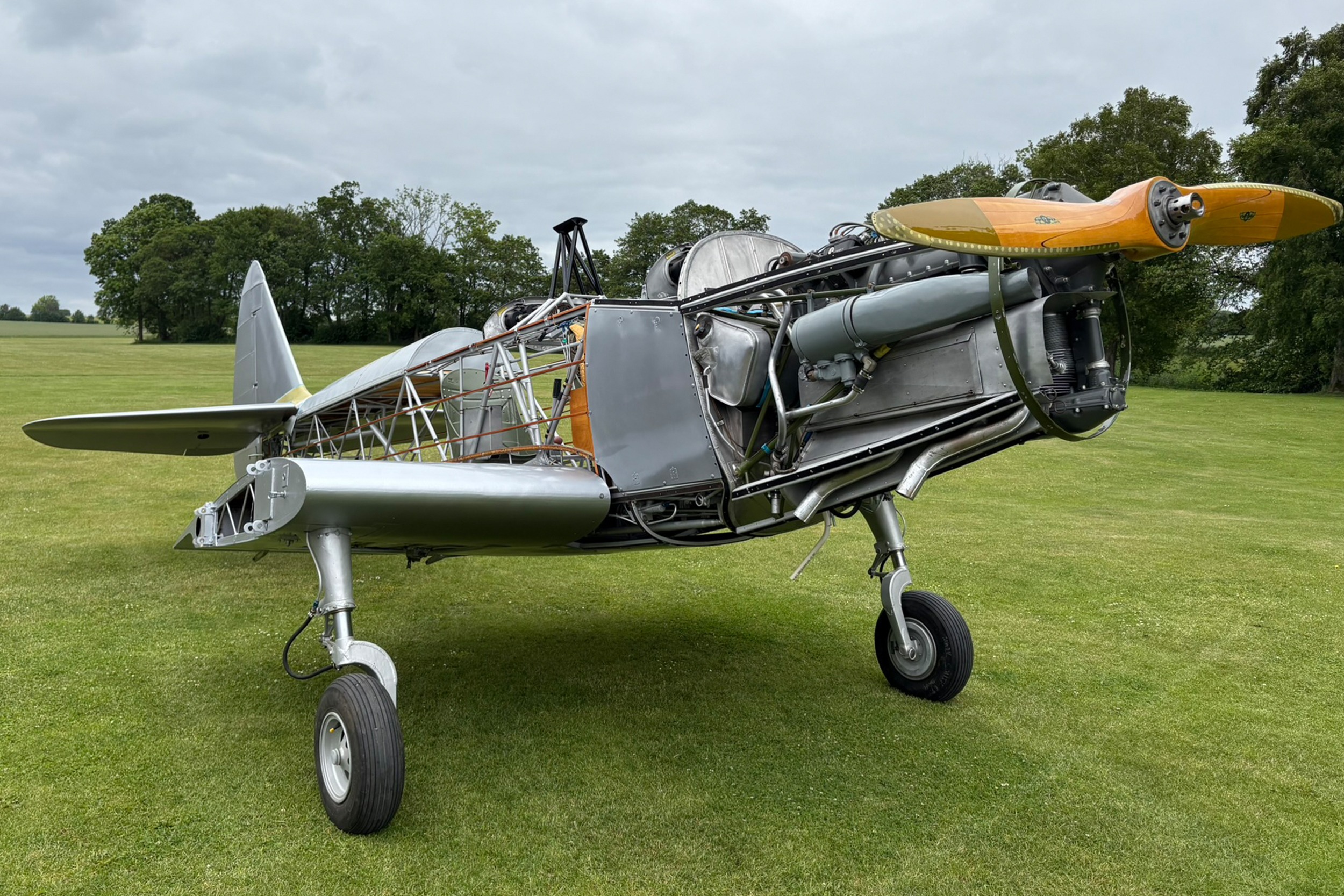
Recognizing the exceptional historical significance of PT-19A 43-31512, the Collings Foundation acquired the aircraft for a comprehensive restoration to flying condition. The project was initially undertaken in the United States before being transferred to renowned historic aircraft restorer Mikael Carlson in Sweden in 2025.
Carlson, whose meticulous work previously returned the Museum’s original World War I Nieuport 28 to flight, is restoring the PT-19A using historically accurate materials and traditional construction methods. By spring 2026, major wing and tail components had been covered with Grade A cotton fabric and finished with traditional aircraft dope, while restoration of the fuselage, engine installation, and aircraft systems continued.
Current Location and Future Exhibit: The PT-19A remains under restoration in Sebbarp, Sweden, with plans to return it to flying condition before shipment to the United States. The aircraft will ultimately join the American Heritage Museum’s proposed Aviation Wing expansion, where it will be displayed in flying condition as part of the World War II Homefront and Flight Training Gallery, honoring the courage, determination, and enduring legacy of the Tuskegee Airmen.