Artifacts
Grumman JRF-5 Goose (G21)
United States | 1937–1945 | World War II – Naval and Coast Guard Aviation
| General Information | |
|---|---|
| Model | JRF-5 Goose (G-21) |
| Class | Aircraft |
| Type | Transport |
| Use | Military |
| Era | 1940-1945 |
| Gallery Focus | WWII Homefront |
| Manufacturer | Grumman |
| Year | 1941 |
| Country | United States |
| Ownership | CF Inc. |
| Gallery Location | Hangar |
| Status | Operational, Online |
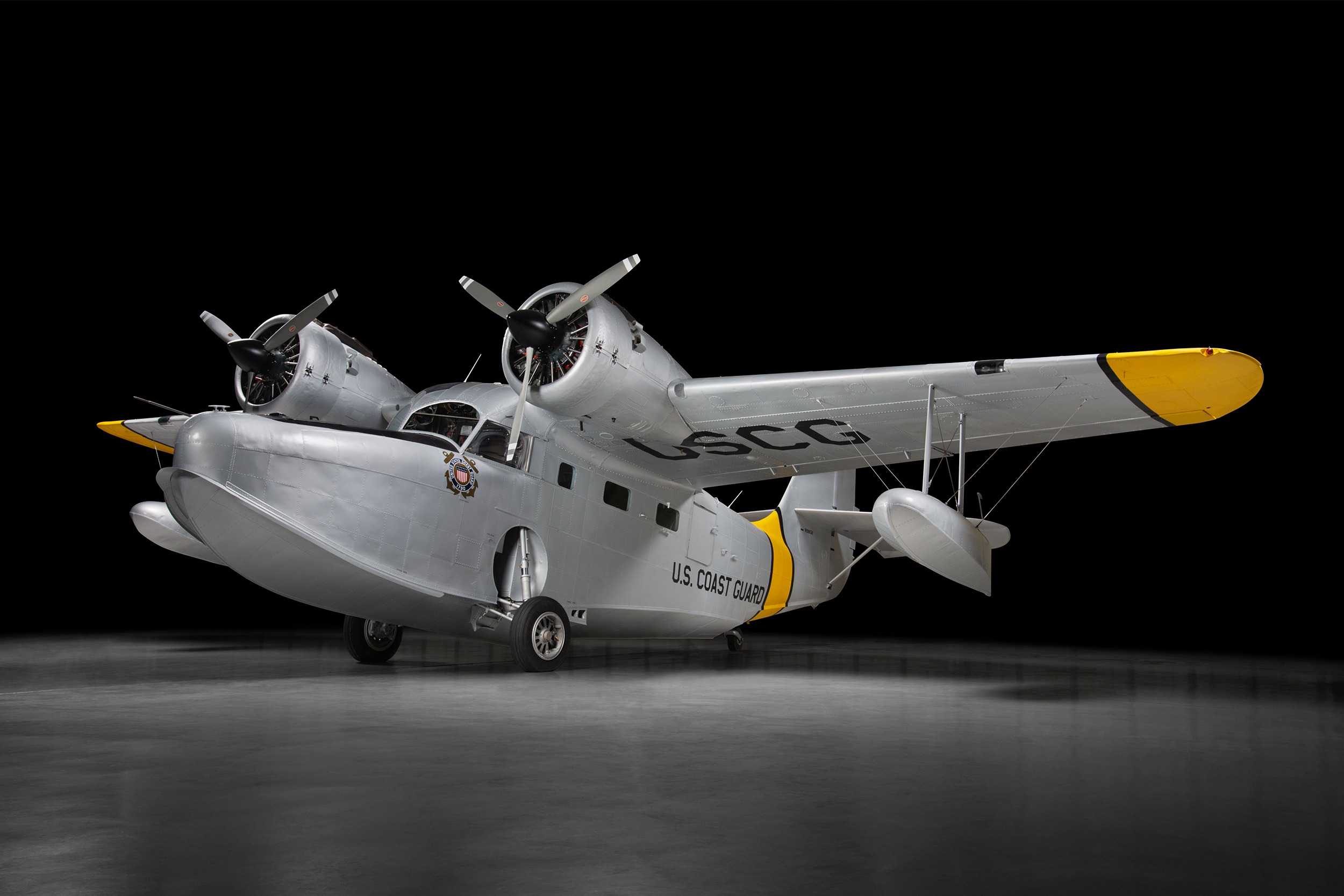
The Grumman G-21 Goose began life not as a military aircraft, but as a luxurious amphibious airplane designed for wealthy businessmen traveling between Long Island and Manhattan. First flown on May 29, 1937, it became Grumman’s first monoplane, first twin-engine aircraft, and first aircraft used in commercial airline service. Its remarkable versatility soon attracted military customers, transforming the Goose into a dependable wartime patrol, transport, and rescue aircraft.
Featuring a boat-shaped aluminum hull and retractable landing gear, the Goose could operate from both water and conventional runways. Two 450-horsepower Pratt & Whitney R-985 Wasp Junior radial engines powered the high-wing aircraft, while its spacious cabin accommodated passengers, supplies, or rescue equipment. Between 1937 and 1945, Grumman produced 345 examples, many serving with the U.S. Navy and Coast Guard in maritime patrol, antisubmarine operations, transportation, and search-and-rescue missions.
The American Heritage Museum’s Grumman JRF-5 Goose, U.S. Navy Bureau Number 84791, has an extraordinary history spanning more than seven decades. Test-flown at Grumman’s Bethpage, New York, factory in September 1944, it entered Navy service and was assigned to Coast Guard Air Station Biloxi, Mississippi. There, it supported Gulf Coast patrol operations, maritime rescue, storm warnings, and fisheries protection. In 1948, the aircraft was transferred to Coast Guard operations in Alaska, where extreme weather and isolated waterways tested its durability.
On August 10, 1950, the Goose struck a dock at Annette Island, Alaska, severely damaging its wing and float. Declared beyond economical repair by the Coast Guard, it was auctioned the following year for just $230 to pioneering Alaskan aviator Bob Ellis. Towed to Ketchikan and painstakingly rebuilt, the aircraft returned to service with Ellis Air Lines as N4763C, transporting passengers and cargo to remote communities inaccessible by conventional aircraft.
Disaster struck again in October 1961 when the Goose hit a submerged log while landing at Whale Pass, capsized, and sank. The pilot successfully rescued his passenger, and the aircraft was salvaged for another lengthy reconstruction. Returned to service in 1972, it subsequently flew with Reeve Aleutian Airways and Peninsula Airways (PenAir), delivering passengers and essential supplies throughout remote Alaska and the Aleutian Islands. Later restoration work returned the aircraft to excellent condition under its current registration, N985R.
In July 2014, following decades of demanding service in Alaska, this extraordinary survivor completed an approximately 4,000-mile journey to New England to join the Collings Foundation’s historic aircraft collection. Its survival through military service, commercial operations, serious accidents, and multiple restorations demonstrates the remarkable strength of Grumman’s original design and the determination of the aviators who kept it flying.
Today, the Goose stands as an enduring symbol of American maritime aviation and the vital role amphibious aircraft played in connecting some of the world’s most isolated communities.
Exhibit Location: The Grumman JRF-5 Goose is housed in the American Heritage Museum’s seasonal Storage Hangar Annex, accessible to visitors only during select special event weekends in the summer and fall. Please consult the Museum’s event calendar for viewing opportunities.