Artifacts
Ford GPW Jeep G-503
| General Information | |
|---|---|
| Model | GPW Jeep G-503 |
| Class | Military Vehicle |
| Type | Light Utility |
| Use | Military |
| Era | 1940-1945 |
| Gallery Focus | WWII Pacific Theater |
| Manufacturer | Ford Motor Company |
| Year | 1944 |
| Country | United States |
| Ownership | CF Inc. |
| Gallery Location | Pacific Theatre |
| Status | Operational, Offline |
The American military Jeep became one of the most recognizable and indispensable vehicles of World War II, serving as the primary light transport vehicle for American and Allied forces across nearly every theater of combat. Developed through a collaborative effort involving American Bantam, Willys-Overland, and Ford Motor Company, the rugged four-wheel-drive Jeep revolutionized battlefield mobility and became an enduring symbol of American ingenuity and industrial might.
Manufactured as the Willys MB and Ford GPW, nearly 640,000 standardized Jeeps were produced during the war. Lightweight, reliable, and remarkably versatile, they transported troops, carried ammunition and supplies, evacuated wounded soldiers, towed light artillery, and performed reconnaissance missions. Their compact design and four-wheel-drive capability enabled them to navigate muddy roads, narrow trails, and rough terrain inaccessible to larger vehicles.
During the Allied invasion of Normandy on June 6, 1944, Jeeps arrived aboard landing craft and military gliders, providing essential transportation as Allied forces established their foothold in occupied France. Throughout the subsequent campaign across Western Europe, Jeeps carried commanders, messengers, and supplies across the rapidly advancing front lines. General Dwight D. Eisenhower later identified the Jeep among the equipment most vital to Allied success in Europe.
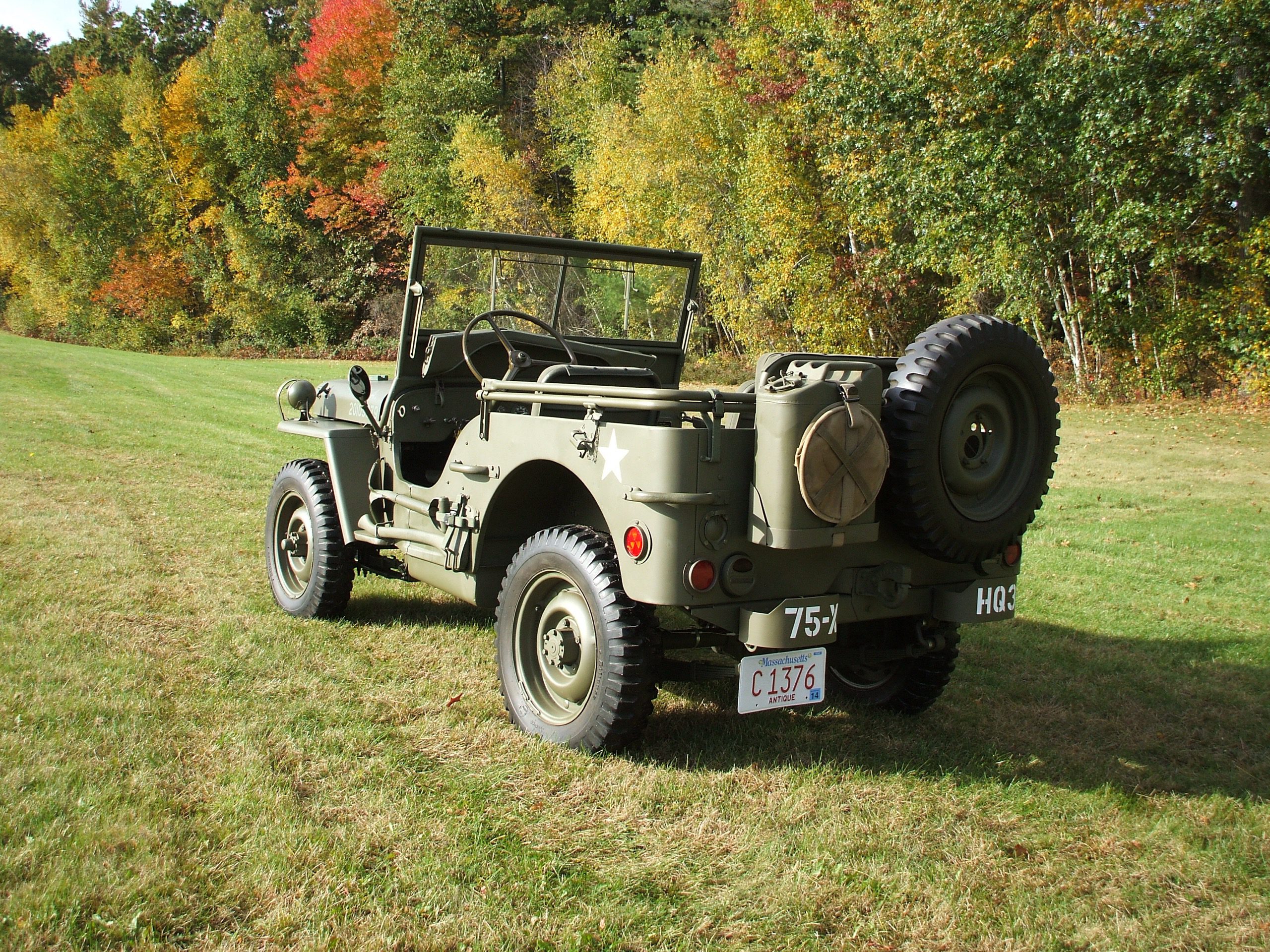
The American Heritage Museum’s 1942 Ford GPW was manufactured during Ford’s second month of full-scale Jeep production. Its restoration represents an extraordinary volunteer effort led by retired U.S. Army Lieutenant Colonel Charlie Dean and his brother James. Working with the Collings Foundation, the brothers dedicated more than 700 hours over 16 months to rebuilding the vehicle. The project involved extensive bodywork, repairs to a twisted frame, replacement of missing components, and multiple engine rebuilds. The completed Jeep triumphantly returned to the Foundation during its World War II weekend in October 2014.
The vehicle carries an especially meaningful tribute to the Dean family’s military heritage. Its bumper markings faithfully reproduce those displayed on the wartime Jeep used by Charlie and James’s grandfather, Colonel Robert Charles Dean, a Boston architect who served as the G-3 Operations Officer for the U.S. Army’s 75th Infantry Division. During the final months of the war, Colonel Dean traveled extensively through France, Belgium, Holland, and Germany, sometimes covering more than 300 miles in a single day while coordinating divisional operations.
Displayed in the American Heritage Museum’s D-Day Gallery, this beautifully restored Ford GPW honors both the extraordinary contribution of the American Jeep to Allied victory and the personal stories of the soldiers and families who helped preserve the legacy of World War II.