Artifacts
M1917 (Renault FT)
American Light Tank | World War I Era (1918–1930s)
| General Information | |
|---|---|
| Model | M1917 |
| Class | Armor |
| Type | Light Tank |
| Use | Military |
| Era | 1914-1919 |
| Gallery Focus | WWI / Great War |
| Manufacturer | American Locomotive Works |
| Year | 1917 |
| Country | United States |
| Ownership | CF Inc. |
| Gallery Location | WWI Trench |
| Status | Operational, Offline |
Additional Photos
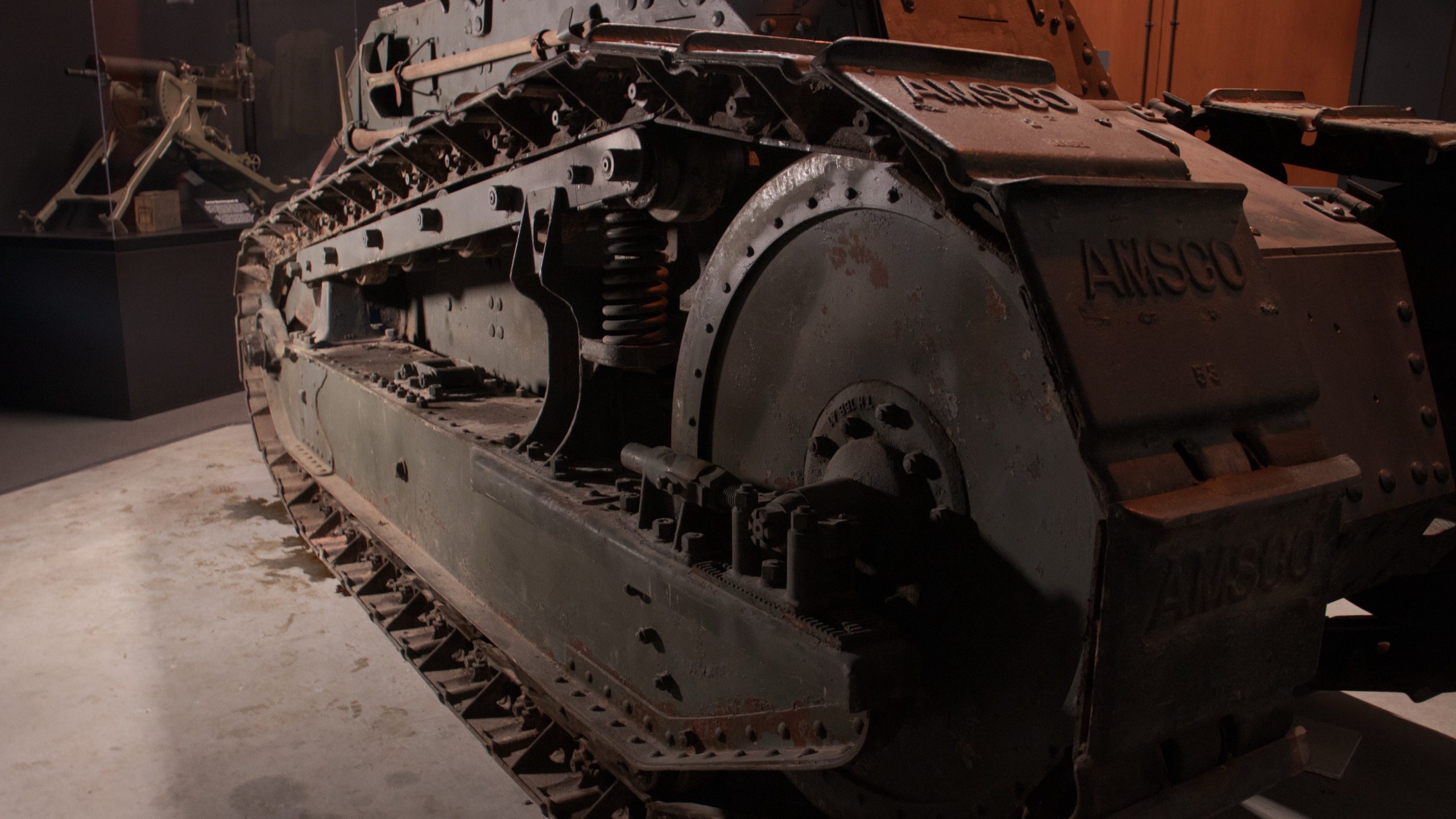
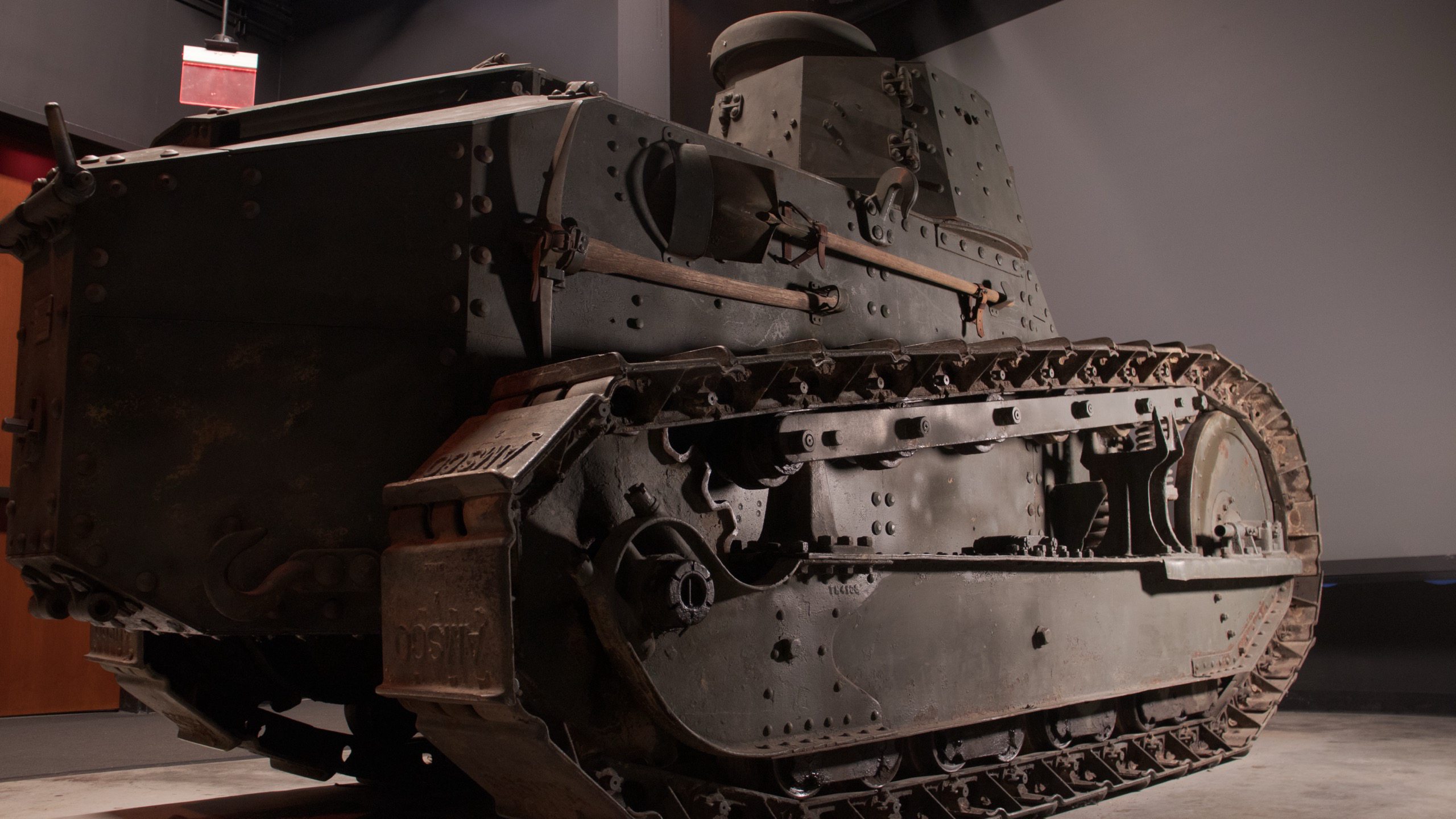
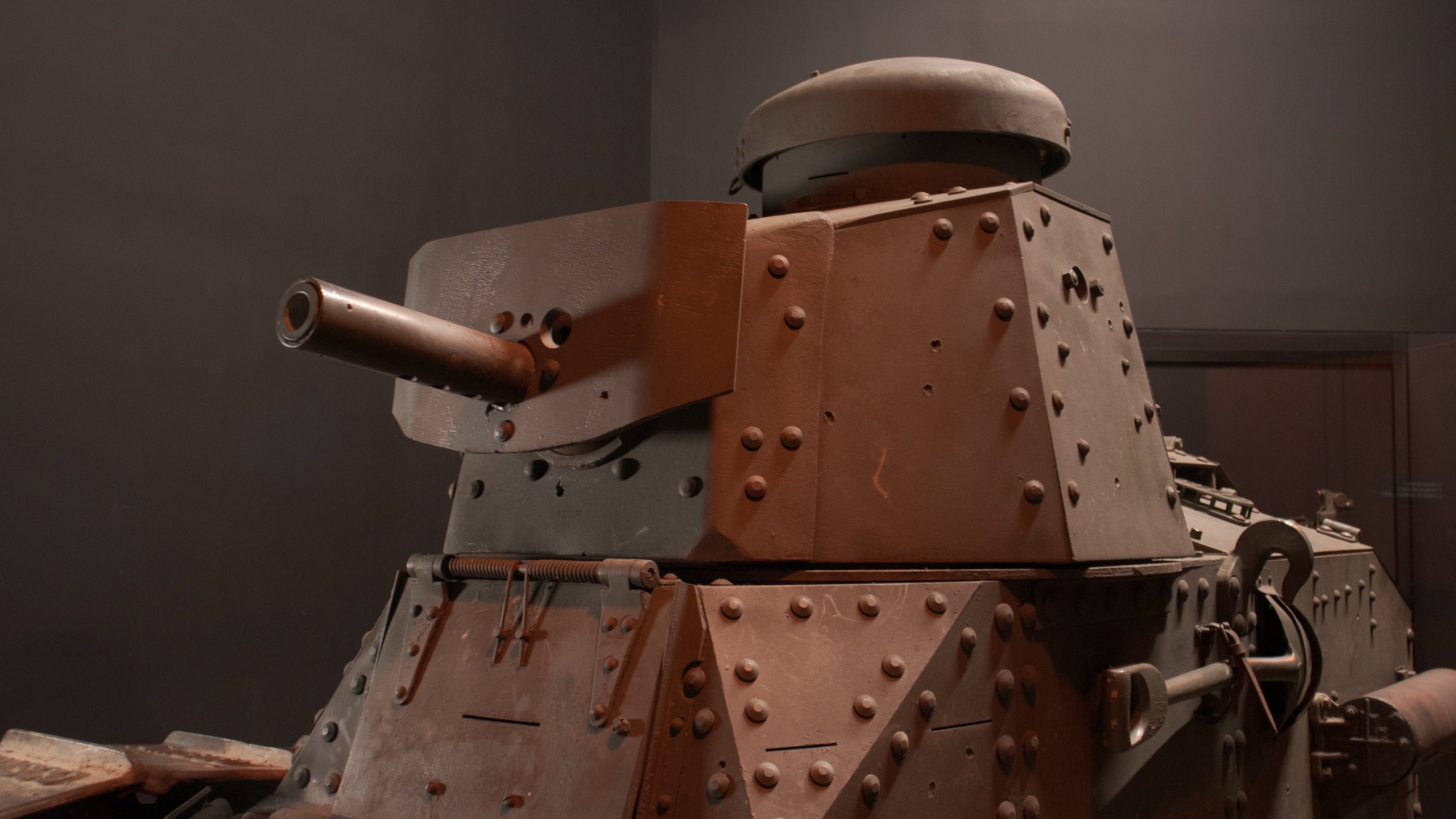
The M1917 Six-Ton Light Tank holds a significant place in American military history as the first mass-produced tank manufactured in the United States. Developed during the final years of World War I, the M1917 represented America’s initial effort to establish a domestic tank industry and equip its soldiers with a revolutionary new weapon designed to overcome the deadly stalemate of trench warfare.
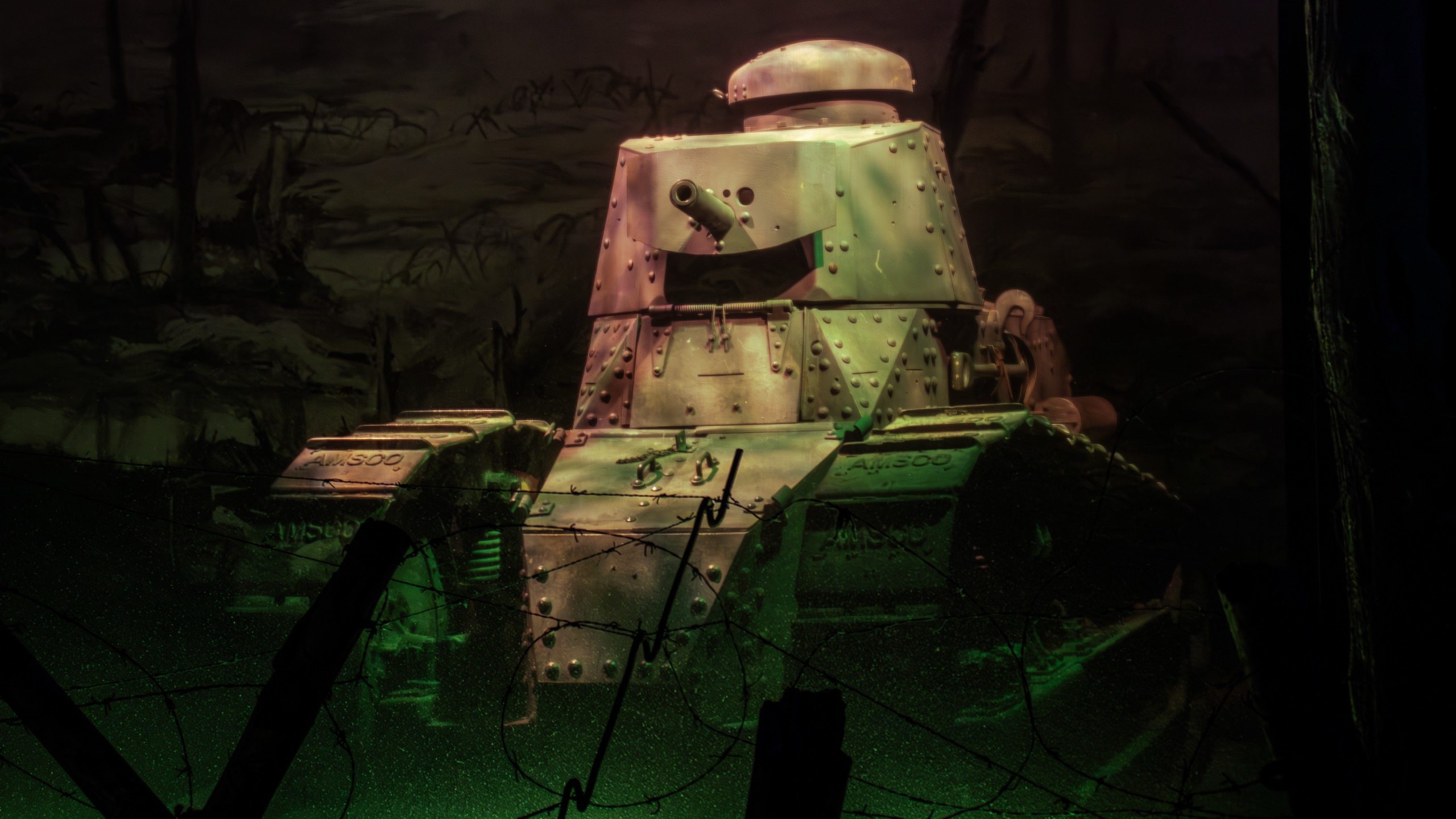
When the United States entered World War I in April 1917, the U.S. Army possessed no operational tanks. Recognizing the importance of armored vehicles, General John J. Pershing and American military planners sought to rapidly develop a tank force. Rather than designing an entirely new vehicle, the United States secured permission to manufacture a modified version of the highly successful French Renault FT, one of the first tanks to incorporate the configuration that would become standard for modern armored vehicles: a fully rotating turret, a centrally positioned crew compartment, and a rear-mounted engine.
Initially designated the Six-Ton Special Tractor, the American-built M1917 incorporated several modifications to the original French design, including a different engine, redesigned turret components, and adjustments to accommodate American manufacturing standards. The compact vehicle weighed approximately 7.25 tons and carried a crew of two: a driver seated in the forward hull and a commander who also operated the turret’s weaponry.
Powered by a 42-horsepower Buda four-cylinder gasoline engine, the M1917 could reach approximately 5.5 mph, a speed considered sufficient to accompany advancing infantry. Its riveted armor, measuring approximately 6mm to 15mm thick, provided protection against small-arms fire and battlefield shrapnel. Depending on the configuration, the turret mounted either a 37mm M1916 cannon or a .30-caliber machine gun. Its tracked suspension and rear-mounted trench-crossing tail helped the tank negotiate shell craters, trenches, and other obstacles characteristic of the Western Front.
American military planners initially ordered more than 4,400 M1917 tanks, but production encountered serious difficulties. Converting French metric specifications to American manufacturing standards, coordinating multiple contractors, and establishing unfamiliar production processes caused extensive delays. The first completed M1917s emerged in October 1918, and the initial vehicles did not reach France until November 20, nine days after the Armistice ended the fighting.
Consequently, no American-built M1917 tanks participated in World War I combat. Instead, American tank crews fought using French-built Renault FTs, including during the Battle of Saint-Mihiel in September 1918. Approximately 950 M1917s were eventually manufactured, becoming the foundation of America’s early armored training and development programs throughout the 1920s before being phased out during the 1930s.
The rare surviving M1917 displayed in the American Heritage Museum’s WWI Trench Experience Gallery represents the birth of American armored warfare. Although it arrived too late to fight in the Great War, its design and production helped establish the foundations of the armored forces that would become indispensable to American military operations in World War II and beyond.