Artifacts
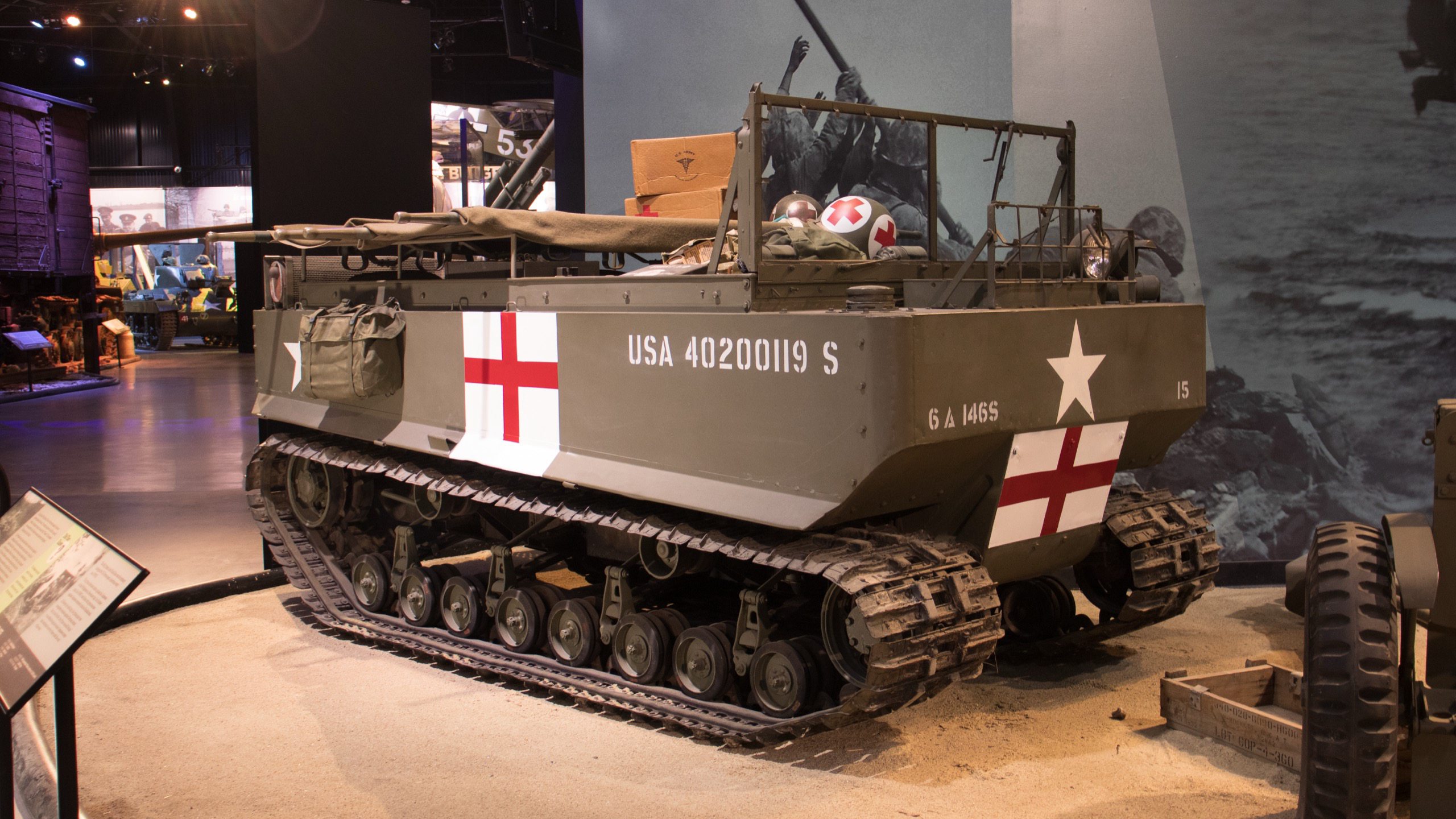
M29C Weasel
| General Information | |
|---|---|
| Model | M29C Weasel |
| Class | Military Vehicle |
| Type | Personnel Carrier – Tracked |
| Use | Military |
| Era | 1940-1945 |
| Gallery Focus | WWII Pacific Theater |
| Manufacturer | Studebaker |
| Year | 1945 |
| Country | United States |
| Ownership | CF Inc. |
| Gallery Location | Pacific Theatre |
| Status | Operational, Offline |
Additional Photos


The American M29 Weasel was a remarkable lightweight tracked vehicle that proved invaluable during World War II, particularly in the challenging terrain of the Pacific Campaign. Originally developed by Studebaker in 1942 for a proposed Allied commando mission to sabotage German installations in snow-covered Norway, the Weasel was designed to transport troops and equipment across terrain inaccessible to conventional vehicles. Although the Norwegian mission was canceled, the versatile vehicle found an important role on battlefields around the world.
Powered by a 70-horsepower Studebaker engine, the Weasel used wide tracks to distribute its weight, allowing it to traverse deep snow, soft sand, and thick mud. Capable of carrying approximately half a ton of supplies, it could also tow ammunition trailers and light artillery, transport personnel, and evacuate wounded soldiers.
During the Battle of Iwo Jima in February 1945, U.S. Marines employed Weasels to move supplies and equipment across the island’s treacherous volcanic terrain, where wheeled vehicles frequently became immobilized.
The Weasel proved especially valuable during the Battle of Okinawa. In early June 1945, torrential rains deposited approximately 12 inches of water over several days, transforming roads into impassable mud and flooding much of the battlefield. With trucks and even tanks struggling to move, the little tracked Weasel became a vital lifeline, transporting ammunition, food, and essential supplies to frontline troops. Weasels also helped evacuate wounded personnel along muddy trails inaccessible to larger vehicles.
Although lightly built and lacking armor protection, the M29 demonstrated that battlefield mobility and logistical support could be just as important as firepower.
Displayed in the American Heritage Museum’s Pacific War Gallery, the M29 Weasel represents the ingenuity of American wartime engineering and the essential role of transportation and supply in achieving Allied victory across the Pacific.