Artifacts
Stearman PT-17 "Tuskegee Airmen"
United States | 1940–1945 | World War II – Tuskegee Airmen
| General Information | |
|---|---|
| Model | PT-17 Kaydet "Tuskegee" (Model 75) |
| Class | Aircraft |
| Type | Trainer |
| Use | Military |
| Era | 1940-1945 |
| Gallery Focus | WWII Homefront |
| Manufacturer | Boeing-Stearman |
| Year | 1940 |
| Country | United States |
| Ownership | Donor, Pending Donation |
| Gallery Location | Hangar |
| Status | Operational, Online |
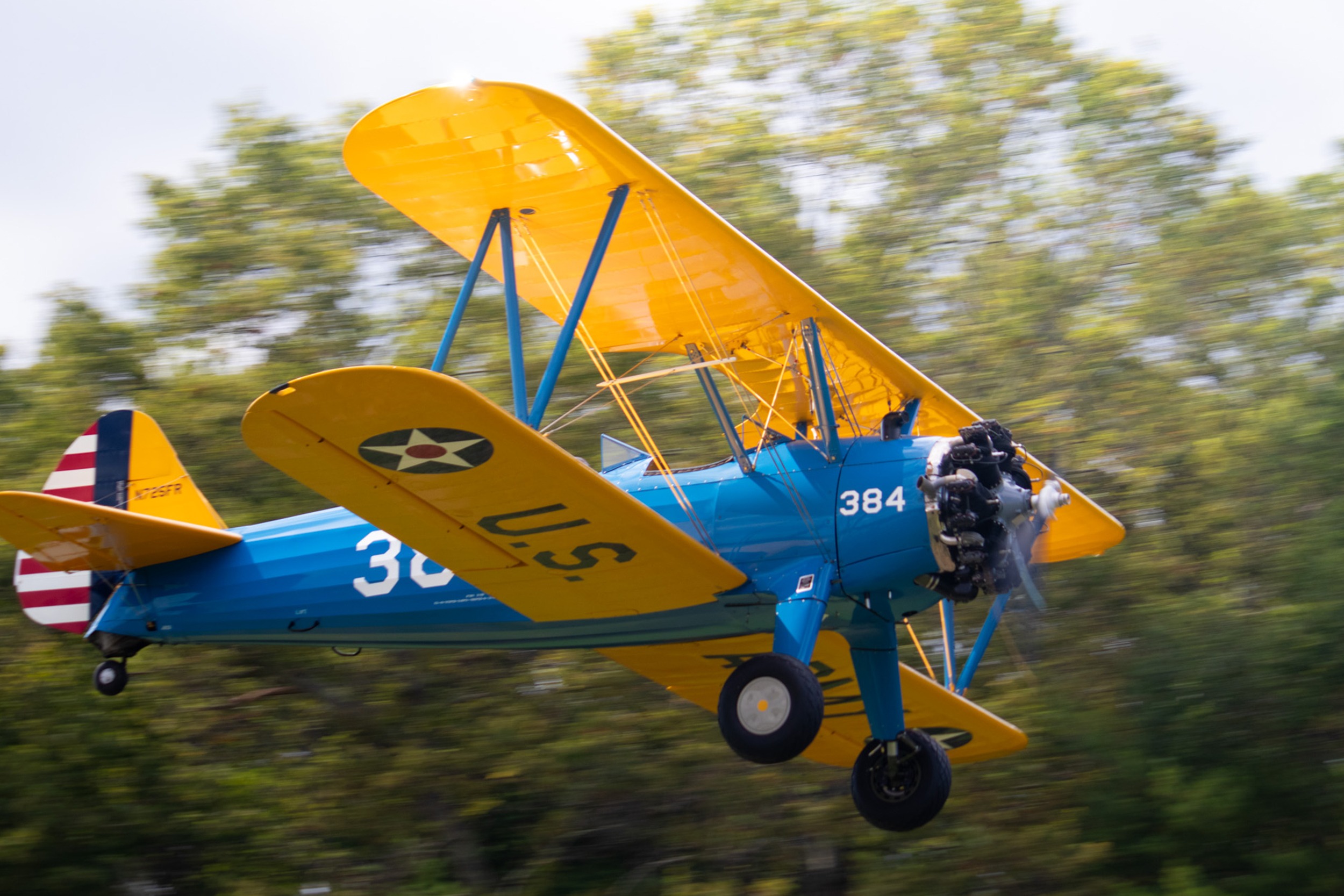
The Boeing-Stearman PT-17 Kaydet was one of the most recognizable and important training aircraft of World War II, introducing thousands of American military pilots to the fundamentals of flight. Rugged, reliable, and forgiving, this distinctive open-cockpit biplane became a cornerstone of the U.S. Army Air Forces’ massive wartime pilot training program. Among those who learned to fly in the Stearman were the pioneering African American aviators who became known as the Tuskegee Airmen.
Developed by the Stearman Aircraft Company of Wichita, Kansas, the Model 75 entered military service during the mid-1930s. Following Stearman’s incorporation into Boeing, production expanded dramatically as the United States prepared for war. More than 10,000 aircraft of the broader Stearman trainer family were produced, serving the U.S. Army Air Forces, U.S. Navy, and Allied nations.
The PT-17 featured a welded steel-tube fuselage, wooden wings covered in fabric, and a 220-horsepower Continental R-670 radial engine. Student and instructor sat in tandem open cockpits with dual flight controls. Its straightforward handling made it ideal for teaching basic maneuvers, takeoffs, landings, aerobatics, and emergency procedures. Although relatively forgiving in flight, the Stearman’s conventional tailwheel landing gear demanded careful attention during ground operations, helping develop the precision required of military pilots.
The American Heritage Museum’s 1940 PT-17 Kaydet, construction number 75-384, has a particularly significant connection to the Tuskegee Airmen. Accepted into U.S. Army Air Corps service on August 20, 1940, it was among the earliest PT-17s manufactured. Its documented service history identifies a 13-month assignment to the aviation training program at Tuskegee, Alabama, where African American cadets prepared for military flying careers during World War II.
Beginning in 1941, the Tuskegee aviation program challenged deeply entrenched racial segregation within the American military. Primary flight training took place at Moton Field, operated by Tuskegee Institute, where cadets developed their flying skills in aircraft including the PT-17. Graduates progressed to more advanced training at nearby Tuskegee Army Air Field before qualifying for operational assignments.
The Tuskegee Airmen went on to distinguish themselves in combat, particularly with the 99th Fighter Squadron and the 332nd Fighter Group, whose red-tailed fighters became legendary over Europe. Their achievements helped challenge racial prejudice and contributed to the eventual desegregation of the United States Armed Forces.
Following military service, the Museum’s Stearman survived into civilian ownership and underwent an extensive restoration to flying condition. The aircraft earned numerous aviation restoration honors, including Best Stearman at EAA AirVenture Oshkosh in 2012.
Today, this historic aircraft stands as a tribute to both the extraordinary expansion of American aviation during World War II and the courage, determination, and accomplishments of the Tuskegee Airmen.
Exhibit Location: The PT-17 Kaydet is housed in the American Heritage Museum’s seasonal Storage Hangar Annex, accessible to visitors only during select special event weekends in the summer and fall. Please consult the Museum’s event calendar for viewing opportunities.