Artifacts
Cessna UC-78 / AT-17 Bobcat
United States | 1939–1945 | World War II – Multiengine Flight Training and Transport
| General Information | |
|---|---|
| Model | UC-78 / AT-17 Bobcat (Model T-50) |
| Class | Aircraft |
| Type | Trainer |
| Use | Military |
| Era | 1940-1945 |
| Gallery Focus | WWII Homefront |
| Manufacturer | Cessna |
| Year | 1943 |
| Country | United States |
| Ownership | CF Inc. |
| Gallery Location | Hangar |
| Status | Operational, Offline |
Affectionately nicknamed the “Bamboo Bomber,” the Cessna AT-17 and UC-78 Bobcat played an essential but often overlooked role in preparing American aircrews for World War II. Thousands of military pilots gained valuable multiengine flying experience in these modest twin-engine aircraft before progressing to powerful combat aircraft such as the Boeing B-17 Flying Fortress and Consolidated B-24 Liberator.
Developed by the Cessna Aircraft Company of Wichita, Kansas, the Model T-50 first flew on March 26, 1939. Originally conceived as an economical five-passenger business aircraft, it combined a welded steel-tube fuselage with wooden wings and tail surfaces, all covered in fabric. Its two Jacobs radial engines, each producing approximately 245 horsepower for takeoff, provided dependable performance while keeping manufacturing and operating costs relatively low. The T-50 was also Cessna’s first production twin-engine aircraft and its first design incorporating retractable landing gear.
With the outbreak of World War II, the T-50’s potential as a military trainer quickly became apparent. The U.S. Army Air Corps initially ordered 33 aircraft under the AT-8 designation, followed by larger orders for the AT-17 advanced trainer. These aircraft introduced student pilots to the complexities of operating multiengine airplanes, including engine synchronization, instrument flying, navigation, and emergency procedures following an engine failure.
As wartime requirements expanded, the U.S. Army Air Forces adopted a utility transport variant designated the C-78, subsequently redesignated UC-78 in 1943. These aircraft transported personnel, supplies, and communications equipment between military installations. The U.S. Navy operated similar aircraft as the JRC-1, while the Royal Canadian Air Force employed hundreds under the designation “Crane” for its extensive wartime pilot training program.
Despite its affectionate nickname, the “Bamboo Bomber” contained no bamboo. Its predominantly wooden construction also earned it the nickname “Wichita Wobbler,” while some military crews humorously called the utility version the “Useless 78.” Nevertheless, the Bobcat proved to be a versatile aircraft that contributed significantly to Allied aviation training and wartime transportation.
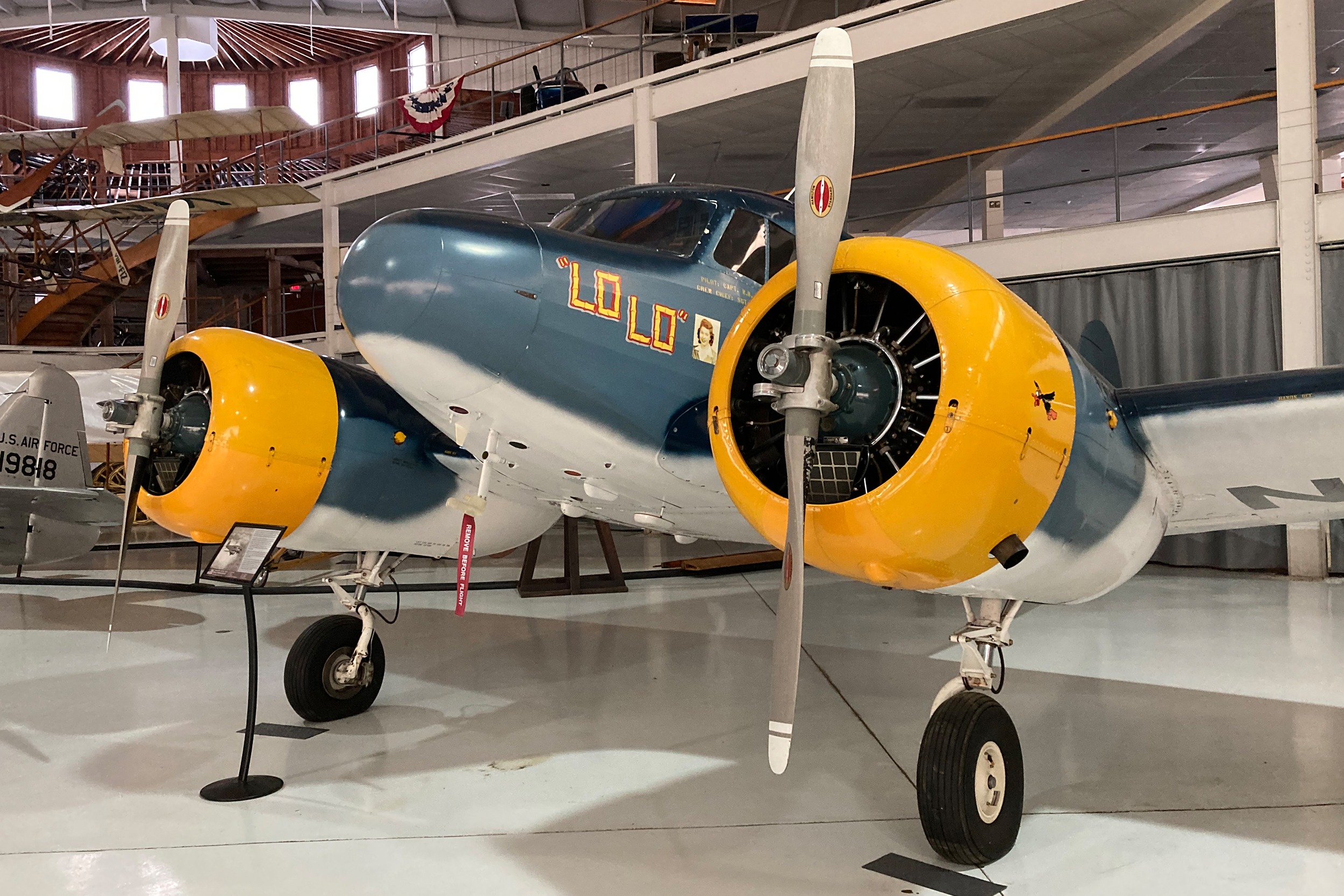
The American Heritage Museum’s Bobcat, construction number 3696, was manufactured in 1942 and served with the U.S. Army Air Forces as serial number 42-58205. Following military service, the aircraft entered the civilian market, eventually operating with Revere Airways at Revere Airport in Massachusetts. Under the ownership of aviation entrepreneur Julius Goldman, the airline provided regional aviation services during the postwar expansion of American civilian flying.
After passing through several private owners, the aircraft was acquired and restored by aviation enthusiast William B. Stookey, who generously donated it to the Collings Foundation. Preserved in military markings, this beautifully restored Bobcat provides a tangible connection to the wartime training and transportation operations that supported Allied victory.
Exhibit Location: The Cessna UC-78 Bobcat is currently displayed in the American Heritage Museum’s Storage Hangar Annex, accessible to visitors only during select special event weekends from May through October. The aircraft is planned for permanent public exhibition within the Museum’s proposed Aviation Wing expansion in the coming three to five years.