
Artifacts
Pz.Kpfw Panzer I Ausf. A
German Light Tank | World War II (1934–1941)

| General Information | |
|---|---|
| Model | Panzerkampfwagen (Pz.Kpfw) – Panzer I Ausf. A |
| Class | Armor |
| Type | Light Tank |
| Use | Military |
| Era | 1936-1939 |
| Gallery Focus | Prelude to WWII – Europe |
| Manufacturer | Henschel, MAN, Krupp, Daimler |
| Year | 1935 |
| Country | Germany |
| Ownership | CF Inc. |
| Gallery Location | War Clouds |
| Status | Operational, Offline |
Additional Photos


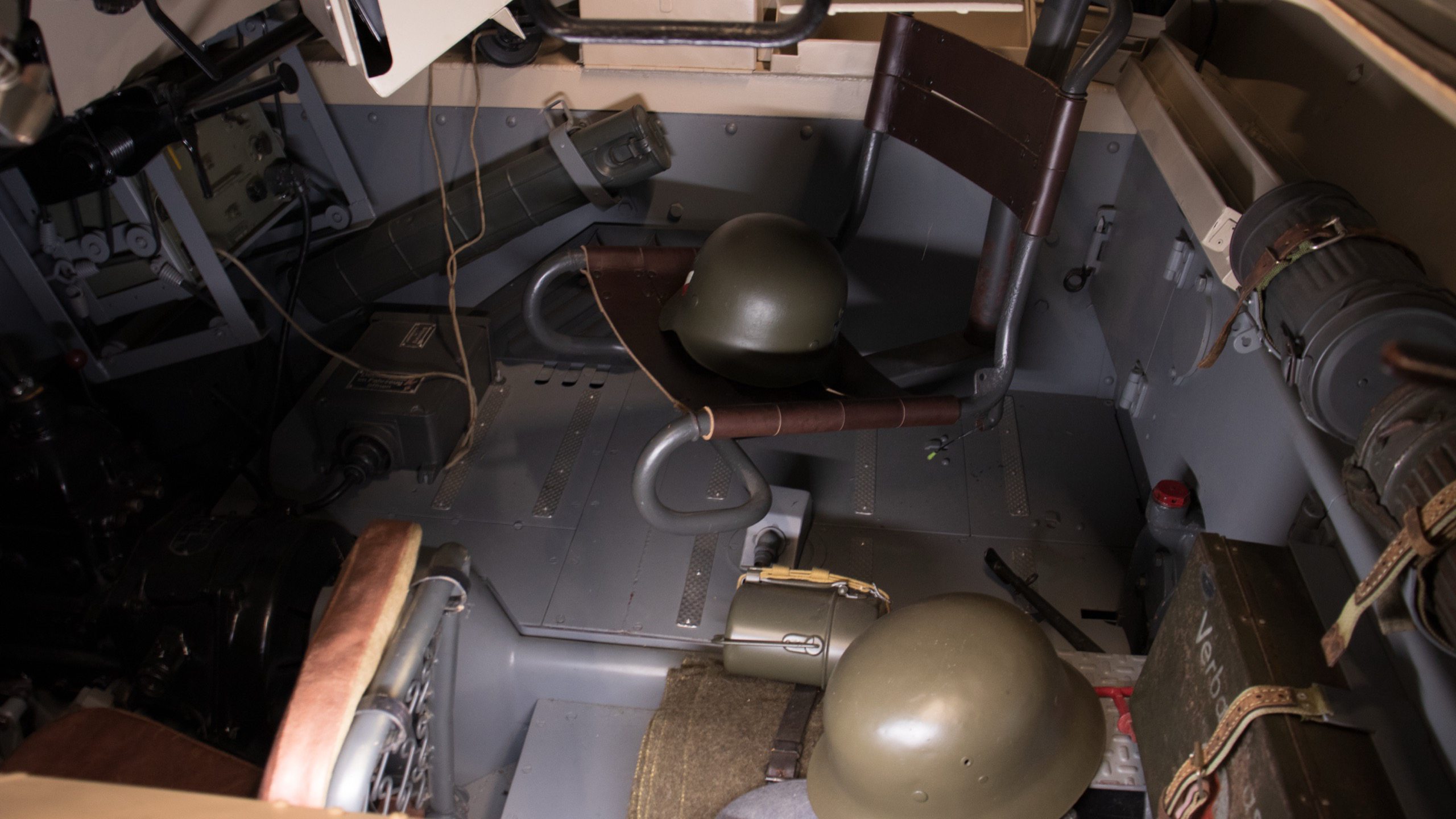
The Panzerkampfwagen I Ausführung A (Panzer I Ausf. A) was Germany’s first mass-produced tank following World War I and an important step in the development of the armored forces that would spearhead Nazi Germany’s early military conquests. Although lightly armored and armed with only machine guns, the Panzer I provided the German Army with invaluable experience in tank production, crew training, and the mobile warfare tactics that would become known as Blitzkrieg.
Following Germany’s defeat in World War I, the Treaty of Versailles prohibited the country from possessing or manufacturing tanks. Nevertheless, German military planners secretly pursued armored vehicle development throughout the 1920s and early 1930s. To conceal these activities, early Panzer I designs were developed under the designation Landwirtschaftlicher Schlepper (agricultural tractor). Following Adolf Hitler’s rise to power in 1933, German rearmament accelerated dramatically, and production of the Panzer I began in 1934.
Officially designated Sd.Kfz. 101, the Panzer I Ausf. A weighed approximately 5.4 metric tons and carried a two-man crew consisting of a driver and commander/gunner. Powered by a 60-horsepower Krupp four-cylinder gasoline engine, it could reach approximately 23 mph. Its turret mounted two 7.92mm MG 13 machine guns, while armor protection reached only 13mm in thickness—sufficient against small-arms fire but vulnerable to anti-tank weapons and cannon-armed enemy vehicles.
The Panzer I first saw combat during the Spanish Civil War in 1936, when Germany supplied tanks and military advisers to General Francisco Franco’s Nationalist forces. Encounters with Soviet-built T-26 tanks demonstrated the Panzer I’s serious limitations, particularly its inability to effectively engage heavily armed opponents.
Despite these shortcomings, the Panzer I constituted a substantial portion of Germany’s armored forces during the invasion of Poland in September 1939 and the subsequent campaigns in Western Europe in 1940. Its effectiveness depended less on firepower than on German tactics emphasizing mobility, concentrated armored formations, and close coordination with infantry and aircraft. By 1941, the increasingly obsolete Panzer I was largely withdrawn from frontline tank service, although its chassis continued supporting specialized military vehicles.
The Panzer I Ausf. A displayed at the American Heritage Museum has a remarkable history of survival and restoration. Captured by Canadian forces during World War II, the tank eventually entered the Canadian War Museum’s collection. Collector Jacques M. Littlefield later acquired the rare vehicle through an exchange involving several tanks from his own collection.
Restoration specialist Greg Taylor of Taylor Restorations and Consulting undertook an extensive project to return the Panzer I to its original configuration. Tragically, Taylor passed away in May 2020 before completing the work. The meticulously restored components were subsequently transported from his Nevada workshop to the American Heritage Museum, where final assembly was completed.
Displayed opposite the British Vickers Mk. VIA light tank in the museum’s War Clouds Gallery, this exceptionally rare Panzer I illustrates Germany’s clandestine rearmament, the rapid evolution of armored warfare, and the military developments that preceded the outbreak of World War II.
