Artifacts
Waco UIC
United States | 1933–1945 | Civilian Aviation – Pearl Harbor
| General Information | |
|---|---|
| Model | UIC |
| Class | Aircraft |
| Type | General |
| Use | Civilian |
| Era | 1920-1939 |
| Gallery Focus | Interwar |
| Manufacturer | Waco |
| Year | 1933 |
| Country | United States |
| Ownership | CF Inc. |
| Gallery Location | Hangar |
| Status | Operational, Online |
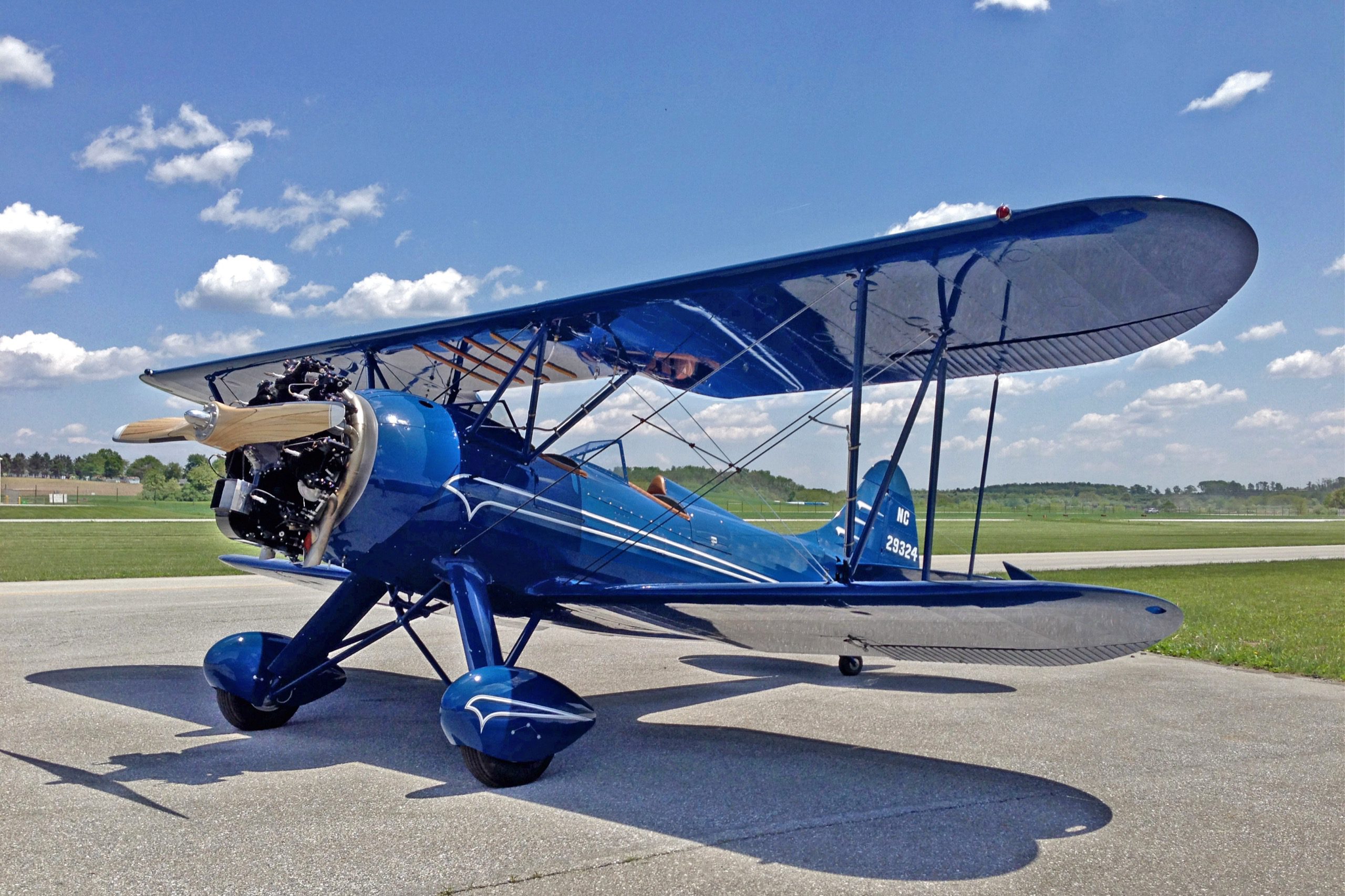
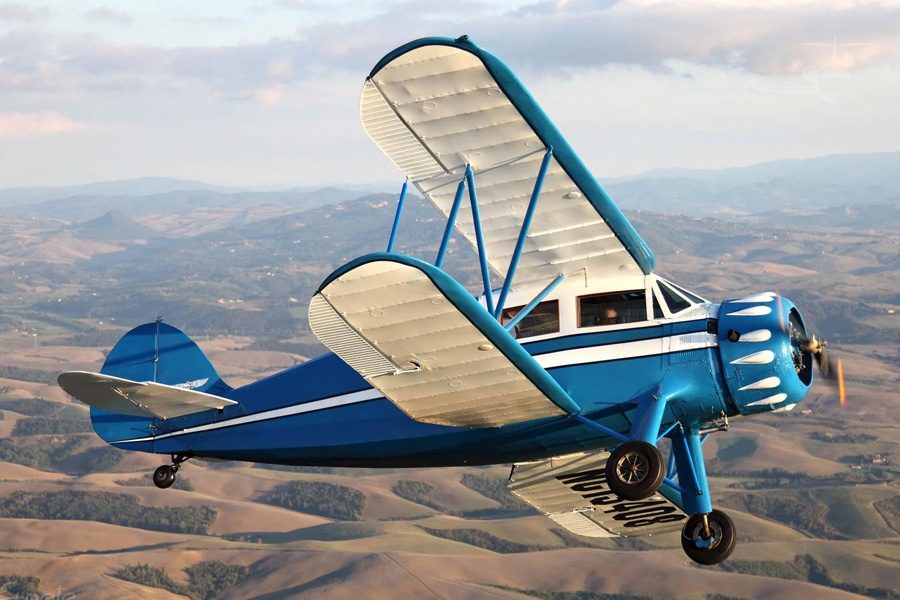
The 1933 Waco UIC is more than a beautifully preserved example of America’s Golden Age of Aviation. This remarkable aircraft is a direct connection to one of the most consequential days in American history, having served with a civilian flying school at Honolulu’s John Rodgers Field during the Japanese attack on Pearl Harbor on December 7, 1941.
Manufactured by the Waco Aircraft Company of Troy, Ohio, the UIC belonged to the company’s popular Standard Cabin series of biplanes. Introduced during the early 1930s, these aircraft combined traditional wood-and-fabric wing construction with a streamlined, enclosed passenger cabin. Powered by a 210-horsepower Continental R-670 radial engine, the four-seat UIC could reach speeds of approximately 140 mph. Its comfortable accommodations, reliable performance, and versatility made it popular among private owners, businesses, and commercial flying services.
The American Heritage Museum’s Waco UIC, construction number 3767, was completed on June 9, 1933. Originally delivered to George Willis of Great Neck, New York, it later passed through the hands of noted test pilot Vance Breese before being purchased in 1938 by Charles Knox and Robert “Bob” Tyce, partners in K-T Flying Service of Honolulu, Territory of Hawaii.
Established in 1934, K-T Flying Service operated from John Rodgers Field, providing civilian flight instruction, sightseeing excursions, inter-island charter flights, and cargo transportation. Tyce became an influential figure in Hawaiian aviation, training hundreds of pilots, including servicemen seeking to qualify for military flight training through the Civilian Pilot Training Program. The company’s fleet included Piper J-3 Cubs, Fleet biplanes, and this distinctive Waco UIC.
On the morning of December 7, 1941, the peaceful routine at John Rodgers Field was shattered by the Japanese attack on Pearl Harbor. As enemy aircraft strafed the civilian airport, Bob Tyce and his wife, Edna, stood outside the K-T Flying Service hangar. Tyce was struck by Japanese machine-gun fire and fatally wounded, becoming the first American civilian killed during the attack.
Tragedy also struck three young soldiers of the California National Guard’s 251st Coast Artillery Regiment who had rented two K-T Flying Service Piper Cubs that morning. Sergeant Henry Blackwell, Corporal Clyde Brown, and Sergeant Warren Rasmussen were flying near Oahu’s southern coast when Japanese fighters attacked their unarmed aircraft. Both Cubs plunged into the ocean, and all three men were lost.
The Waco survived the attack. Its surviving flight records document operations during the days immediately preceding December 7, followed by an entry indicating the aircraft was dismantled on December 8, as wartime restrictions brought civilian aviation in Hawaii to an abrupt halt.
Today, the American Heritage Museum preserves this historic Waco UIC as a tangible connection to the civilian aviators whose lives were forever changed by the events of Pearl Harbor. Its survival offers a rare opportunity to honor Bob Tyce, the men of K-T Flying Service, and the often-overlooked civilian experiences of December 7, 1941.
Exhibit Location: The Waco UIC is housed in the American Heritage Museum’s seasonal Storage Hangar Annex, accessible to visitors only during select special event weekends in the summer and fall. Please consult the Museum’s event calendar for viewing opportunities.