Artifacts
Waco UPF-7
United States | 1937–1945 | Civilian Aviation – World War II Pilot Training
| General Information | |
|---|---|
| Model | UPF-7 |
| Class | Aircraft |
| Type | General |
| Use | Civilian |
| Era | 1920-1939 |
| Gallery Focus | Interwar |
| Manufacturer | Waco |
| Year | 1941 |
| Country | United States |
| Ownership | CF Inc. |
| Gallery Location | Hangar |
| Status | Operational, Online |
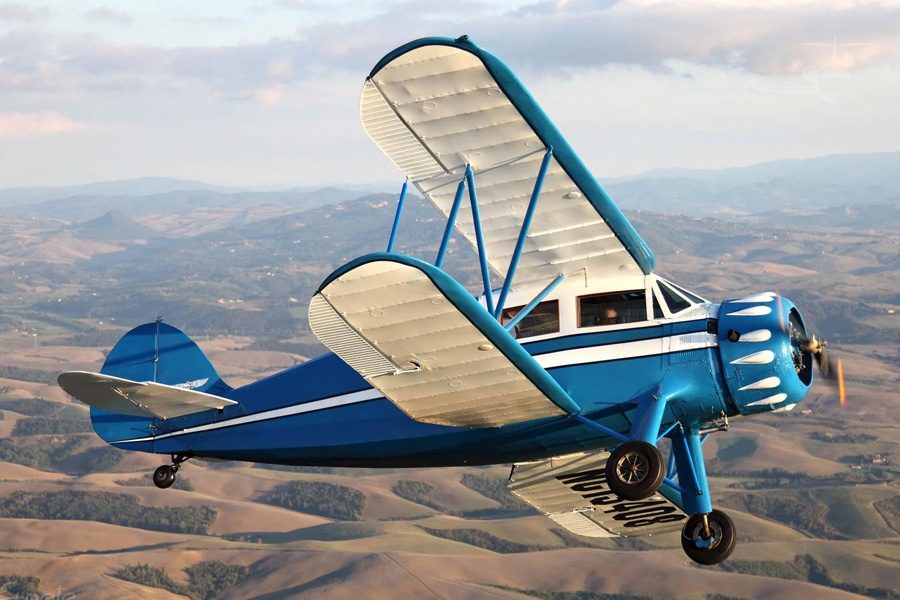
The Waco UPF-7 represents the elegance and craftsmanship of America’s Golden Age of Aviation while reflecting the critical role civilian flight training played in preparing the nation for World War II. With its graceful biplane wings, open cockpits, and distinctive radial engine, the UPF-7 became one of the most recognizable American training aircraft of the late 1930s and early 1940s.
Manufactured by the Waco Aircraft Company of Troy, Ohio, the UPF-7 was the final and most successful development of the company’s popular F-series of open-cockpit biplanes, first introduced in 1930. Entering production in 1937, the UPF-7 combined traditional aircraft construction with improvements in performance, handling, and pilot comfort. More than 600 examples were produced before manufacturing ended in 1942.
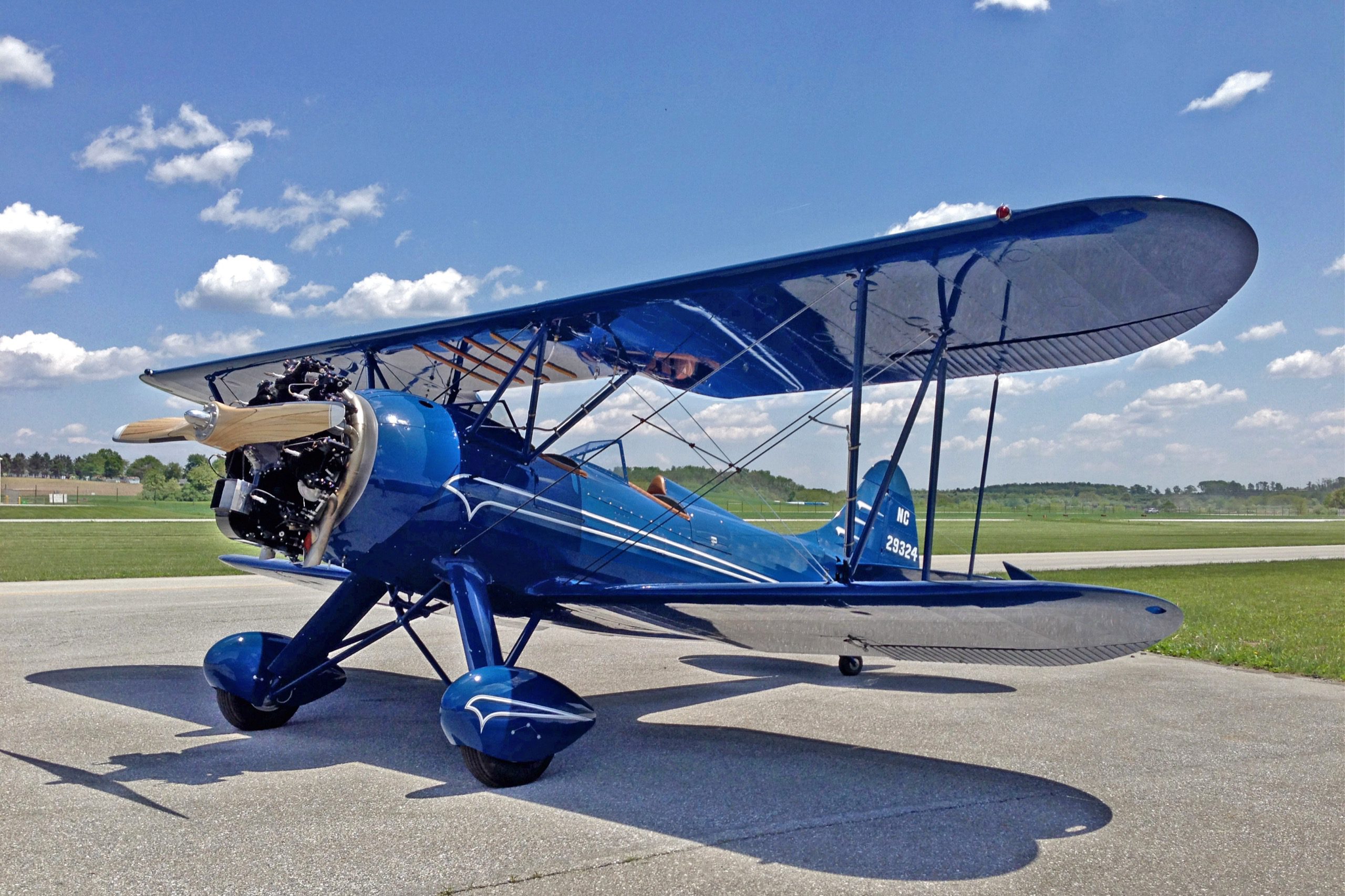
Powered by a 220-horsepower Continental W-670 seven-cylinder radial engine, the UPF-7 featured a welded steel-tube fuselage, wooden wings, and fabric covering. Its 30-foot wingspan, four ailerons, and wide-track landing gear contributed to its responsive handling and suitability for flight instruction. The aircraft featured two open cockpits arranged in tandem, with dual controls allowing an instructor and student to fly together. Its sturdy construction and predictable flight characteristics made it especially popular among civilian flying schools.
As the prospect of American involvement in World War II increased, the Waco UPF-7 became an important participant in the Civilian Pilot Training Program (CPTP). Established in 1939 under the Civil Aeronautics Authority, the program sought to dramatically expand the nation’s pool of trained pilots. Thousands of Americans received flight instruction through participating colleges, universities, and civilian flying schools, creating a vital foundation for the rapid expansion of military aviation after Pearl Harbor.
The UPF-7 was particularly well suited to this mission, offering students experience with conventional landing gear, basic aerobatics, and precision aircraft handling. A small number were also acquired or evaluated by the U.S. Army Air Corps under the PT-14 designation. Following the war, many surviving Wacos transitioned into private ownership, becoming prized recreational aircraft and enduring symbols of vintage aviation.
The American Heritage Museum’s Waco UPF-7 was manufactured in 1940 and retains its original civilian registration, NC29324. Meticulously restored to exceptional condition, the aircraft demonstrates the remarkable craftsmanship and attention to detail characteristic of the Waco Aircraft Company. Its beautifully finished airframe and radial engine reflect the enduring appeal of these classic American biplanes.
The aircraft was generously donated to the Collings Foundation by Pierre Swick of Waitsfield, Vermont, helping preserve an outstanding example of prewar American aviation. Today, it serves as a tribute to the civilian pilots, instructors, and aircraft manufacturers who helped build America’s aviation capabilities during the years surrounding World War II.
Exhibit Location: The Waco UPF-7 is housed in the American Heritage Museum’s seasonal Storage Hangar Annex, accessible to visitors only during select special event weekends in the summer and fall. Please consult the Museum’s event calendar for viewing opportunities.