Artifacts
1937 #62 Slim Rutherford Sprint Car
United States | 1937–1962 | Golden Age of American Sprint Car Racing
| General Information | |
|---|---|
| Model | #62 Slim Rutherford – Maroon Sprint Car |
| Class | Vehicle |
| Type | Race Car, Sprint Car |
| Use | Civilian |
| Era | 1930-1940 |
| Gallery Focus | Sprint Cars |
| Manufacturer | Slim Rutherford |
| Year | 1937 |
| Country | United States |
| Ownership | CF Trust |
| Gallery Location | Vintage Race Car Collection |
| Status | Operational, Offline |
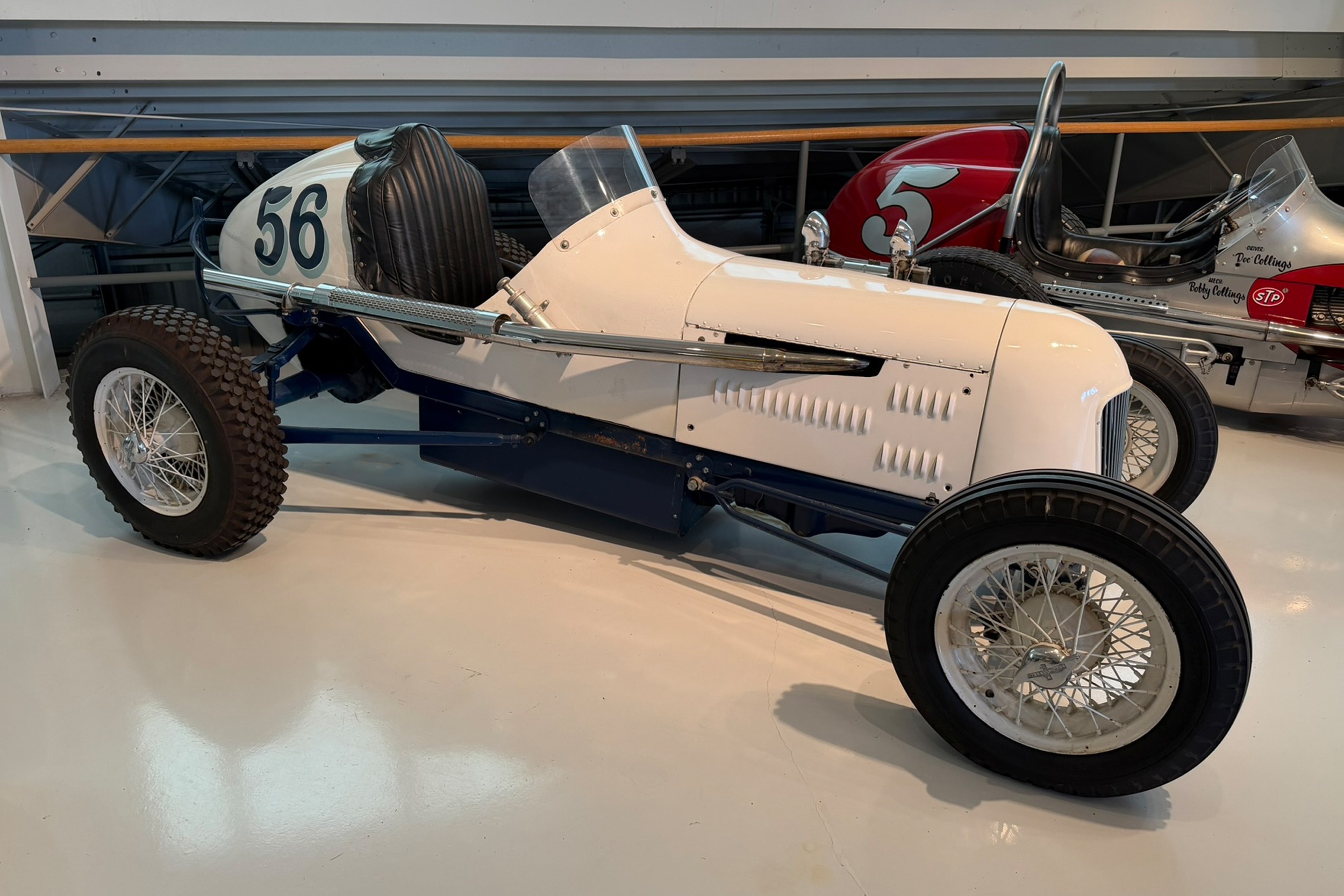
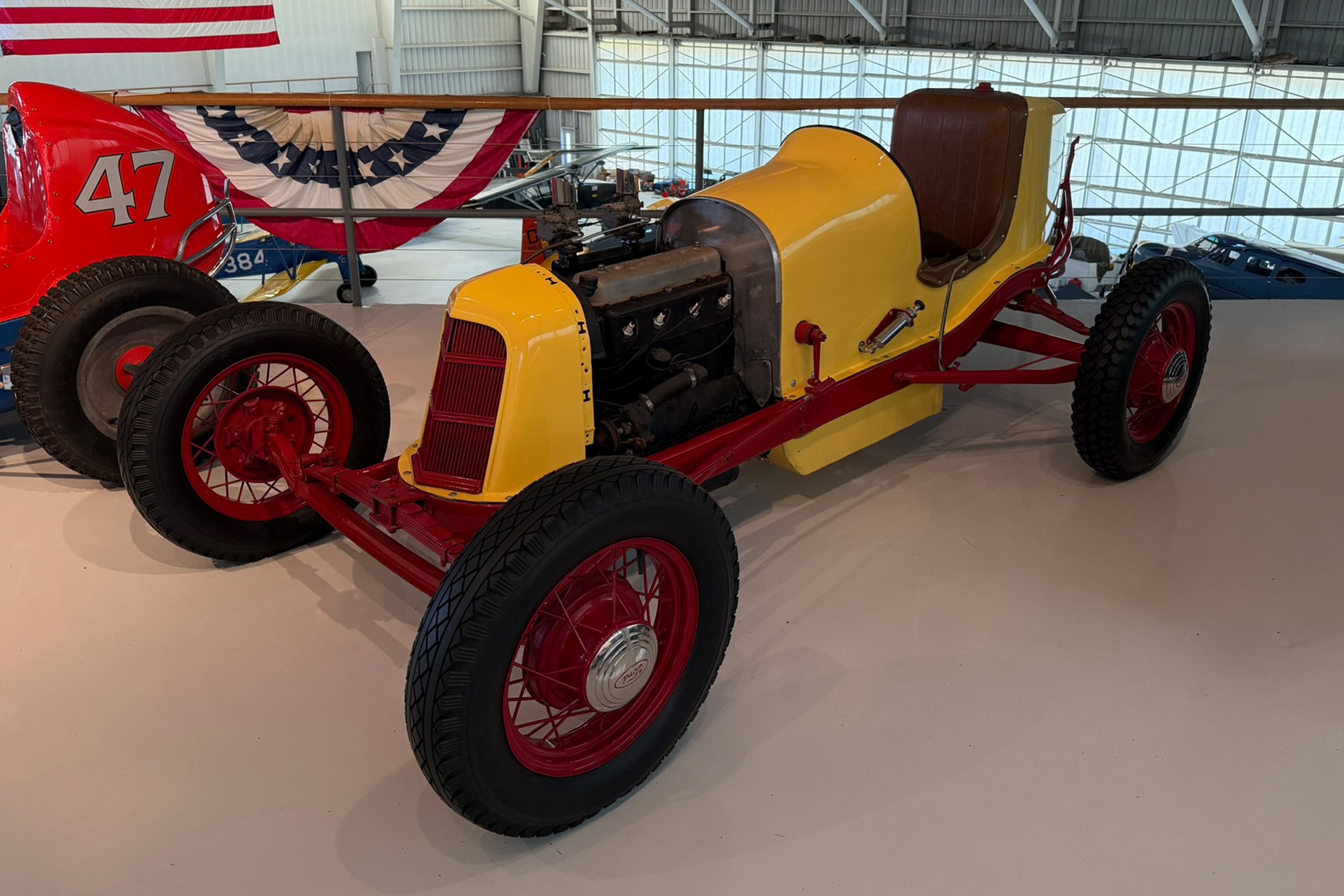
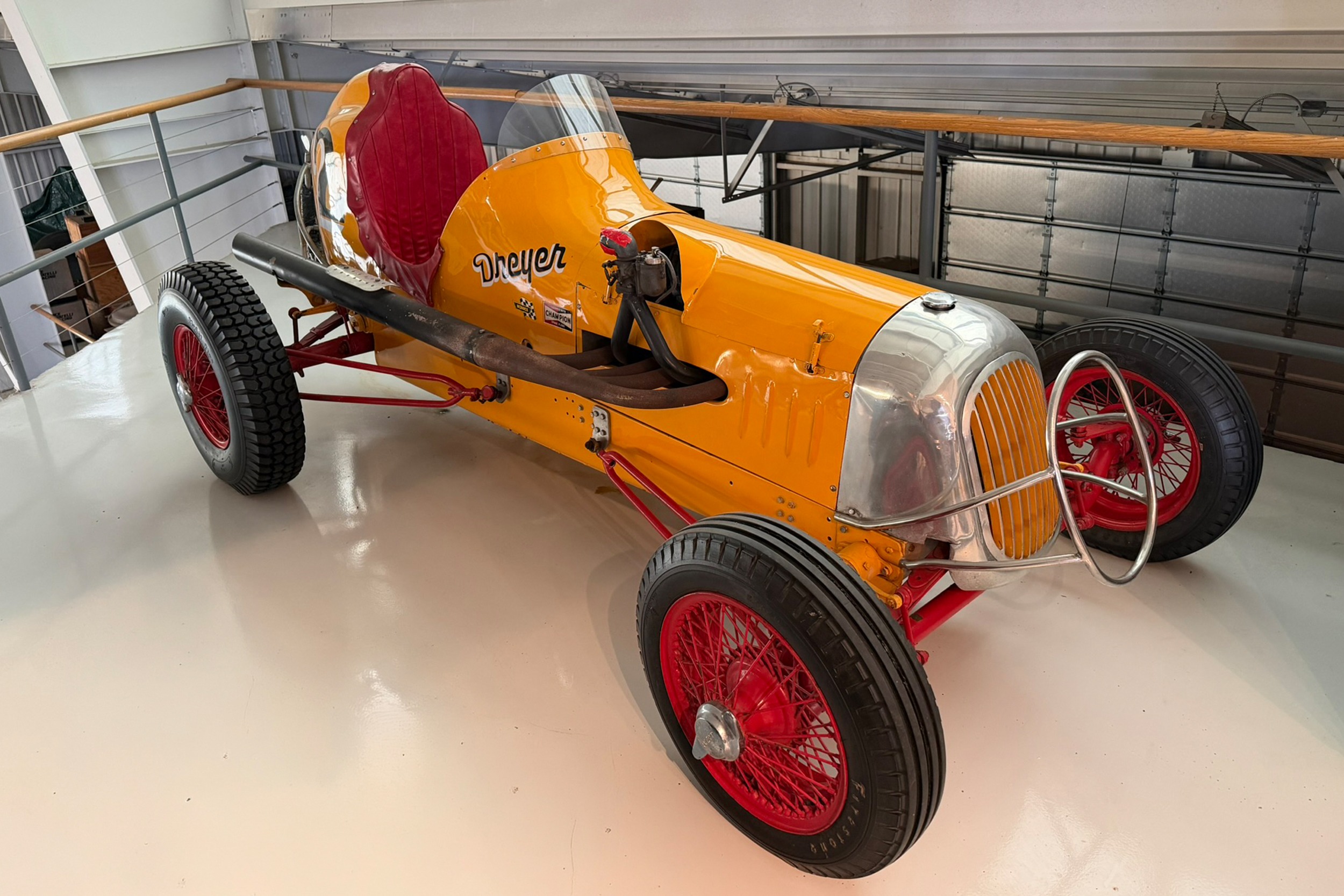
During the Golden Age of American Sprint Car racing, few individuals embodied the spirit of mechanical ingenuity and independent competition quite like Melvin “Slim” Rutherford. A gifted driver, machinist, engineer, and automobile builder, Rutherford developed remarkably sophisticated racing machines largely through his own resourcefulness. The maroon Number 62 “Slim Rutherford Special,” originally constructed in 1937, represents one of the most extraordinary examples of grassroots engineering in American motorsports.
Born in West Virginia in 1901, Rutherford began racing in 1922 before relocating to Whiting, Indiana, where he worked as an electrician for Standard Oil. Racing remained his passion, and he gradually established a small machine shop in his basement, designing and manufacturing specialized engine components during evenings and weekends. His ingenuity extended to machining crankshafts from railroad boxcar axles, taking advantage of the high-quality steel used in heavy railway equipment.
By 1937, Rutherford had developed an entirely new racing engine of his own design. Featuring a gear-driven single-overhead-camshaft arrangement, a specially constructed barrel crankcase, and a separate cast-iron cylinder block, the engine represented an extraordinary achievement for an independent machinist. Rutherford’s innovative powerplant was installed in his distinctive Number 62, which remained competitive through the beginning of World War II.
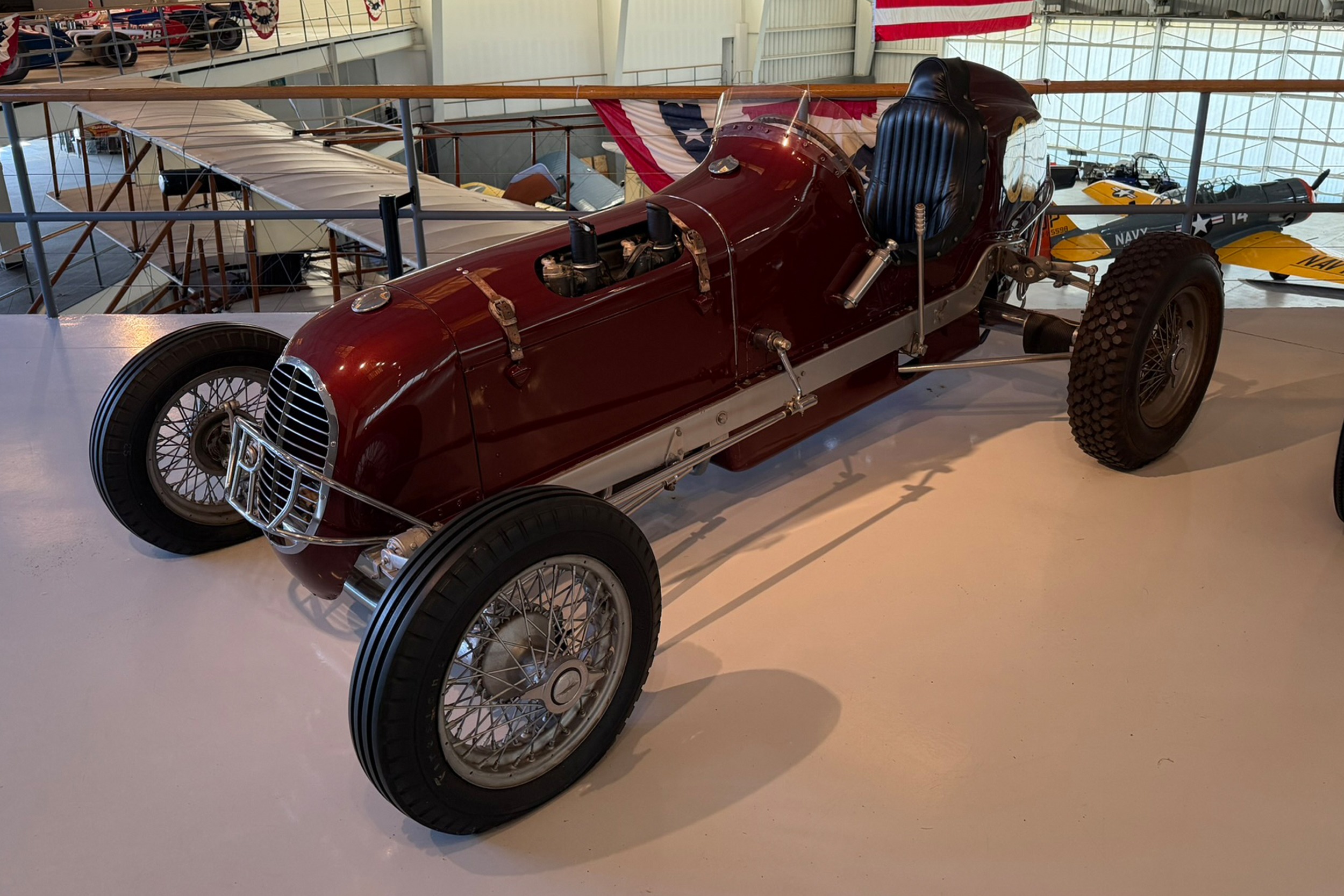
The automobile itself reflects the resourcefulness of its creator. According to the museum’s collection history, Rutherford incorporated components from a 1928 Chrysler Model 72 and a 1929 Chrysler Imperial, adapting available automotive equipment into a specialized racing machine. Its long, narrow maroon bodywork, exposed suspension, wire-spoke wheels, and compact cockpit illustrate the purposeful construction of early American “Big Cars,” the forerunners of modern Sprint Cars.
Rutherford’s greatest competitive success came during the 1940 racing season. Competing in 39 events, he recorded an extraordinary 29 victories, seven second-place finishes, and three third-place finishes, placing among the top three in every race he entered. That remarkable performance earned him the Kentucky and Indiana Racing Association Championship and established the Number 62 as one of the most successful independent racing machines of its era.
Following World War II, Rutherford continued improving his automobile, introducing an innovative independent rear suspension with inboard brakes in 1947. He remained active as a driver until 1951 and continued campaigning his Number 62 and other racing cars as an owner until his retirement from competition in 1962.
Rutherford passed away in 1986, but his extraordinary contributions to automobile engineering and racing were recognized with his induction into the National Sprint Car Hall of Fame in 2022.
Today, the Number 62 Slim Rutherford Special preserves the remarkable legacy of a self-taught engineer whose ingenuity, determination, and competitive success demonstrated what could be accomplished through mechanical creativity and an enduring passion for racing.
Museum Display Location: Third Floor Race Car Collection, American Heritage Museum’s seasonal Storage Hangar Annex. Accessible during select special event weekends in the summer and fall.