Artifacts
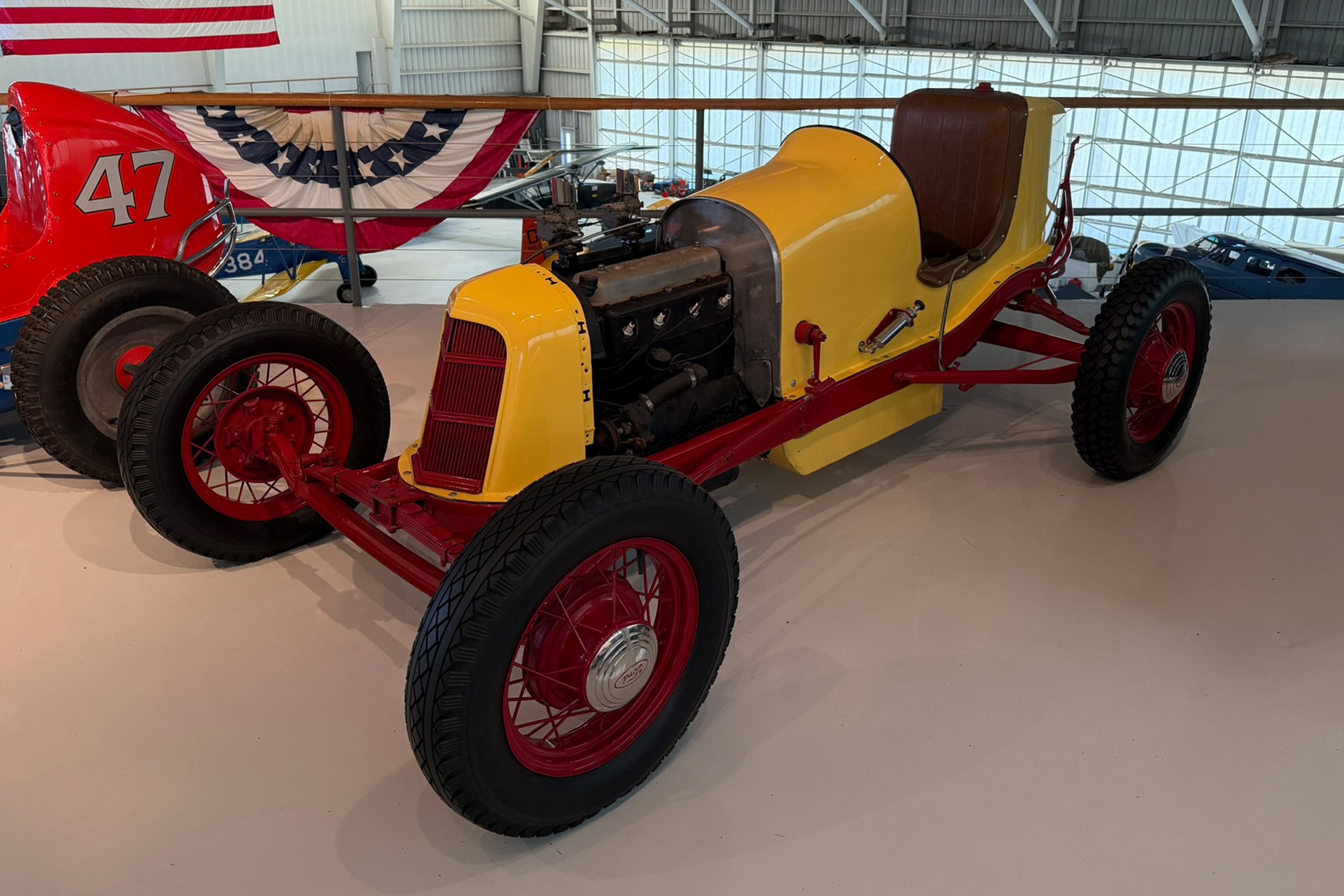
1940's Era Model A Powered Sprint Car
United States | 1940s | Golden Age of American Sprint Car Racing
| General Information | |
|---|---|
| Model | Yellow Model A Powered Yellow Sprint Car |
| Class | Vehicle |
| Type | Race Car, Sprint Car |
| Use | Civilian |
| Era | 1930-1940 |
| Gallery Focus | Sprint Cars |
| Manufacturer | Ford |
| Year | 1940 (~) |
| Country | United States |
| Ownership | CF Trust |
| Gallery Location | Vintage Race Car Collection |
| Status | Operational, Offline |
During the 1930s and 1940s, American Sprint Car racing was built on ingenuity, mechanical skill, and a determination to go faster with whatever equipment was available. Long before modern purpose-built racing machines became commonplace, resourceful drivers and mechanics assembled competitive cars in backyard garages and small workshops, adapting ordinary automobile components into powerful open-wheel racers.
This distinctive yellow and red Sprint Car embodies that grassroots racing tradition. Its power comes from a modified four-cylinder Ford Model A engine, originally developed for one of America’s most popular automobiles. Introduced for the 1928 model year, the Model A’s 200.5-cubic-inch engine produced a modest 40 horsepower in factory configuration. However, its relatively simple construction, widespread availability, and potential for modification made it a favorite among racing enthusiasts.
To extract additional performance, mechanics fitted Model A engines with specialized high-compression cylinder heads, improved carburetors, modified camshafts, and other racing components. One particularly interesting feature of this automobile is its high-speed cylinder head, which has had the manufacturer’s name shaved away. The modification conceals the identity of the performance component and reflects the highly individualized nature of these early racing machines, when builders frequently developed their own combinations of parts and engineering solutions.
The car’s exposed suspension, wire-spoke wheels, narrow bodywork, and upright single-seat cockpit further illustrate the remarkably straightforward construction of early Sprint Cars. Rather than purchasing expensive racing chassis, many competitors fabricated their own frames or adapted salvaged front and rear axles, steering assemblies, and other mechanical components from existing automobiles. Weight reduction and mechanical simplicity were essential to achieving competitive speeds.
Originally known as “Big Cars” to distinguish them from the smaller Midget racers, these powerful open-wheel machines became fixtures at dirt tracks and fairgrounds throughout the United States. Half-mile ovals were particularly popular, where drivers competed on dusty, often rutted surfaces with few of the safety protections associated with modern motorsports.
By the 1940s, sophisticated Offenhauser-powered machines were becoming increasingly competitive, but Ford-powered specials continued to represent the accessible, independent spirit of American racing.
Today, this Model A-powered Sprint Car preserves an important chapter in motorsports history, when the imagination and determination of a talented mechanic could transform an ordinary automobile engine into the heart of a formidable racing machine.
Museum Display Location: Third Floor Race Car Collection, American Heritage Museum’s seasonal Storage Hangar Annex. Open to visitors during select special event weekends in the summer and fall.