Artifacts
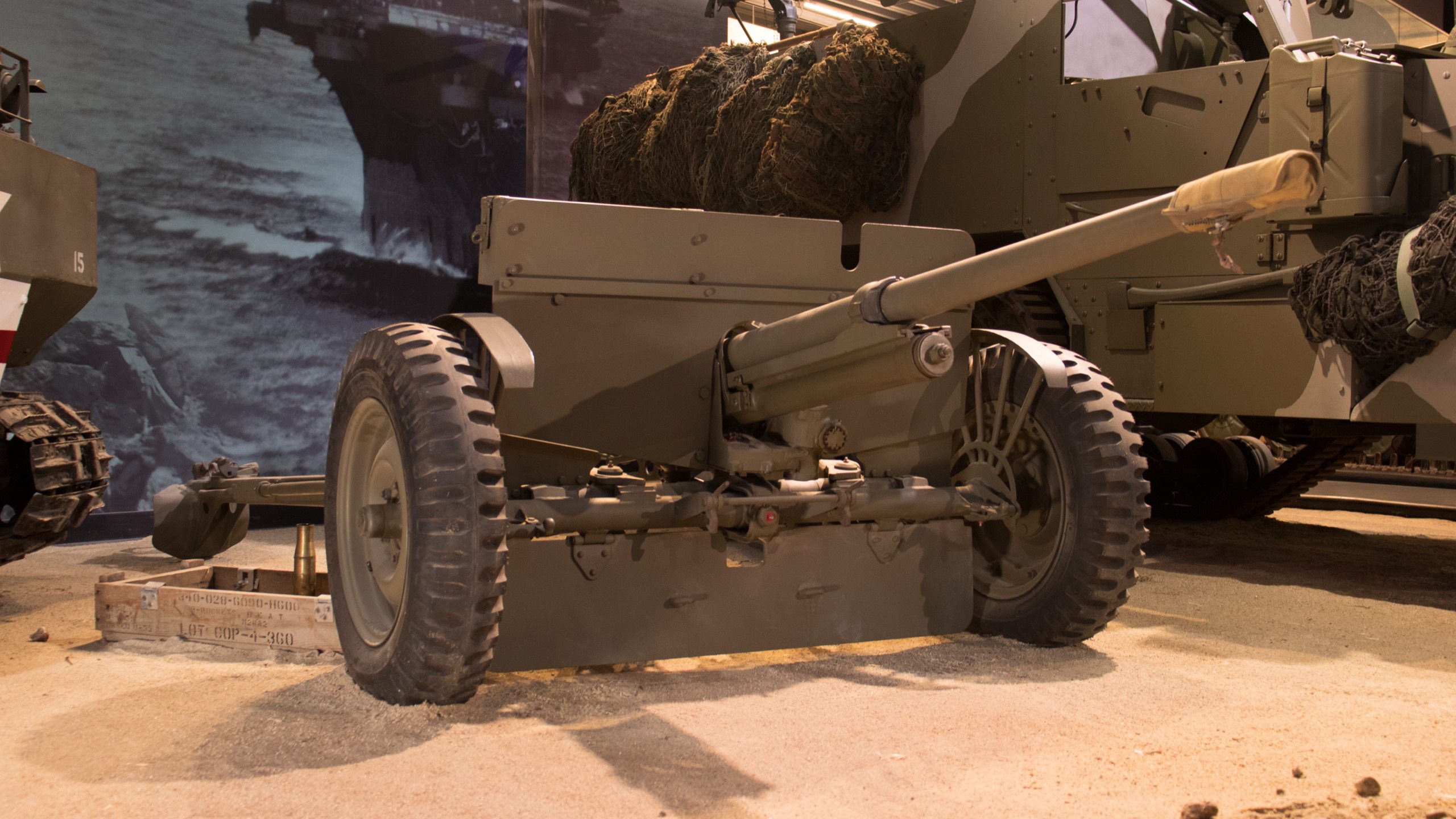
37mm M3 Anti-Tank Gun
| General Information | |
|---|---|
| Model | 37mm M3 Anti-Tank Gun |
| Class | Artillery |
| Type | Anti-Tank Gun |
| Use | Military |
| Era | 1940-1945 |
| Gallery Focus | WWII Pacific Theater |
| Manufacturer | Watervliet Arsenal |
| Year | 1942 |
| Country | United States |
| Ownership | CF Inc. |
| Gallery Location | Pacific Theatre |
| Status | Operational, Offline |
Additional Photos

The American 37mm M3 Anti-Tank Gun was a vital infantry support weapon during World War II, particularly in the Pacific Campaign. Introduced in 1940, it was the first dedicated anti-tank gun fielded in large numbers by the U.S. Army. Lightweight and easily maneuvered, the M3 became especially valuable to American soldiers and Marines fighting across the Pacific’s challenging island terrain.
The M3 first saw combat during the defense of the Philippines in December 1941. During the Guadalcanal Campaign in October 1942, Marine gun crews successfully destroyed Japanese tanks attempting to cross the Matanikau River. Although designed to defeat armored vehicles, the M3 proved equally effective against enemy infantry. Its devastating canister ammunition scattered metal projectiles in a shotgun-like blast, making it particularly effective against massed Japanese infantry assaults.
During the Battle of Tarawa in November 1943, Marines maneuvered M3 guns over seawalls to confront Japanese armor and defensive positions. The weapon continued serving throughout the island-hopping campaign, including at Iwo Jima in 1945, where Marines employed it against fortified Japanese positions.
While increasingly obsolete against heavily armored German tanks in Europe, the M3 remained effective against Japan’s lighter armored vehicles. Its portability and versatility ensured continued service in the Pacific through the war’s end.
The M3 represents the adaptability and determination of American forces who relied upon its firepower during some of the most demanding ground combat of World War II.