Artifacts
LCVP Landing Craft – Higgins Boat
United States | 1942–1945 | World War II – D-Day & European Theater
| General Information | |
|---|---|
| Model | LCVP Higgins Boat |
| Class | Boat |
| Type | Landing Craft, Personnel |
| Use | Military |
| Era | 1940-1945 |
| Gallery Focus | WWII European Theater |
| Manufacturer | Higgins Industries, Owens Yacht Company |
| Year | 1943 |
| Country | United States |
| Ownership | CF Inc. |
| Gallery Location | D-Day |
| Status | Static Only |
Additional Photos
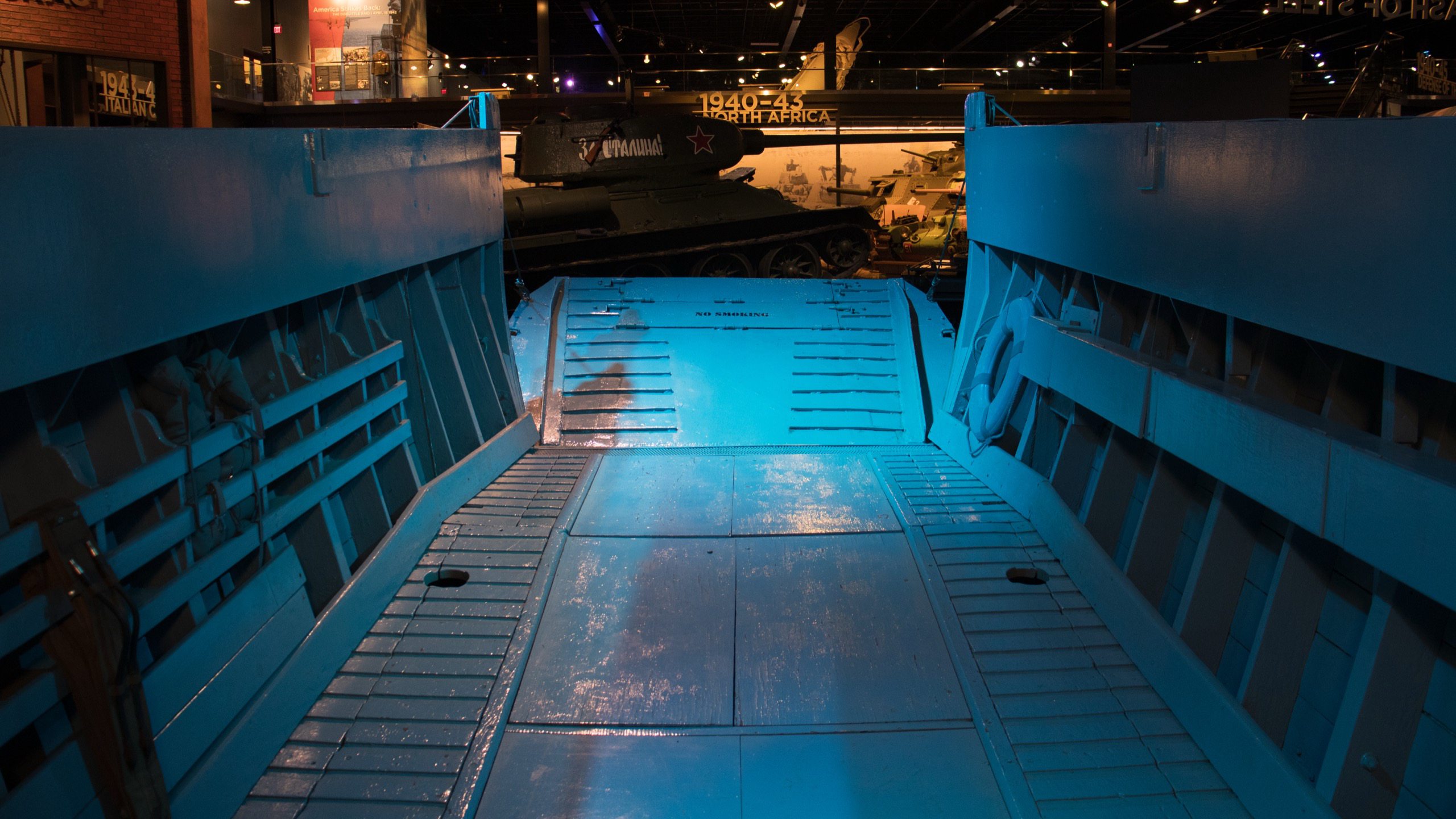
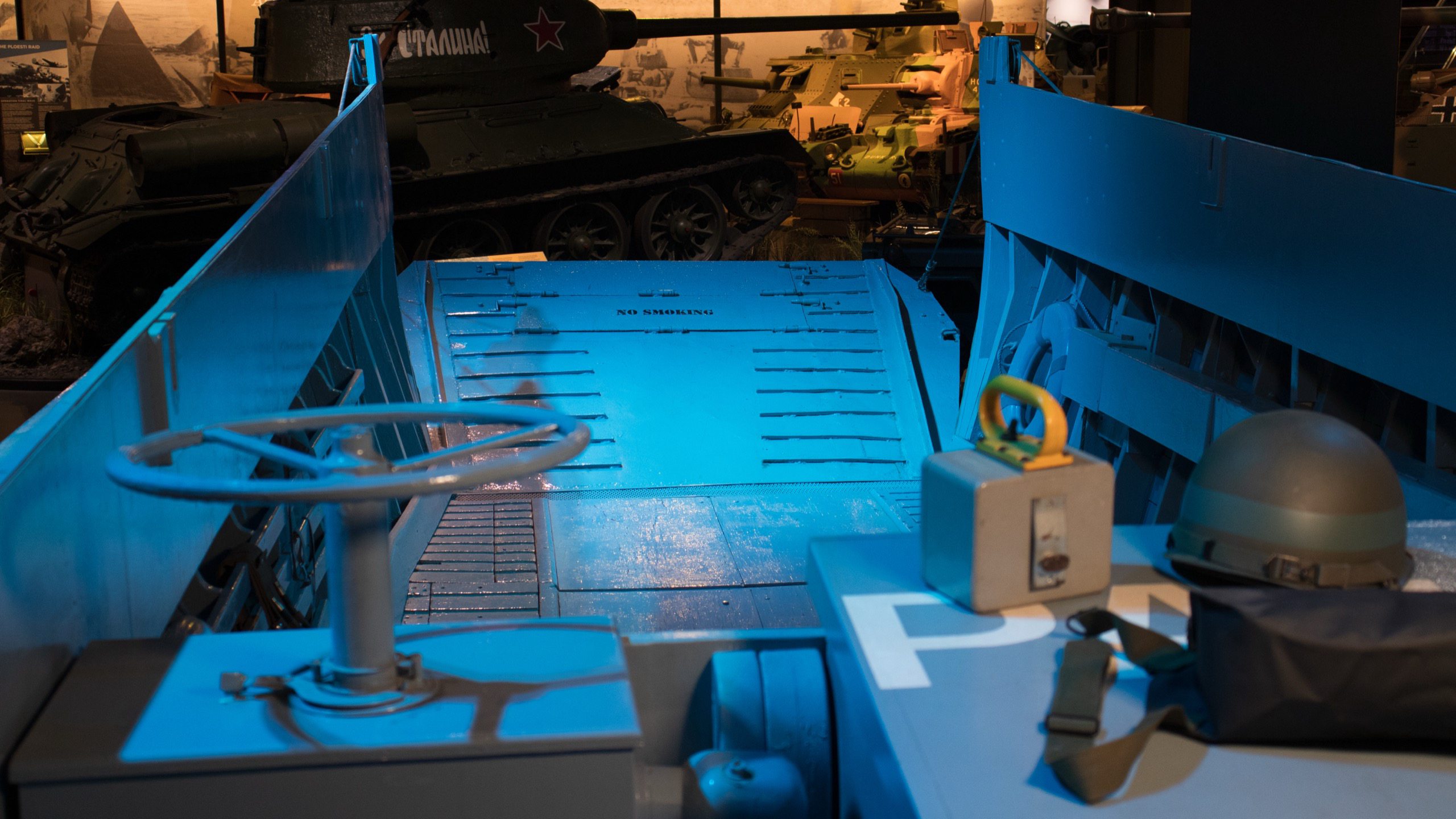
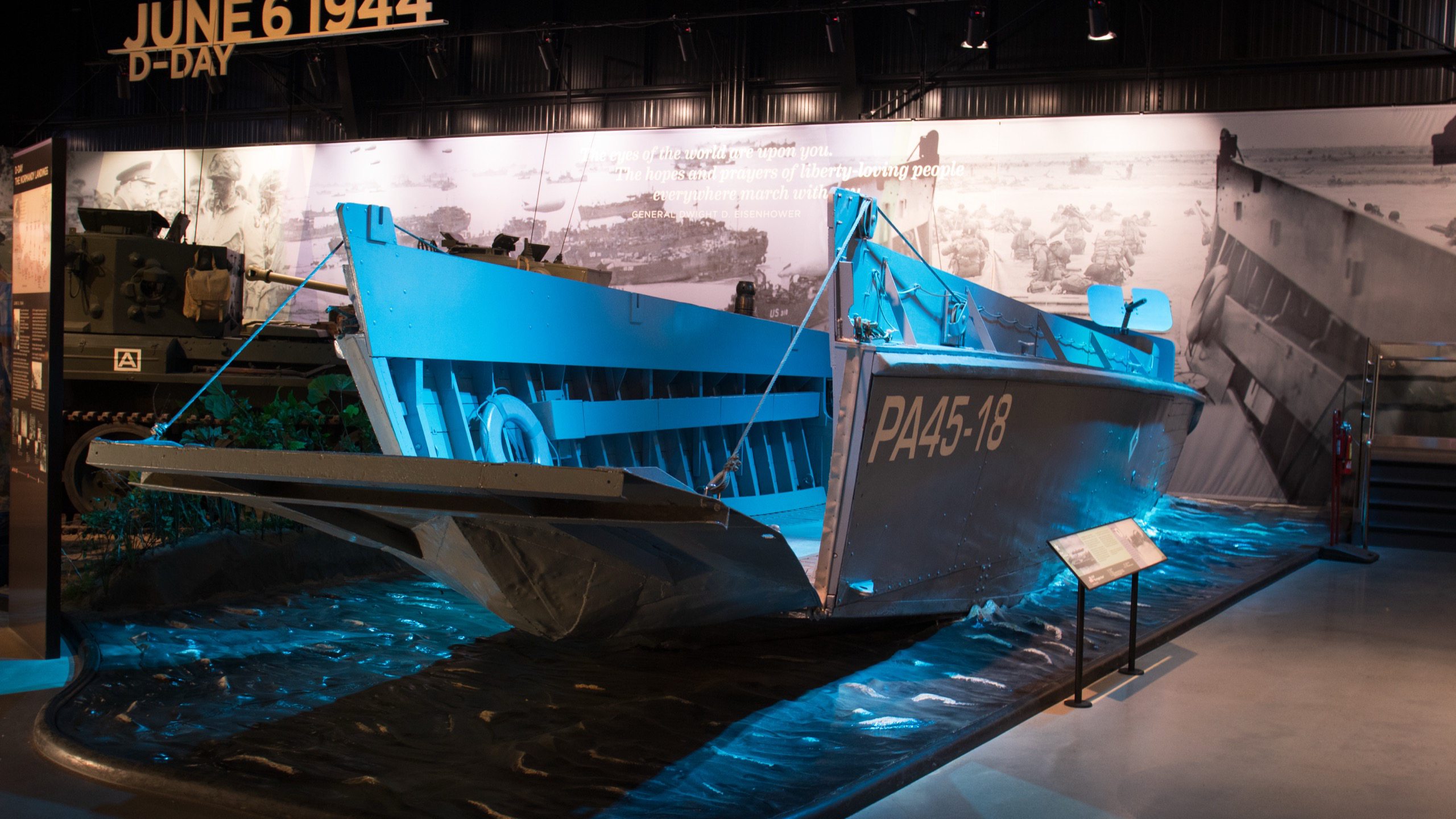
The American Landing Craft, Vehicle, Personnel (LCVP), famously known as the “Higgins Boat,” was one of the most important innovations of World War II. Designed by Andrew Jackson Higgins of New Orleans, Louisiana, this versatile landing craft revolutionized amphibious warfare by allowing Allied forces to transport soldiers, vehicles, and supplies directly from ships onto hostile beaches.
Developed from Higgins’ shallow-draft boats originally designed for Louisiana’s swamps and bayous, the LCVP featured a distinctive steel bow ramp that could be lowered to discharge troops and equipment rapidly. Measuring 36 feet long and powered by a marine engine capable of speeds approaching 12 knots, the craft could carry 36 fully equipped soldiers, a Jeep with additional personnel, or approximately four tons of supplies. Its four-man crew operated the boat under dangerous conditions, often navigating intense enemy fire while delivering successive waves of troops to shore.
During Operation Overlord on June 6, 1944, Higgins Boats played a critical role in the Allied invasion of Normandy. Hundreds approached the heavily defended beaches of Utah, Omaha, Gold, Juno, and Sword, carrying soldiers directly into combat. As their ramps dropped, troops rushed ashore into machine-gun fire, artillery bombardment, and the obstacles of Germany’s Atlantic Wall. The Higgins Boat’s ability to land troops on open beaches helped make the largest amphibious invasion in European history possible.
More than 23,000 LCVPs were manufactured during World War II, serving in amphibious operations throughout North Africa, Italy, France, and the Pacific. General Dwight D. Eisenhower later credited Higgins and his landing craft with fundamentally changing Allied military strategy.
The Higgins Boat displayed at the American Heritage Museum is an exceptionally rare surviving World War II example with a remarkable preservation history. Discovered in Vierville-sur-Mer, Normandy, near Omaha Beach, the vessel was recovered after decades of postwar use. Although its original wartime assignment remains unconfirmed, its discovery along the Normandy coast provides a compelling connection to the historic Allied invasion.
Acquired for preservation by the First Division Museum at Cantigny, Illinois, the LCVP underwent extensive restoration by the North Carolina Maritime Museum in Beaufort, completed in 2009. The Collings Foundation acquired the historic vessel in 2016 for inclusion in the American Heritage Museum.
Displayed in the museum’s D-Day Gallery, this original Higgins Boat offers visitors a powerful connection to the soldiers and sailors whose extraordinary courage and sacrifice helped secure the Allied foothold in Nazi-occupied Europe.