Artifacts
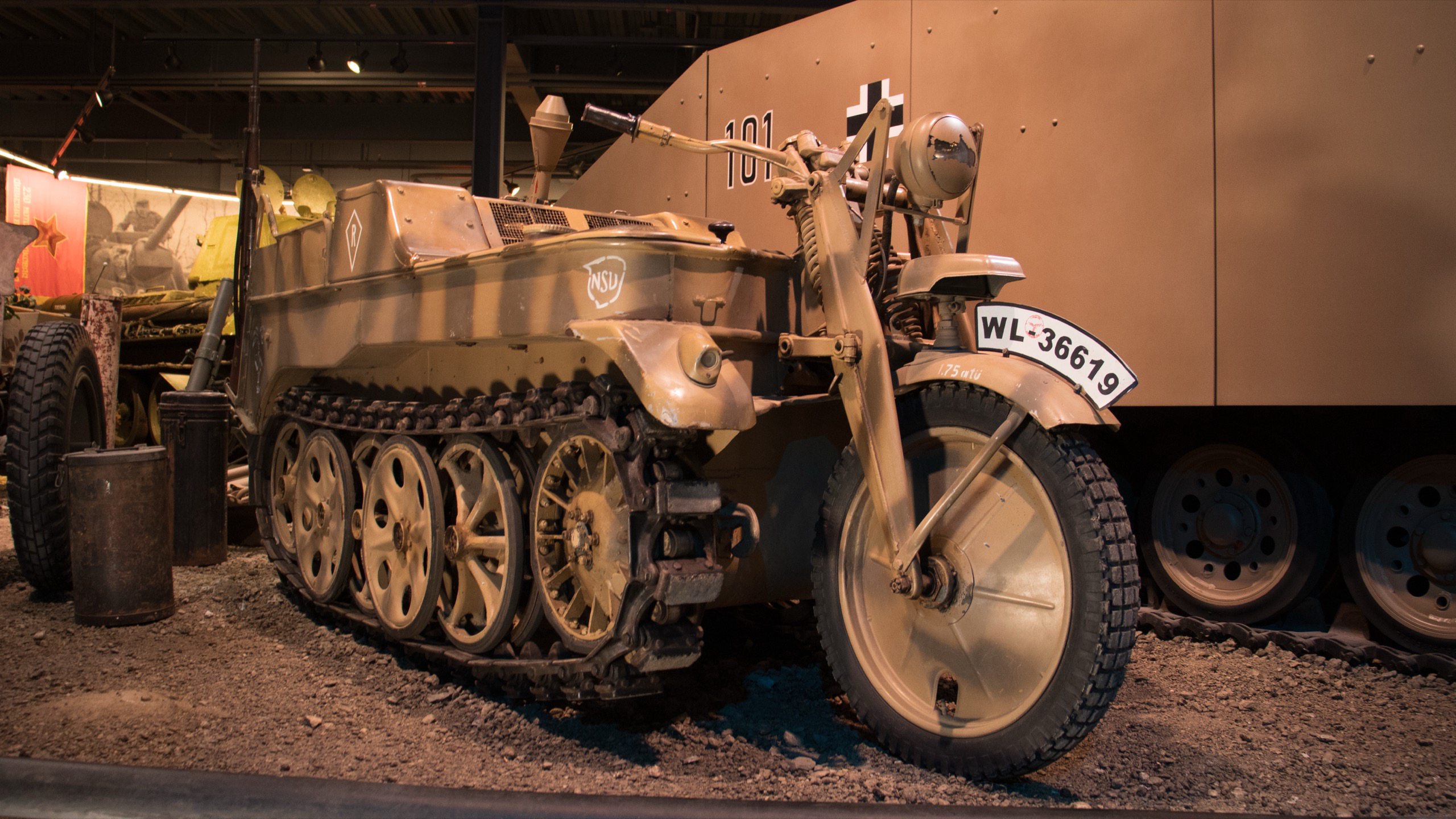
Sd.Kfz. 2 Kleines Kettenkrad
Germany | 1941–1945 | World War II – Eastern Front
| General Information | |
|---|---|
| Model | Sonderkraftfahrzeug Sd.Kfz. 2 Kleines Kettenkrad HK 101 |
| Class | Military Vehicle |
| Type | Half-Track Motorcycle |
| Use | Military |
| Era | 1940-1945 |
| Gallery Focus | WWII European Theater |
| Manufacturer | NSU Motorenwerke |
| Year | 1942 |
| Country | Germany |
| Ownership | CF Inc. |
| Gallery Location | Eastern Front |
| Status | Operational, Offline |
Additional Photos
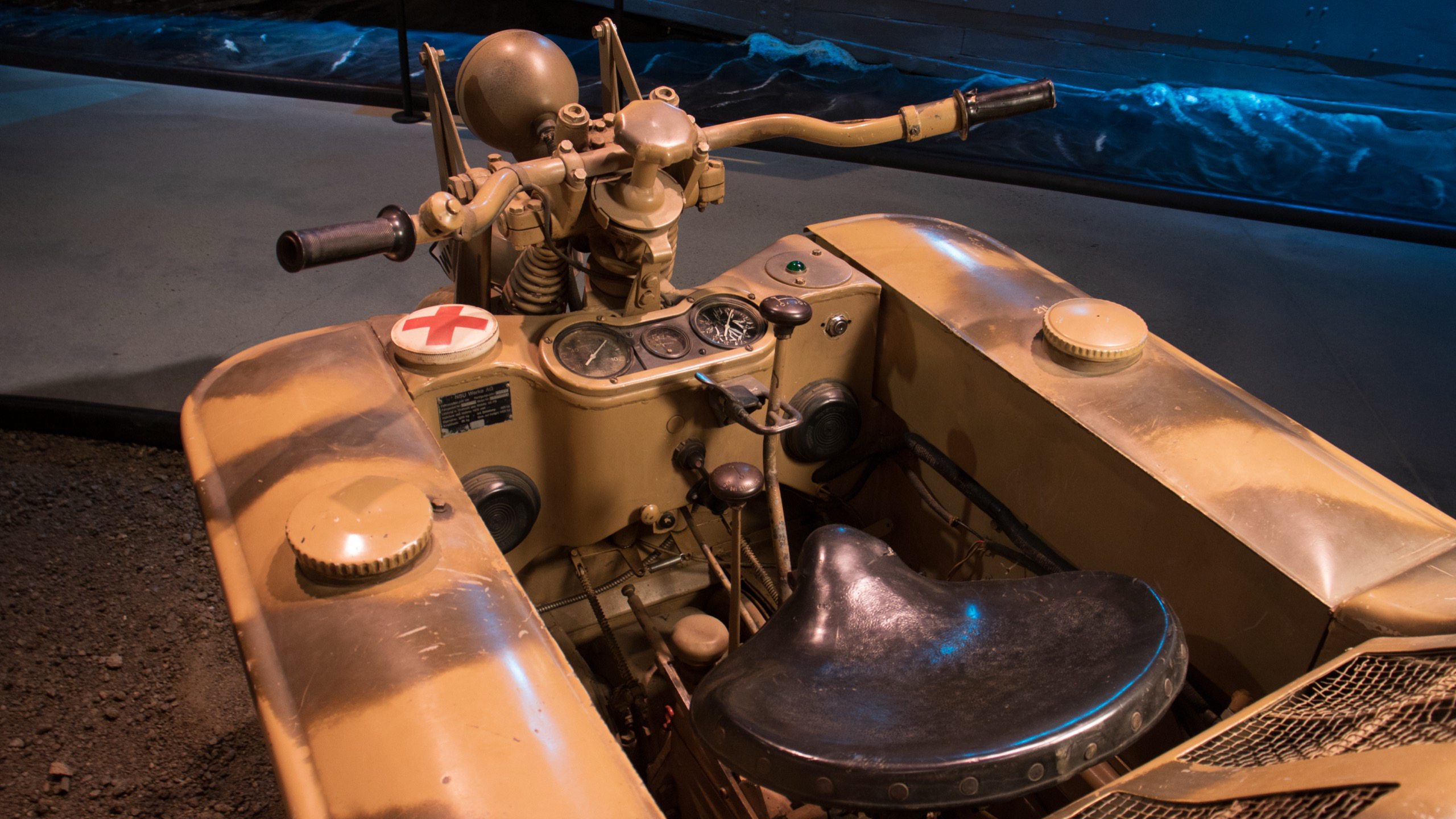
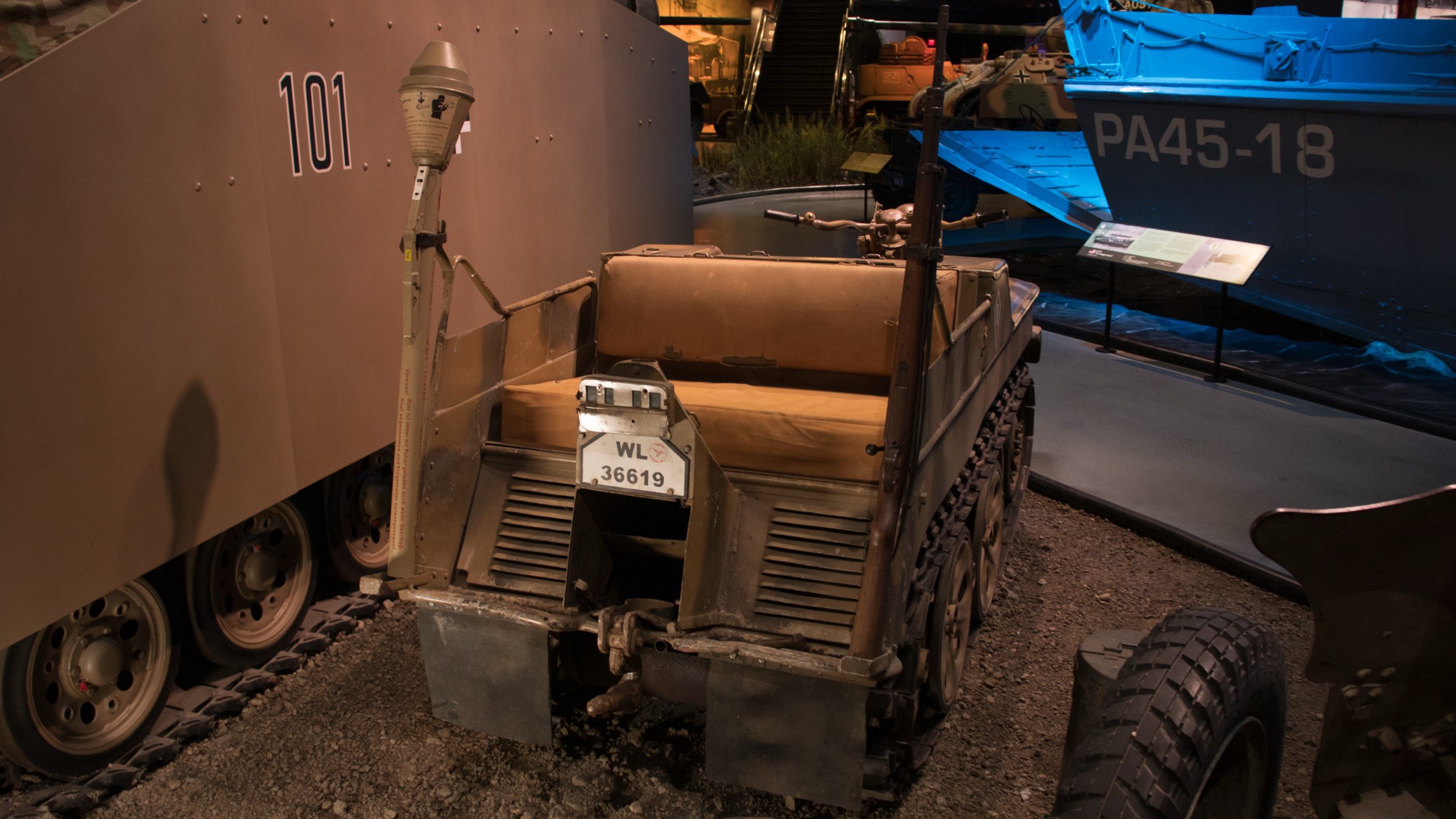
The German Sonderkraftfahrzeug 2 (Sd.Kfz. 2), officially designated the Kleines Kettenkraftrad HK 101 and commonly known as the “Kettenkrad,” was one of the most unusual military vehicles of World War II. Combining the appearance and handlebars of a motorcycle with the tracked suspension of a small armored vehicle, the Kettenkrad provided exceptional mobility across terrain that frequently immobilized conventional military trucks and motorcycles.
Developed by NSU Motorenwerke beginning in 1939, the Kettenkrad was originally intended as a lightweight artillery tractor for German airborne forces. Its compact dimensions allowed it to fit inside the cargo compartment of a Junkers Ju 52 transport aircraft, although it was not designed for parachute deployment.
Powered by a 36-horsepower Opel four-cylinder engine, the Kettenkrad could reach speeds of approximately 43 mph. Its distinctive steering system combined a motorcycle-style front wheel with independently braked tracks, allowing surprisingly tight turns. The vehicle accommodated a driver and two passengers and could tow light artillery, ammunition trailers, and other equipment.
The Kettenkrad proved particularly valuable during Germany’s invasion of the Soviet Union and the subsequent fighting on the Eastern Front. The vast distances, deep snow, and notoriously muddy conditions of the Russian countryside created enormous logistical challenges for German forces. The Kettenkrad’s wide tracks and low ground pressure allowed it to transport soldiers, deliver supplies, tow small anti-tank guns, and lay communications cables across difficult terrain.
Although unarmored and unarmed, the Kettenkrad’s versatility made it a valuable support vehicle. More than 8,000 were manufactured during World War II, serving on the Eastern Front, in North Africa, and throughout Western Europe.
During the war’s final stages, Kettenkrads found another unusual assignment: towing Messerschmitt Me 262 jet fighters on airfields, conserving precious aviation fuel and reducing unnecessary engine operation.
Displayed in the American Heritage Museum’s Eastern Front Gallery, the Sd.Kfz. 2 Kettenkrad illustrates the ingenuity of German military engineering and the essential role of specialized transportation vehicles in sustaining operations across the vast and unforgiving battlefields of the Soviet Union.