Artifacts
M22 Locust
American Airborne Light Tank | World War II (1943–1945)
| General Information | |
|---|---|
| Model | M22 Locust |
| Class | Armor |
| Type | Light Tank, Airborne |
| Use | Military |
| Era | 1940-1945 |
| Gallery Focus | WWII European Theater |
| Manufacturer | Marmon-Herrington |
| Year | 1943 |
| Country | United KingdomUnited States |
| Ownership | CF Inc. |
| Gallery Location | Crossing the Rhine |
| Status | Operational, Online |
Additional Photos
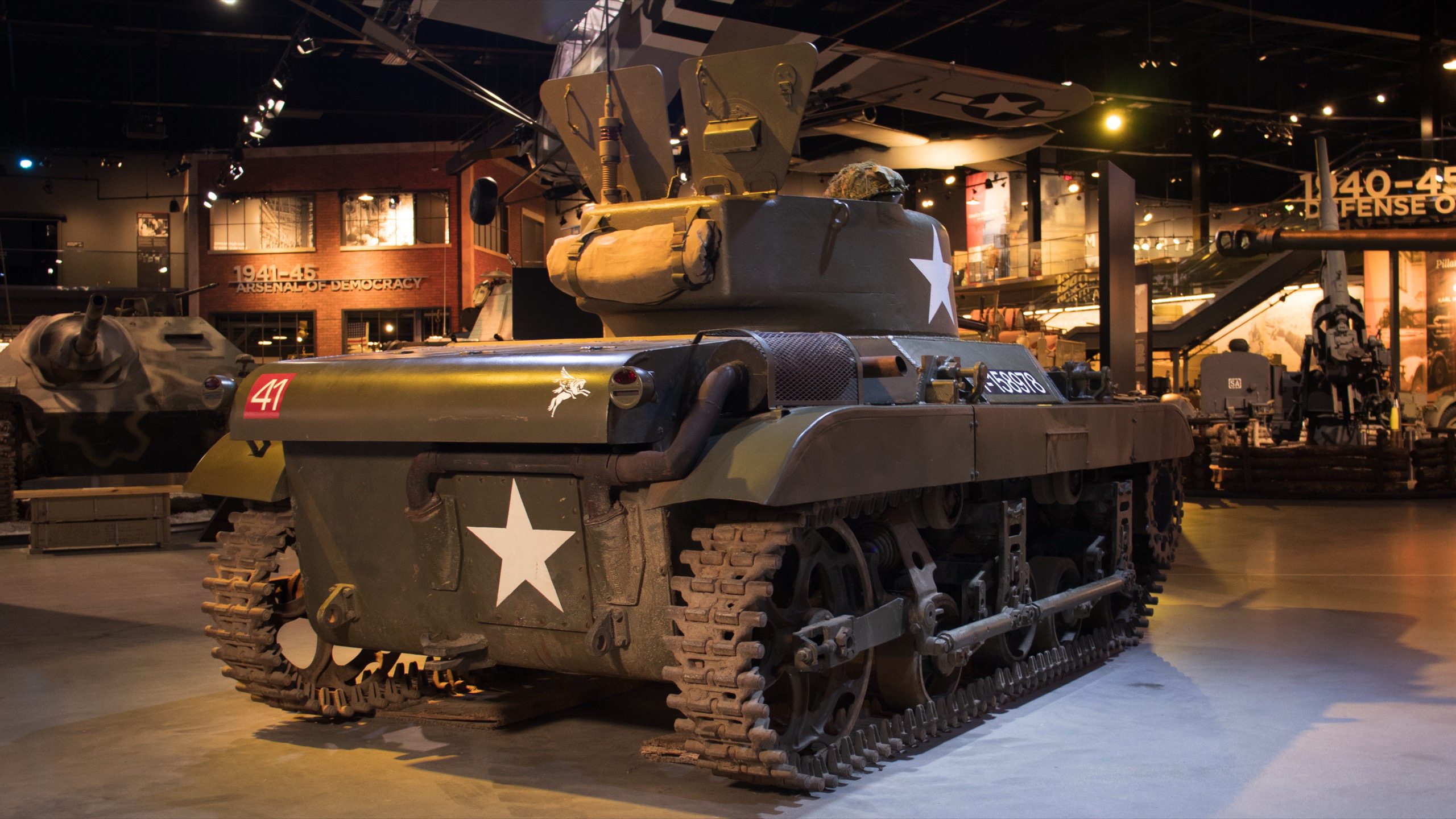
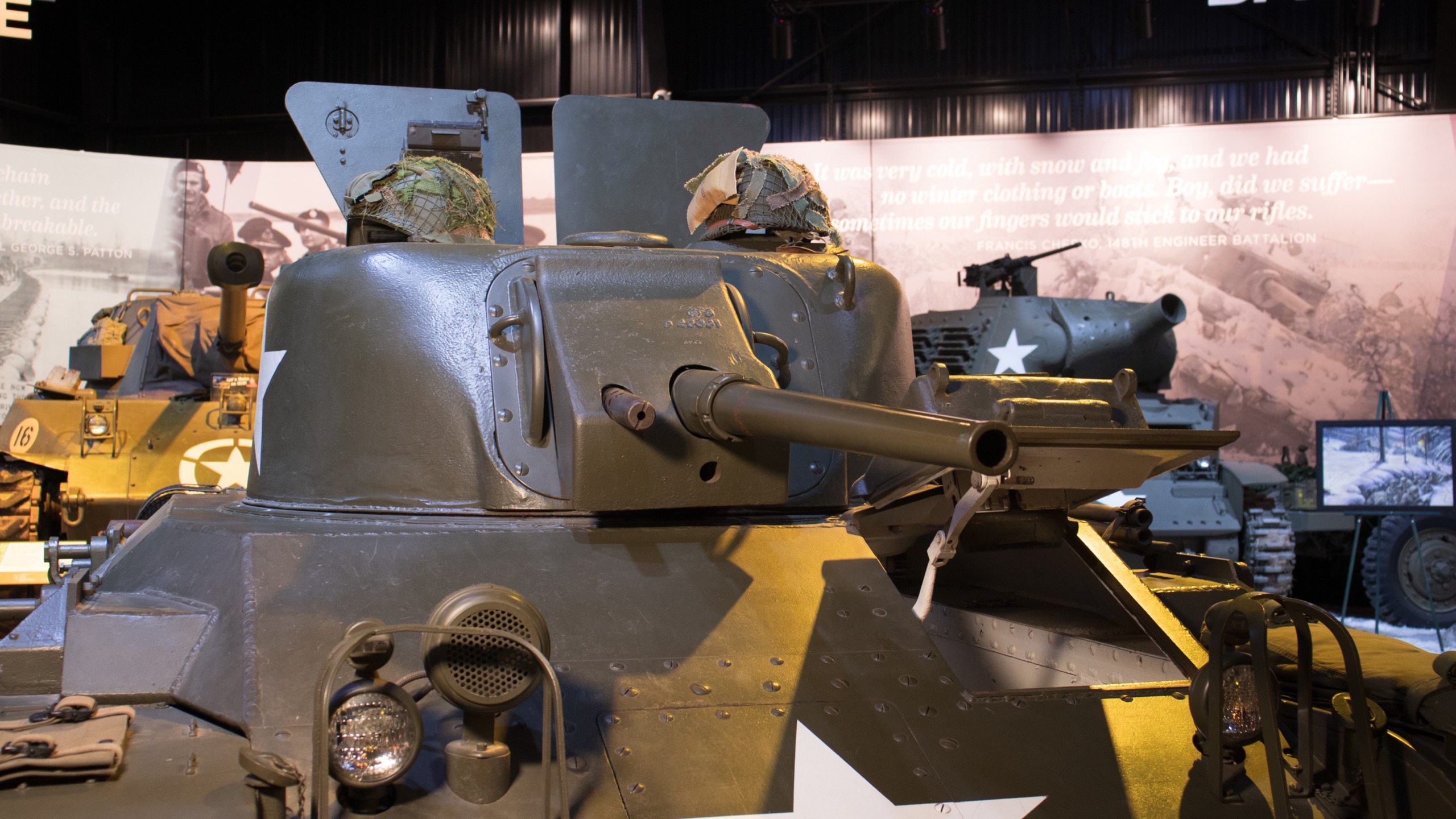
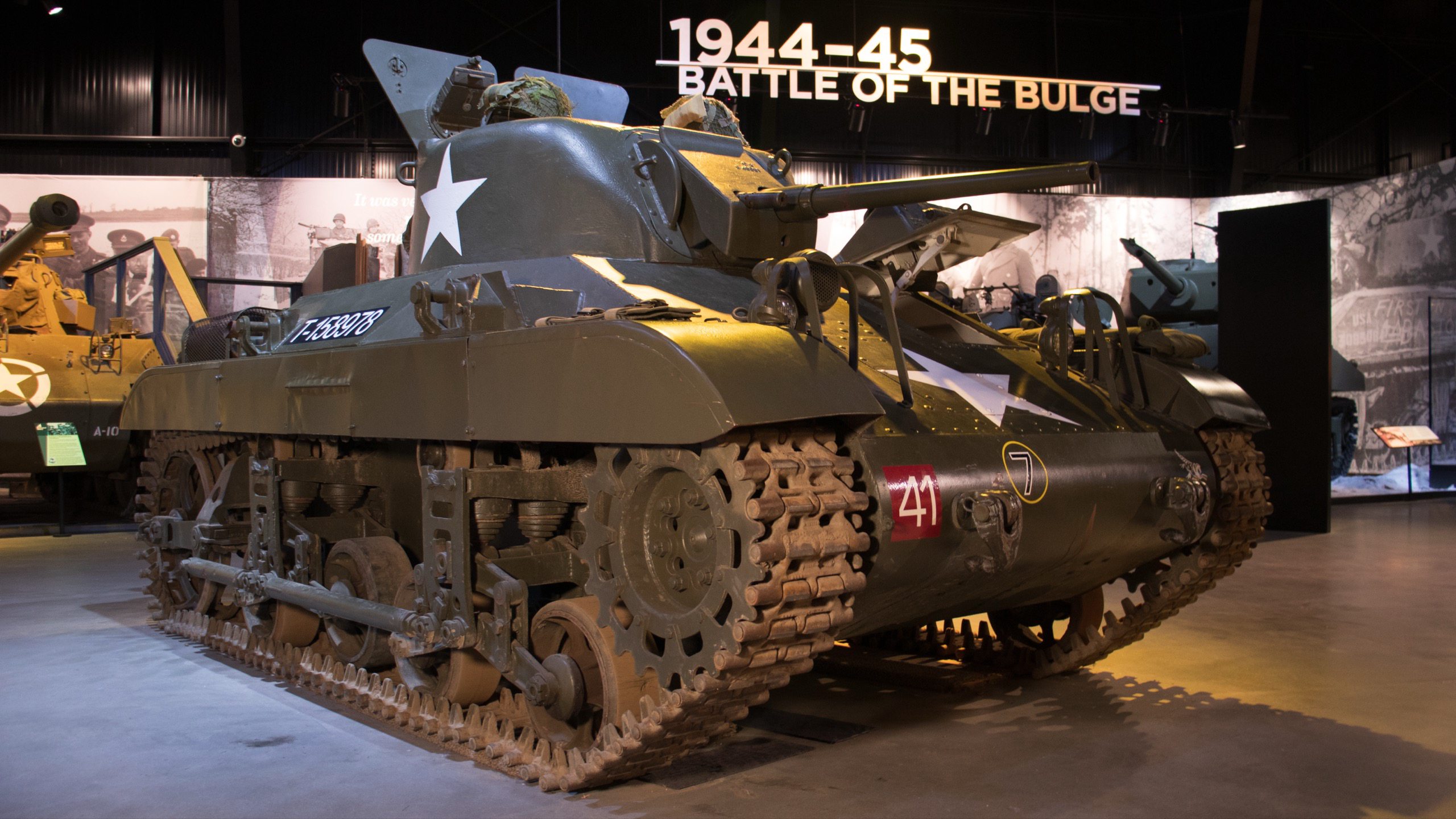
The M22 Locust was one of the smallest and most unusual American tanks developed during World War II. Designed specifically for airborne operations, this lightweight armored vehicle was intended to provide paratroopers with mobile firepower immediately after landing behind enemy lines. Although manufactured in the United States, the Locust achieved its only World War II combat service with British airborne forces during the historic Allied crossing of the Rhine River in March 1945.
Development began in 1941 following a request from the British War Office for a tank light enough to be transported by aircraft or military glider. American manufacturer Marmon-Herrington developed the design, initially designated the T9, which eventually entered production as the M22. A total of 830 Locust tanks were manufactured, with approximately 260 supplied to Great Britain under the Lend-Lease program.
Weighing approximately 16,400 pounds, the Locust was remarkably compact, accommodating a three-man crew consisting of a commander, gunner, and driver. Powered by a 165-horsepower Lycoming six-cylinder gasoline engine, it could reach speeds approaching 40 mph on roads. Its primary armament consisted of a 37mm M6 cannon supplemented by a .30-caliber Browning machine gun. However, the Locust’s lightweight construction required significant compromises in armor protection, leaving it vulnerable to German anti-tank weapons.
American plans originally called for transporting the Locust beneath a C-54 Skymaster aircraft with its turret removed, but this arrangement proved impractical for combat deployment. The British instead utilized the massive General Aircraft Hamilcar glider, capable of carrying a fully assembled Locust directly into battle.
The Locust’s defining moment came on March 24, 1945, during Operation Varsity, the massive Allied airborne assault supporting Operation Plunder, the crossing of Germany’s Rhine River. Eight Locust tanks of the British 6th Airborne Armoured Reconnaissance Regiment were loaded aboard individual Hamilcar gliders and flown into German territory alongside British and American airborne troops.
The operation demonstrated both the potential and limitations of airborne armor. One glider broke apart before landing, while several others suffered damage or crashes under German fire. Although six Locusts reached the landing area, only four ultimately arrived at their designated rendezvous point, and just two were fully combat-ready. One tank was knocked out by a German self-propelled gun while supporting American paratroopers. Other surviving Locusts provided fire support for British infantry defending strategically important ground.
Operation Varsity marked the Locust’s only combat deployment during World War II. Despite its limited battlefield success, the M22 represented an ambitious attempt to bring armored firepower directly into airborne operations.
The M22 Locust displayed in the American Heritage Museum’s Crossing the Rhine Gallery illustrates the technological innovation, extraordinary risks, and determination of Allied airborne forces during the final offensive into Nazi Germany.