Artifacts
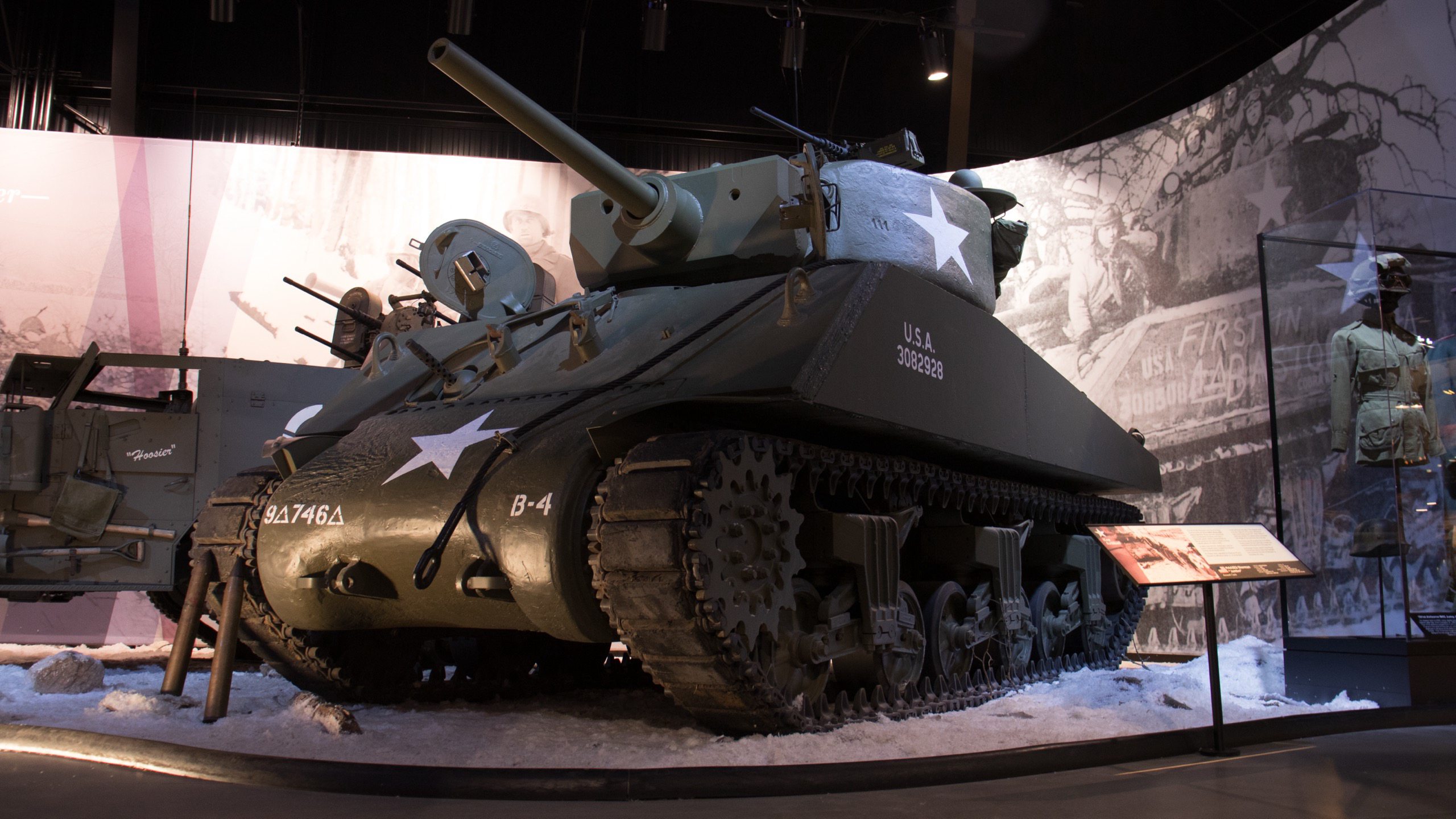
M4A3E2 Sherman "Jumbo"
American Heavy Assault Tank | World War II (1944–1945)
| General Information | |
|---|---|
| Model | M4A3E2 Sherman "Jumbo" |
| Class | Armor |
| Type | Sherman |
| Use | Jumbo |
| Era | 1940-1945 |
| Gallery Focus | WWII European Theater |
| Manufacturer | Fisher Tank Arsenal (Grand Blanc) |
| Year | 1944 |
| Country | United States |
| Ownership | CF Inc. |
| Gallery Location | Battle of the Bulge |
| Status | Operational, Offline |
Additional Photos
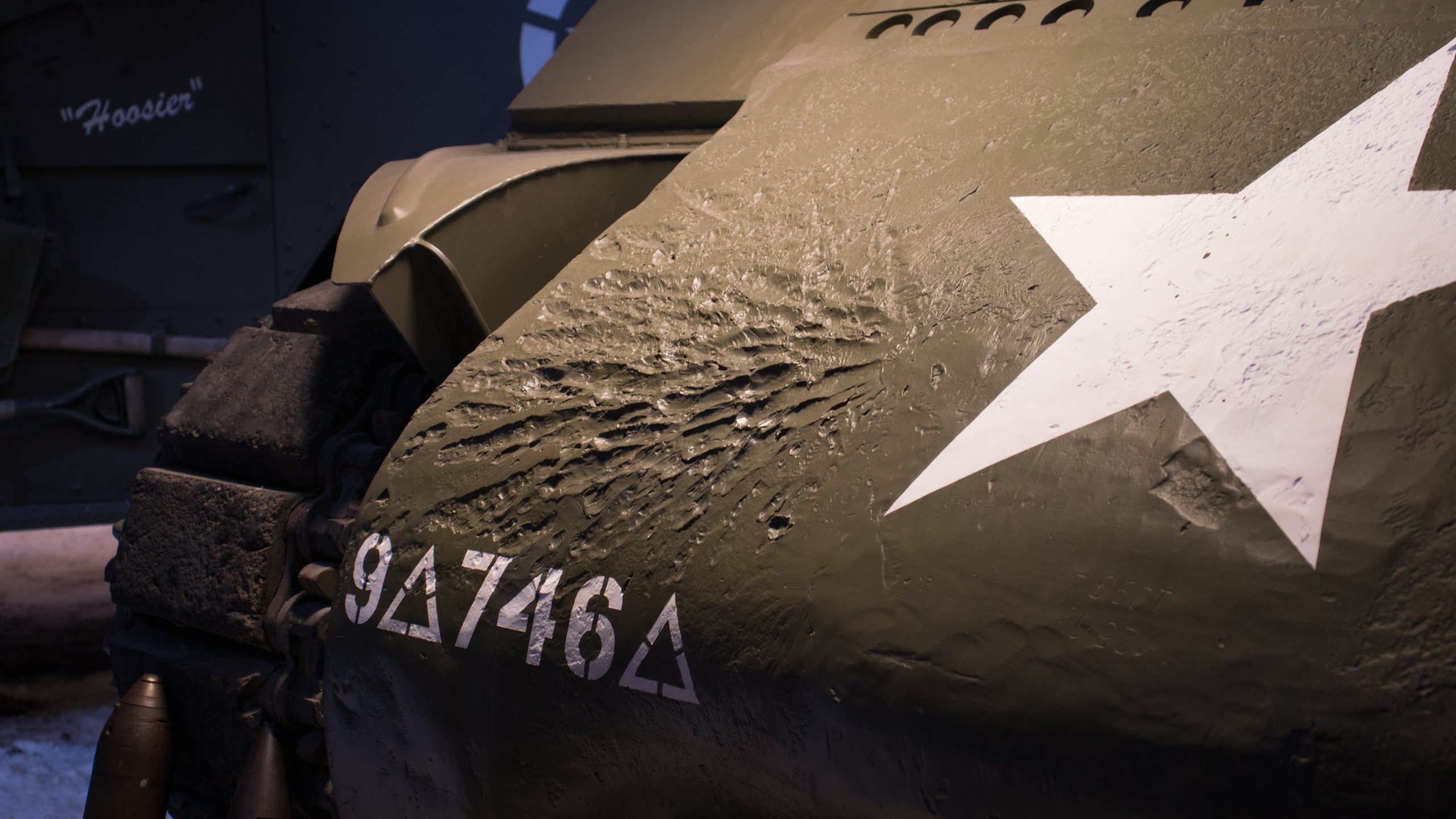
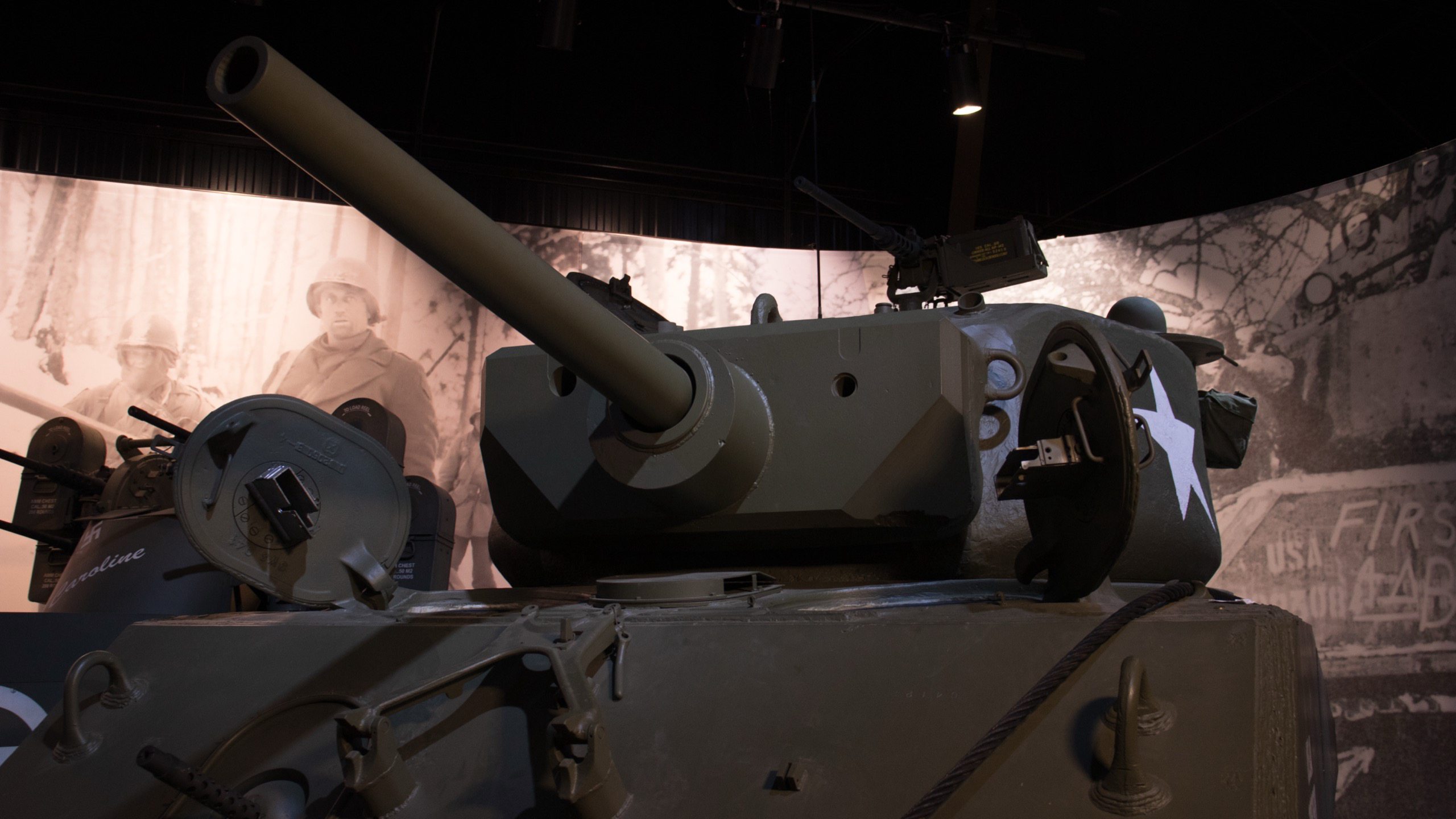
The M4 Sherman was the most widely used American medium tank of World War II, renowned for its reliability, versatility, and mass production. However, as Allied forces prepared to advance into heavily defended German territory, the U.S. Army recognized the need for a more heavily armored tank capable of surviving intense enemy fire while spearheading attacks against fortified positions. The result was the M4A3E2 Sherman, commonly known as the “Jumbo.”
Developed in early 1944, the M4A3E2 was an assault tank variant of the standard M4A3 Sherman, modified to provide substantially greater protection for its five-man crew. Engineers at the Fisher Tank Arsenal added 1.5 inches of armor plate to the hull front and upper sides, increasing frontal armor thickness to 4 inches and side protection to 3 inches. A newly designed cast turret featured 6-inch-thick armor and a massive 7-inch-thick gun shield. These improvements increased the tank’s weight to approximately 42 tons, compared with roughly 35 tons for a conventional Sherman.
The Jumbo retained the reliable Ford GAA V8 engine and initially carried the standard 75mm M3 main gun, favored for its effective high-explosive ammunition against infantry and fortified positions. Some were later upgraded with more powerful 76mm guns to improve their effectiveness against German armor. Modified gearing and extended track connectors helped accommodate the vehicle’s additional weight.
Only 254 Sherman Jumbos were manufactured between May and July 1944, making them among the rarest production variants of the Sherman family. Arriving in France beginning in September 1944, they were distributed among American armored units and frequently employed at the head of advancing columns, where their exceptional armor protection offered an important advantage against German anti-tank weapons.
The Jumbo became particularly significant during the Battle of the Bulge, Germany’s desperate winter offensive of December 1944. One of the most famous examples, a Sherman Jumbo named Cobra King of the 37th Tank Battalion, 4th Armored Division, led the breakthrough into Bastogne on December 26, 1944, helping relieve the surrounded American defenders, including the 101st Airborne Division.
Although produced in small numbers, the M4A3E2 demonstrated the value of heavily armored assault vehicles in breaking through fortified defenses. The rare surviving example displayed in the American Heritage Museum’s Battle of the Bulge Gallery represents an important chapter in American armored warfare and the determination of U.S. tank crews during the final months of World War II.