Artifacts
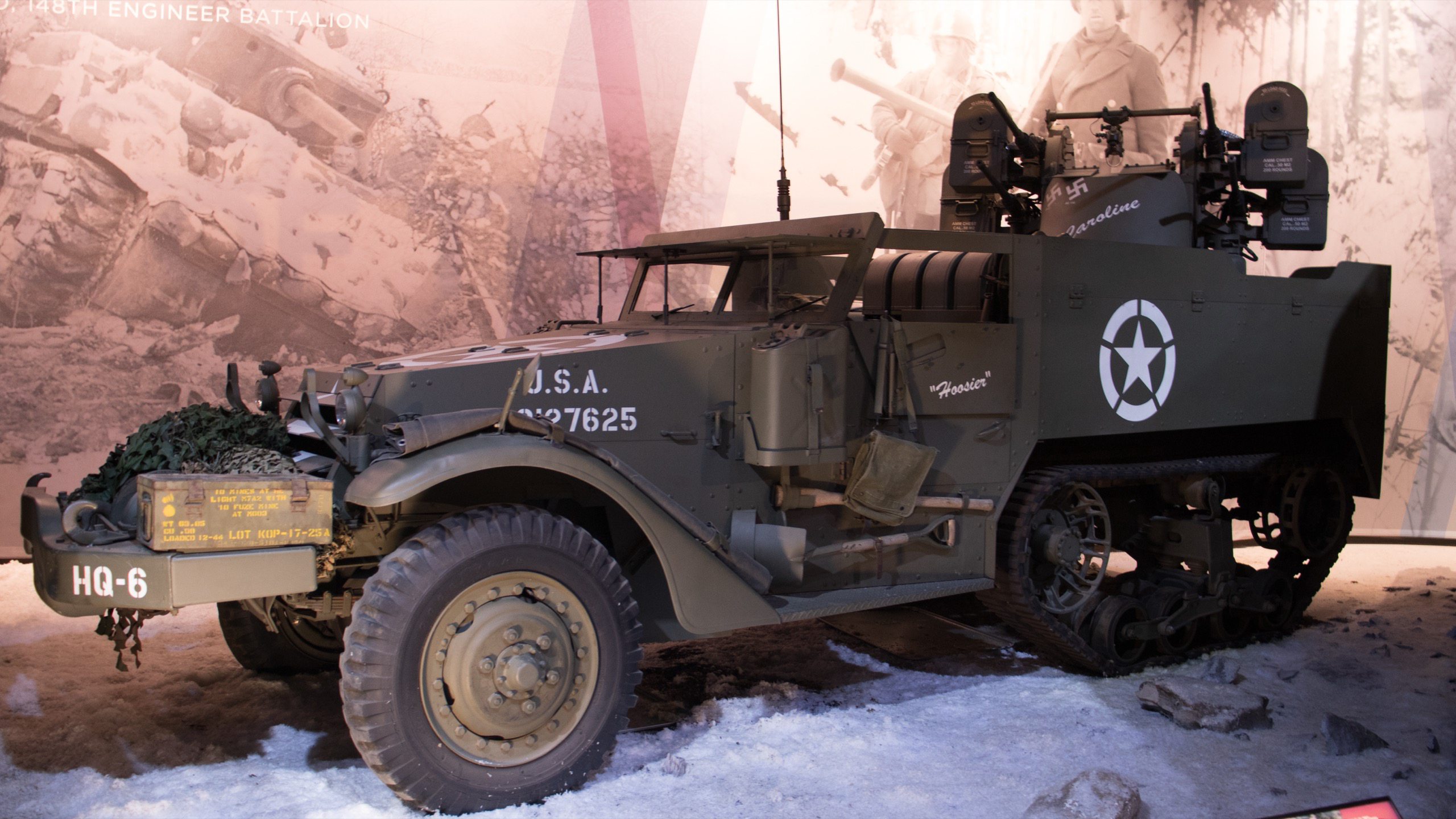
M16 Multiple Gun Motor Carriage MGMC
United States | 1943–1953 | World War II – European Theater
| General Information | |
|---|---|
| Model | M16 Multiple Gun Motor Carriage MGMC Half-Track |
| Class | Military Vehicle |
| Type | Self-Propelled Anti-Aircraft Gun |
| Use | Military |
| Era | 1940-1945 |
| Gallery Focus | WWII European Theater |
| Manufacturer | White Motor Corporation |
| Year | 1943 |
| Country | United States |
| Ownership | CF Inc. |
| Gallery Location | Battle of the Bulge |
| Status | Operational, Online |
Additional Photos
Video
The "Meat Chopper" – M16 MGMC Full Tour
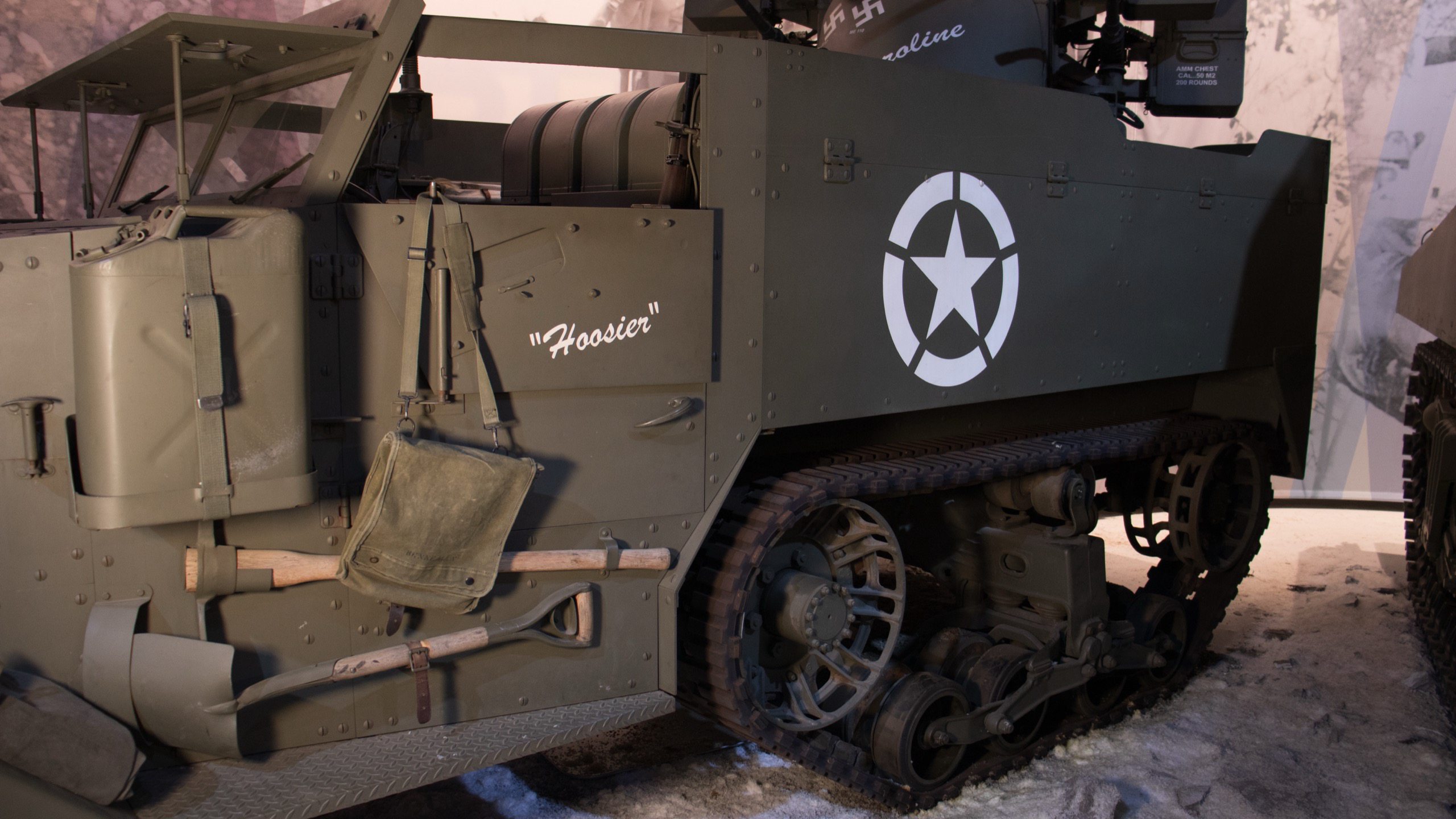
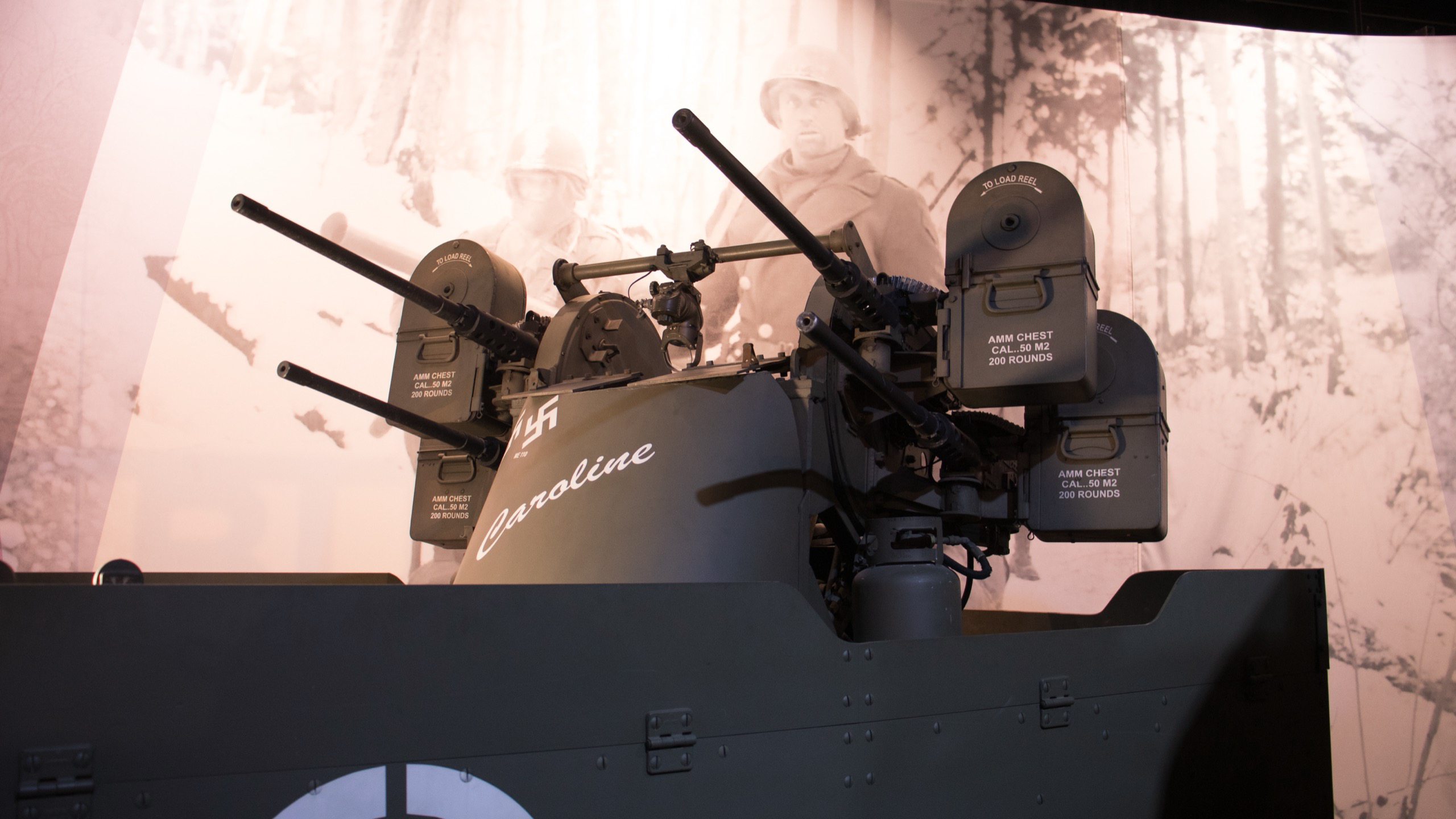
The American M16 Multiple Gun Motor Carriage (MGMC), commonly known as the M16 Half-Track, was one of the most formidable mobile anti-aircraft and infantry support weapons of World War II. Armed with four .50-caliber Browning M2 heavy machine guns mounted in an electrically powered M45 Maxson Quadmount turret, the M16 could deliver a devastating concentration of fire against low-flying aircraft and enemy ground forces.
Developed by the White Motor Company and entering combat service in 1944, the M16 combined the mobility of the M3 Half-Track with an extraordinary volume of firepower. Its four heavy machine guns could produce a combined theoretical firing rate of approximately 2,000 rounds per minute, earning the vehicle the fearsome nickname “Meat Chopper.” The turret could rotate through 360 degrees, allowing crews to rapidly engage targets approaching from nearly any direction.
Originally intended to protect advancing American armored columns, troop concentrations, and supply convoys against German aircraft, the M16 quickly demonstrated its effectiveness against enemy infantry. As Allied forces established air superiority over Western Europe, the vehicle was increasingly employed in ground support roles, where its concentrated machine gun fire could suppress enemy positions and help protect advancing troops.
During the Battle of the Bulge in December 1944 and January 1945, M16 Half-Tracks supported American ground forces confronting Germany’s massive surprise offensive through the Ardennes Forest. Their rapid-firing machine guns provided valuable defensive firepower against advancing German infantry, helping American forces resist attacks and protect critical positions. The M16 also retained its original anti-aircraft role, particularly as the Luftwaffe mounted renewed attacks during the winter campaign.
Although its lightly armored hull and exposed gun crew offered limited protection against enemy fire, the M16’s exceptional firepower and mobility made it a highly valued battlefield asset. The vehicle continued serving through the end of World War II and saw further combat during the Korean War.
Displayed in the American Heritage Museum’s Battle of the Bulge Gallery, the M16 Multiple Gun Motor Carriage illustrates the adaptability of American military technology and the vital role of mobile firepower in defeating Germany’s final major offensive on the Western Front.