Artifacts
M5A1 Stuart
American Light Tank | World War II (1942–1945)
| General Information | |
|---|---|
| Model | M5A1 Stuart |
| Class | Armor |
| Type | Light Tank |
| Use | Military |
| Era | 1940-1945 |
| Gallery Focus | WWII European Theater |
| Manufacturer | General Motors Cadillac Division, Massey-Harris, American Car & Foundry |
| Year | 1942 |
| Country | United States |
| Ownership | CF Inc. |
| Gallery Location | Italian Campaign |
| Status | Operational, Offline |
Additional Photos
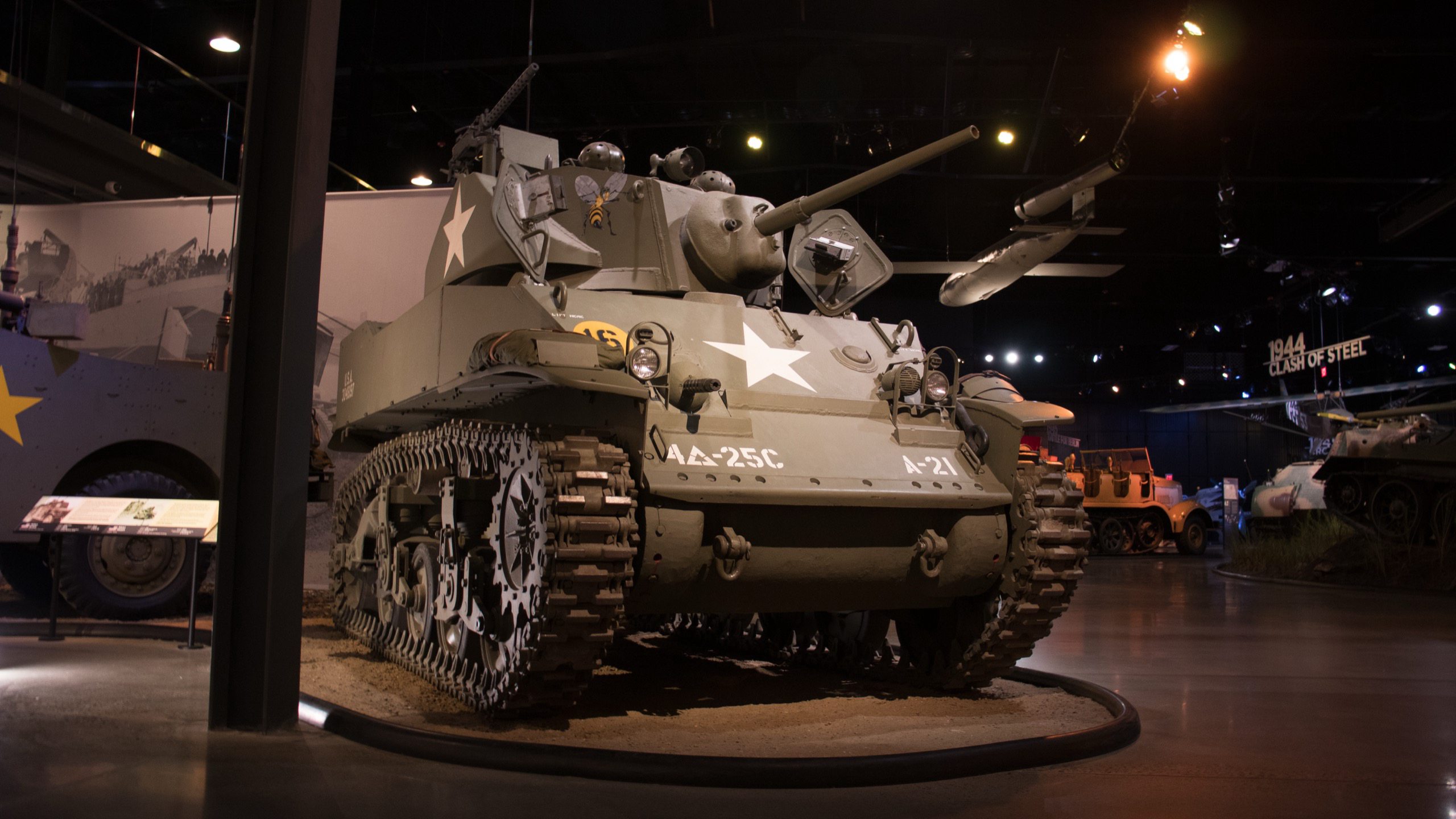
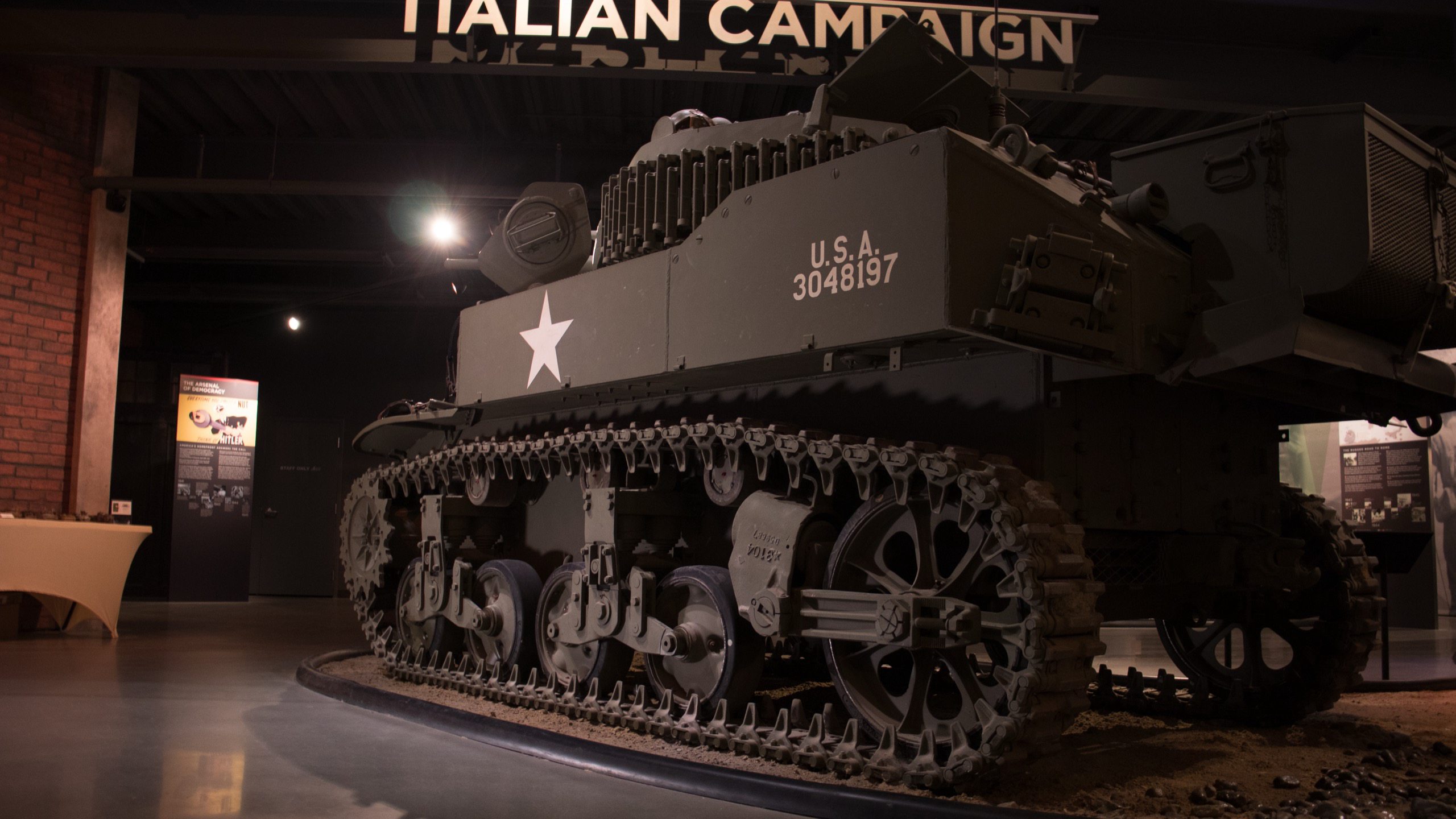
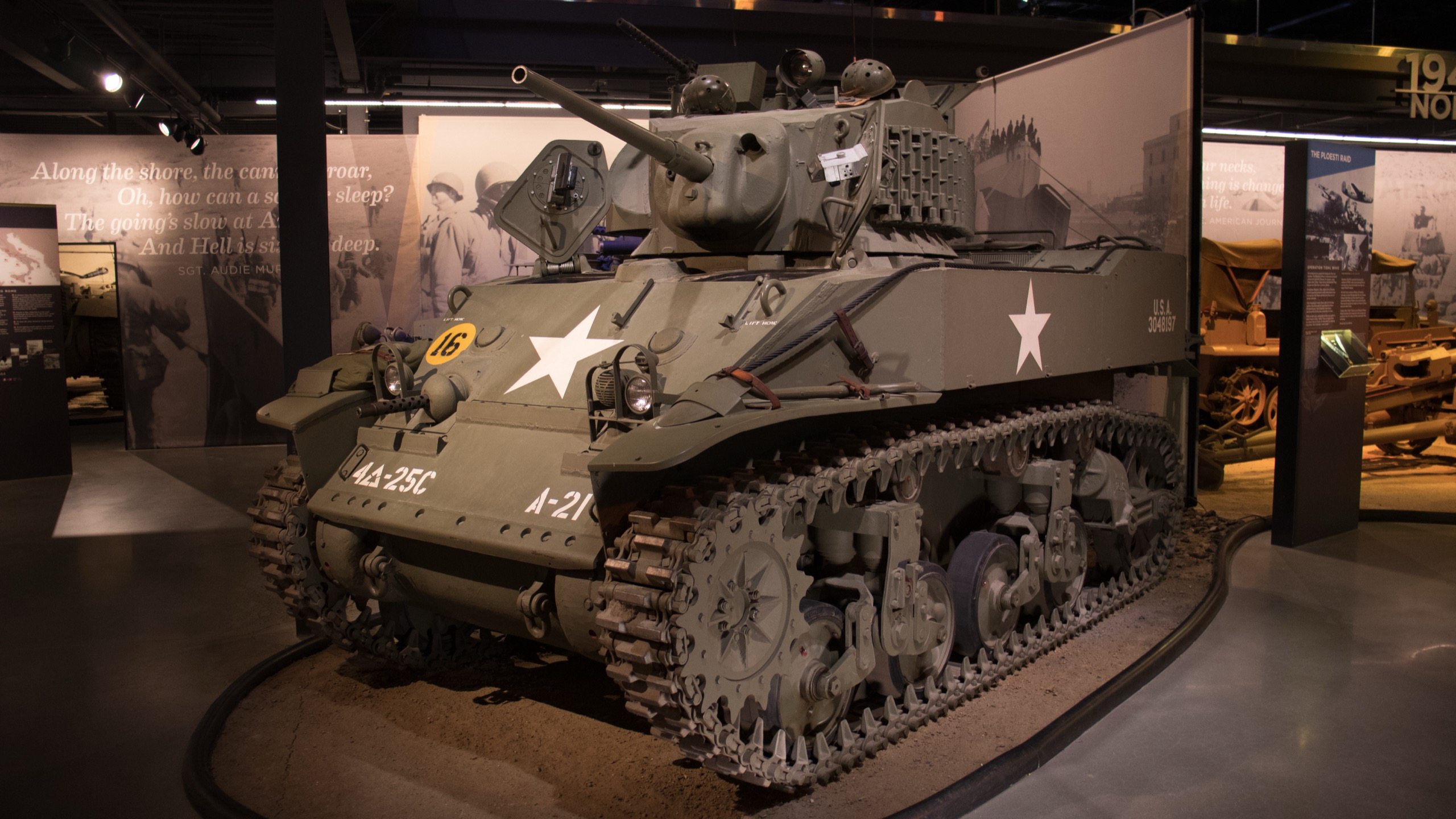
The M5A1 Stuart was one of America’s most widely used light tanks during World War II, valued for its speed, maneuverability, and mechanical reliability. Developed as an improvement over the earlier M3 Stuart, the M5 series served with American and Allied forces across North Africa, Italy, Western Europe, and the Pacific. Named by the British in honor of Confederate cavalry general J.E.B. Stuart, the tank became an essential component of American armored reconnaissance and infantry support operations.
Introduced in 1942, the M5 featured several important engineering improvements over its predecessor. Replacing the M3’s radial aircraft engine were two Cadillac V8 gasoline engines, producing a combined 220 horsepower. Each engine was connected to a Hydra-Matic automatic transmission, making the tank easier to operate and maintain. A redesigned hull incorporated sloped frontal armor and relocated the driver’s hatches to the hull roof, improving crew protection and interior space.
The improved M5A1 variant, introduced in late 1942, featured a redesigned turret with additional space for radio equipment, improved crew arrangements, and other refinements. Armed with a 37mm M6 cannon and three .30-caliber Browning machine guns, the approximately 17-ton tank was operated by a four-man crew. With a maximum road speed of 36 mph, the Stuart was particularly effective at reconnaissance, screening advancing forces, and providing fire support against enemy infantry and lightly fortified positions.
Although its 37mm cannon was increasingly ineffective against heavily armored German tanks, the M5A1 remained valuable throughout the war. More than 6,800 M5A1 Stuarts were manufactured, with production continuing until June 1944, when the more heavily armed M24 Chaffee began replacing it.
During the Italian Campaign of 1943–1945, Stuart light tanks supported Allied forces fighting through some of Europe’s most challenging terrain. Italy’s narrow mountain roads, steep hillsides, and fortified German defensive positions demanded highly mobile armored vehicles. During the fighting around Anzio, M5 tanks supported infantry by engaging German strongpoints bypassed during assaults by heavier Sherman tanks. Elsewhere, Stuarts conducted reconnaissance missions, protected advancing columns, and maintained communication between units operating across difficult terrain.
The M5A1 Stuart displayed at the American Heritage Museum holds extraordinary significance beyond its wartime history. Manufactured in October 1943, this particular tank, serial number 5058, was the first tank acquired by collector Jacques M. Littlefield. That acquisition marked the beginning of what would become one of the world’s largest private collections of tanks and military vehicles, ultimately forming the foundation of the American Heritage Museum.
Displayed in the museum’s Italian Campaign Gallery, this M5A1 Stuart represents not only the ingenuity of American armored vehicle design and the contributions of Allied tank crews, but also the remarkable origins of the collection that made the American Heritage Museum possible.