Artifacts
Soviet SU-100
Soviet Union | 1944–1945 | World War II – Eastern Front & Battle of Berlin
| General Information | |
|---|---|
| Model | SU-100 (Samokhodnaya Ustanovka-100) |
| Class | Armor |
| Type | Tank Destroyer |
| Use | Military |
| Era | 1940-1945 |
| Gallery Focus | WWII European Theater |
| Manufacturer | Ural Heavy Machinery Factory (UZTM) |
| Year | 1944 |
| Country | Soviet Union |
| Ownership | CF Inc. |
| Gallery Location | Battle for Berlin |
| Status | Operational, Online |
Additional Photos
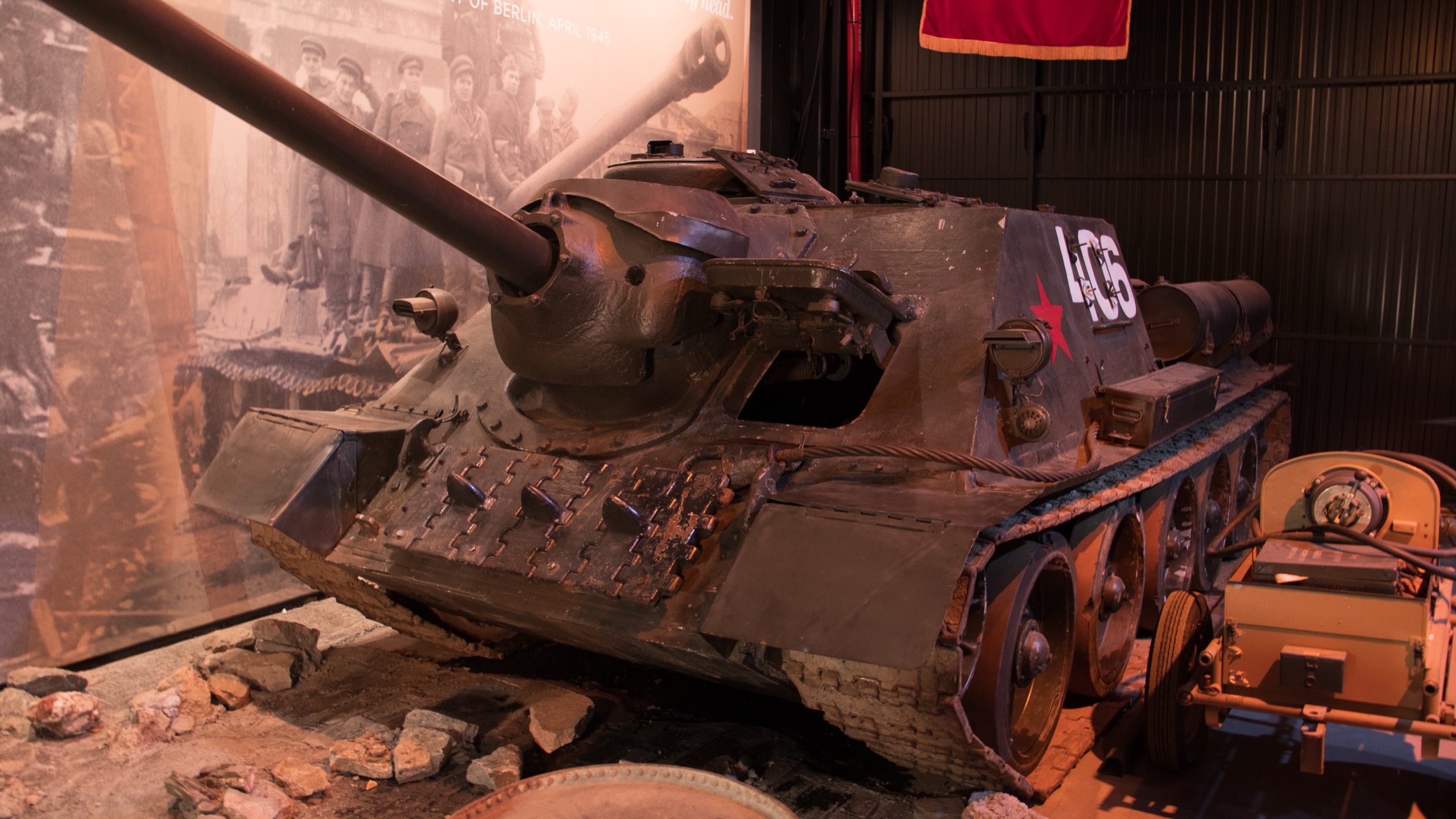
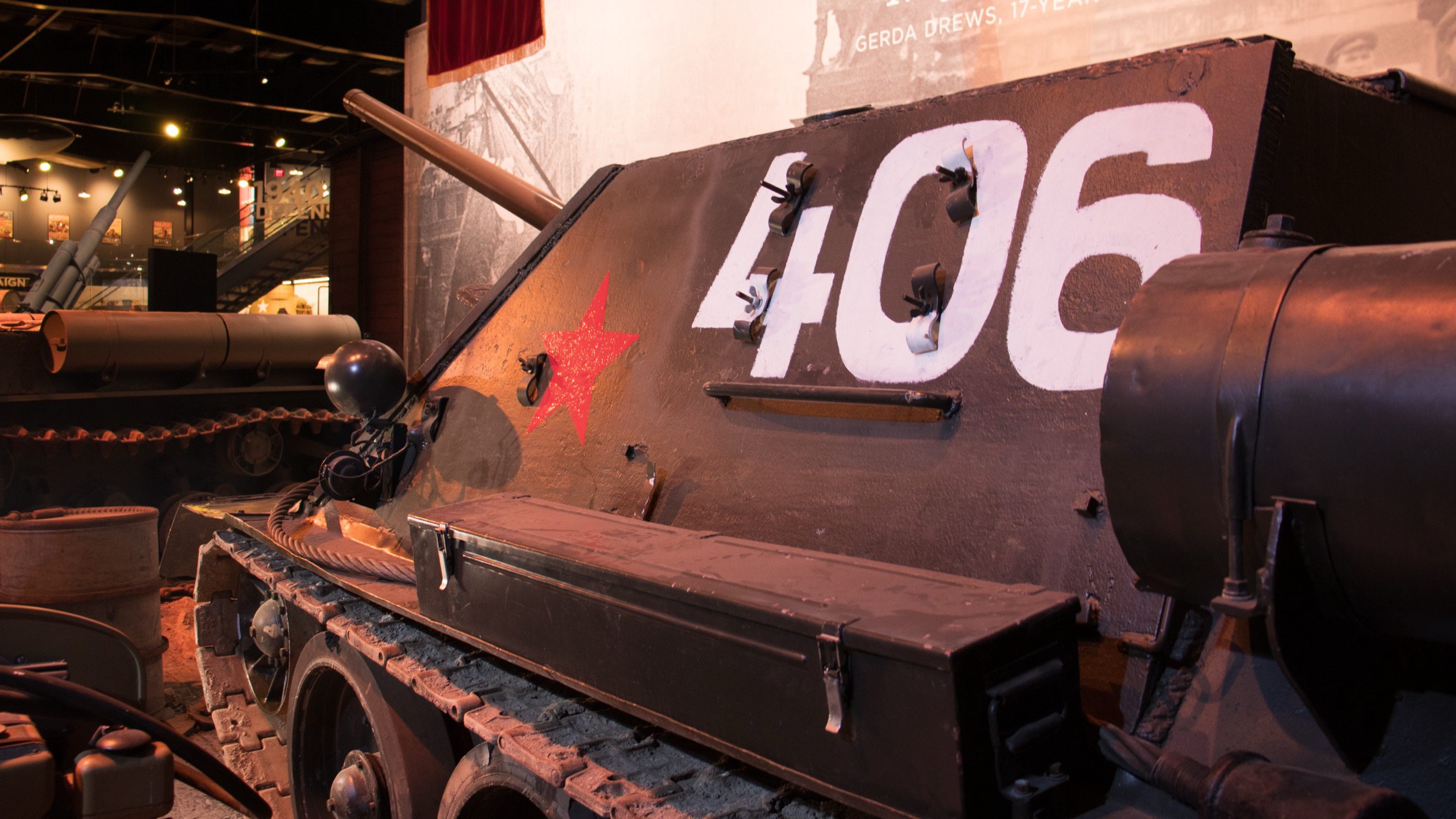
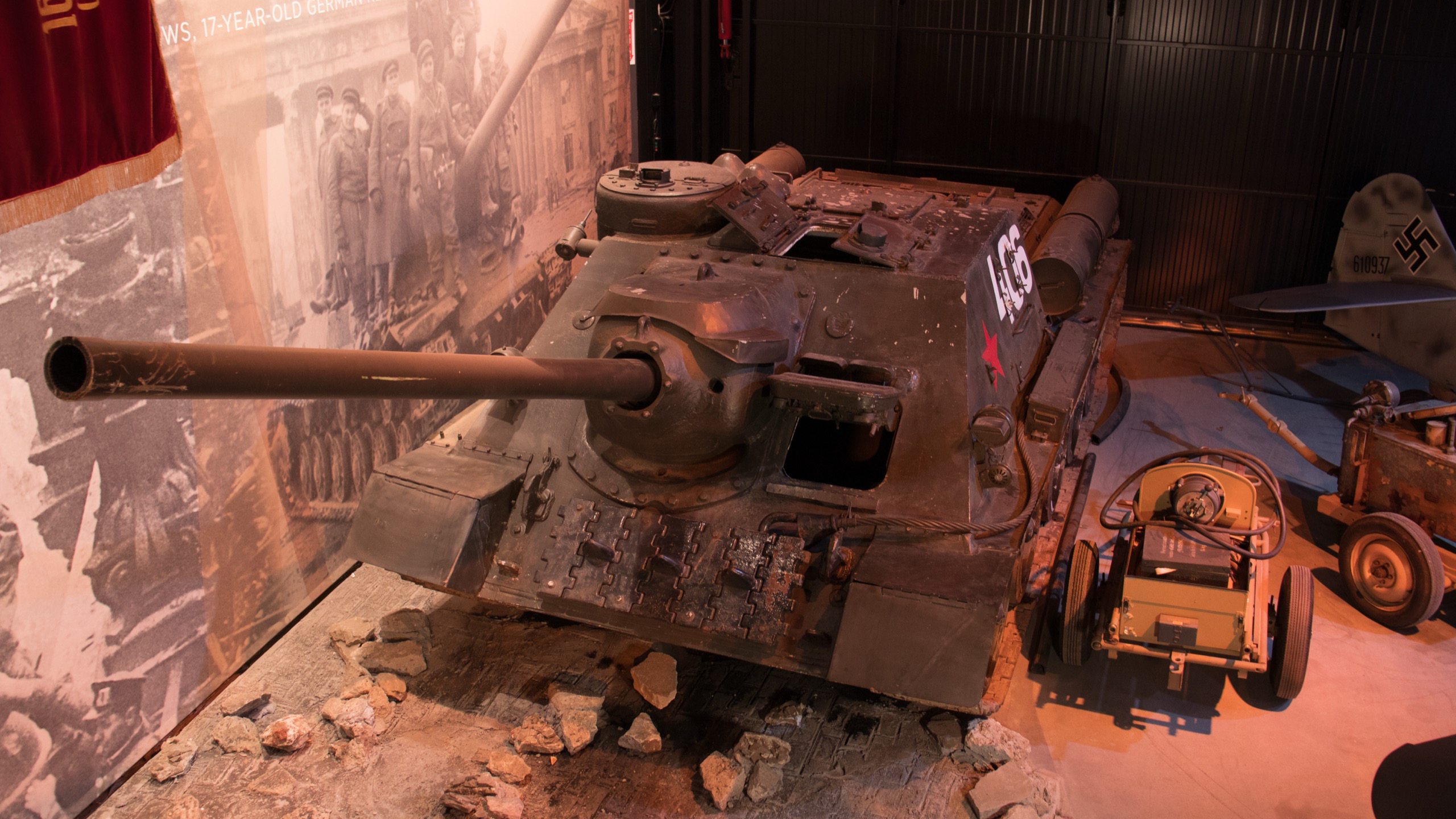
The Soviet SU-100 was one of the most powerful tank destroyers developed during World War II, designed to counter the increasingly formidable German Panther and Tiger tanks encountered on the Eastern Front. Introduced during the final months of 1944, the SU-100 combined the proven mobility of the Soviet T-34 tank chassis with a devastating 100mm anti-tank cannon, becoming an important weapon in the Red Army’s final offensives against Nazi Germany.
Its designation, Samokhodnaya Ustanovka, translates to “Self-Propelled Mount,” while the number 100 refers to the caliber of its main gun. Developed as a successor to the SU-85 tank destroyer, the SU-100 incorporated a larger, fixed armored superstructure capable of accommodating the powerful 100mm D-10S cannon, a weapon developed using advances in Soviet high-velocity naval artillery.
Unlike conventional tanks, the SU-100 had no rotating turret. Its cannon was mounted within a heavily armored, forward-facing fighting compartment, requiring the driver to reposition the entire vehicle when engaging targets outside the gun’s limited traverse. This simplified design reduced manufacturing complexity while providing a lower silhouette and excellent frontal protection.
The SU-100’s greatest strength was its extraordinary firepower. Its high-velocity 100mm cannon could penetrate approximately five inches of armor at distances exceeding one mile and was capable of defeating the frontal armor of German Panther tanks under favorable conditions. The vehicle carried 33 rounds of armor-piercing and high-explosive ammunition, allowing its four-man crew to engage both enemy armored vehicles and fortified defensive positions.
Weighing approximately 35 tons, the SU-100 was powered by a 500-horsepower V-12 diesel engine, providing speeds approaching 30 mph. Its sharply sloped frontal armor was increased to 75mm, substantially improving protection over the earlier SU-85. A redesigned commander’s cupola also improved battlefield observation.
However, the SU-100 had significant limitations. Its lack of a secondary machine gun left it particularly vulnerable to close-range infantry attacks, while its fixed cannon restricted its effectiveness in confined terrain and urban environments.
The SU-100 played an important role in the final battles of World War II. During March 1945, Soviet SU-100 units helped defeat Germany’s last major offensive, Operation Spring Awakening, near Lake Balaton in Hungary. German forces, including powerful Tiger II tanks, attempted to regain the initiative and protect vital Hungarian oil resources, but were ultimately forced to retreat.
Just weeks later, SU-100 tank destroyers participated in the Soviet advance into Germany and the Battle of Berlin, which began on April 16, 1945. During the desperate fighting for the German capital, these vehicles provided powerful direct fire against armored resistance and fortified positions, supporting the Red Army’s final assault. Berlin surrendered on May 2, marking the collapse of organized German resistance in the capital.
The SU-100’s effectiveness ensured a remarkably long service life after World War II. Soviet production continued into the postwar period, and the design was subsequently manufactured in Czechoslovakia. Exported to numerous Soviet-allied nations, SU-100s participated in conflicts including the 1956 Suez Crisis, the 1967 Six-Day War, and the 1973 Yom Kippur War.
Displayed in the American Heritage Museum’s Battle of Berlin Gallery, the SU-100 stands alongside the Soviet IS-2 heavy tank, illustrating the tremendous firepower and armored strength employed by the Red Army in its final campaign against Nazi Germany.
Together, these historic vehicles provide visitors with a powerful connection to the technological developments, battlefield conditions, and enormous human cost of the war on the Eastern Front.