
Artifacts
North American A-36 / P-51A Apache
United States | 1942–1944 | World War II – Italian Campaign
| General Information | |
|---|---|
| Model | A-36A Apache / Mustang |
| Class | Aircraft |
| Type | Attack |
| Use | Military |
| Era | 1940-1945 |
| Gallery Focus | WWII European Theater |
| Manufacturer | North American |
| Year | 1942 |
| Country | United States |
| Ownership | CF Inc. |
| Gallery Location | N/A |
| Status | Operational, Offline |
The North American A-36A Mustang, commonly known as the “Apache,” was one of the earliest combat variants of the legendary P-51 Mustang family. Developed specifically for dive-bombing and ground-attack missions, the A-36 proved exceptionally effective during the Allied campaigns in North Africa, Sicily, and Italy, helping establish the Mustang’s reputation long before the arrival of its more famous Merlin-powered successors.
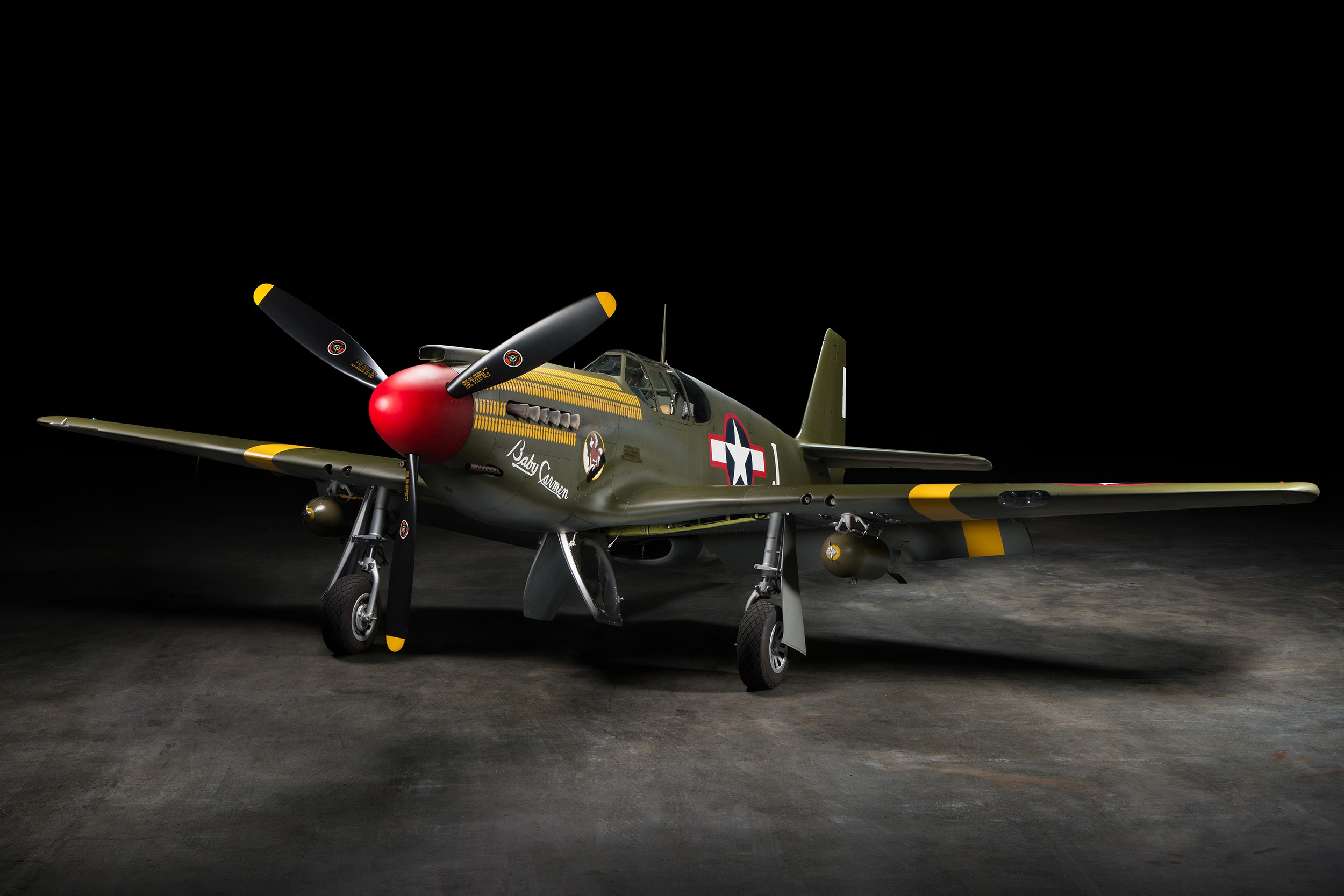
Designed under the direction of Edgar Schmued at North American Aviation, the A-36A was developed from the original Allison-powered Mustang in 1942. Its most distinctive features were four hydraulically operated dive brakes mounted above and below the wings, allowing pilots to control their speed during steep bombing attacks. Powered by a 1,325-horsepower Allison V-1710 V-12 engine, the aircraft could exceed 360 mph and carried six .50-caliber Browning machine guns, along with up to 1,000 pounds of bombs. Only 500 A-36As were manufactured, making it one of the rarest production variants of the Mustang family.
The A-36 entered combat in June 1943 with the U.S. Army Air Forces’ 27th and 86th Fighter-Bomber Groups of the Twelfth Air Force. Its first major operations targeted Axis defenses on the Mediterranean island of Pantelleria, followed by extensive participation in the Allied invasion of Sicily and the subsequent campaign across mainland Italy.
A-36 pilots developed highly effective dive-bombing tactics, approaching targets from altitude, deploying their dive brakes, and releasing bombs before pulling out at low altitude. They attacked enemy artillery, troop concentrations, bridges, transportation networks, and fortified positions in direct support of advancing Allied ground forces. Although designed primarily for ground attack, A-36 pilots also achieved numerous aerial victories against German and Italian aircraft.
The American Heritage Museum’s A-36A, U.S. Army Air Forces serial number 42-83738, is one of only a handful of surviving examples of this exceptionally rare aircraft. Unlike many A-36s deployed overseas, this aircraft remained in the United States during World War II, serving as a training aircraft before entering civilian ownership.
Following decades of preservation and private ownership, the aircraft underwent an extensive restoration by American Aero Services in New Smyrna Beach, Florida. Returned to flying condition on June 13, 2012, the meticulously restored Mustang earned the prestigious World War II Grand Champion Warbird award at EAA AirVenture Oshkosh that summer.
The aircraft wears the markings of “Baby Carmen,” a combat-veteran A-36A assigned to the 526th Fighter-Bomber Squadron, 86th Fighter-Bomber Group, which reportedly completed more than 200 combat missions in the Mediterranean Theater. Its historically accurate olive-drab finish, hand-painted nose art, red-bordered national insignia, and mission markings honor the aircrews and ground personnel who maintained these demanding aircraft through months of intensive combat.
Current Location and Future Exhibit: The A-36A remains in flying condition and is currently stored in a private hangar in Worcester, Massachusetts, where it is not available for public viewing. It is planned for permanent exhibition within the American Heritage Museum’s proposed Aviation Wing expansion as part of a new World War II Italian Campaign Gallery, preserving the legacy of one of America’s most distinctive wartime fighter-bombers.


