Artifacts
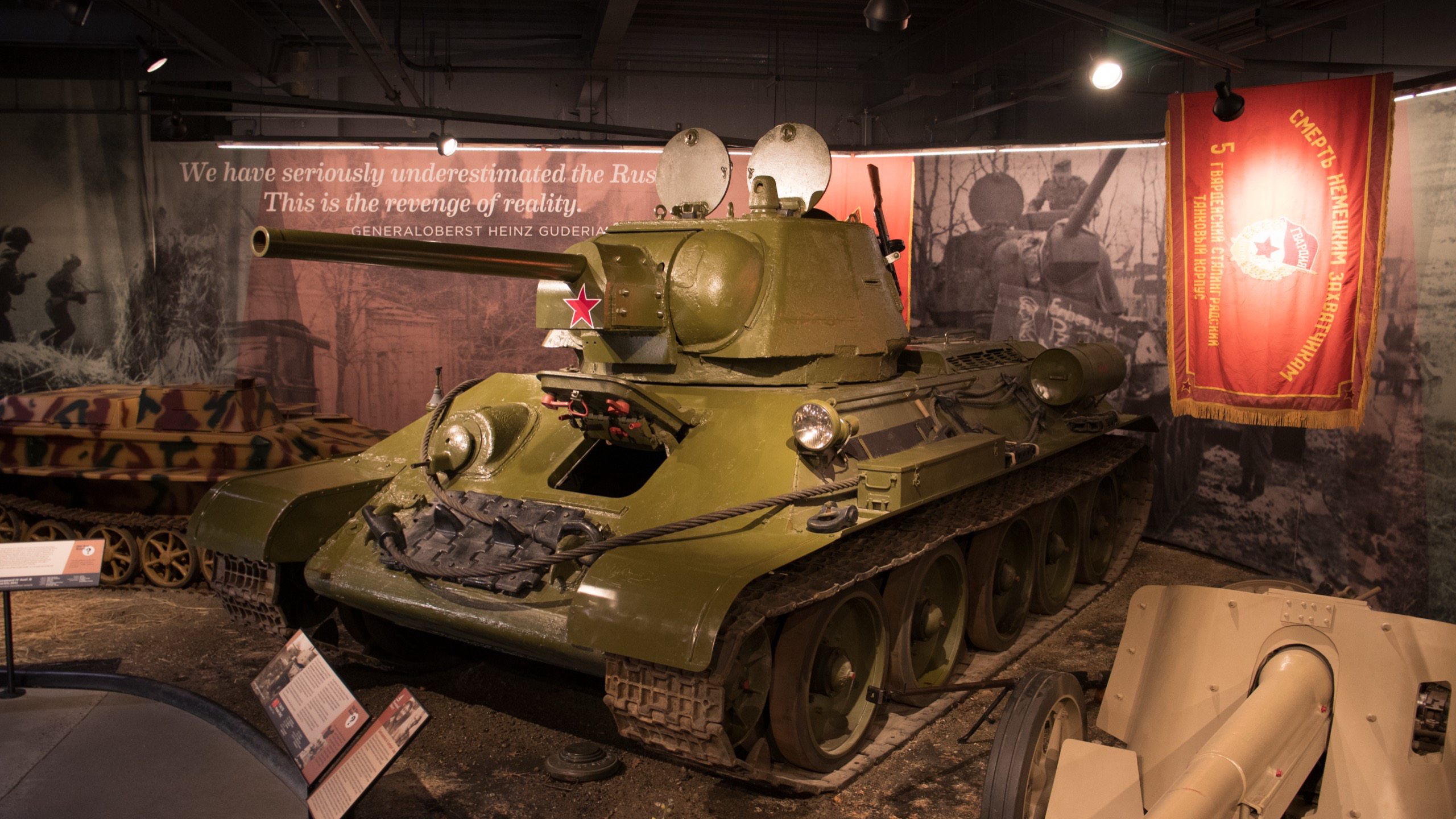
Soviet T-34-76
Soviet Medium Tank | World War II (1940–1945)
| General Information | |
|---|---|
| Model | T-34/76 |
| Class | Armor |
| Type | Medium Tank |
| Use | Military |
| Era | 1940-1945 |
| Gallery Focus | WWII European Theater |
| Manufacturer | Kharkiv Morozov Machine Building Design Bureau (KhMDB) |
| Year | 1943 |
| Country | Soviet Union |
| Ownership | CF Inc. |
| Gallery Location | Eastern Front |
| Status | Operational, Offline |
Additional Photos
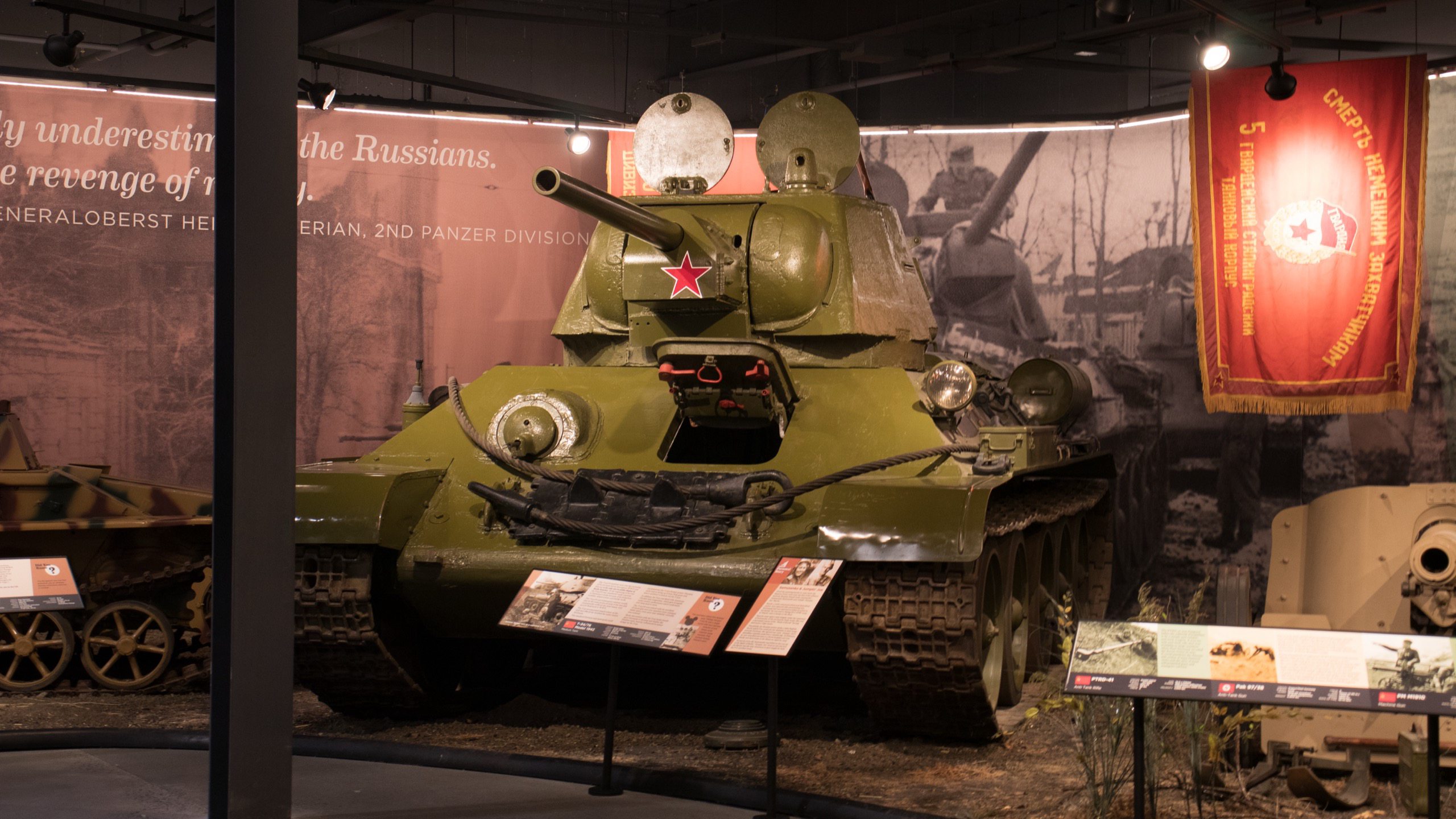
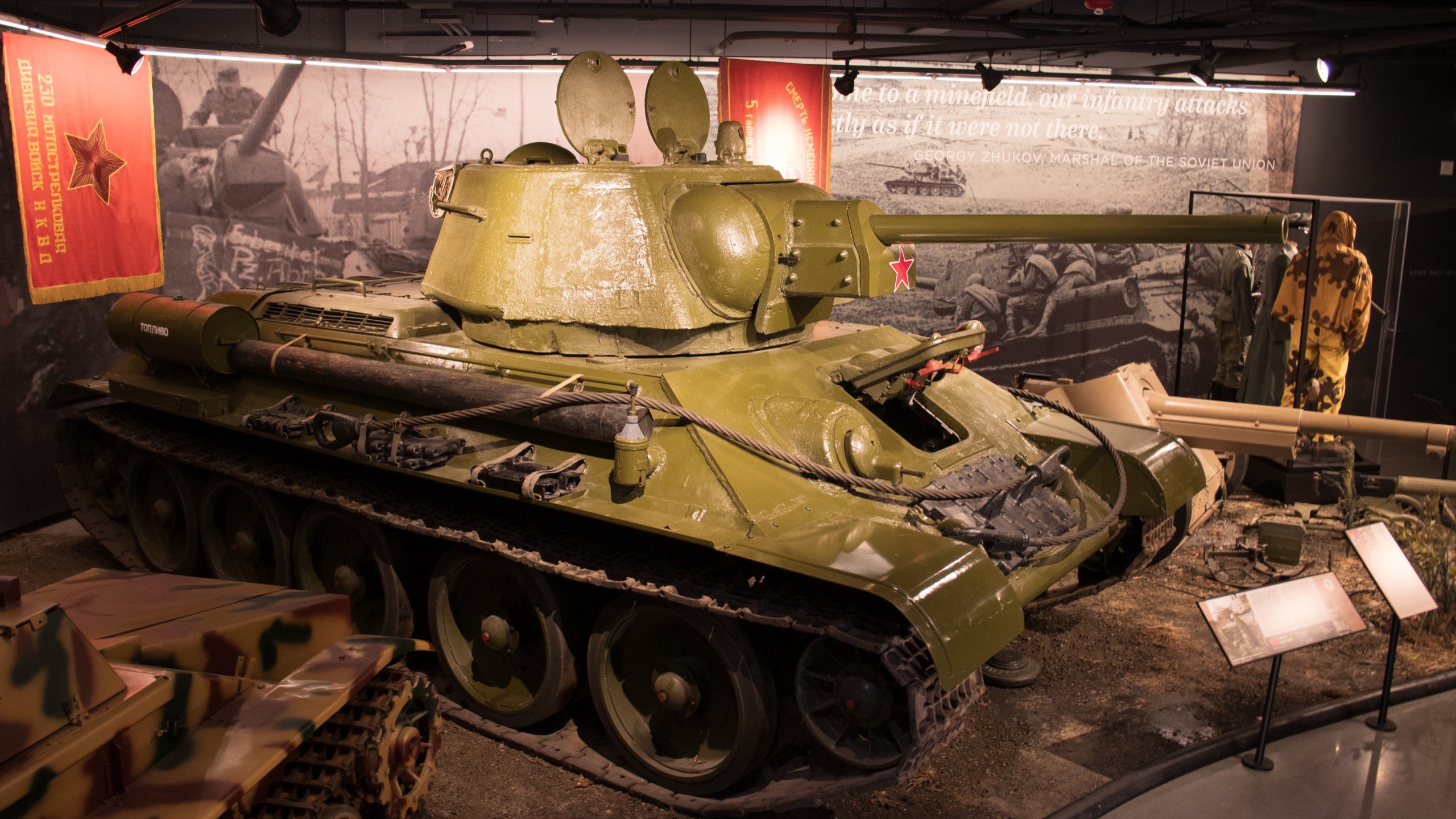
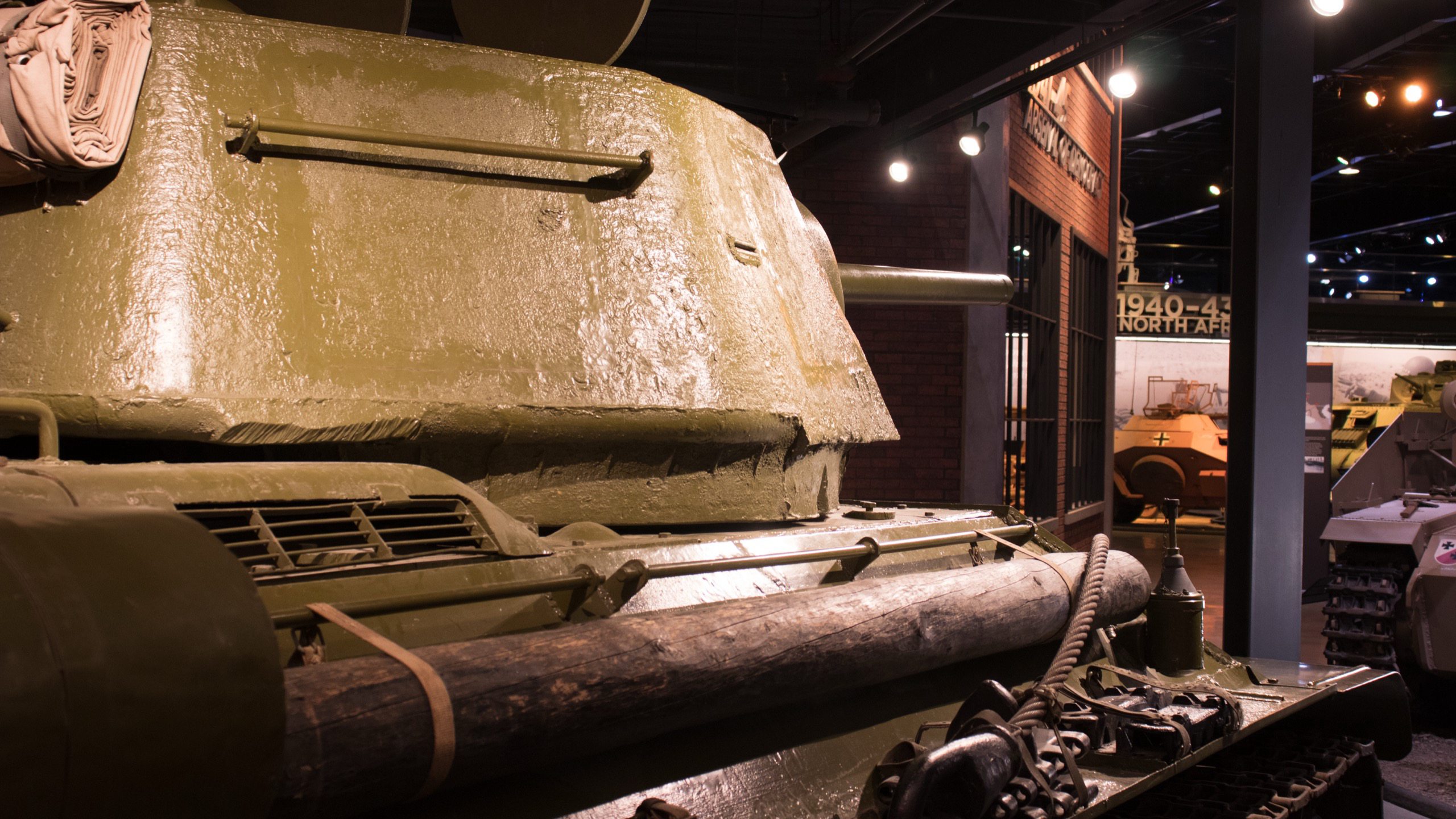
The Soviet T-34 was one of the most influential and successful tank designs of World War II, combining formidable firepower, innovative armor protection, and excellent battlefield mobility. Introduced in 1940, the T-34 became the backbone of the Soviet Red Army’s armored forces and played a decisive role in defeating Nazi Germany on the Eastern Front.
Developed at the Kharkov Locomotive Factory, the T-34 incorporated several revolutionary features. Its sharply sloped armor, measuring 45mm on the front hull, provided considerably greater protection than its thickness alone suggested by increasing the likelihood of enemy shells deflecting. Wide tracks and a powerful 500-horsepower V-2 diesel engine gave the approximately 30-ton tank excellent mobility across snow, mud, and difficult terrain. The original T-34/76 was armed with a 76.2mm cannon and two 7.62mm machine guns, providing effective firepower against early-war German armor.
When Germany invaded the Soviet Union in June 1941, the T-34 surprised German forces with its combination of armor, mobility, and firepower. However, its cramped two-man turret, limited visibility, and early mechanical problems reduced its battlefield effectiveness. As German tanks became more heavily armored, the Soviets introduced the improved T-34/85 in 1944, featuring a larger turret and more powerful 85mm gun.
More than 35,000 T-34/76 tanks were produced, demonstrating the extraordinary industrial capacity of the Soviet Union despite devastating wartime losses and the relocation of major factories beyond German reach.
Beyond its engineering achievements, the T-34 represents the courage and sacrifice of the soldiers who fought in one of history’s most brutal conflicts. Among them was Aleksandra Grigoryevna Samusenko, a remarkable Soviet tank commander and Guards Captain who served with the 1st Guards Tank Army. One of the few women to command tanks in combat, Samusenko earned decorations for bravery, including the Order of the Red Star for her service during the Battle of Kursk.
Her extraordinary story became intertwined with that of American paratrooper Sergeant Joseph R. Beyrle, a member of the 101st Airborne Division who parachuted into Normandy on D-Day, June 6, 1944. Captured by German forces, Beyrle endured months as a prisoner of war before escaping in January 1945.
Rather than immediately seeking passage home, Beyrle encountered a Soviet armored unit and persuaded Samusenko to let him fight alongside her soldiers. Using his expertise in demolitions, he spent approximately one month serving with the Red Army during its advance through Poland, becoming the only known American soldier to fight with both American and Soviet forces during World War II.
Beyrle was wounded in February 1945 and eventually returned home. Tragically, Samusenko was killed on March 3, 1945, during the final Soviet offensives into Germany, just weeks before the war’s end.
The T-34/76 displayed in the American Heritage Museum’s Eastern Front Gallery honors both the technological achievements of Soviet armored warfare and the remarkable human stories of Samusenko and Beyrle, whose unlikely partnership exemplified the cooperation and shared sacrifices of Allied soldiers in the fight against Nazi Germany.