Artifacts
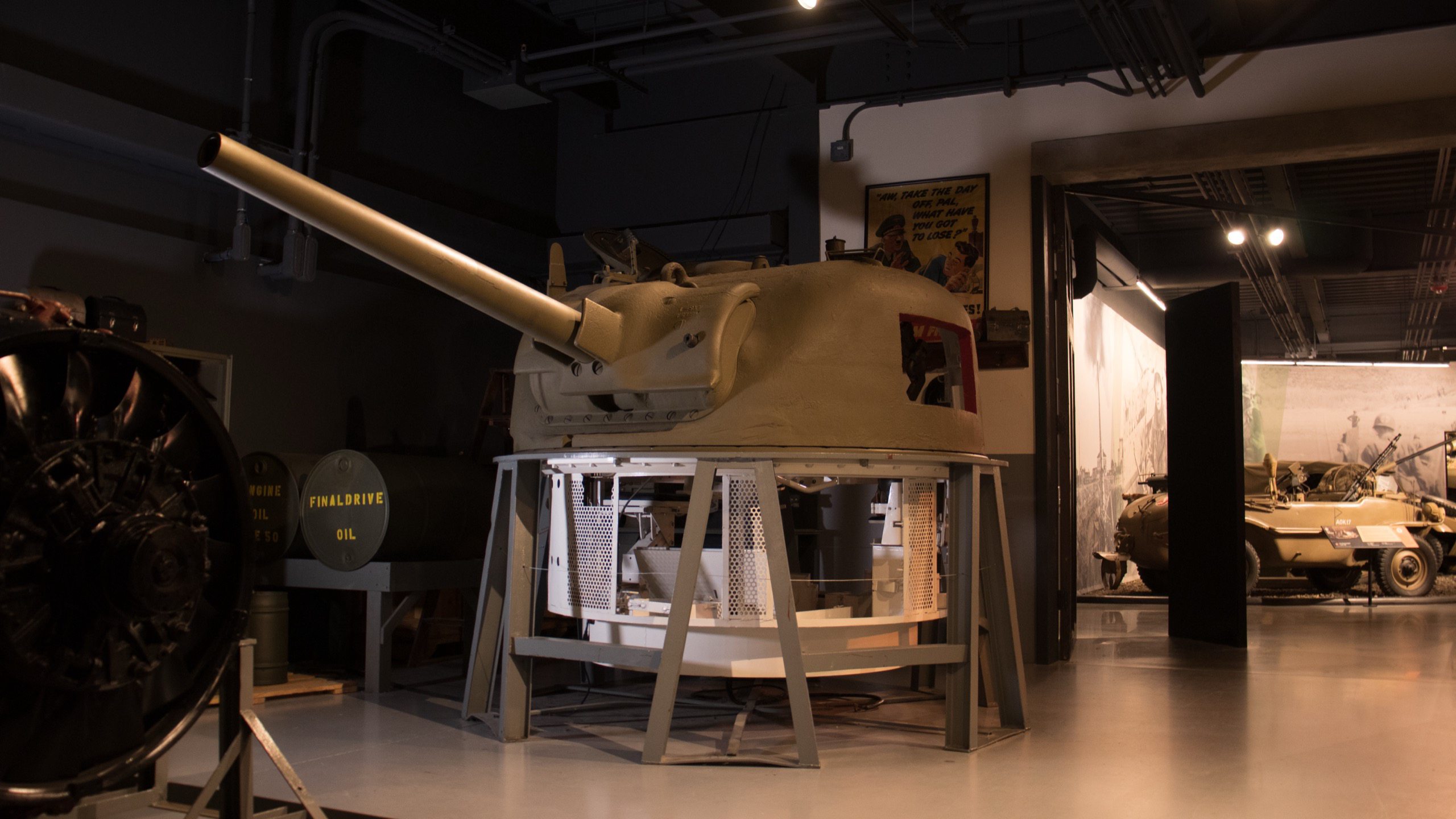
M4 Sherman Turret Trainer
American Medium Tank Crew Training Exhibit | World War II (1942–1945)
| General Information | |
|---|---|
| Model | M4 Sherman (Turret Trainer) |
| Class | Armor |
| Type | Training Aid |
| Use | Military |
| Era | 1940-1945 |
| Gallery Focus | WWII European Theater |
| Manufacturer | Ford, Chrysler, General Motors Fisher, Baldwin Locomotive Works, Pressed Steel Car |
| Year | 1943 |
| Country | United States |
| Ownership | CF Inc. |
| Gallery Location | Arsenal of Democracy |
| Status | Static Only |
Additional Photos
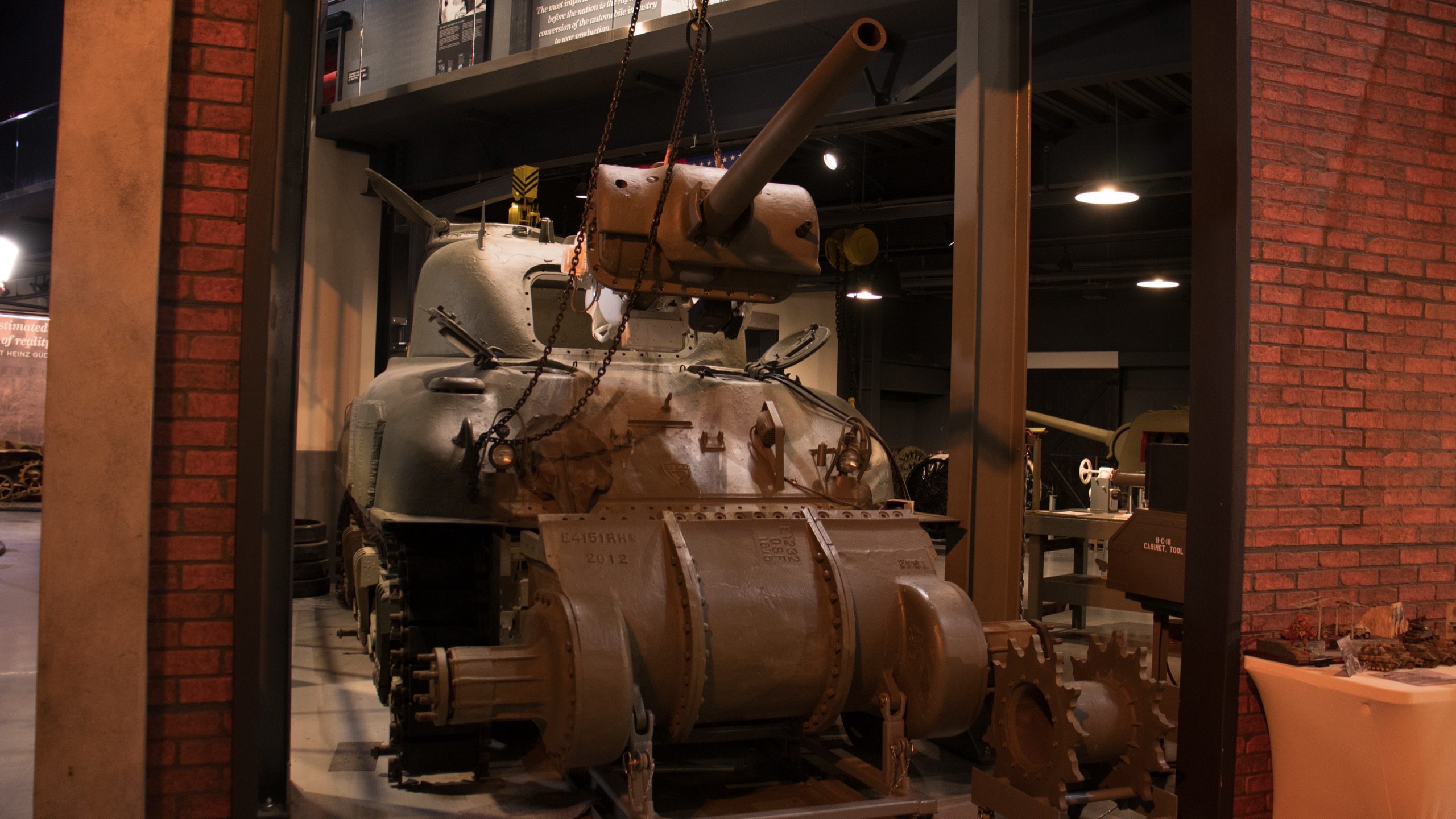
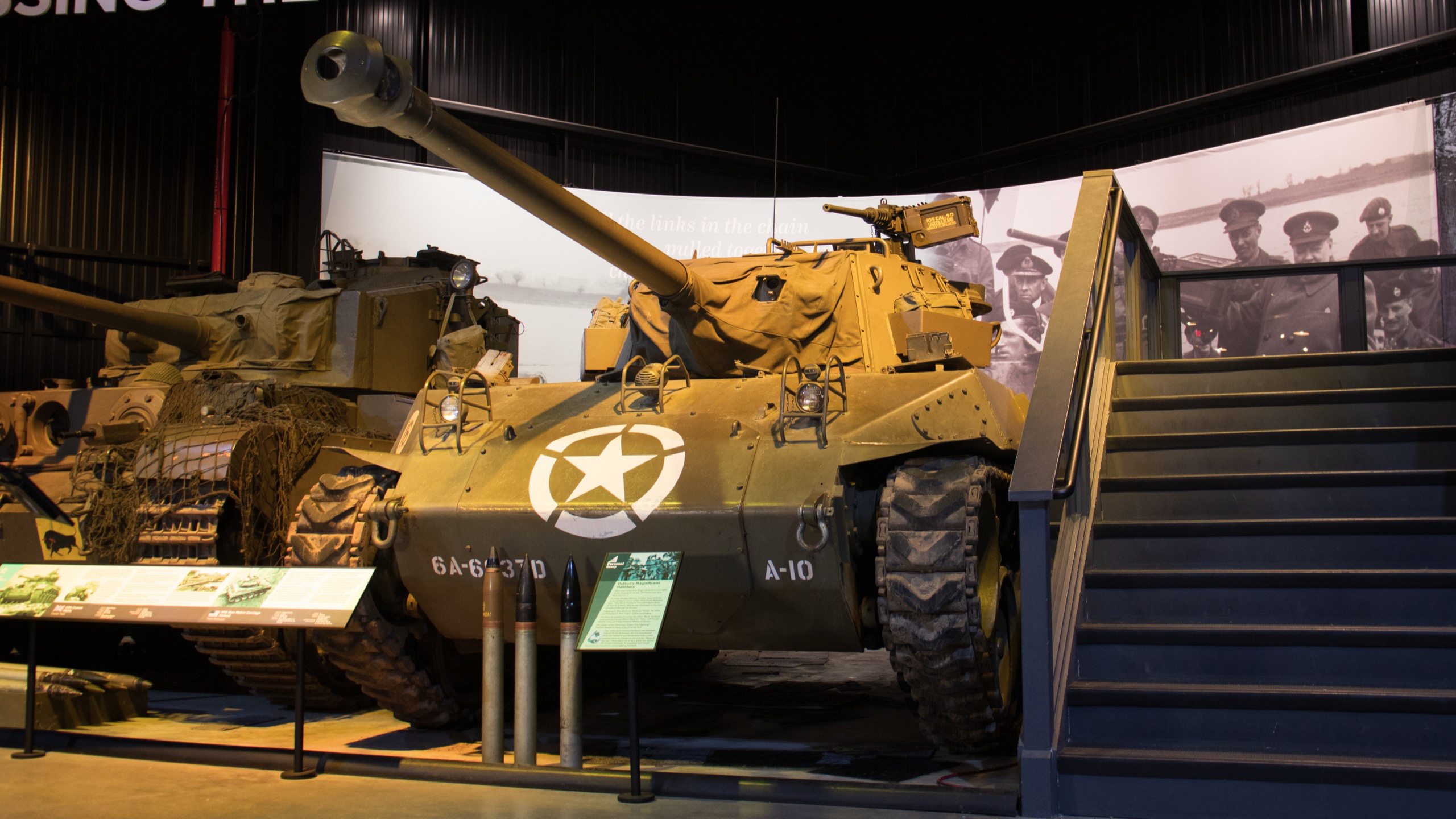
The M4 Sherman was the backbone of American armored forces during World War II and one of the most recognizable tanks in military history. Renowned for its reliability, versatility, and ease of mass production, the Sherman served with American and Allied forces in nearly every theater of the war. Between 1942 and 1945, American factories produced more than 49,000 Sherman tanks, demonstrating the extraordinary industrial capacity of the United States and its vital contribution to Allied victory.
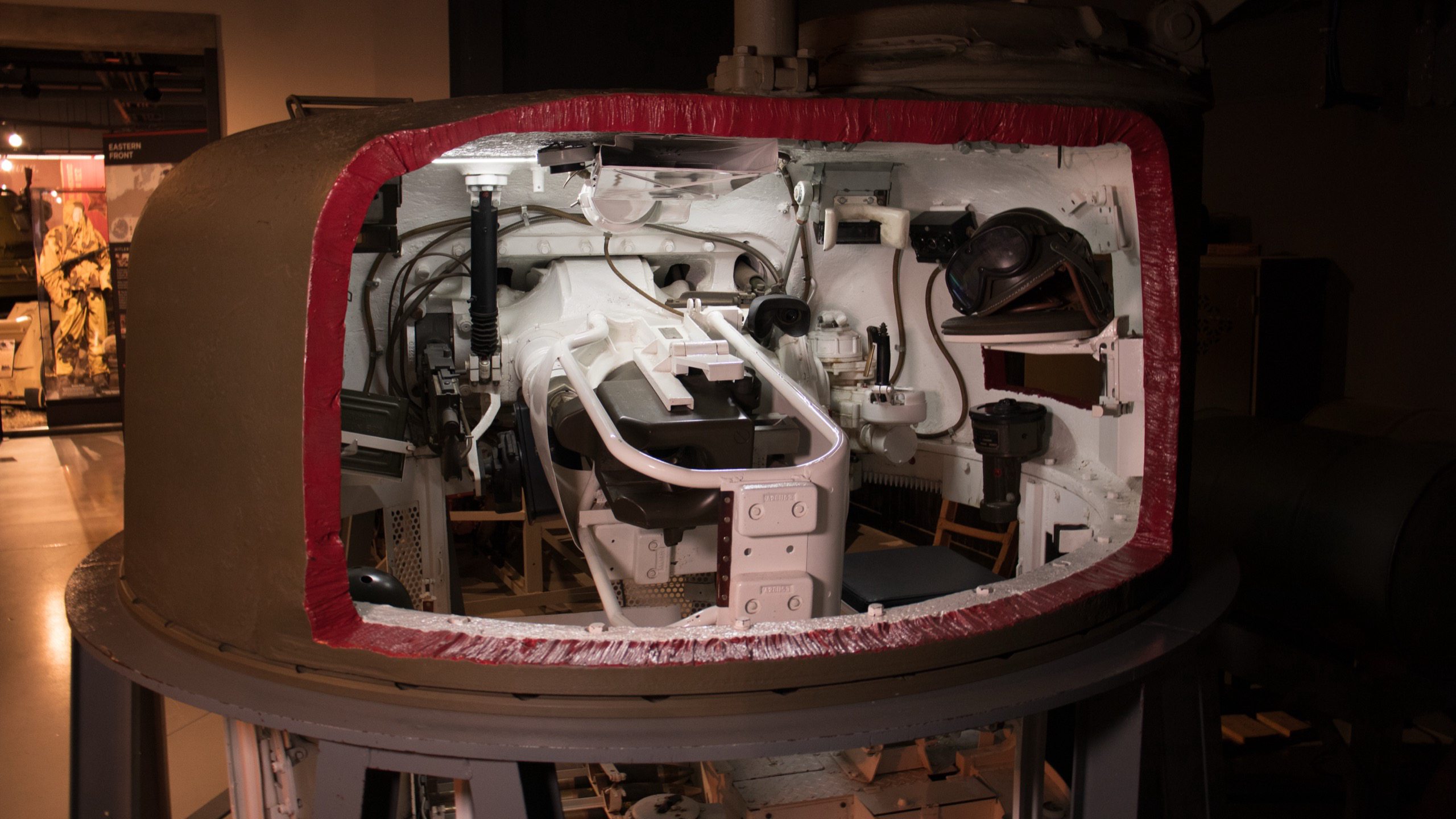
While the Sherman’s mechanical reliability and firepower were important to its battlefield success, its effectiveness ultimately depended on the coordination of its five-man crew. Three of those crew members—the tank commander, gunner, and loader—worked together inside the cramped confines of the rotating turret.
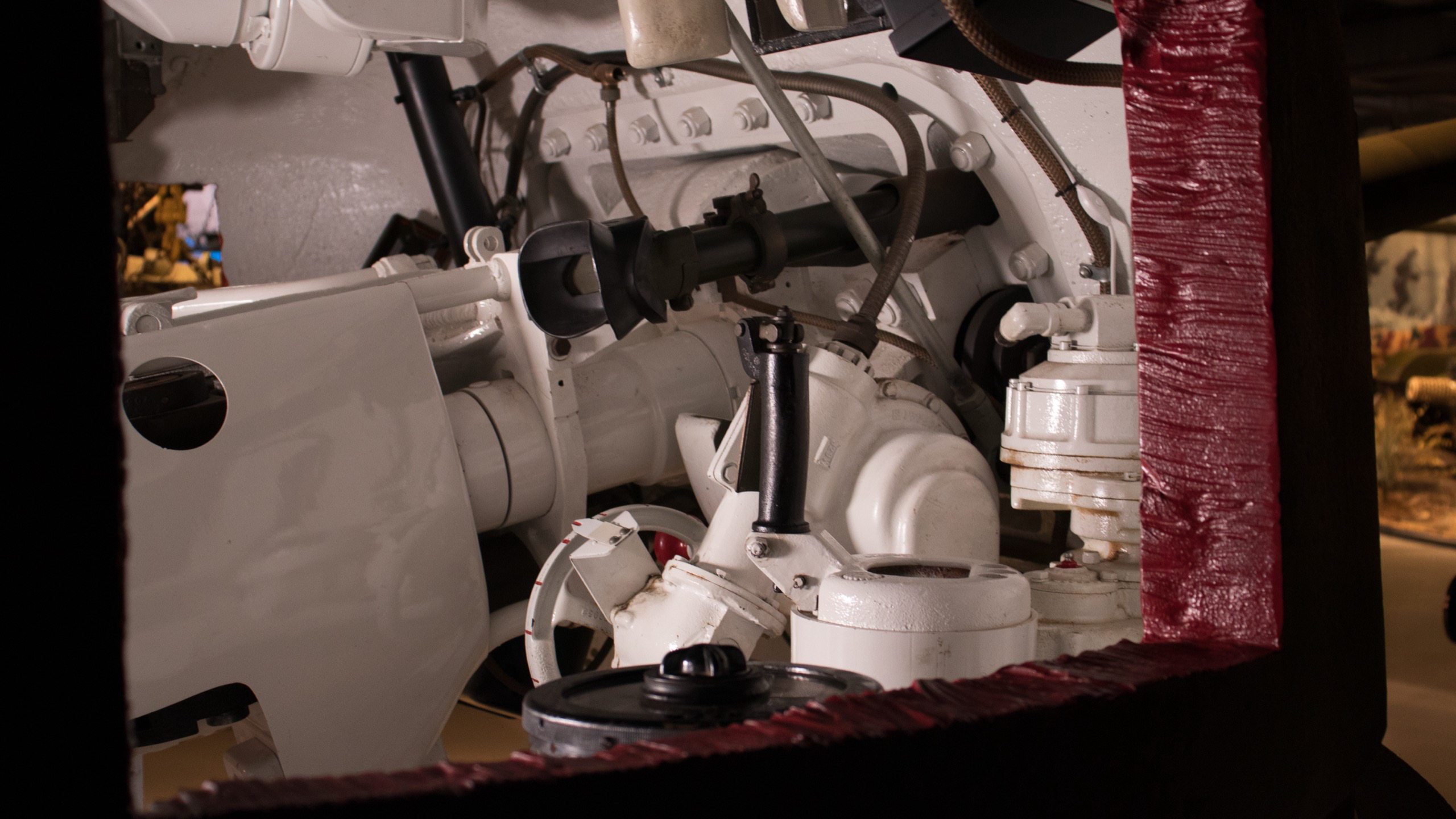
The M4 Sherman Turret Trainer displayed at the American Heritage Museum offers visitors a rare opportunity to examine the interior of this critical fighting compartment. The exhibit replicates the three turret crew positions, illustrating how each soldier performed his duties while operating in a confined, noisy, and dangerous environment.
The tank commander directed the crew, identified threats, communicated with other vehicles, and coordinated battlefield movements. The gunner aimed and fired the main cannon, typically a 75mm gun on early and mid-war Shermans, while the loader selected and loaded ammunition under demanding combat conditions. Effective operation required constant communication and teamwork, often while the tank was moving across difficult terrain.
To provide a clearer view of these positions, sections of the original turret’s armored steel have been cut away, exposing the interior arrangement and revealing the substantial thickness of the armor that protected its occupants. On standard 75mm-equipped Shermans, turret armor was approximately two inches thick along the sides and three inches at the front. This cutaway presentation allows visitors to appreciate both the protection afforded by the armor and the extremely limited space available to the crew.
Adjacent to the turret trainer, a simulated Sherman driver’s position introduces visitors to the controls used to maneuver the approximately 30-ton vehicle. Through the driver’s steering levers, transmission controls, and other operating components, visitors can better understand the skill required to drive a tank in combat.
Together, these exhibits form an important part of the American Heritage Museum’s Arsenal of Democracy Gallery, where a recreated Sherman tank factory production line illustrates the remarkable industrial mobilization that equipped America’s armed forces. The turret trainer and driver’s station connect the engineering and manufacturing achievements of the American home front with the individual soldiers who depended on these machines in battle.