Artifacts
F-105G Thunderchief "Wild Weasel"
American Supersonic Fighter-Bomber / Electronic Warfare Aircraft | Vietnam War (1964–1973)
| General Information | |
|---|---|
| Model | F-105G Thunderchief |
| Class | Aircraft |
| Type | Attack |
| Use | Military |
| Era | 1956-1975 |
| Gallery Focus | Vietnam War |
| Manufacturer | Republic |
| Year | 1965 |
| Country | United States |
| Ownership | Loan, US Air Force |
| Gallery Location | Vietnam War |
| Status | Static Only |
Additional Photos
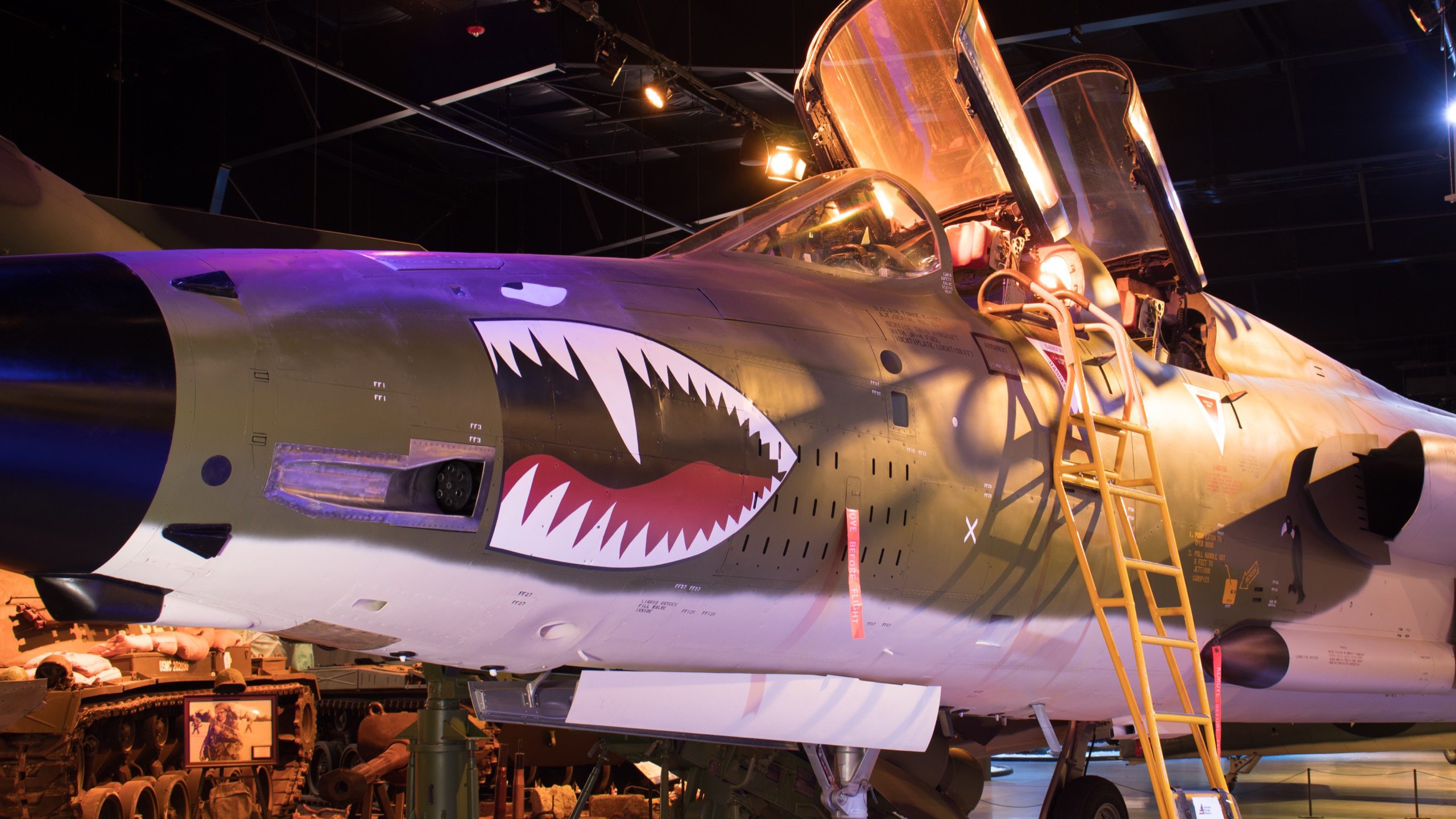
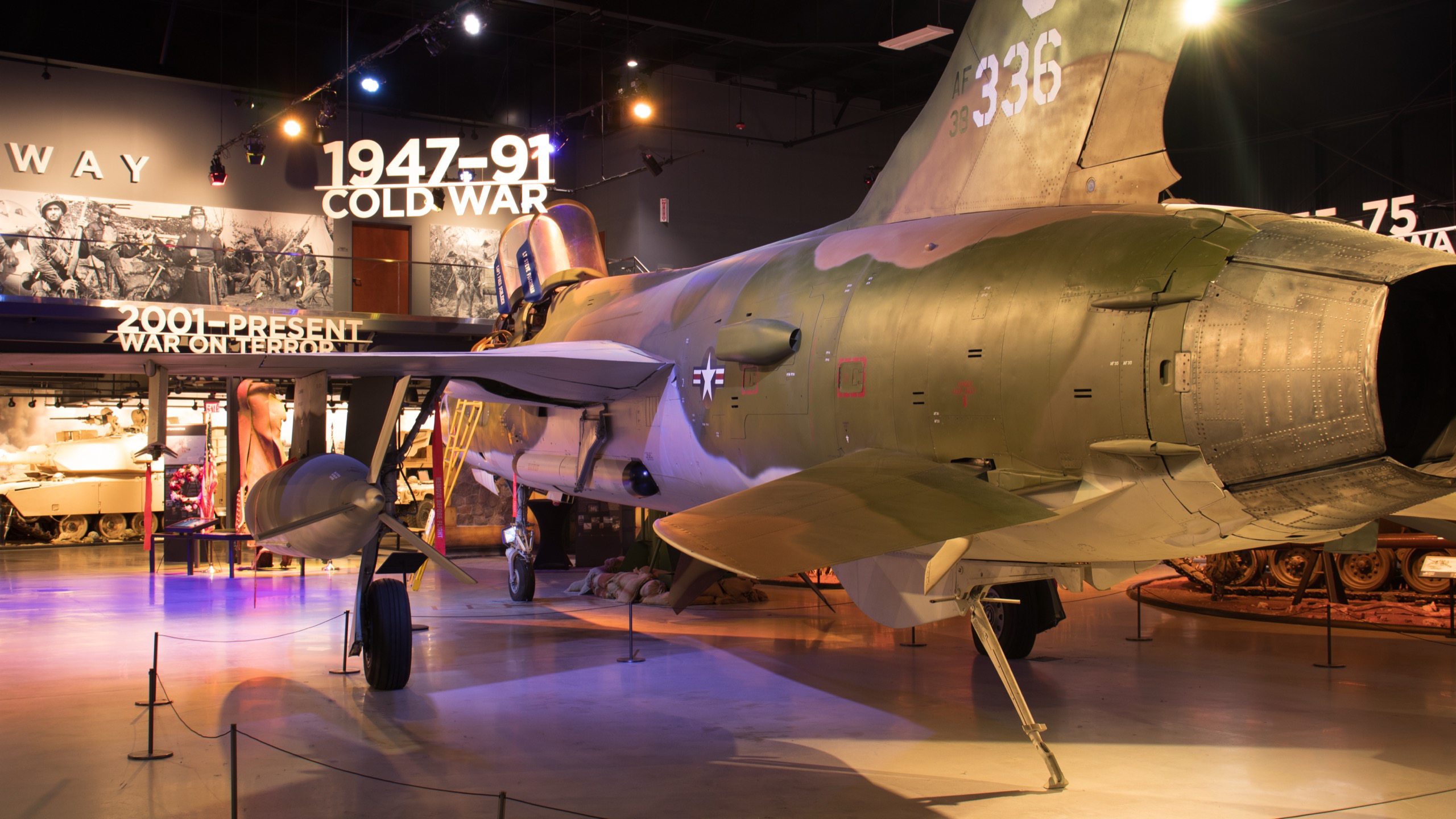
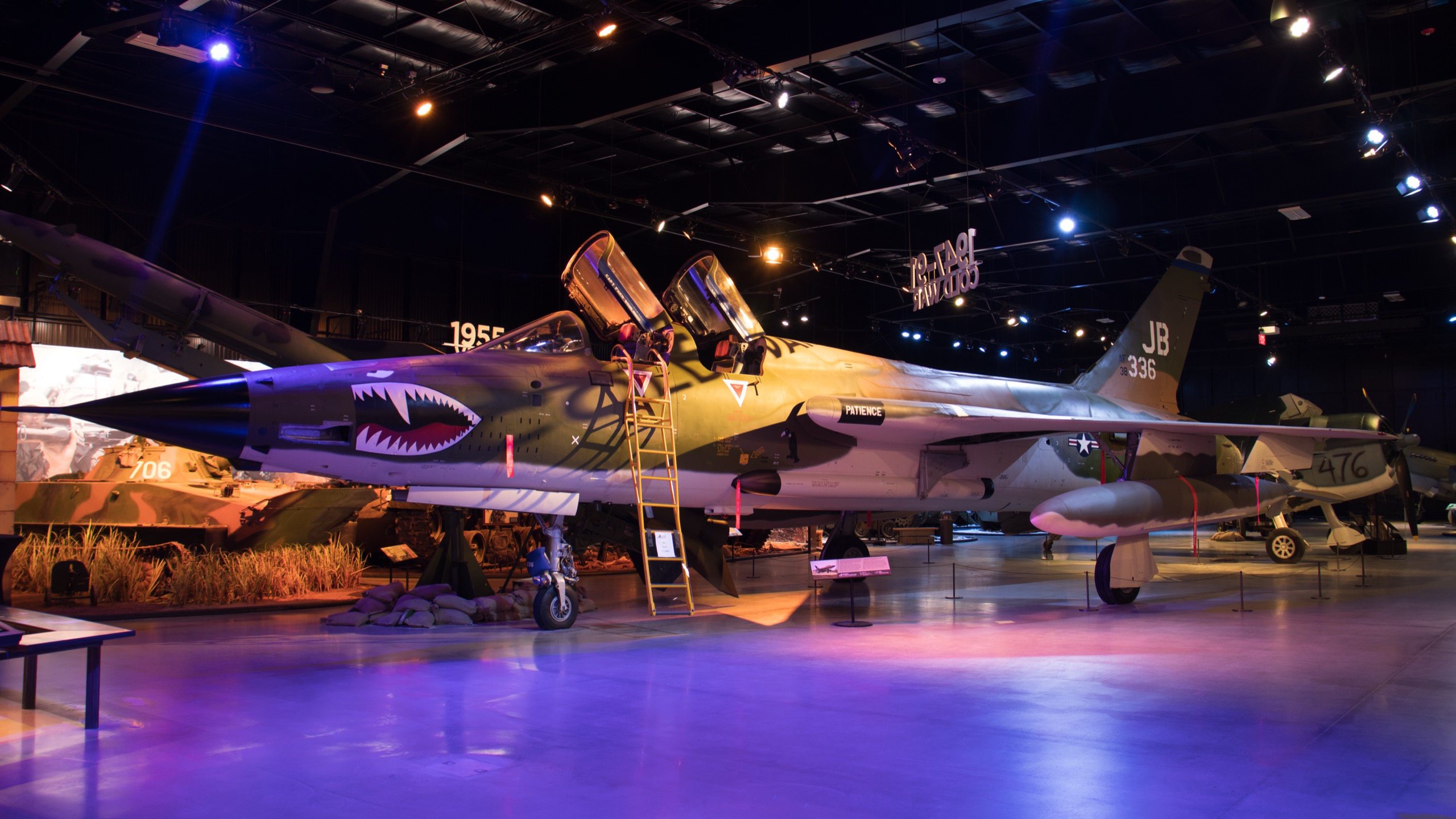
The Republic F-105 Thunderchief was one of the most powerful and recognizable American combat aircraft of the Vietnam War. Originally developed as a supersonic fighter-bomber capable of delivering nuclear or conventional weapons, the Thunderchief became the backbone of U.S. Air Force strike operations over North Vietnam. Nicknamed the “Thud” by its crews, the aircraft was renowned for its speed, heavy weapons payload, and rugged construction. However, as North Vietnamese air defenses became increasingly sophisticated, the F-105 assumed an entirely new and exceptionally dangerous mission: hunting enemy radar installations and surface-to-air missile sites.
The F-105G “Wild Weasel” was a specialized electronic warfare variant developed from the two-seat F-105F. Its mission, known as Suppression of Enemy Air Defenses (SEAD), was to locate, disrupt, and destroy Soviet-supplied radar systems that guided North Vietnam’s deadly SA-2 Guideline surface-to-air missiles. Equipped with sophisticated radar-homing and warning systems, electronic countermeasures, and AGM-45 Shrike and AGM-78 Standard anti-radiation missiles, the F-105G could detect enemy radar emissions and attack their sources.
Powered by a Pratt & Whitney J75 turbojet producing approximately 26,500 pounds of thrust with afterburner, the Thunderchief could exceed Mach 2. It retained its internal 20mm M61 Vulcan cannon and could carry more than 12,000 pounds of external ordnance.
Wild Weasel missions were among the most hazardous flown during the Vietnam War. Operating ahead of or alongside American strike formations, two-man crews consisting of a pilot and electronic warfare officer deliberately entered heavily defended airspace to identify and attack enemy missile installations. Their objective was not always to destroy a SAM site outright; forcing its radar operators to shut down their equipment could temporarily neutralize the threat and protect other aircraft. These dangerous missions gave rise to the Wild Weasel motto, “First In, Last Out.”
The American Heritage Museum’s F-105G, serial number 63-8336, is a genuine Vietnam War veteran. Originally manufactured in 1964 as an F-105F, the aircraft underwent extensive modifications in 1971 to become an F-105G. Known by the nickname “Patience,” it served during the Vietnam War, including Wild Weasel operations associated with the 17th Wild Weasel Squadron, 388th Tactical Fighter Wing, operating from Korat Royal Thai Air Force Base in Thailand during 1972–1973.
Following the war, the aircraft continued serving with the U.S. Air Force and Georgia Air National Guard before entering military storage in April 1982. It was later exhibited at the Flying Heritage Collection in Everett, Washington, before arriving at the American Heritage Museum.
Today, F-105G serial number 63-8336 is displayed in the museum’s Vietnam War Gallery on long-term loan from the National Museum of the United States Air Force. Positioned alongside an actual Soviet-designed SA-2 Guideline surface-to-air missile, the Thunderchief provides visitors with a powerful illustration of the technological struggle between American aircrews and North Vietnamese air defenses. Together, these artifacts tell the story of the extraordinary courage, innovation, and sacrifice that defined the Wild Weasel mission.