Artifacts
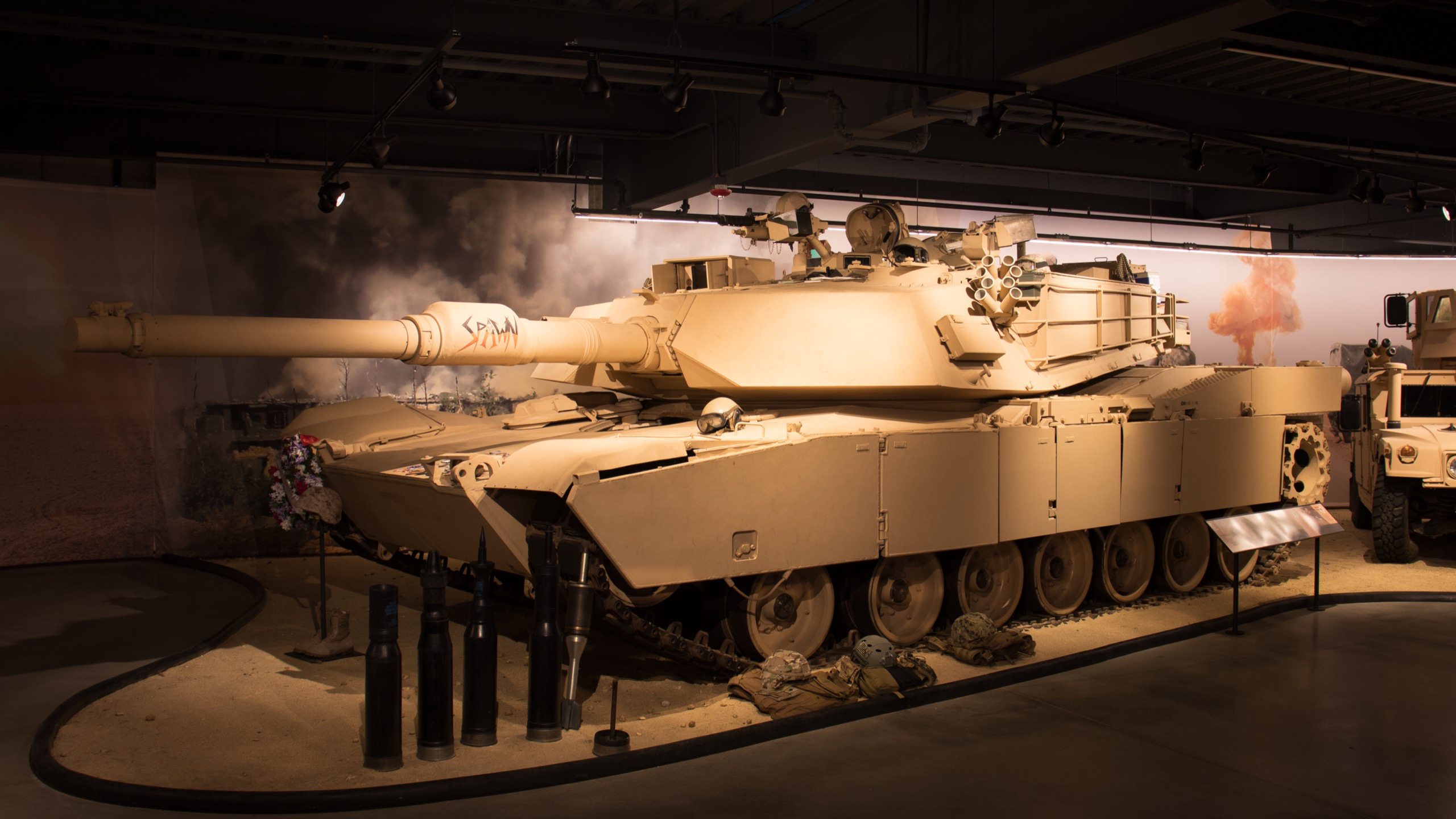
M1A1 Abrams
United States | 1986–Present | Persian Gulf War & Iraq War
| General Information | |
|---|---|
| Model | M1A1 Abrams |
| Class | Armor |
| Type | Main Battle Tank |
| Use | Military |
| Era | 2001-2024 |
| Gallery Focus | War on Terror / Iraq & Afghanistan |
| Manufacturer | Lima Army Tank Plant |
| Year | 1990 |
| Country | United States |
| Ownership | Loan, USMC |
| Gallery Location | War on Terror |
| Status | Static Only |
Additional Photos
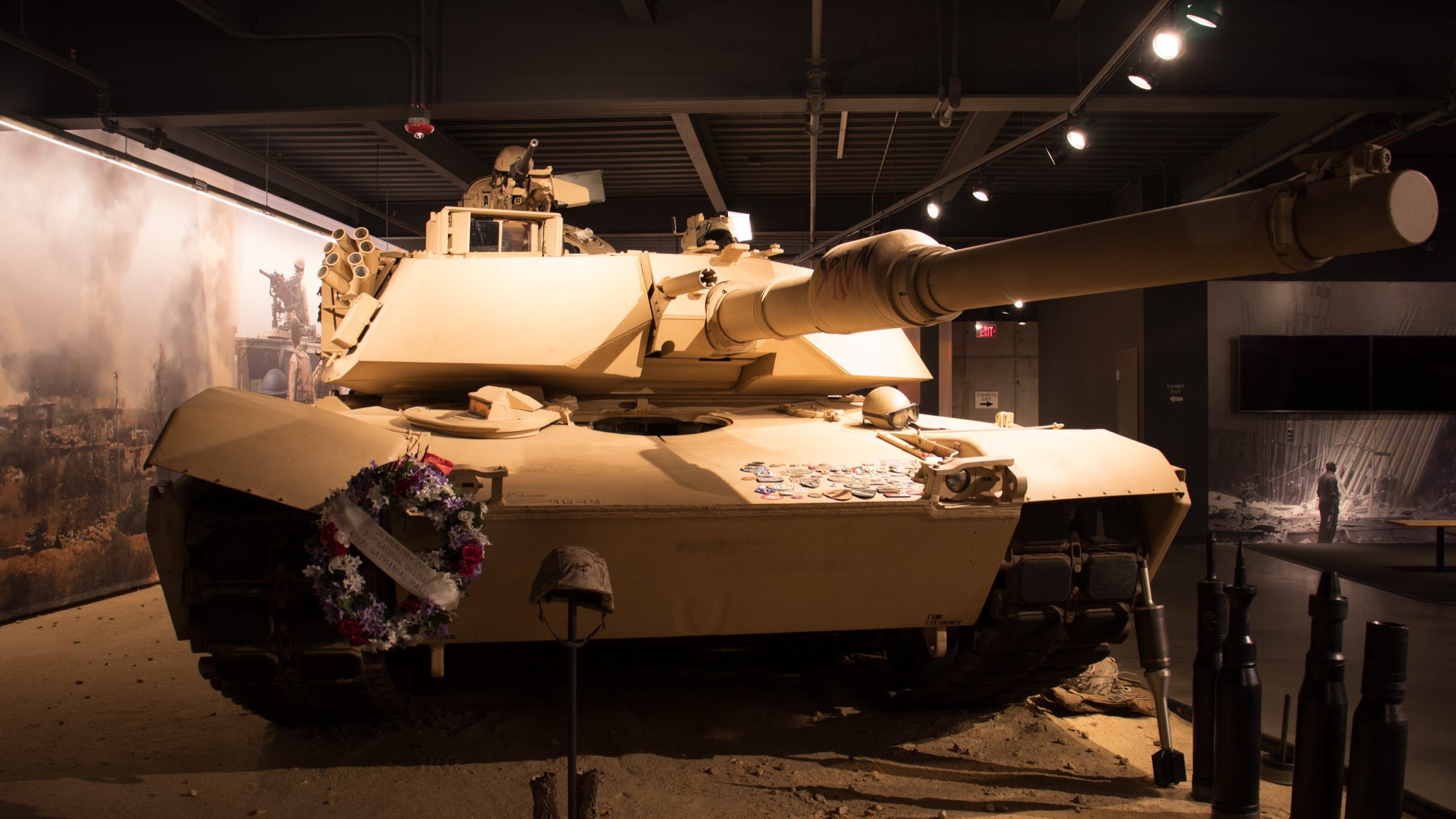
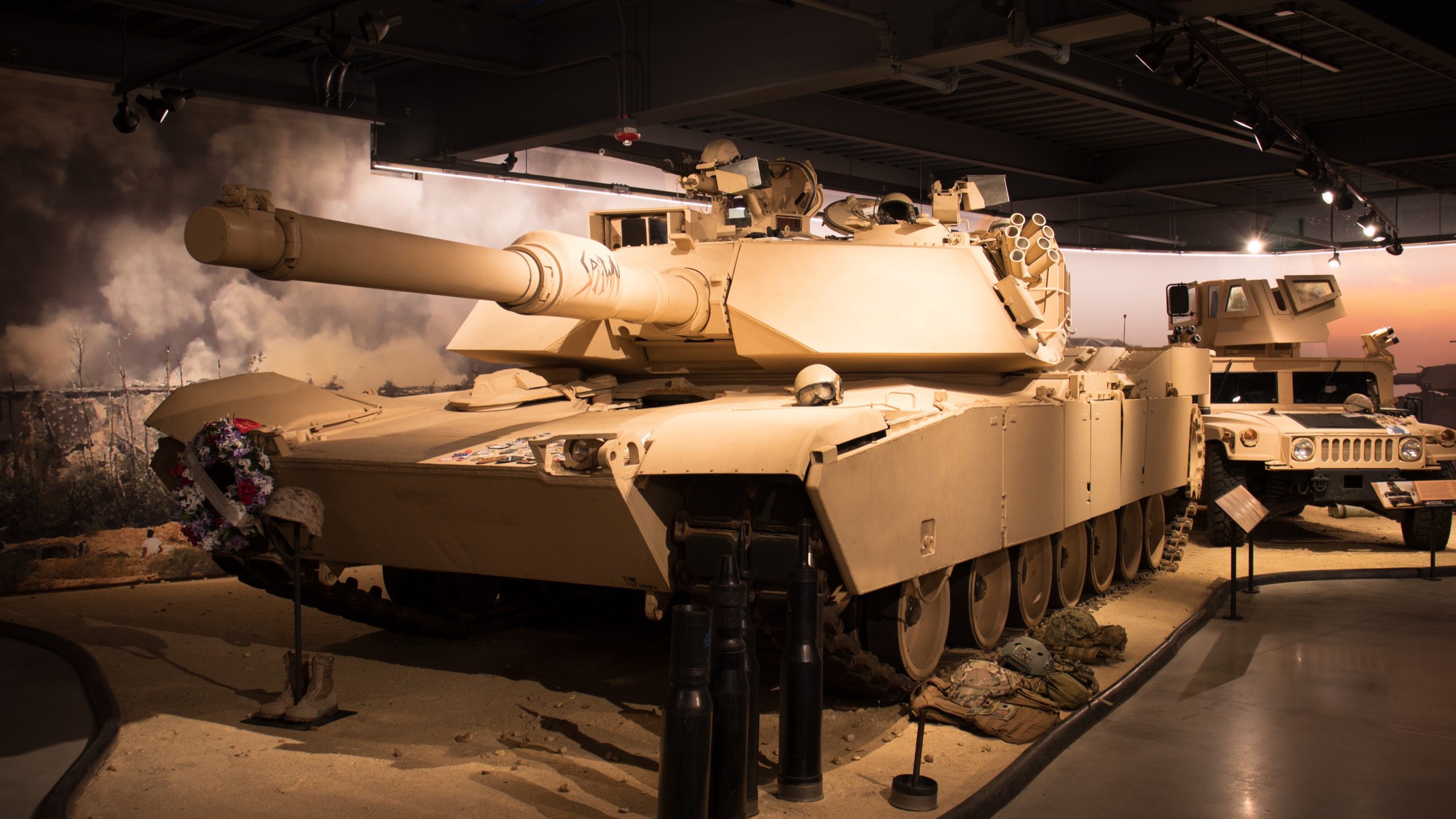
The American M1A1 Abrams is one of the most powerful and technologically advanced main battle tanks developed by the United States. Originally conceived during the Cold War to confront Soviet armored forces, the Abrams became a defining weapon of American ground operations during the Persian Gulf War and the subsequent war in Iraq.
The original M1 Abrams entered service in 1980, incorporating advanced composite armor, a 1,500-horsepower gas turbine engine, sophisticated fire-control systems, and a stabilized 105mm cannon. The improved M1A1, introduced in the mid-1980s, featured enhanced armor protection and the powerful M256 120mm smoothbore cannon, derived from a German Rheinmetall design. Its thermal imaging sights and computerized targeting systems allowed crews to accurately engage enemy vehicles at distances exceeding 2,500 meters, even while moving.
During Operation Desert Storm in 1991, M1A1 Abrams tanks demonstrated overwhelming superiority against Iraq’s Soviet-designed T-55, T-62, and T-72 tanks. Their combination of firepower, mobility, and protection helped Coalition forces rapidly defeat Iraqi armored formations and liberate Kuwait.
The M1A1 returned to combat during the 2003 invasion of Iraq, spearheading American armored advances toward Baghdad. However, the insurgency that followed presented new dangers. Operating in urban environments and along vulnerable transportation routes, Abrams crews increasingly faced rocket-propelled grenades, ambushes, and powerful improvised explosive devices (IEDs).
The M1A1 Abrams displayed at the American Heritage Museum is an actual combat-veteran tank with a profoundly personal history. Assigned to Company A, 2nd Tank Battalion, United States Marine Corps, the vehicle, known as “White 2,” was conducting security operations near Habbaniyah, Iraq, on August 3, 2006.
During a patrol supporting efforts to secure the dangerous road between Fallujah and Habbaniyah, an insurgent IED detonated alongside the tank, severely damaging its right side. Shrapnel from the explosion fatally wounded its commander, Marine Sergeant George Martinez Ulloa Jr., a respected leader and combat veteran who had previously participated in the 2004 Battle of Fallujah.
The surviving crew—gunner Travis Marcum, loader Nick Johns, and driver Nathan Hall—managed to move the damaged Abrams away from danger, drawing upon the training and discipline instilled by their fallen commander.
Years later, the surviving crew reunited at the American Heritage Museum with fellow Marines, including platoon sergeant Mike Kadlub and Erick Pfafflin, who served aboard the accompanying tank, “White 1.” Their emotional recollections were recorded in a documentary interview displayed alongside the Abrams, providing visitors with a firsthand account of the attack and the extraordinary bonds shared by soldiers in combat.
On loan from the National Museum of the Marine Corps, this historic M1A1 remains preserved with visible evidence of the damage sustained during its final combat mission.
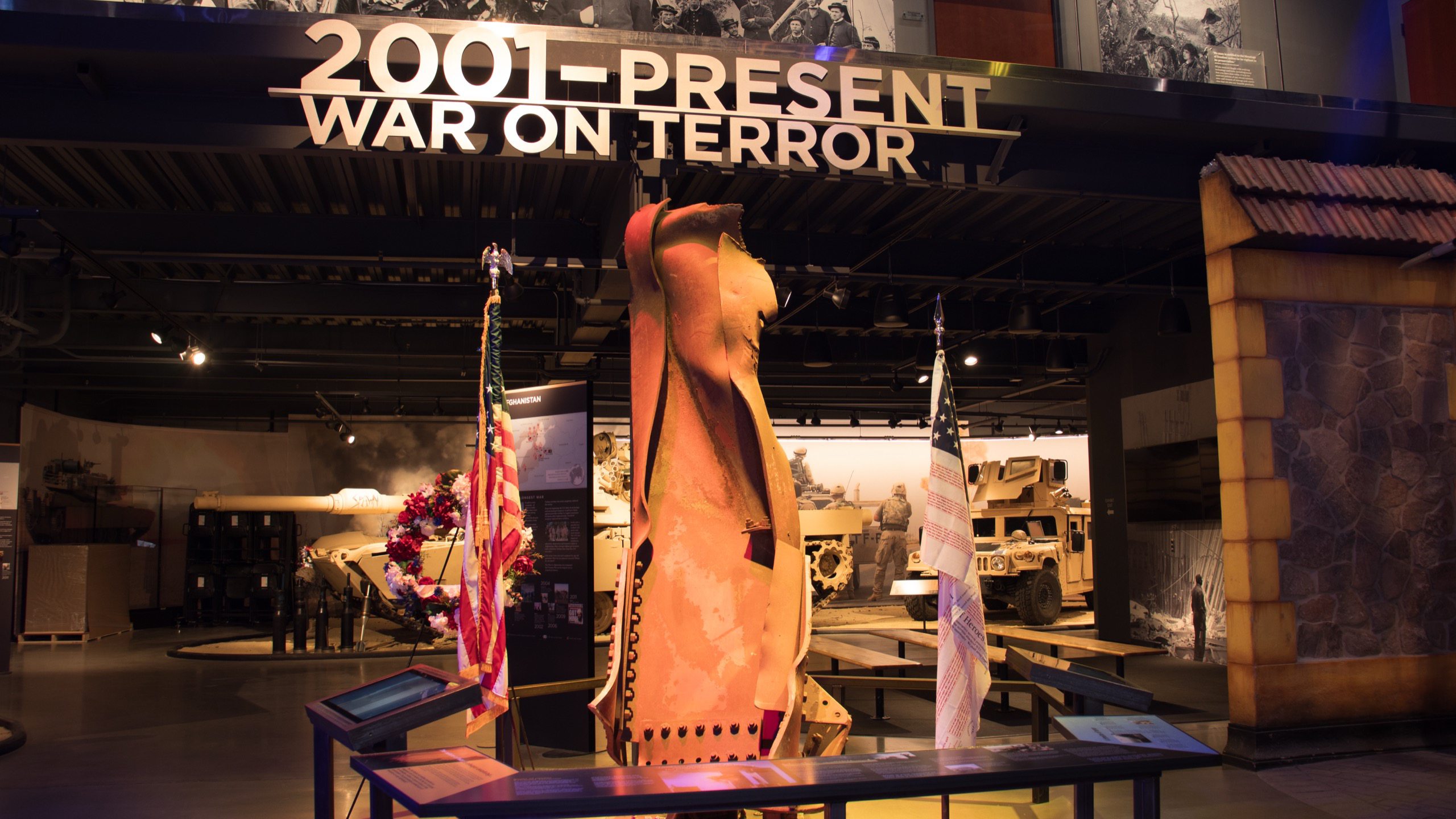
Displayed in the American Heritage Museum’s War on Terror Gallery, the tank serves not only as a testament to American military technology but also as a powerful memorial to Sgt. George Ulloa Jr. and the courage, sacrifice, and enduring brotherhood of the Marines who served alongside him.