Artifacts
PackBot 510
| General Information | |
|---|---|
| Model | PackBot 510 |
| Class | Robot |
| Type | Military Robot, Tracked |
| Use | Military |
| Era | 2001-2024 |
| Gallery Focus | War on Terror / Iraq & Afghanistan |
| Manufacturer | FliR / Endeavor Robotics / iRobot |
| Year | 2011 |
| Country | United States |
| Ownership | CF Inc. |
| Gallery Location | War on Terror |
| Status | Operational, Offline |
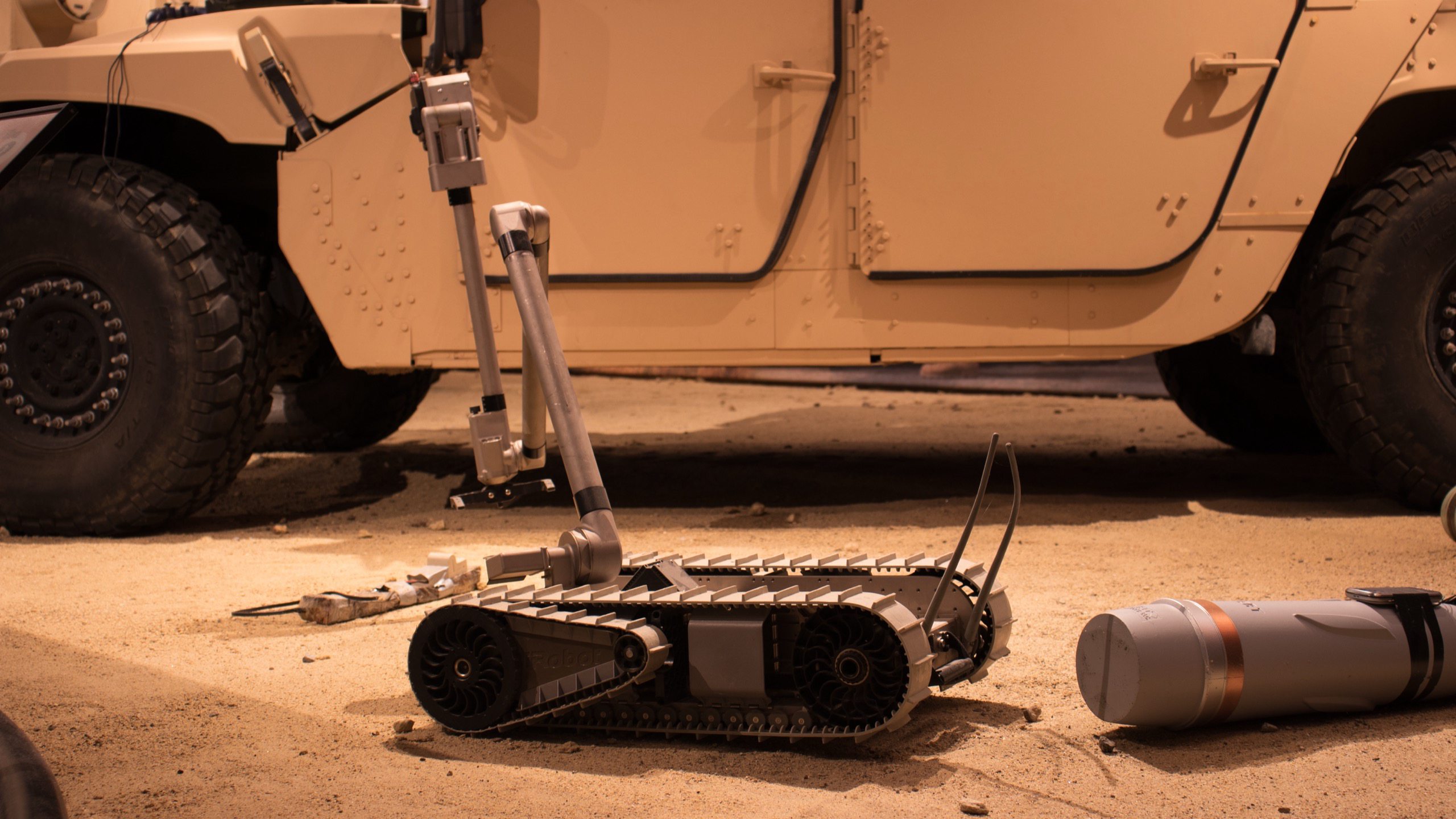
The iRobot (Endeavor Robotics) PackBot represents a major advancement in military robotics, transforming how American forces confronted deadly threats during the wars in Iraq and Afghanistan. Developed by Massachusetts-based iRobot Corporation (now Endeavor Robotics), this compact, remotely operated tracked vehicle allowed soldiers and explosive ordnance disposal (EOD) technicians to investigate dangerous situations without placing themselves directly in harm’s way.
First deployed to Afghanistan in 2002, early PackBots conducted reconnaissance missions inside caves, tunnels, and suspected enemy hideouts. As insurgent forces increasingly employed improvised explosive devices (IEDs) and roadside bombs, PackBots became indispensable tools for American and Coalition forces. Equipped with cameras, sensors, and remotely controlled manipulator arms, these robots could examine suspicious objects, identify explosive threats, and assist in safely neutralizing dangerous devices.
The advanced PackBot 510, introduced in 2007, featured improved mobility, greater lifting capabilities, and an intuitive video-game-style controller. Its rugged tracked chassis allowed it to navigate rubble, stairs, rocky terrain, and confined spaces, while transmitting real-time images to operators positioned safely away from potential explosions.
Thousands of PackBots served in Iraq and Afghanistan, supporting bomb disposal, reconnaissance, route clearance, and other hazardous missions. Their deployment helped reduce the exposure of military personnel to deadly explosives and demonstrated the growing importance of unmanned ground vehicles in modern warfare.
Displayed in the American Heritage Museum’s War on Terror Gallery, the PackBot illustrates how technological innovation transformed battlefield operations and helped protect American service members facing the unconventional threats of twenty-first-century warfare.