Artifacts
Comet I (A34)
United Kingdom | 1944–1945 | World War II – Crossing the Rhine & Final Advance into Germany
| General Information | |
|---|---|
| Model | Comet I (A34) |
| Class | Armor |
| Type | Cruiser Tank |
| Use | Military |
| Era | 1940-1945 |
| Gallery Focus | WWII European Theater |
| Manufacturer | Leyland Motors |
| Year | 1944 |
| Country | United Kingdom |
| Ownership | CF Inc. |
| Gallery Location | Crossing the Rhine |
| Status | Operational, Offline |
Additional Photos
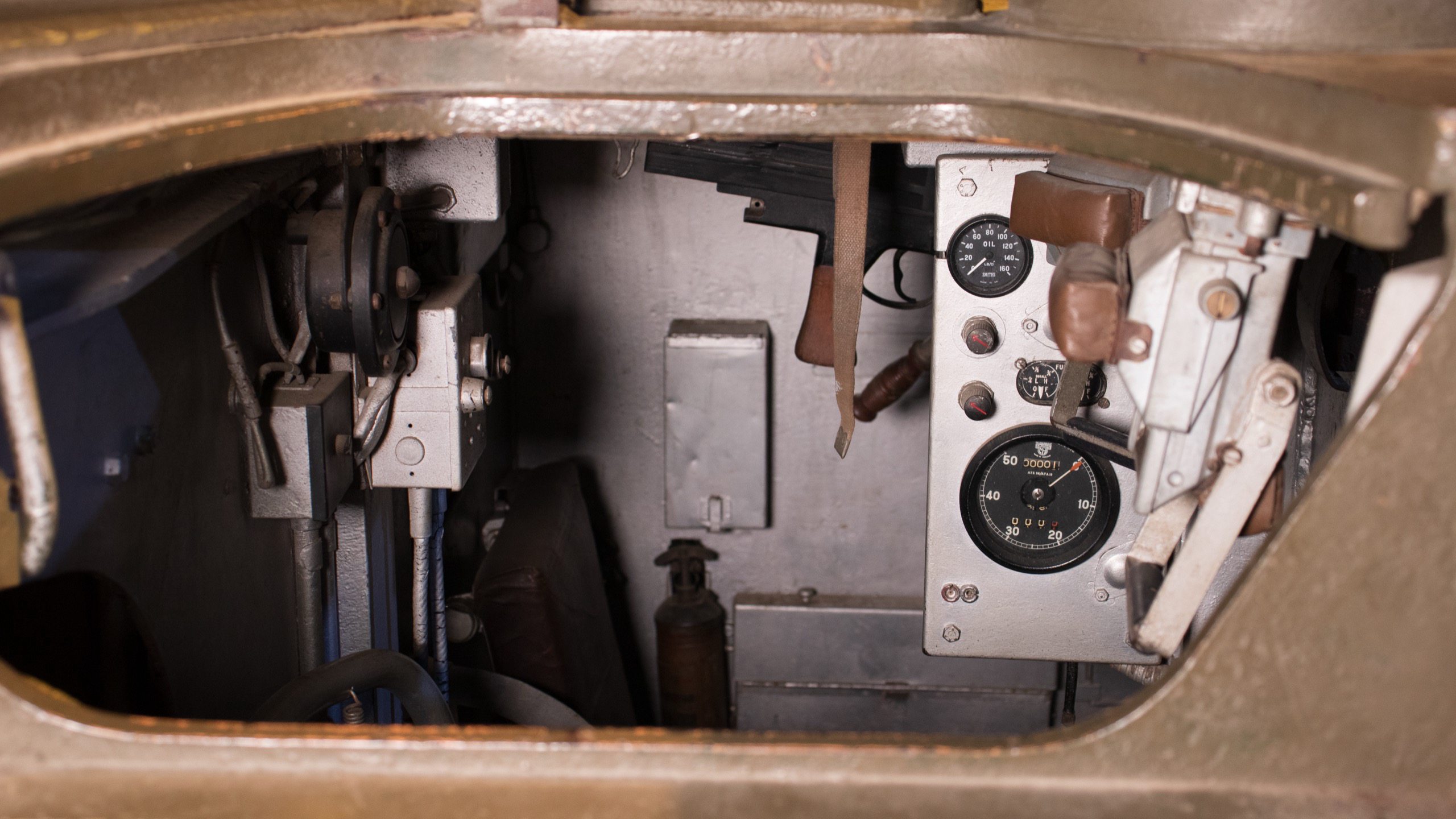
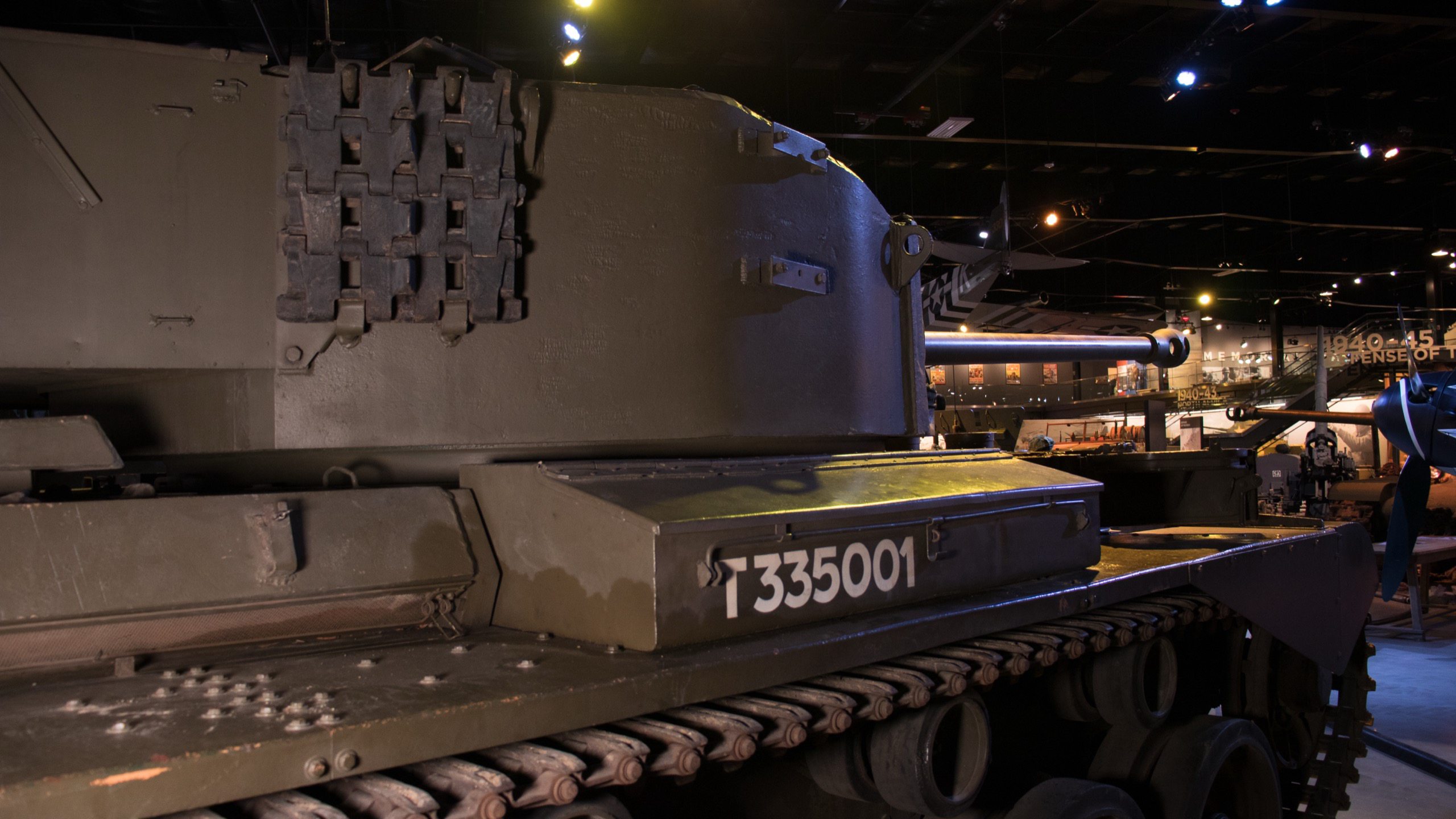
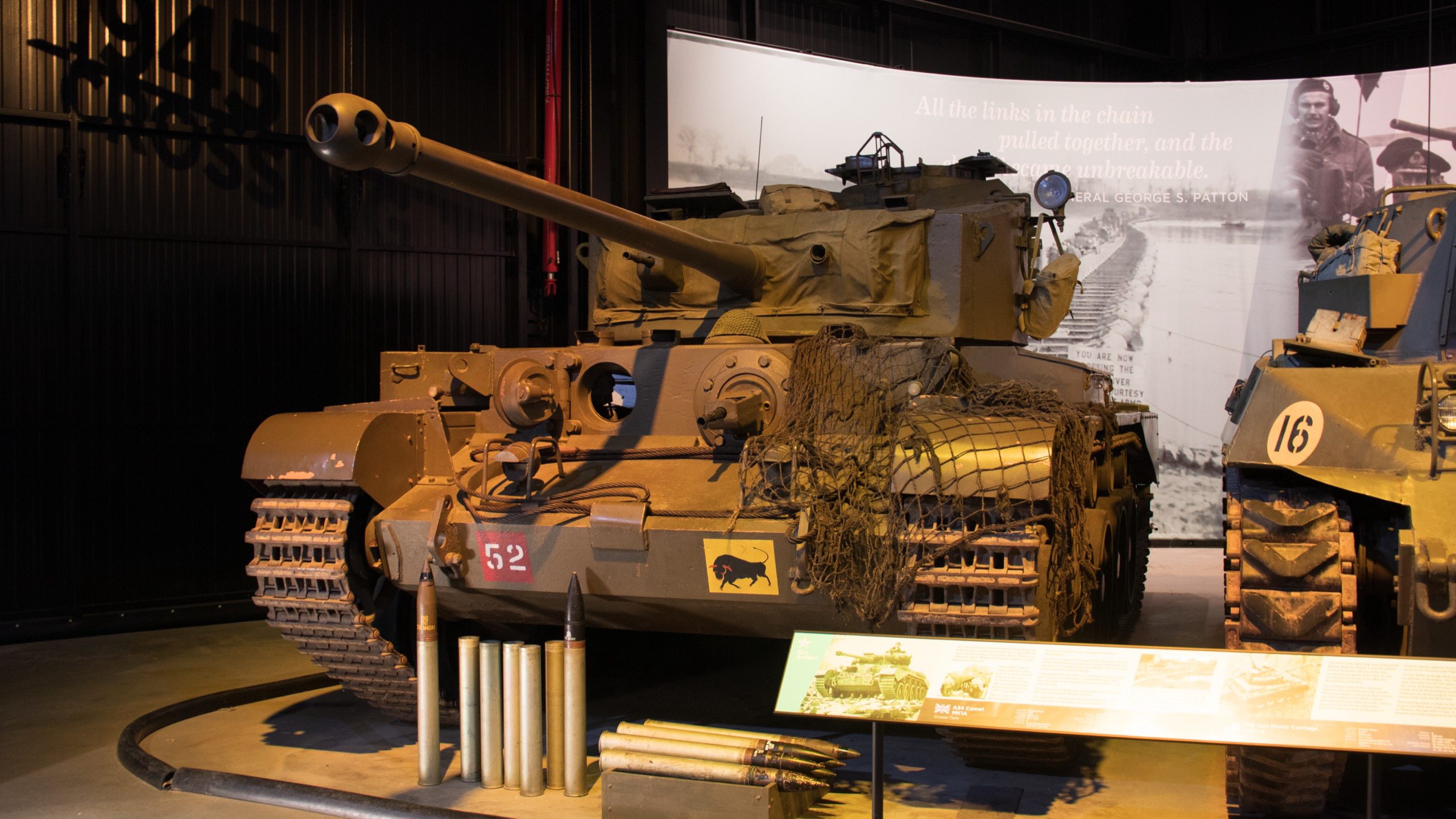
The British A34 Comet was one of the most advanced cruiser tanks developed during World War II, combining the speed and mobility of earlier British designs with significantly improved firepower and armor protection. Introduced during the final months of the war, the Comet represented the culmination of British cruiser tank development before the arrival of the revolutionary Centurion main battle tank.
Developed as a successor to the Cromwell, the Comet addressed the growing threat posed by German Panther and Tiger tanks. Its most important improvement was the powerful 77mm High Velocity (HV) cannon, a compact adaptation of Britain’s formidable 17-pounder anti-tank gun. Although firing the same diameter projectile, the 77mm HV used a shorter cartridge, allowing it to fit within the Comet’s redesigned turret.
The tank also incorporated improved frontal armor, wider tracks, strengthened suspension, and enhanced crew visibility. Powered by a 600-horsepower Rolls-Royce Meteor V-12 engine, the approximately 35-ton Comet could reach speeds exceeding 30 mph. Its five-man crew operated in a relatively compact but substantially improved fighting compartment.
The Comet first entered combat with Britain’s 11th Armoured Division during the final offensive into Germany in March 1945. Its combination of firepower, mobility, and reliability made it an effective weapon during the rapid Allied advance following the crossing of the Rhine River.
The Museum’s Remarkable Combat Veteran
The A34 Comet Mk IA displayed at the American Heritage Museum is an original World War II combat veteran with an exceptionally well-documented history.
Manufactured by Leyland Motors in December 1944, tank T335001 was the 101st Comet produced. In February 1945, it was assigned to C Squadron, 3 Troop, 2nd Fife and Forfar Yeomanry, part of the 29th Armoured Brigade, British 11th Armoured Division.
On March 28, 1945, the regiment crossed the Rhine River as British forces advanced into Germany. Less than two weeks later, on April 7, 1945, T335001 was photographed and filmed crossing the Weser River at Petershagen.
Remarkably, the museum has identified two crewmen visible in these historic images: tank commander Sergeant Jim Thompson-Bell and loader/operator Trooper Stan Weston. Weston later confirmed his identification in the photographs, helping establish the vehicle’s remarkable wartime provenance.
Shortly afterward, the tank’s squadron encountered determined German resistance near Loccum, where British crews engaged German 88mm anti-tank guns. Sergeant Thompson-Bell was subsequently awarded the Military Medal for his actions.
The 11th Armoured Division continued its advance across northern Germany, and elements of the division participated in the liberation of the Bergen-Belsen concentration camp on April 15, 1945.
Following the war, T335001 remained in British service before being sold to the Irish Defence Forces in 1960. It subsequently entered the Budge Collection in England and was acquired by Jacques Littlefield’s Military Vehicle Technology Foundation in December 1993.
Displayed in the American Heritage Museum’s Crossing the Rhine Gallery, this extraordinary Comet preserves not only an important advancement in British armored engineering, but the personal history of the soldiers who fought inside it during the final weeks of World War II.