Artifacts
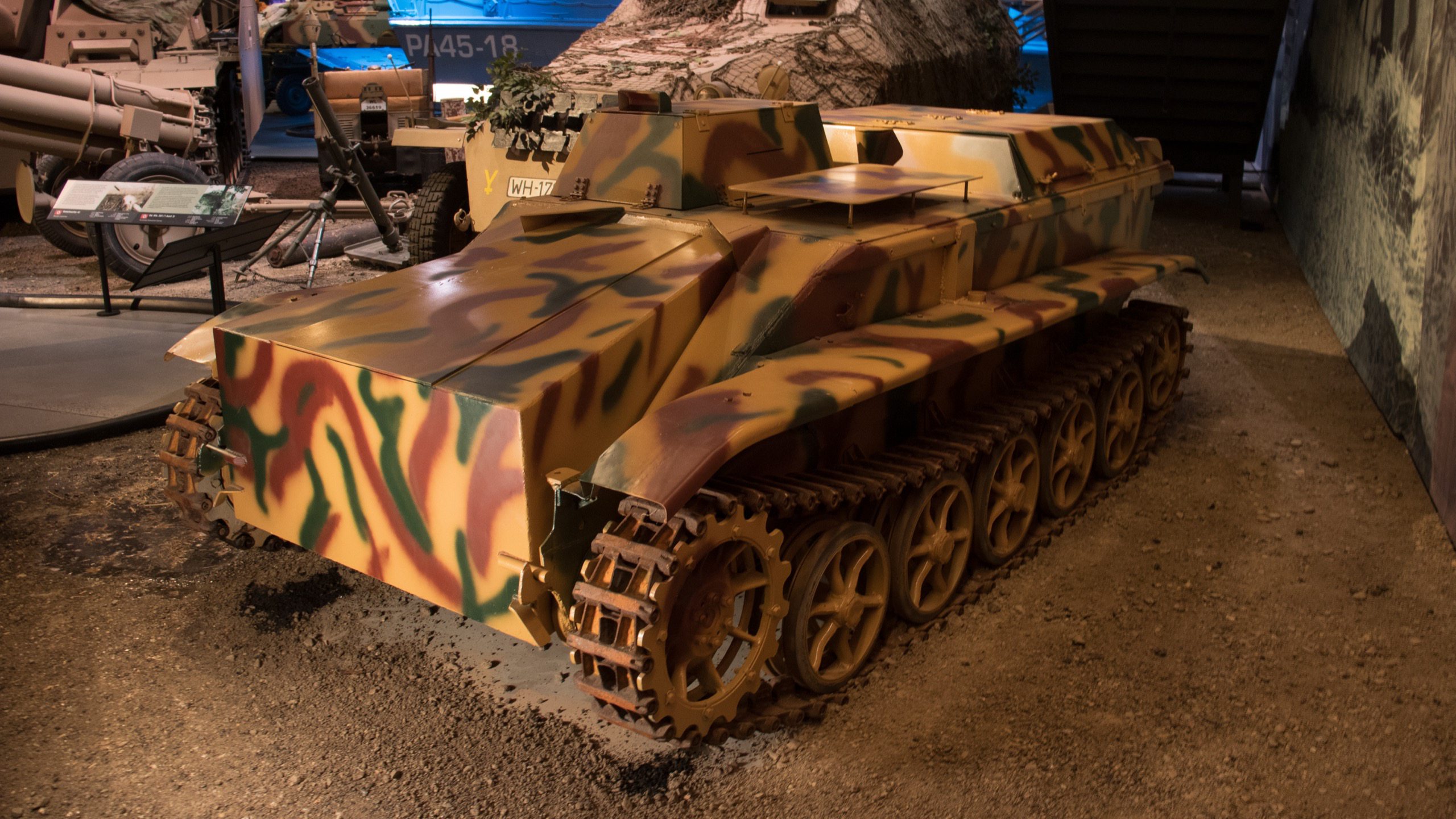
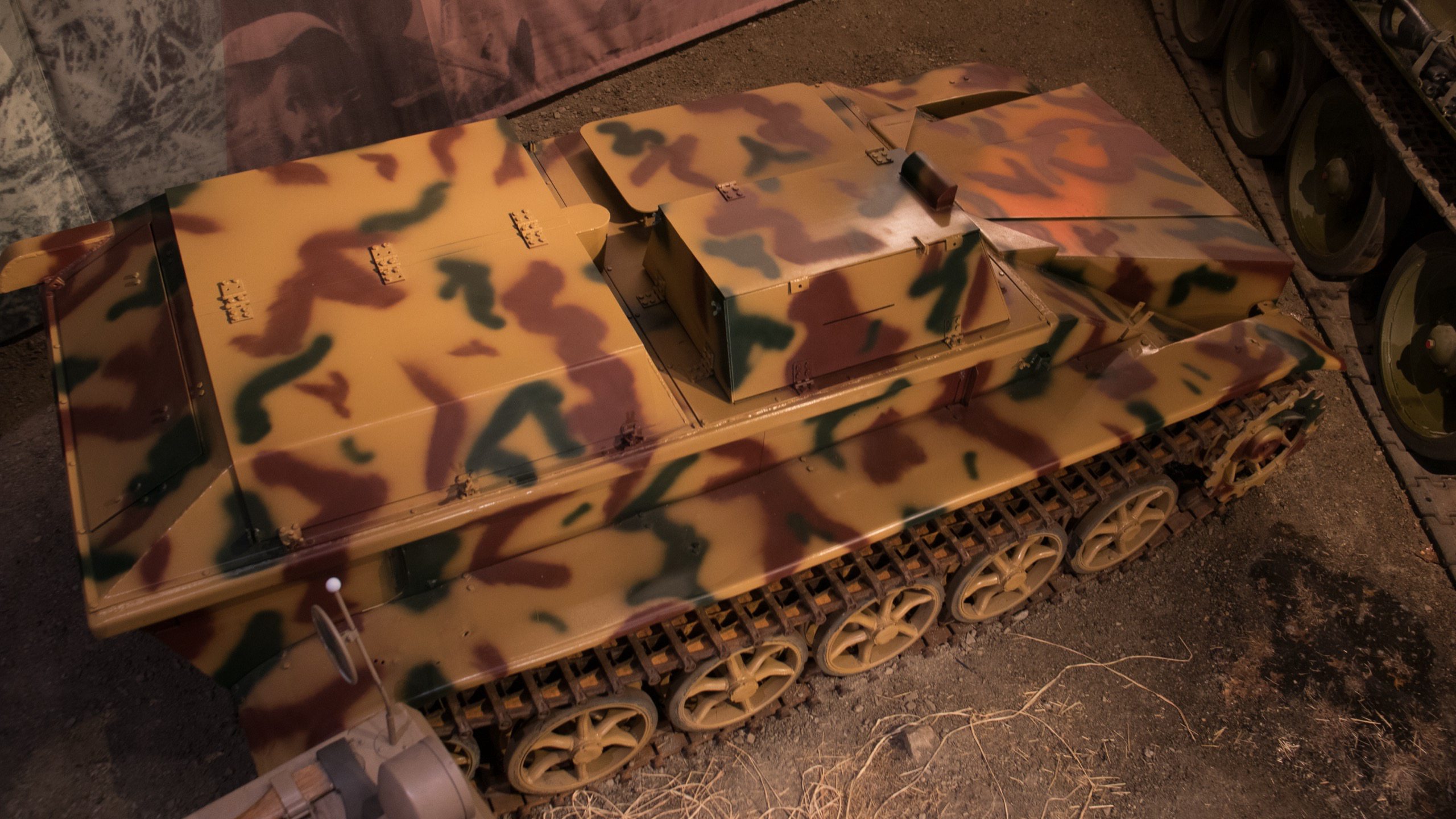
Sd.Kfz. 301 Borgward IV Ausf. B
German Remote-Controlled Demolition Vehicle | World War II (1942–1945)
| General Information | |
|---|---|
| Model | Sd.Kfz. 301 Borgward IV Ausf. B (Schwerer Ladungsträger B IV) |
| Class | Armor |
| Type | Remote Demolition Tank |
| Use | Military |
| Era | 1940-1945 |
| Gallery Focus | WWII European Theater |
| Manufacturer | Borgward |
| Year | 1943 |
| Country | Germany |
| Ownership | CF Inc. |
| Gallery Location | Eastern Front |
| Status | Operational, Offline |
Additional Photos
Video
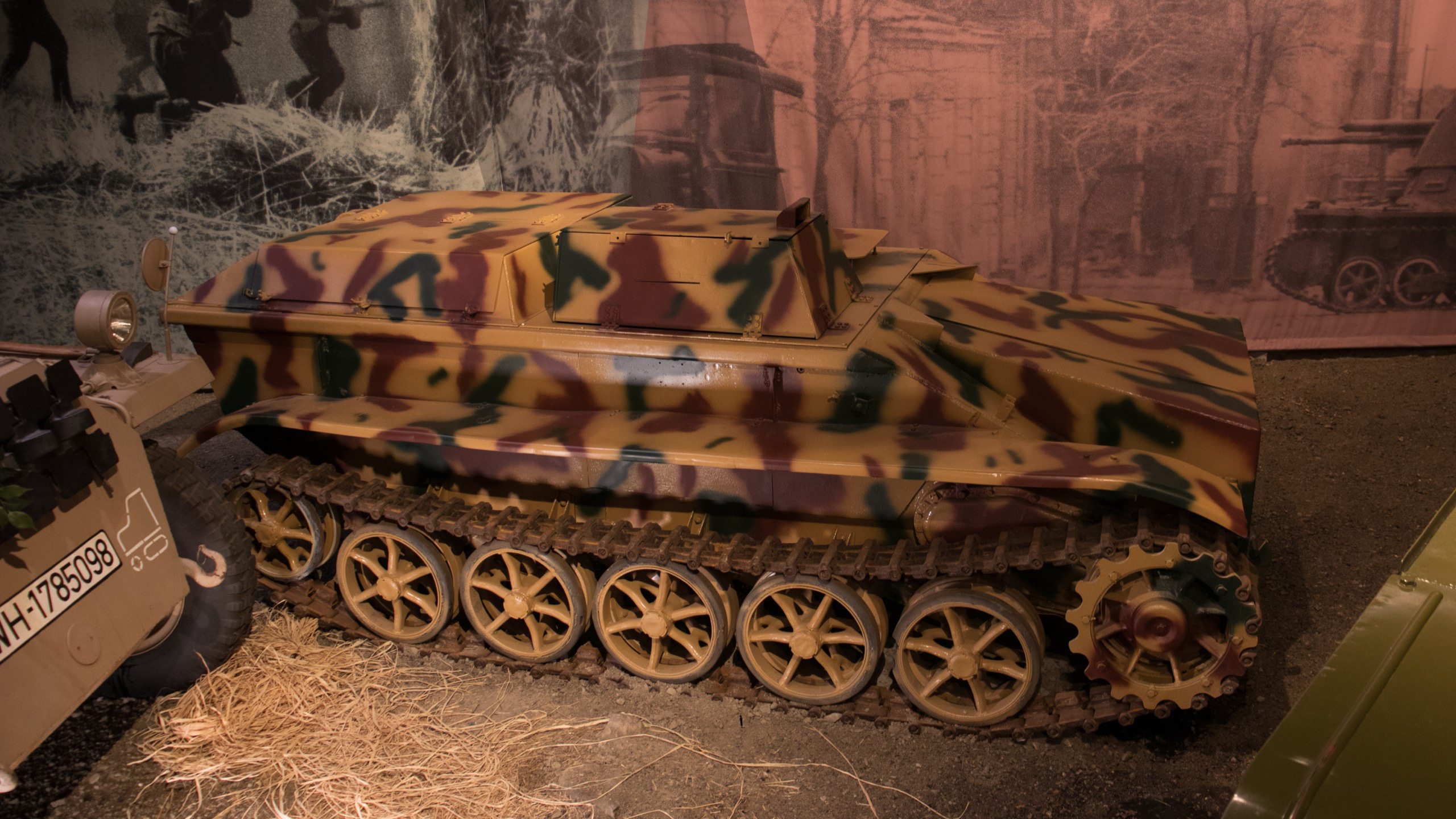
The Borgward IV was one of Germany’s most unusual armored vehicles of World War II, representing an early attempt to employ remotely controlled machines on the battlefield. Officially designated the Schwerer Ladungsträger (Heavy Explosive Carrier), Sd.Kfz. 301, the Borgward IV was designed to deliver powerful explosive charges against enemy fortifications, barricades, and defensive positions without exposing its operator to the final assault.
Developed by the German manufacturer Borgward and introduced in 1942, the vehicle was the largest of three German remotely operated demolition carriers, alongside the smaller Goliath and Springer. Unlike those vehicles, which were destroyed when their explosive charges detonated, the Borgward IV was designed to deposit its explosives and withdraw to a safe distance, allowing it to be reused.
The vehicle carried a massive 450-kilogram (approximately 990-pound) explosive charge in a detachable container mounted on its front. During an attack, a driver would initially operate the tracked vehicle from an onboard compartment, bringing it close to the intended target. After dismounting, control was transferred to a radio operator stationed in a specially equipped armored vehicle, who guided the Borgward toward its objective. Once positioned, the explosive charge was released, and the vehicle was directed away before detonation.
Three principal variants were manufactured: Ausf. A, B, and C. The Ausf. B, produced in approximately 260 examples during 1943, incorporated improved radio equipment, a relocated antenna, and other refinements over the original design. Powered by a gasoline engine, the vehicle could reach approximately 25 mph on roads. However, its relatively thin armor offered limited protection against enemy fire, and its complex control systems contributed to operational difficulties.
Borgward IV vehicles saw action on both the Eastern and Western Fronts, but their most infamous association was with the Warsaw Uprising of 1944. On August 13, Polish resistance fighters captured a German Borgward IV near a barricade in Warsaw’s Old Town. Mistaking the vehicle for a conventional armored fighting vehicle, insurgents drove it through the streets as celebrating civilians gathered around.
Tragically, while the vehicle was being maneuvered along Kilińskiego Street, its explosive container became detached and detonated. The enormous blast killed approximately 300 Polish insurgents and civilians and wounded hundreds more. Although long remembered as the explosion of a deliberately booby-trapped German tank, modern historical research suggests the tragedy was more likely an accidental detonation of the vehicle’s demolition charge.
The surviving Borgward IV Ausf. B displayed in the American Heritage Museum’s Eastern Front Gallery illustrates both the technological experimentation of World War II and the devastating human consequences of warfare. As an early predecessor of modern remotely operated military vehicles, it represents a significant chapter in the evolution of battlefield robotics and armored engineering.