Artifacts
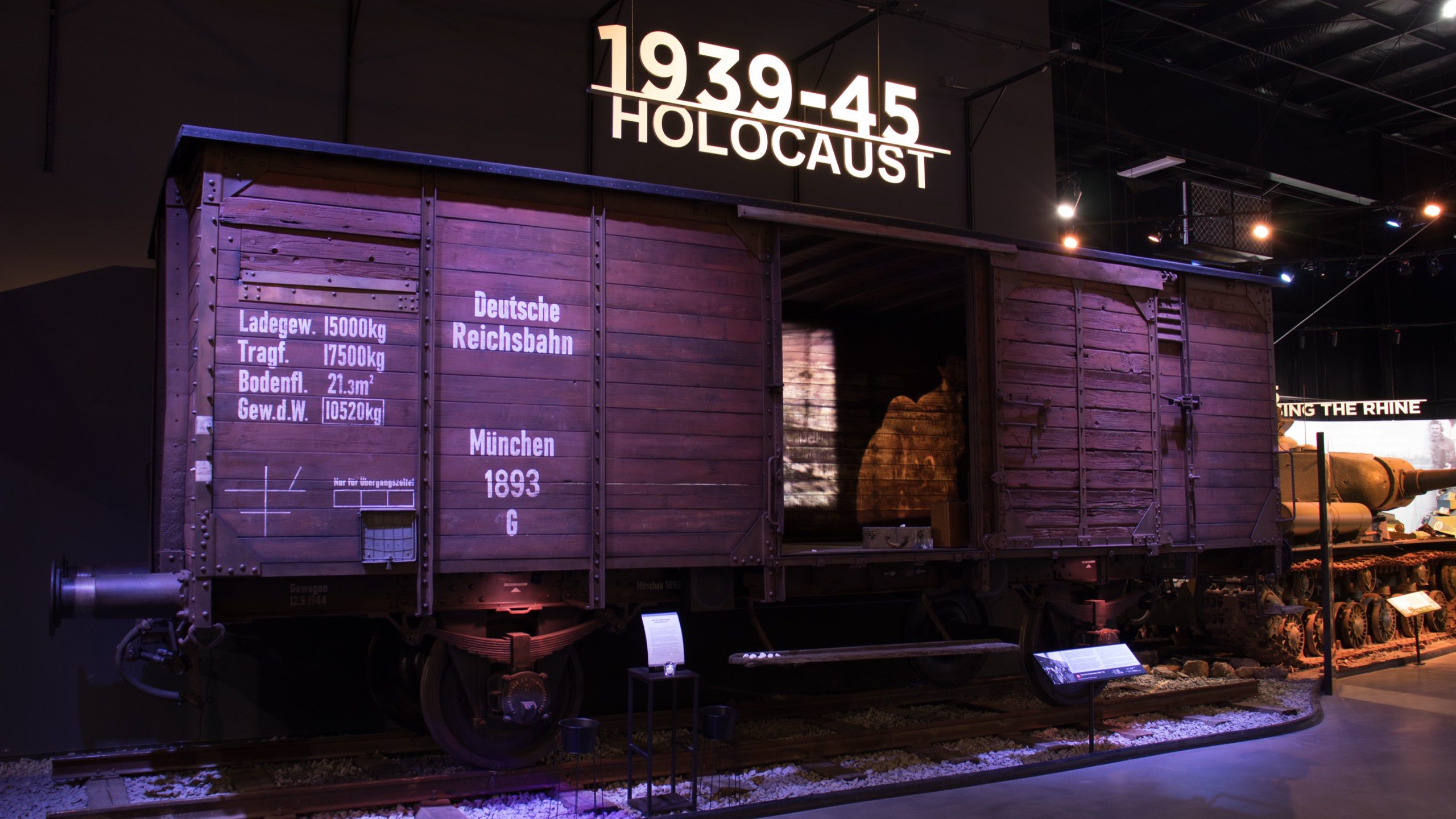
Deutsche Reichsbahn Type A2 Boxcar
| General Information | |
|---|---|
| Model | Deutsche Reichsbahn Type A2 Covered Freight Wagon Rail Car |
| Class | Rail Car |
| Type | Freight Boxcar |
| Use | Civilian |
| Era | 1940-1945 |
| Gallery Focus | WWII European Theater |
| Manufacturer | Deutsche Reichsbahn |
| Year | 1903 |
| Country | Germany |
| Ownership | CF Inc. |
| Gallery Location | Holocaust |
| Status | Operational, Offline |
Additional Photos
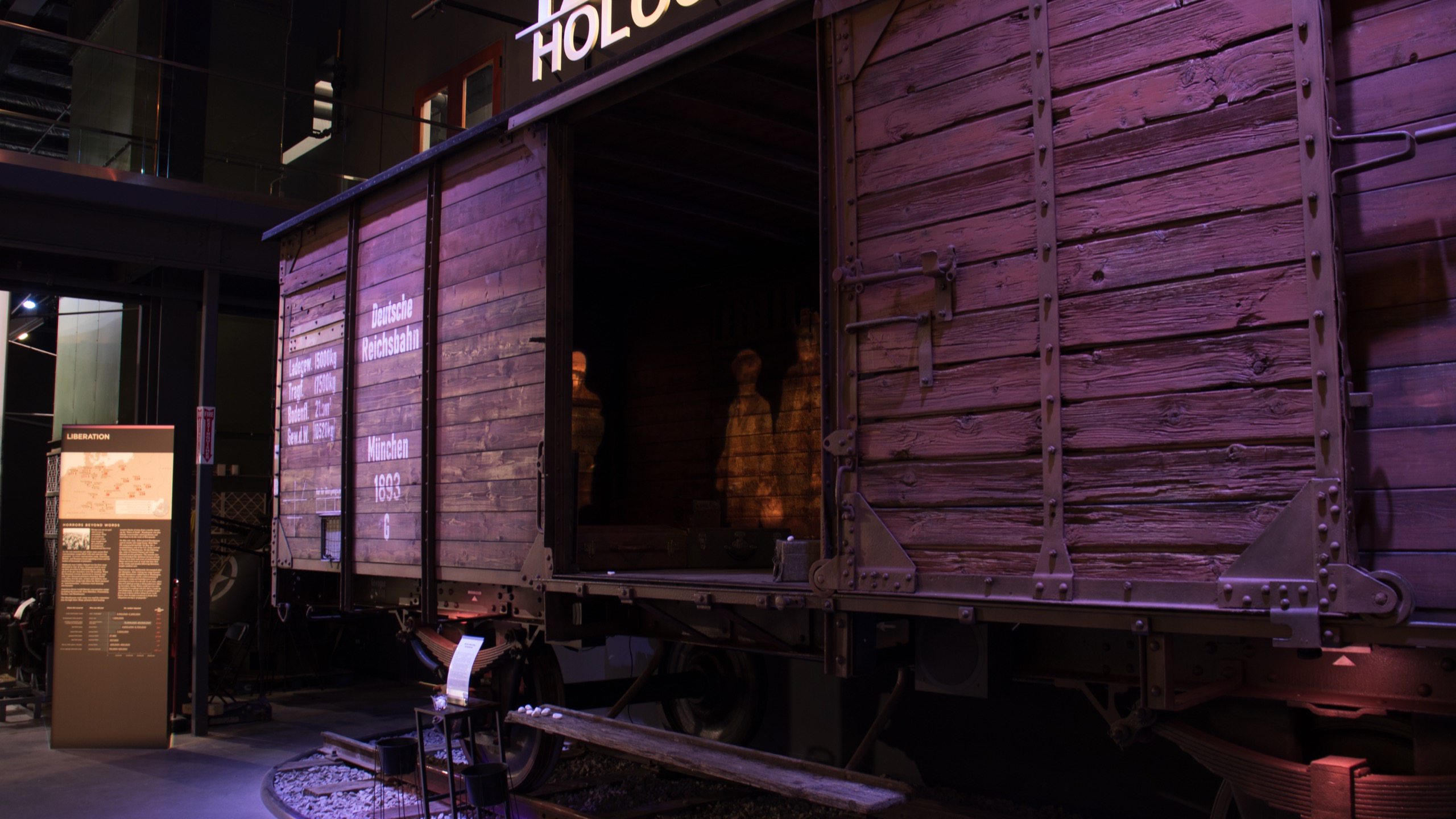
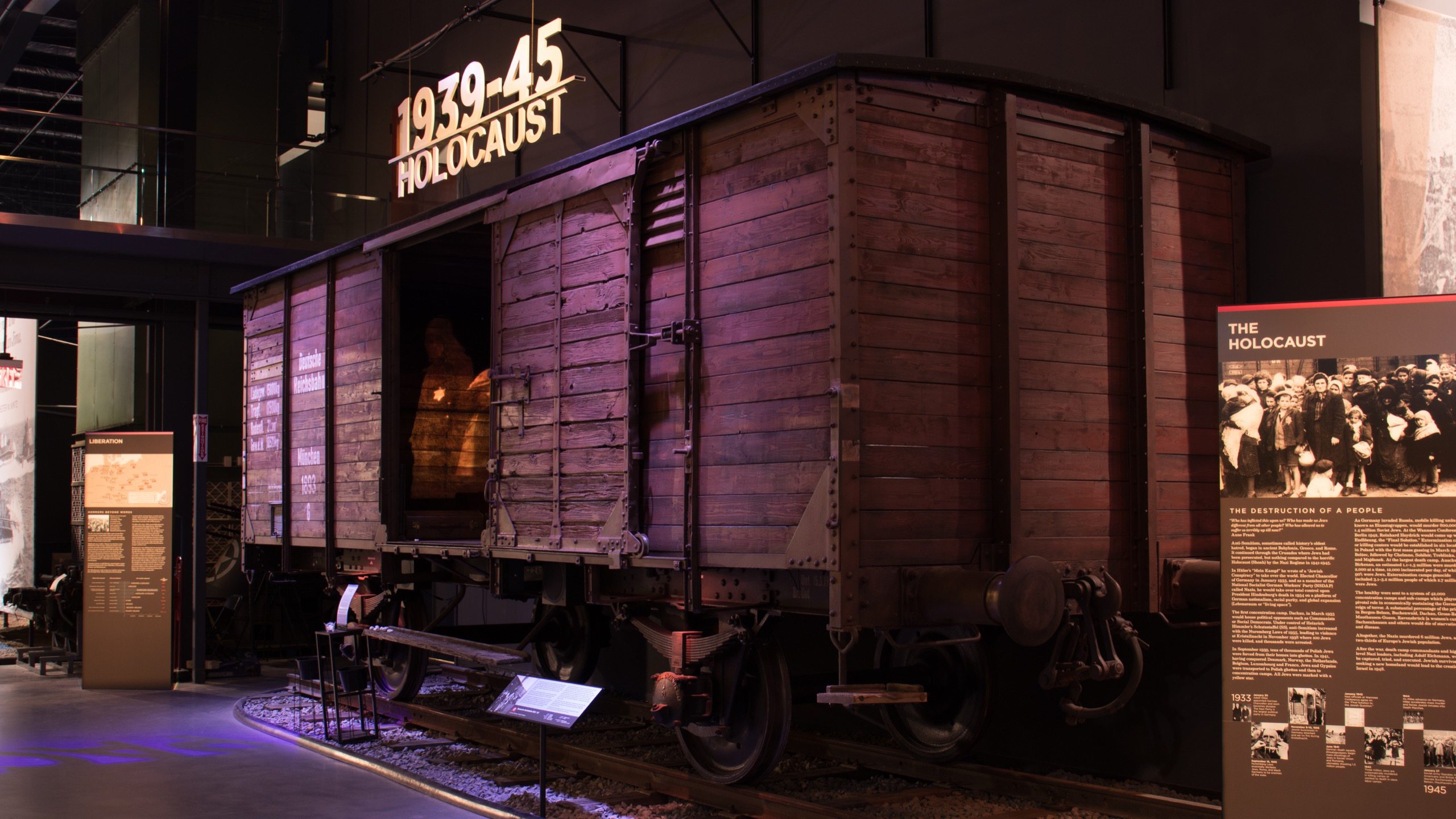
This original Deutsche Reichsbahn Type A2 covered freight wagon represents one of the most haunting symbols of the Holocaust and the systematic deportation of millions of European Jews and other victims of Nazi persecution during World War II. Imported from Nuremberg, Germany, by the American Heritage Museum in the summer of 2023, the historic railcar has undergone a complete restoration for preservation and exhibition.
This approximately 30-foot-long, two-axle freight wagon belongs to a class of more than 120,000 Type A2 covered goods wagons manufactured between 1910 and 1927 for Germany’s railway system. Originally designed for transporting commercial freight, wagons of this general type were later employed by Nazi Germany to transport prisoners and deportees to ghettos, concentration camps, forced labor facilities, and extermination centers throughout occupied Europe.
During World War II, Germany’s national railway system, the Deutsche Reichsbahn, became an essential component of the Nazi regime’s machinery of persecution and mass murder. Millions of Jewish men, women, and children, along with Roma and other persecuted populations, were forcibly transported by rail. Many were sent to killing centers, including Auschwitz-Birkenau, Treblinka, and Sobibor, where they were systematically murdered.
Deportees confined inside covered freight wagons endured horrific conditions. Often packed tightly into overcrowded cars with little ventilation, inadequate sanitation, and insufficient food or water, they suffered through journeys lasting days. Exposure to extreme heat, freezing temperatures, and dehydration claimed lives before some trains even reached their destinations.
Although the individual wartime service history of this particular A2 railcar cannot currently be established, it is representative of the types of covered freight wagons used during the Holocaust. Its preservation provides a tangible connection to the vast transportation infrastructure that enabled Nazi Germany’s systematic campaign of genocide.
Displayed in the American Heritage Museum’s Holocaust Gallery, this railcar stands as a solemn reminder of the six million Jewish victims of the Holocaust and the millions of others persecuted and murdered by the Nazi regime. It honors their memory while encouraging visitors to confront the devastating consequences of antisemitism, hatred, dehumanization, and institutional complicity in crimes against humanity.