Artifacts
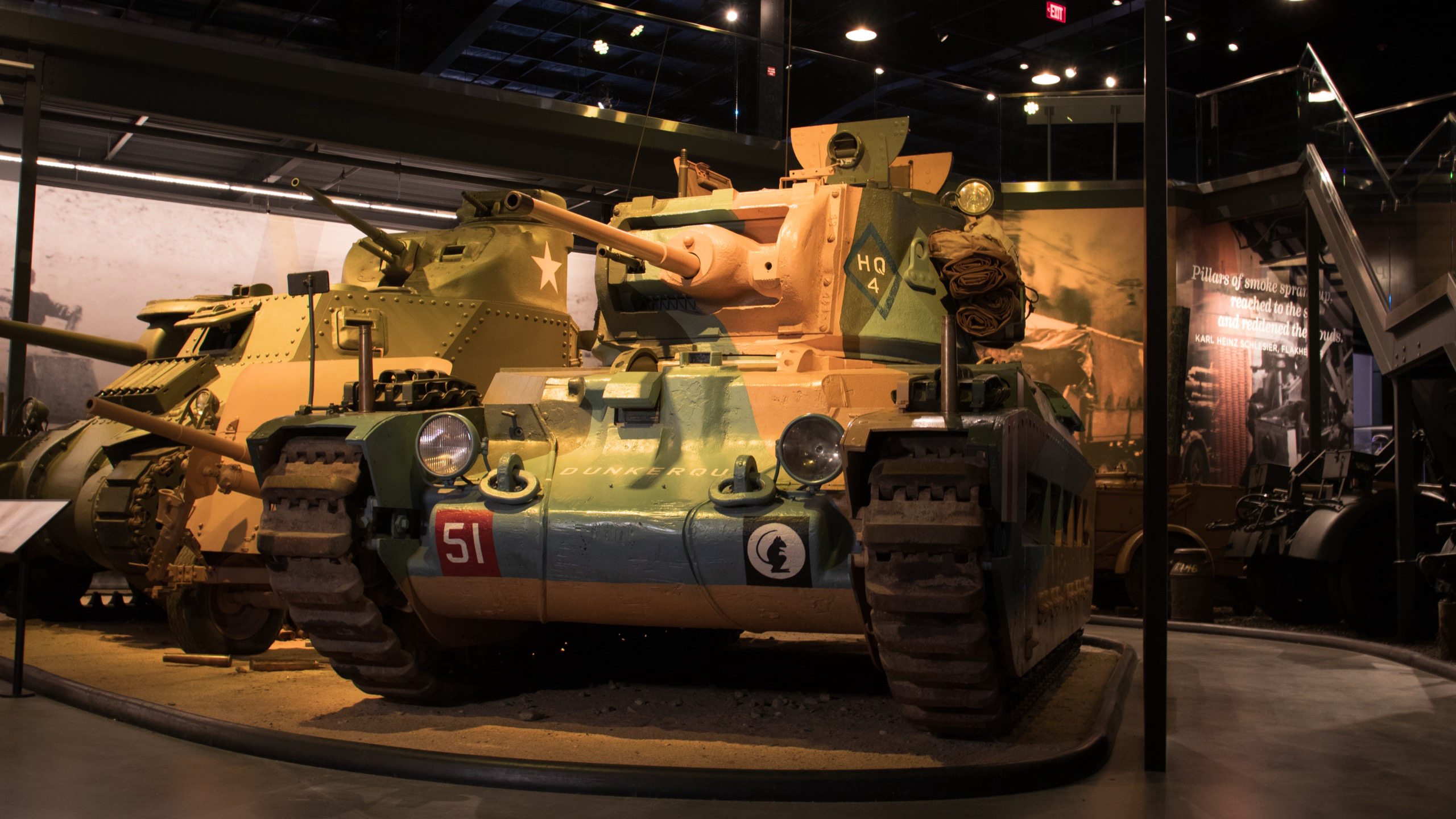
Matilda Mk.II (A12)
British Infantry Tank | World War II (1939–1945)
| General Information | |
|---|---|
| Model | Matilda Mk.II (A12) |
| Class | Armor |
| Type | Infantry Tank |
| Use | Military |
| Era | 1940-1945 |
| Gallery Focus | WWII European Theater |
| Manufacturer | Vulcan Foundry |
| Year | 1939 |
| Country | United Kingdom |
| Ownership | CF Inc. |
| Gallery Location | North Africa |
| Status | Operational, Offline |
Additional Photos
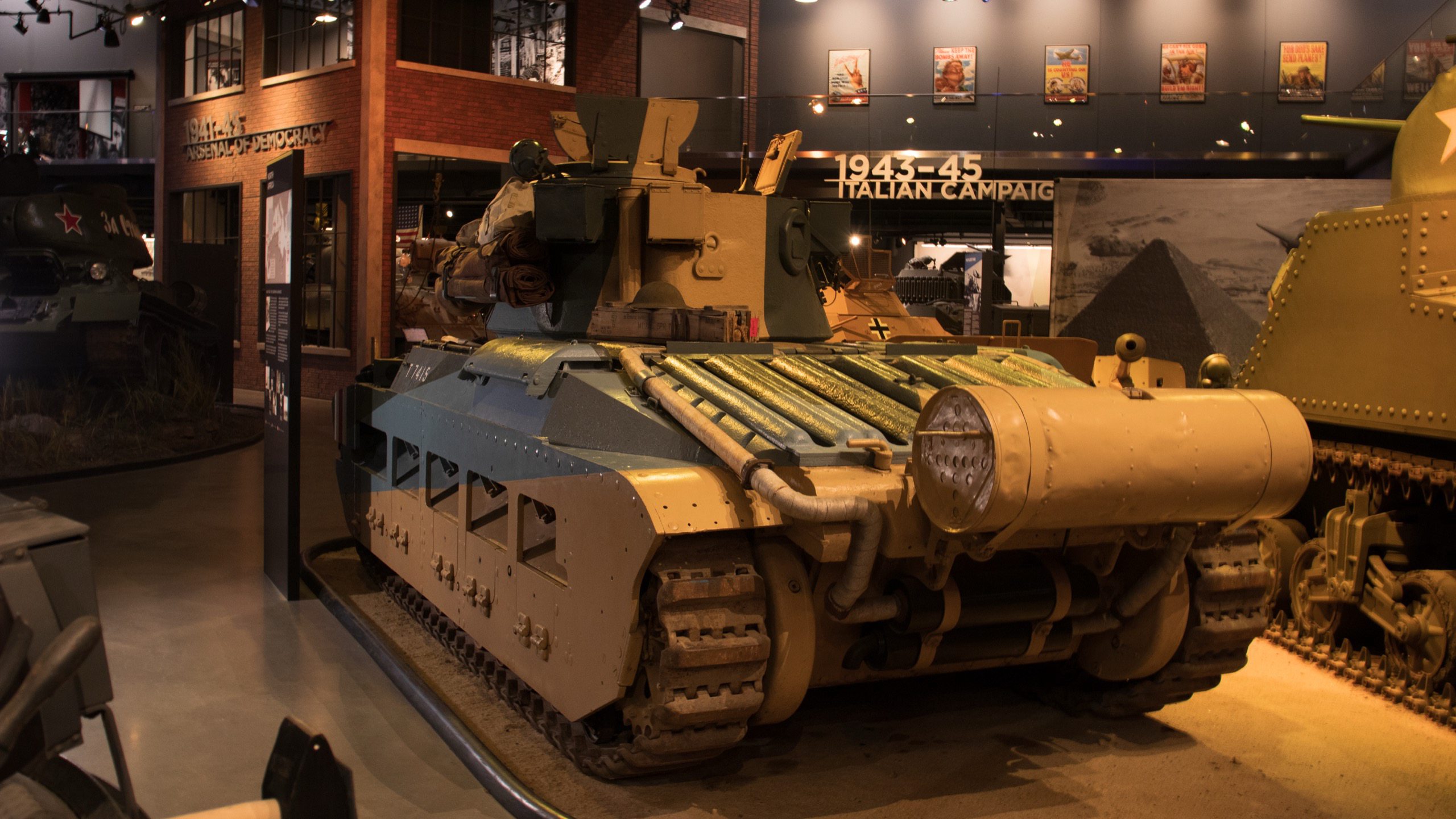
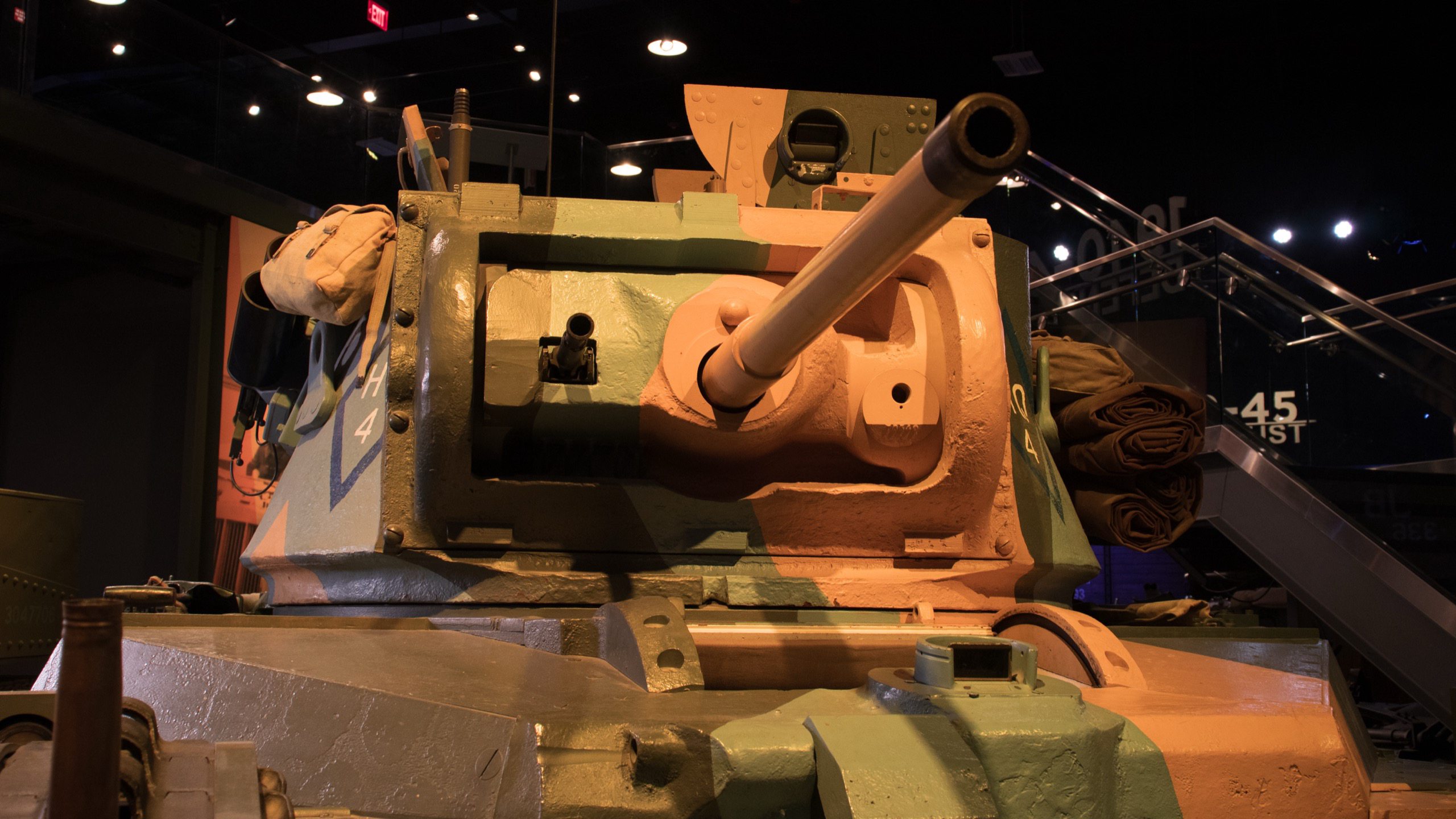
The Matilda Mk. II (A12) was one of Britain’s most heavily armored and formidable tanks during the early years of World War II. Designed to accompany advancing infantry and withstand concentrated enemy fire, the Matilda earned a fearsome reputation during the North African Campaign, where its exceptional armor protection frequently rendered enemy anti-tank weapons ineffective. Its battlefield dominance earned it the nickname “Queen of the Desert.”
Developed during the late 1930s, the Matilda II reflected British military doctrine that divided armored vehicles into fast cruiser tanks and heavily protected infantry tanks. Unlike cruiser tanks designed for rapid maneuvers and exploitation, the Matilda emphasized survivability and direct infantry support over speed. Its armor reached an impressive 78mm (3.1 inches) in thickness, providing protection superior to most contemporary tanks.
Weighing approximately 27 tons and operated by a four-man crew, the Matilda was powered by two six-cylinder diesel engines, manufactured by AEC or Leyland depending on the variant. Its maximum road speed of approximately 16 mph made it comparatively slow, but its rugged construction and heavy armor proved invaluable during assaults against fortified positions.
The Matilda’s primary armament was the Ordnance QF 2-pounder (40mm) cannon, mounted in a fully rotating turret and supported by a coaxial machine gun. Although effective against early-war German and Italian armor, the 2-pounder lacked a widely issued high-explosive round, limiting its effectiveness against enemy infantry and fortifications.
The Matilda first saw combat during the Battle of Arras in France in May 1940, but achieved its greatest success in North Africa. During Operation Compass (December 1940–February 1941), Matildas of the British 7th Royal Tank Regiment spearheaded attacks against Italian defensive positions in Egypt and Libya. Their thick armor proved nearly impervious to many Italian anti-tank weapons, allowing British and Commonwealth forces to overcome fortified positions and capture thousands of enemy soldiers.
The arrival of Germany’s Afrika Korps in 1941 presented new challenges. Although the Matilda remained effective against many German tanks, its relatively slow speed and limited gun performance became increasingly problematic. German forces discovered that the powerful 8.8cm FlaK anti-aircraft gun, employed in an anti-tank role, could penetrate the Matilda’s formidable armor. Heavy losses during Operation Battleaxe in June 1941 demonstrated the tank’s growing vulnerability.
Matildas continued supporting Allied operations during Operation Crusader later that year, but were gradually replaced in North Africa by more versatile designs, including the Valentine and American-built M3 Grant. Nevertheless, the Matilda remained in service elsewhere, notably with Australian forces fighting in the Pacific, through the end of World War II. A total of 2,987 Matilda II tanks were manufactured between 1937 and 1943.
The Matilda Mk. II displayed in the American Heritage Museum’s North Africa Gallery represents the evolution of British armored warfare and the critical role heavily protected infantry tanks played in the early Allied campaigns against Axis forces.