Artifacts
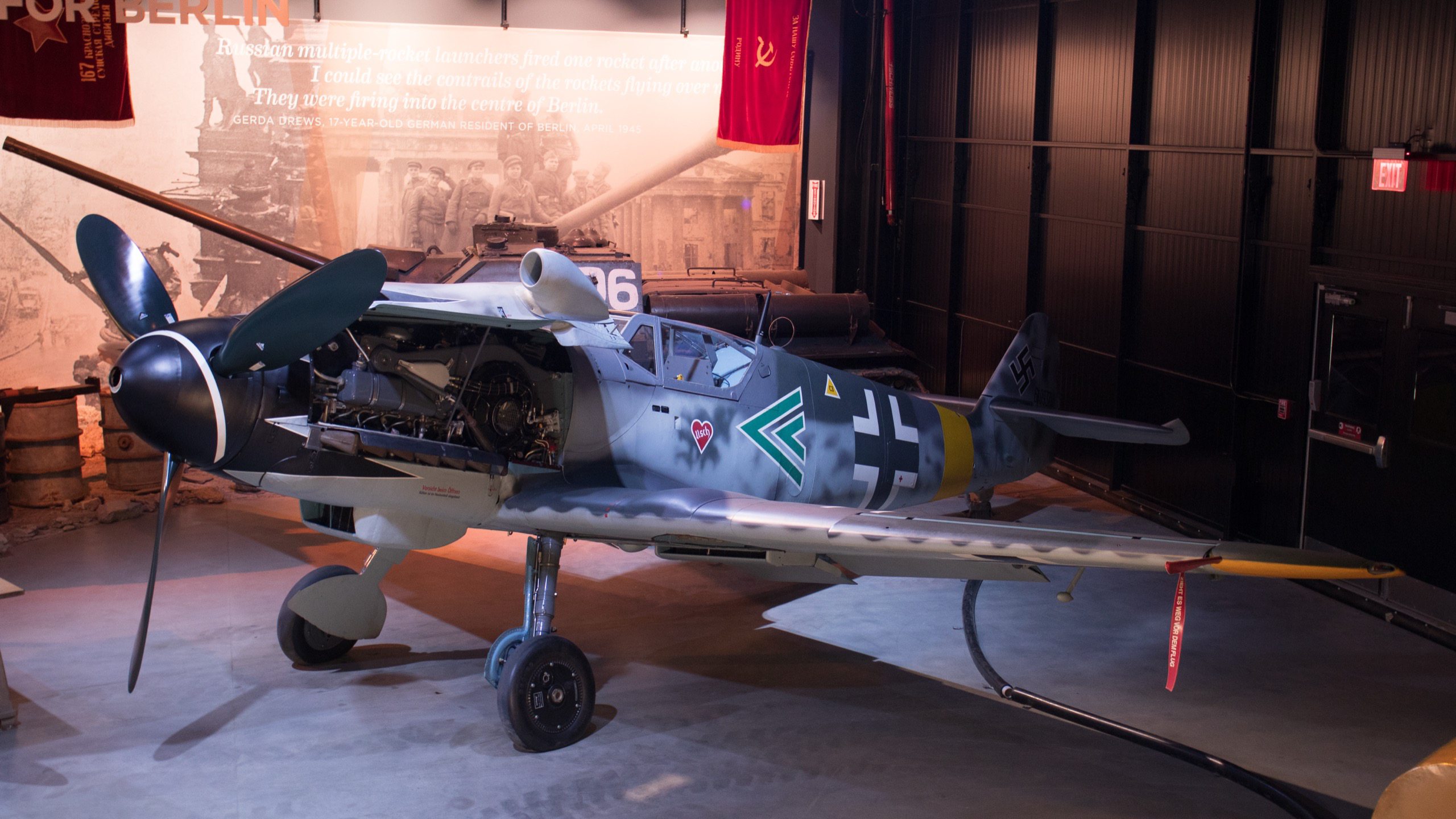
Messerschmitt Bf 109G-10
Germany | 1944–1945 | World War II – Defense of the Reich
| General Information | |
|---|---|
| Model | Bf 109G-10 |
| Class | Aircraft |
| Type | Fighter |
| Use | Military |
| Era | 1940-1945 |
| Gallery Focus | WWII European Theater |
| Manufacturer | Messerschmitt / Erla |
| Year | 1943 |
| Country | Germany |
| Ownership | CF Inc. |
| Gallery Location | Battle for Berlin |
| Status | Operational, Offline |
Additional Photos
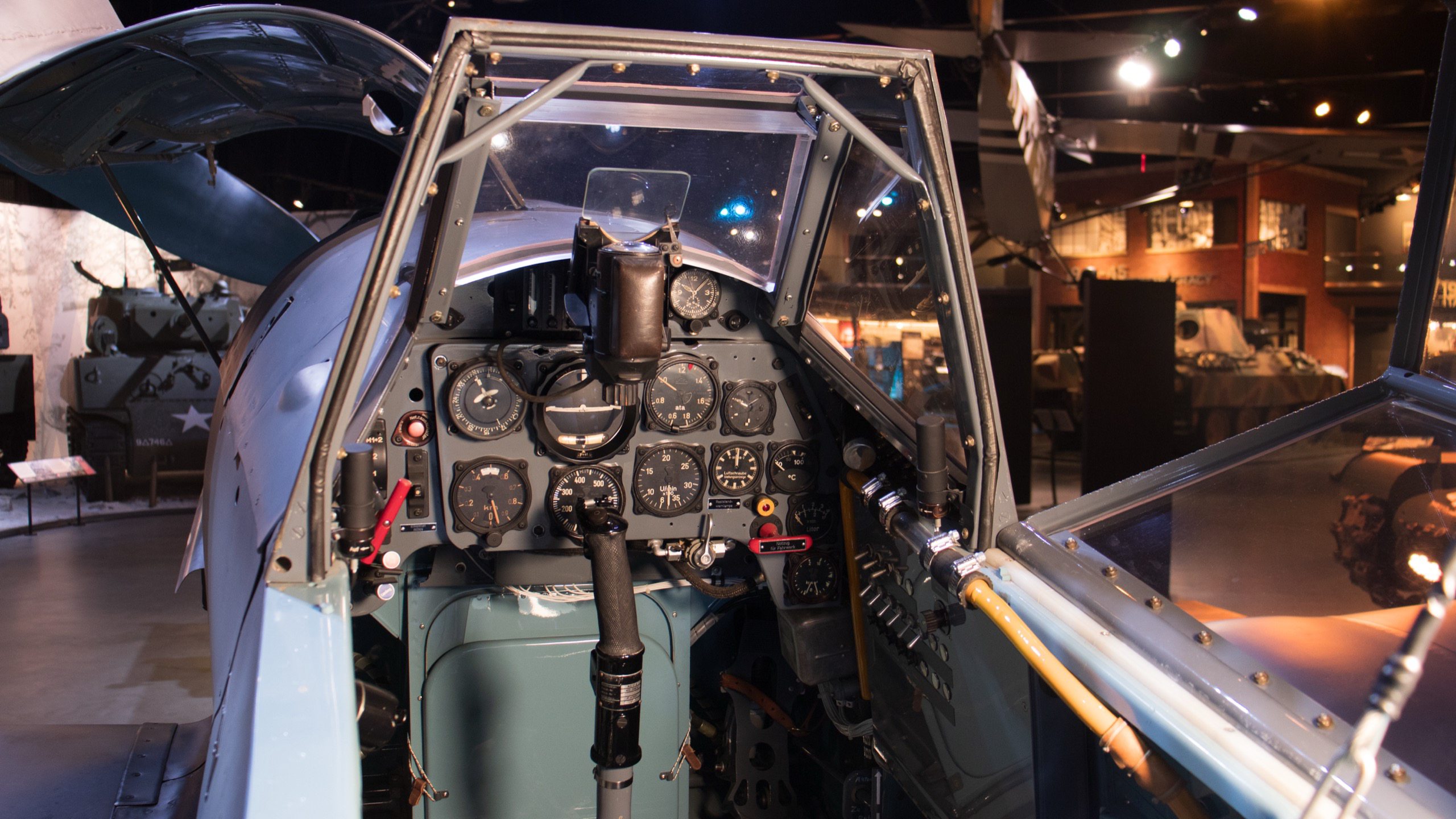
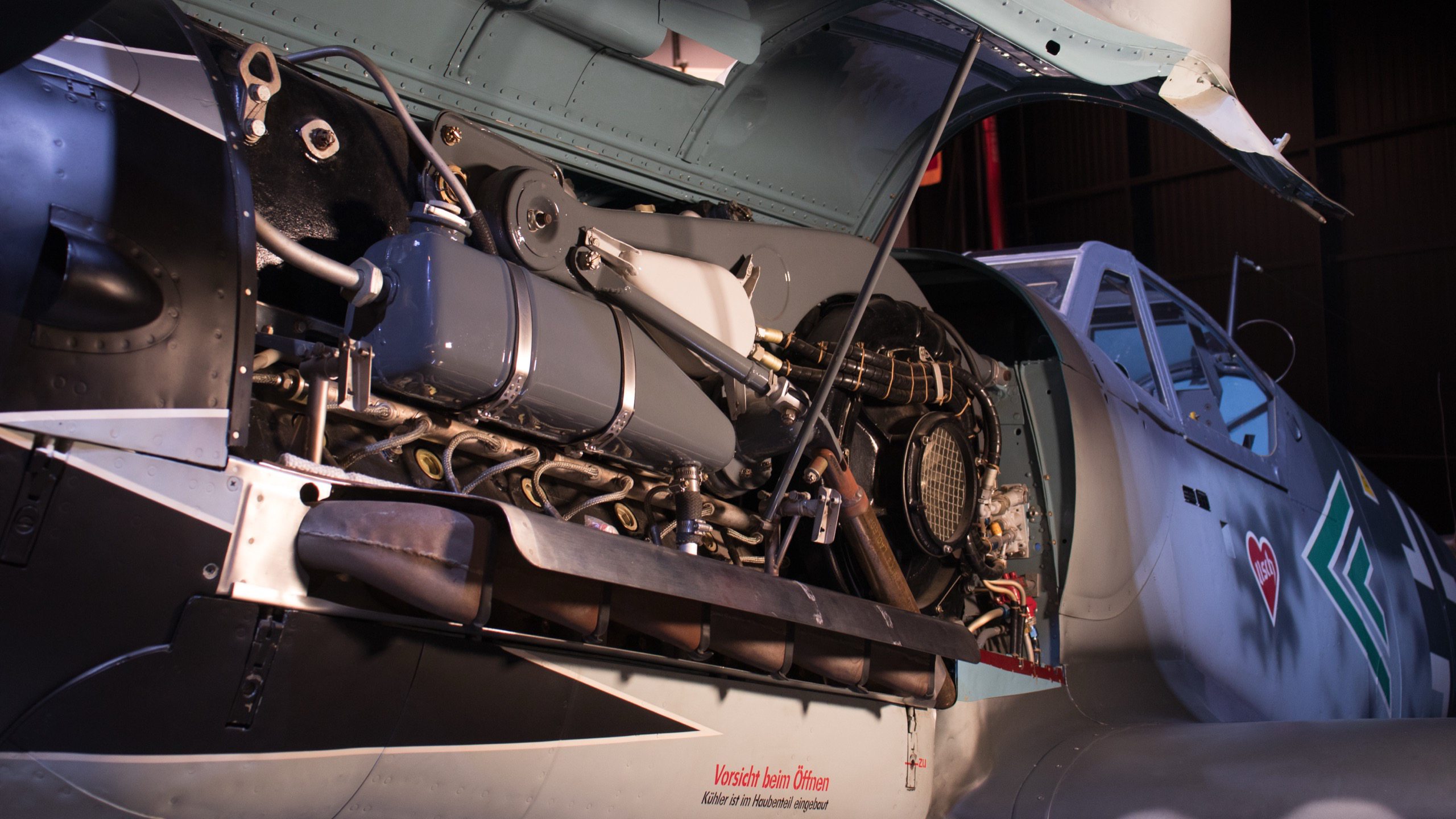
Video
The Messerschmitt Bf 109 was one of the most influential fighter aircraft of World War II and the backbone of Germany’s Luftwaffe throughout the conflict. Designed by Willy Messerschmitt during the mid-1930s, the Bf 109 combined advanced features including an all-metal airframe, retractable landing gear, enclosed cockpit, and powerful liquid-cooled engine. First flown in 1935, the aircraft entered combat during the Spanish Civil War and remained in frontline service until Germany’s surrender in May 1945.
More than 34,000 Bf 109s were manufactured, making it the most-produced fighter aircraft in history. The type served across nearly every European theater, including the invasion of Poland, Battle of France, Battle of Britain, North African Campaign, and the Eastern Front. As Allied air superiority grew, the Bf 109 increasingly assumed the desperate task of defending German cities and industrial centers against American and British bombing raids.
Introduced in late 1944, the Bf 109G-10 was among the final and most powerful developments of the famous fighter. Part of the extensive “Gustav” series, the G-10 incorporated the improved Daimler-Benz DB 605D inverted V-12 engine, capable of producing approximately 1,800 horsepower. With improved high-altitude performance and a maximum speed approaching 425 mph under favorable conditions, it represented an effort to keep the aging design competitive against advanced Allied fighters such as the North American P-51 Mustang.
The G-10 featured revised engine cowling, an improved Erla-Haube canopy offering better rearward visibility, and heavier armament. The G-10/U4 variant carried a powerful 30mm MK 108 cannon firing through the propeller hub, supplemented by two synchronized 13mm MG 131 machine guns above the engine.
The American Heritage Museum’s Bf 109G-10/U4, Werknummer 610937, is a rare surviving example with an extraordinary history extending beyond World War II. Manufactured during the closing months of the conflict, the aircraft was abandoned at Zeltweg Airfield in Austria as German forces collapsed in 1945. Its precise wartime combat assignments remain uncertain.
Following the war, the fighter entered Bulgarian Air Force service before being transferred to Yugoslavia, where it operated as aircraft number 9644, marked “White 44.” Its last recorded flight occurred on October 17, 1950. Subsequently retired, the aircraft survived years of storage and eventually entered the international warbird preservation community.
During the late 1980s, the aircraft was acquired by Evergreen Aviation and underwent an extensive restoration in the United States. It was subsequently exhibited at the Evergreen Aviation & Space Museum in McMinnville, Oregon, before joining the American Heritage Museum’s collection in Massachusetts.
Today, this exceptional survivor illustrates the technological evolution of German fighter aviation and the increasingly difficult conditions confronting the Luftwaffe during the final months of World War II. It also offers a rare connection to the complex postwar history of military aviation in Europe.
Exhibit Location: The Messerschmitt Bf 109G-10/U4 is on permanent public display in the Battle for Berlin Gallery within the American Heritage Museum’s World War II in Europe exhibition.