Artifacts
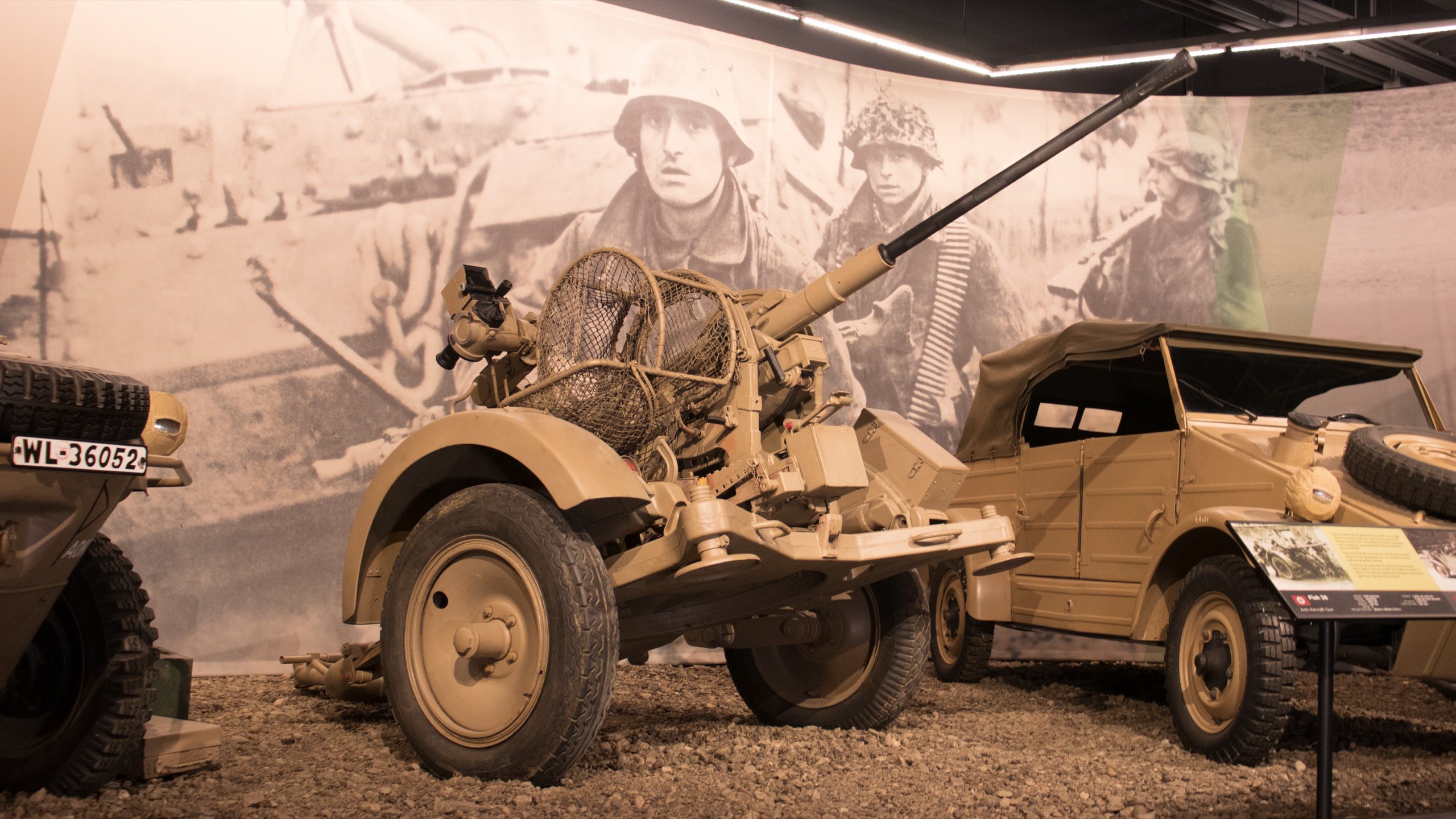
2 cm Flugzeugabwehrkanone Flak 38
Germany | 1940–1945 | World War II – Italian Campaign
| General Information | |
|---|---|
| Model | 2 cm Flugzeugabwehrkanone Flak 38 |
| Class | Artillery |
| Type | Anti-Aircraft Gun |
| Use | Military |
| Era | 1940-1945 |
| Gallery Focus | WWII European Theater |
| Manufacturer | Rheinmetall-Borsig |
| Year | 1940 |
| Country | Germany |
| Ownership | CF Inc. |
| Gallery Location | Italian Campaign |
| Status | Static Only |
Additional Photos
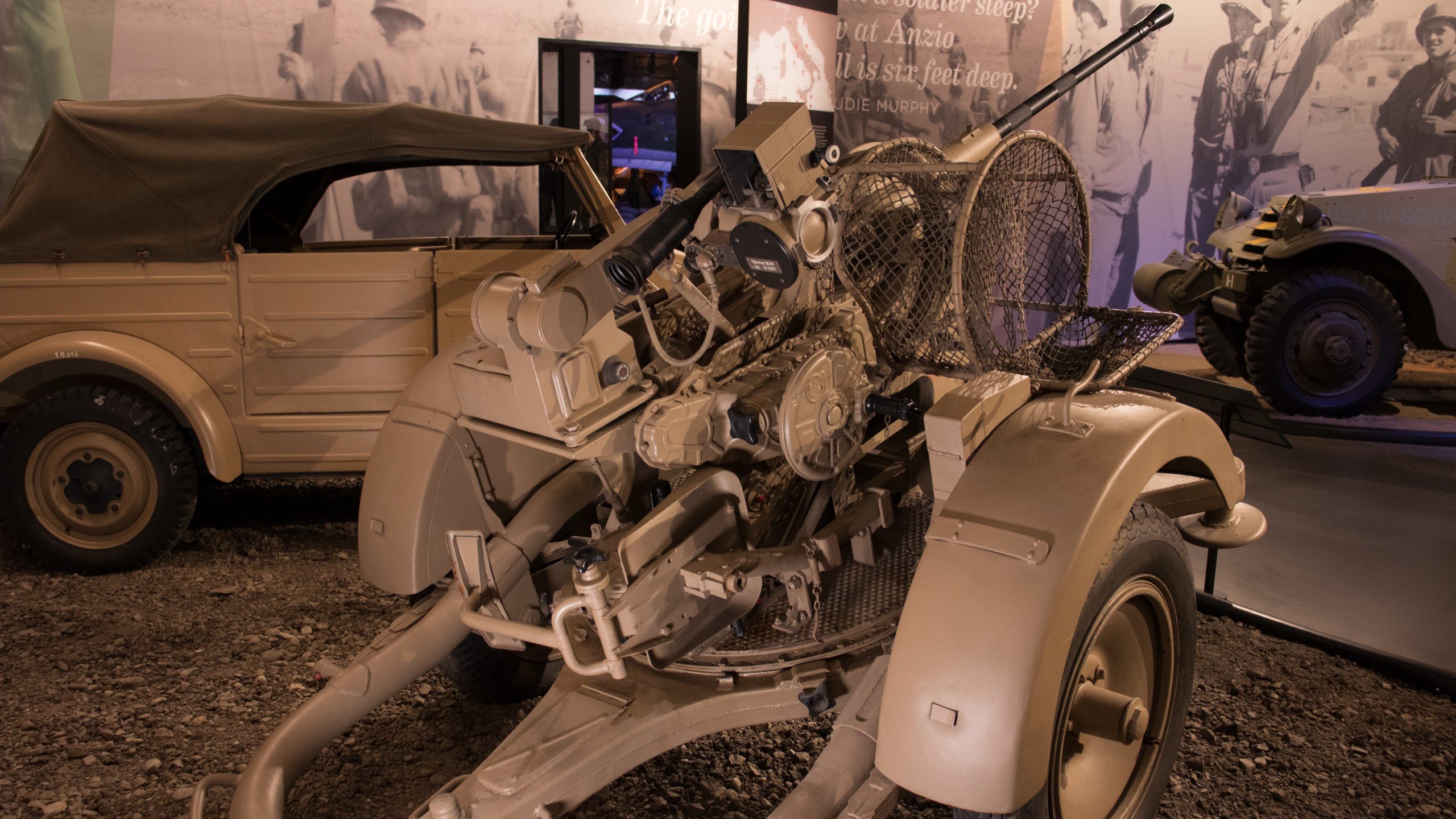
The German 2cm Flugabwehrkanone 38 (FlaK 38) was a rapid-firing light anti-aircraft cannon designed to protect German troops, vehicles, and military installations against low-flying Allied aircraft. Introduced in 1940 as an improvement over the earlier FlaK 30, it became one of Germany’s most widely employed anti-aircraft weapons during World War II.
Firing 20mm high-explosive and armor-piercing ammunition from 20-round magazines, the FlaK 38 had a theoretical firing rate of approximately 450 rounds per minute. Its compact mounting allowed 360-degree rotation and a high angle of elevation, enabling crews to track rapidly moving aircraft. Transported on a two-wheeled trailer, the weapon could be quickly positioned to defend roads, airfields, supply depots, and frontline formations.
During the Italian Campaign of 1943–1945, German forces relied upon light anti-aircraft weapons such as the FlaK 38 to defend against increasingly effective Allied tactical airpower. American and British fighter-bombers frequently attacked German transportation routes, supply columns, and defensive positions throughout Italy’s mountainous countryside. The FlaK 38 provided vital close-range protection against these attacks.
The weapon also proved effective in a ground-support role. Its rapid-firing 20mm cannon could engage infantry, lightly armored vehicles, and exposed enemy positions, making it a versatile addition to German defensive formations.
Although powerful against low-flying aircraft, the FlaK 38’s relatively short effective range limited its usefulness against high-altitude bombers. Nevertheless, thousands remained in service through Germany’s surrender in May 1945.
Displayed in the American Heritage Museum’s Italian Campaign Gallery, the FlaK 38 illustrates the growing importance of air defense and the challenges faced by German ground forces as Allied air superiority became increasingly decisive during the liberation of Italy.