Artifacts
Type 166 Schwimmwagen
Germany | 1942–1944 | World War II – Italian Campaign
| General Information | |
|---|---|
| Model | Type 166 Schwimmwagen |
| Class | Military Vehicle |
| Type | Light Utility, Amphibious |
| Use | Military |
| Era | 1940-1945 |
| Gallery Focus | WWII European Theater |
| Manufacturer | Volkswagen |
| Year | 1942 |
| Country | Germany |
| Ownership | CF Inc. |
| Gallery Location | Italian Campaign |
| Status | Operational, Offline |
Additional Photos
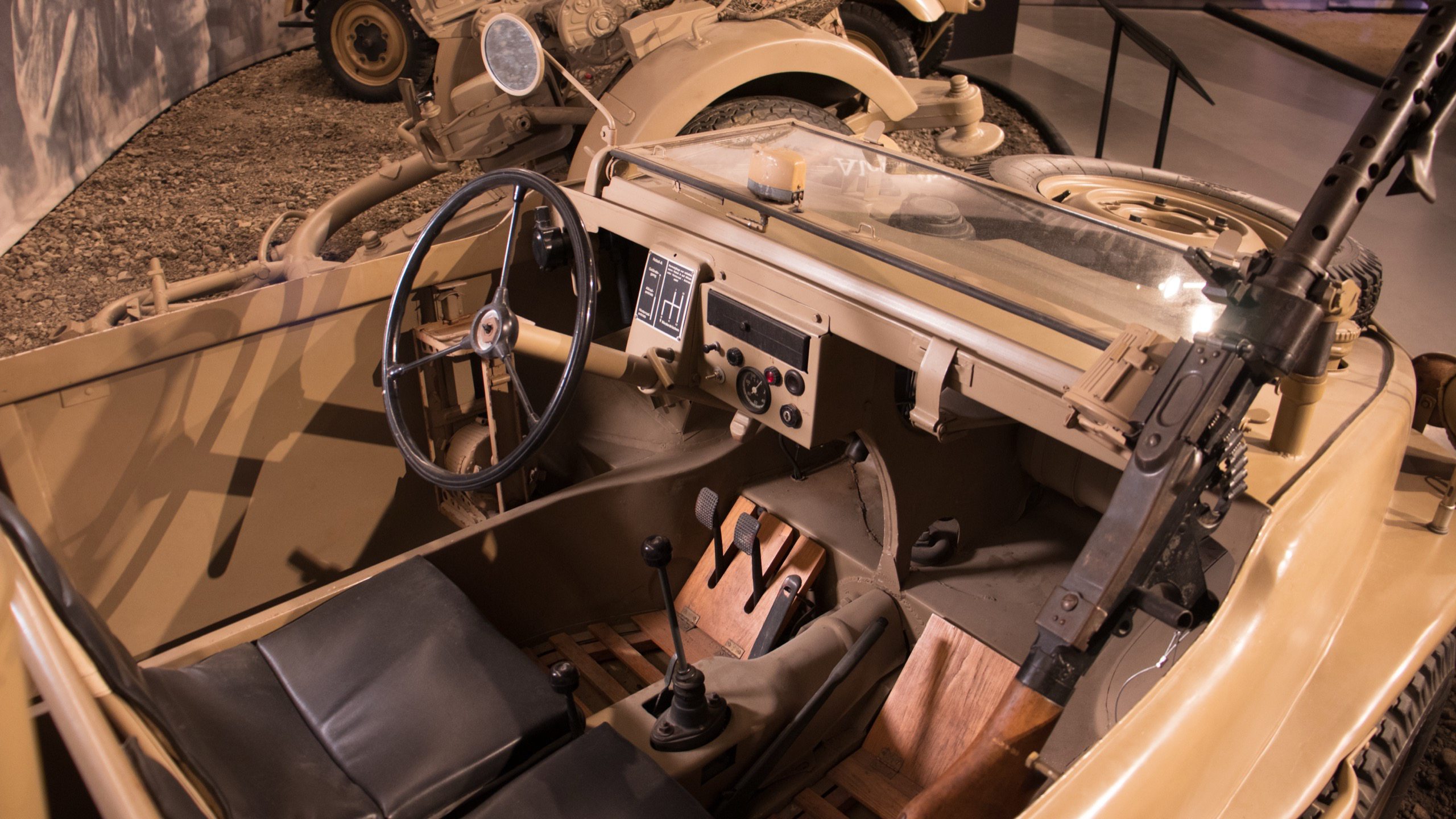
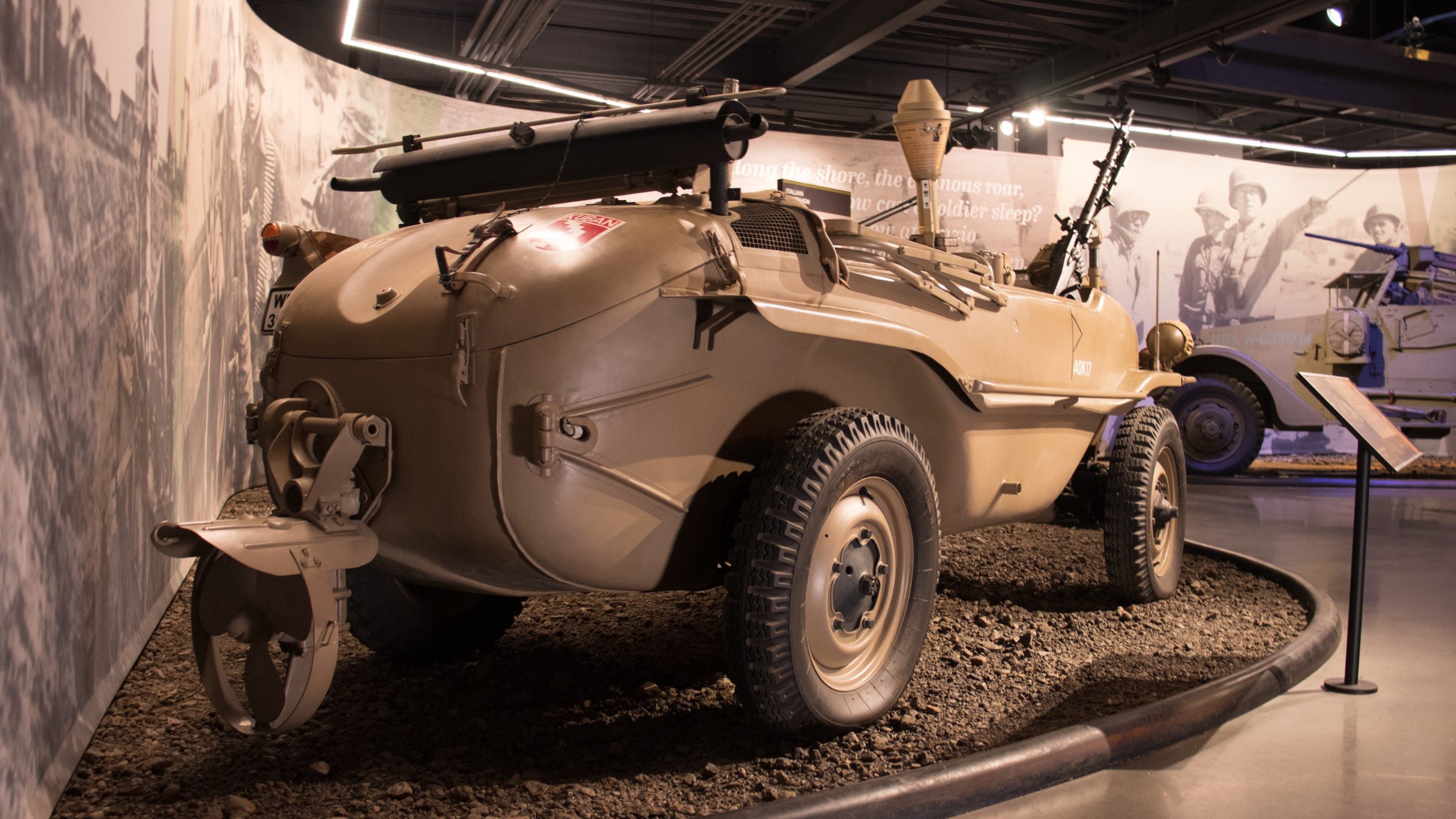
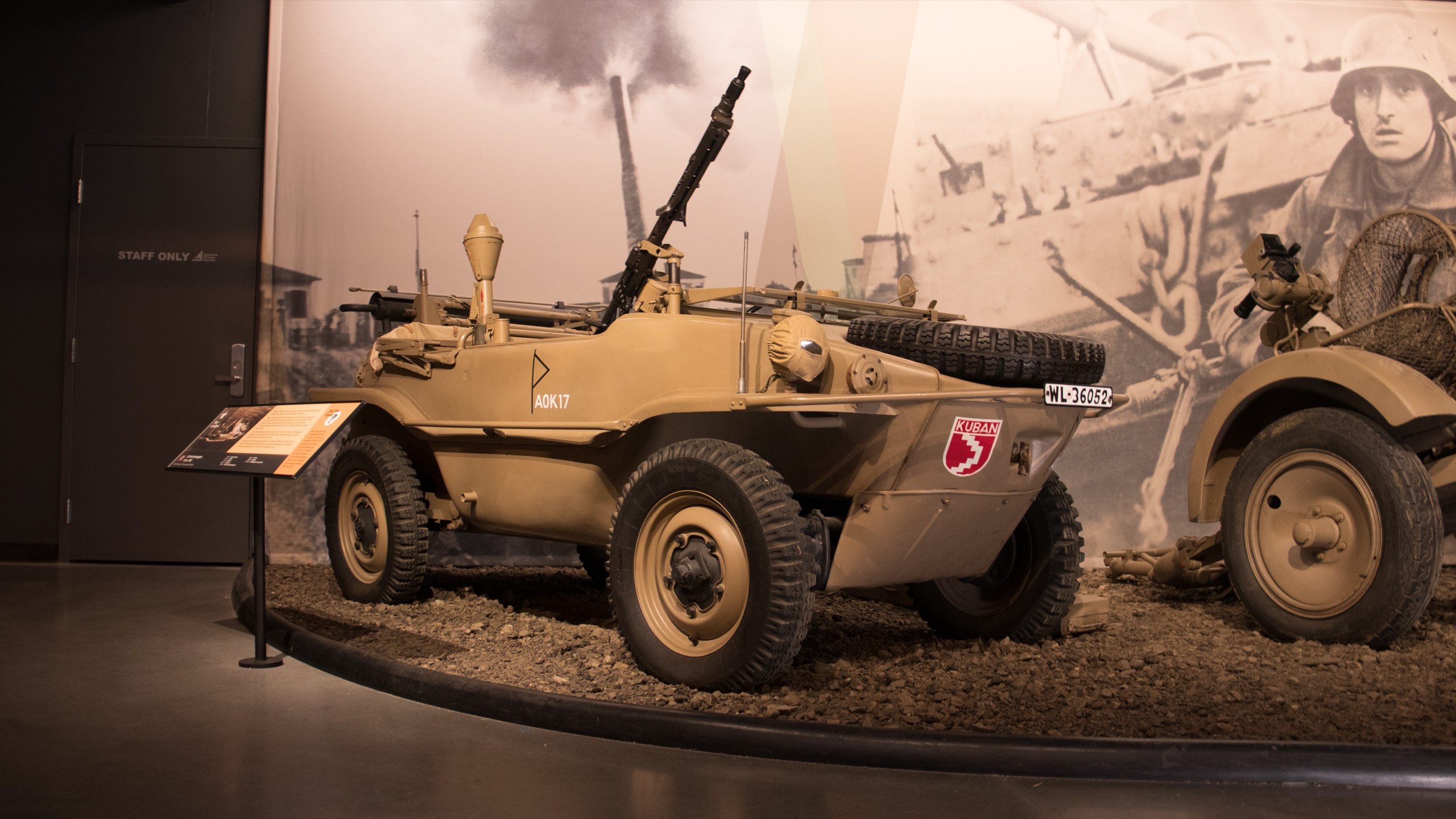
The German Volkswagen Type 166 Schwimmwagen, meaning “swimming car,” was one of the most innovative light military vehicles of World War II. Combining four-wheel-drive mobility with the ability to travel across water, the Schwimmwagen was designed to provide German reconnaissance and command units with reliable transportation over difficult terrain, including rivers, streams, mud, and rugged countryside.
Developed by Ferdinand Porsche’s engineering team and Volkswagen, the Schwimmwagen evolved from the Volkswagen Type 82 Kübelwagen, sharing many mechanical components with the vehicle that would eventually become the civilian Volkswagen Beetle. Its distinctive watertight, boat-shaped steel body allowed it to float, while a 25-horsepower, air-cooled four-cylinder engine provided power on land and water.
One of its most unusual features was a folding three-bladed propeller mounted above the rear engine compartment. When lowered into the water, the propeller was driven by the engine, allowing the Schwimmwagen to travel at approximately 6 mph. The front wheels acted as rudders, enabling the driver to steer using the conventional steering wheel. Because the propeller operated only in forward motion, a paddle was supplied for maneuvering in reverse.
On land, the Schwimmwagen could reach approximately 50 mph. Its four-wheel-drive system and high ground clearance allowed it to negotiate rough terrain that frequently defeated ordinary military vehicles. The vehicle accommodated four occupants and was sometimes equipped with a 7.92mm MG34 machine gun for defense.
During the Italian Campaign of 1943–1945, German reconnaissance and command units employed Schwimmwagens across Italy’s rugged landscape. Narrow mountain roads, muddy valleys, and numerous rivers created serious transportation challenges. The Schwimmwagen’s compact size and exceptional off-road mobility made it particularly useful for scouting, communications, and transporting officers between dispersed positions.
Approximately 15,600 Schwimmwagens were manufactured between 1942 and 1944, making the Type 166 the most extensively produced amphibious automobile of World War II.
Displayed in the American Heritage Museum’s Italian Campaign Gallery, the Volkswagen Type 166 Schwimmwagen illustrates the ingenuity of German military vehicle engineering and the critical importance of reconnaissance, mobility, and adaptability during the demanding Allied campaign to liberate Italy.