Artifacts
3.7 cm Panzerabwehrkanone Pak 35/36
Germany | 1936–1945 | World War II – Eastern Front
| General Information | |
|---|---|
| Model | 3.7 cm Panzerabwehrkanone Pak 35/36 |
| Class | Artillery |
| Type | Anti-Tank Gun |
| Use | Military |
| Era | 1940-1945 |
| Gallery Focus | WWII European Theater |
| Manufacturer | Rheinmetall |
| Year | 1942 |
| Country | Germany |
| Ownership | CF Inc. |
| Gallery Location | Eastern Front |
| Status | Operational, Offline |
Additional Photos
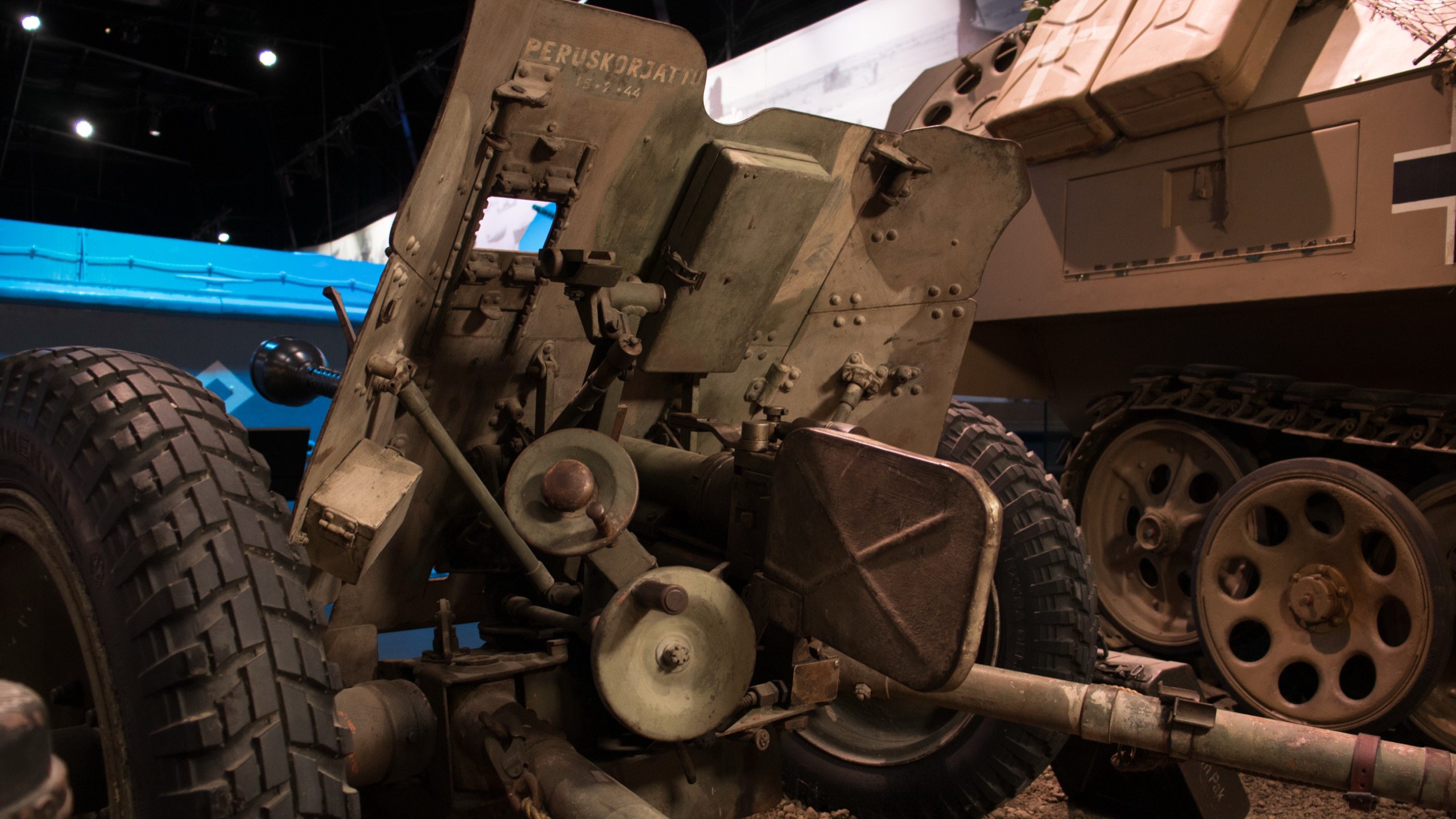
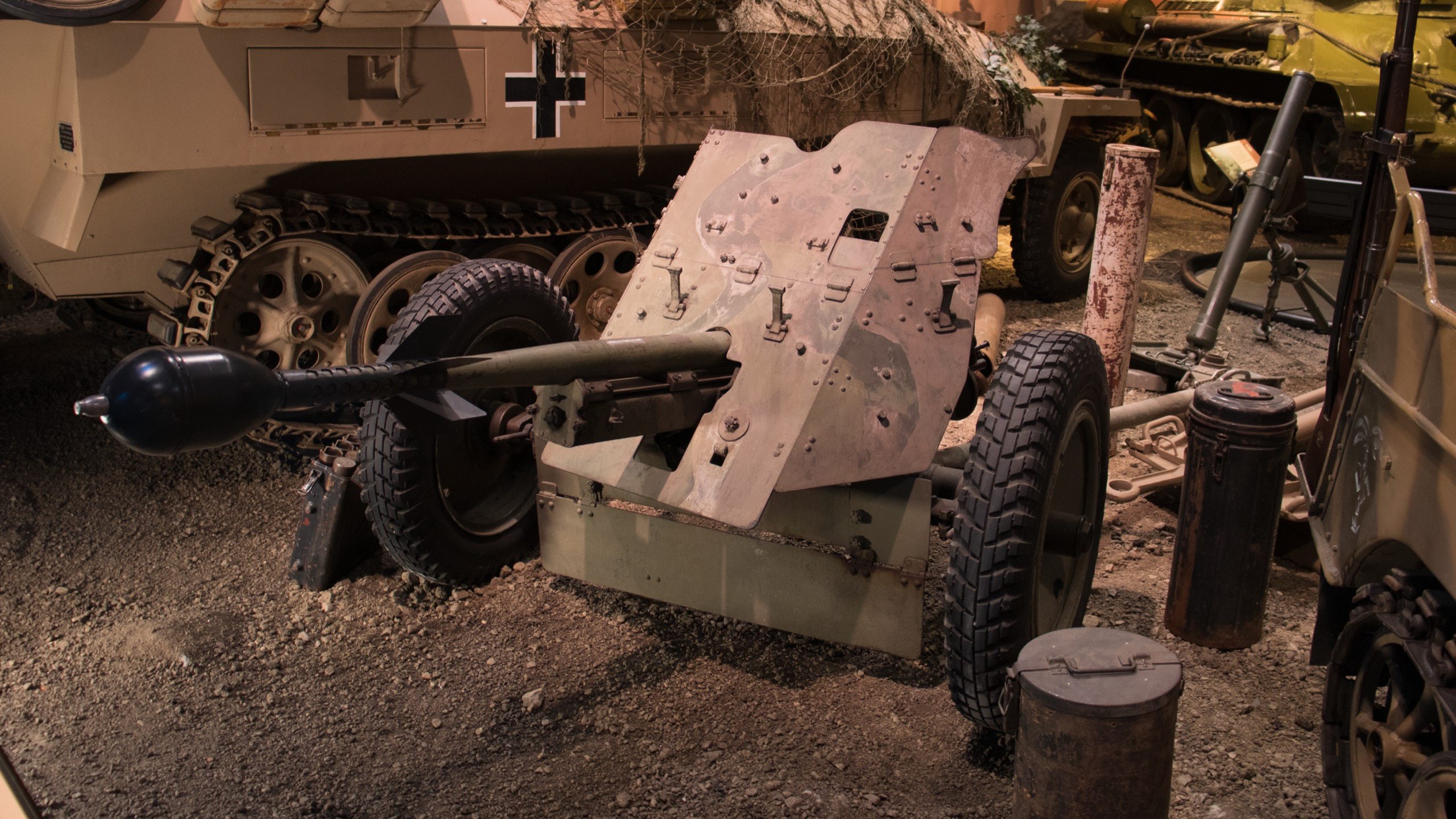
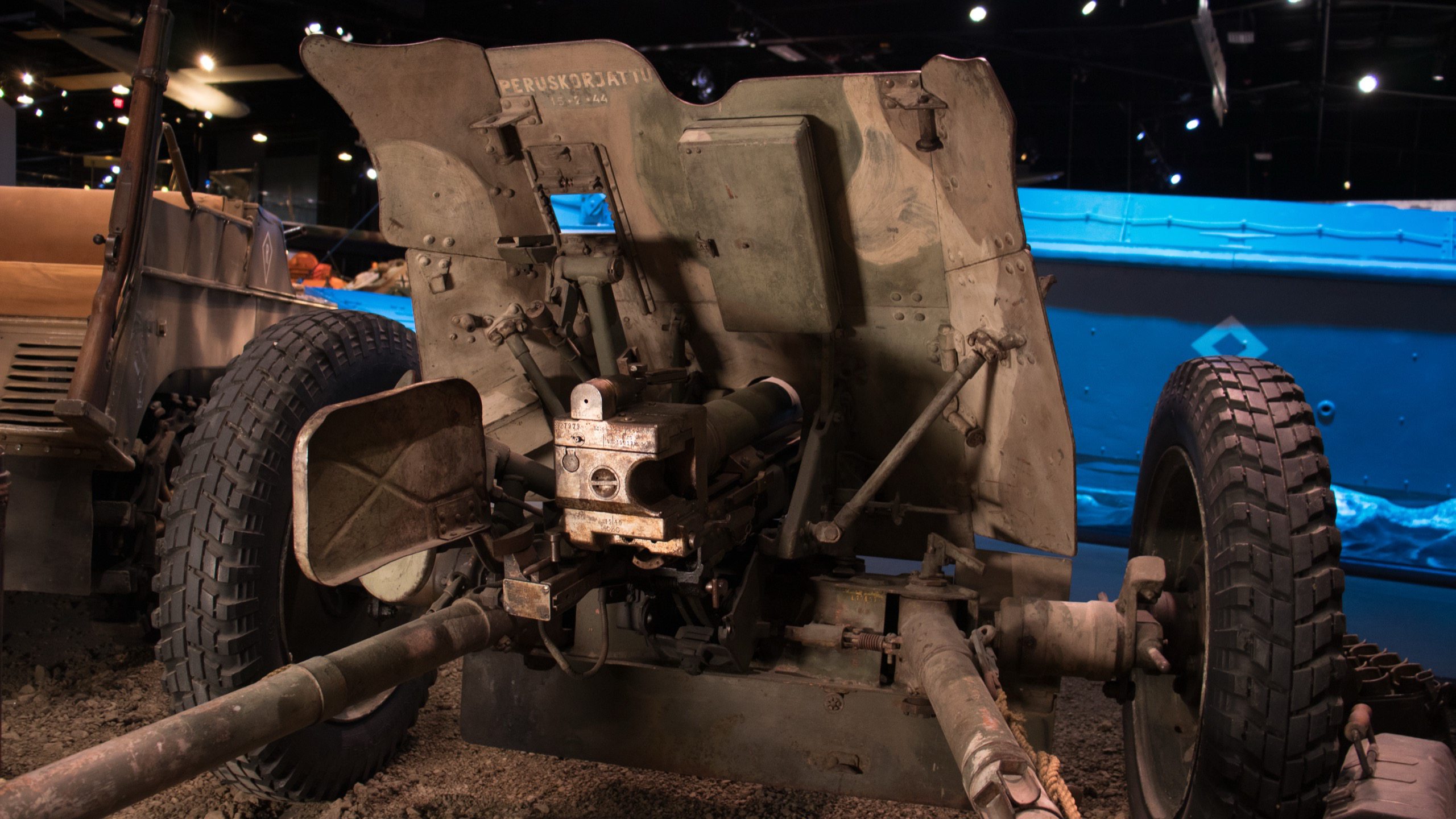
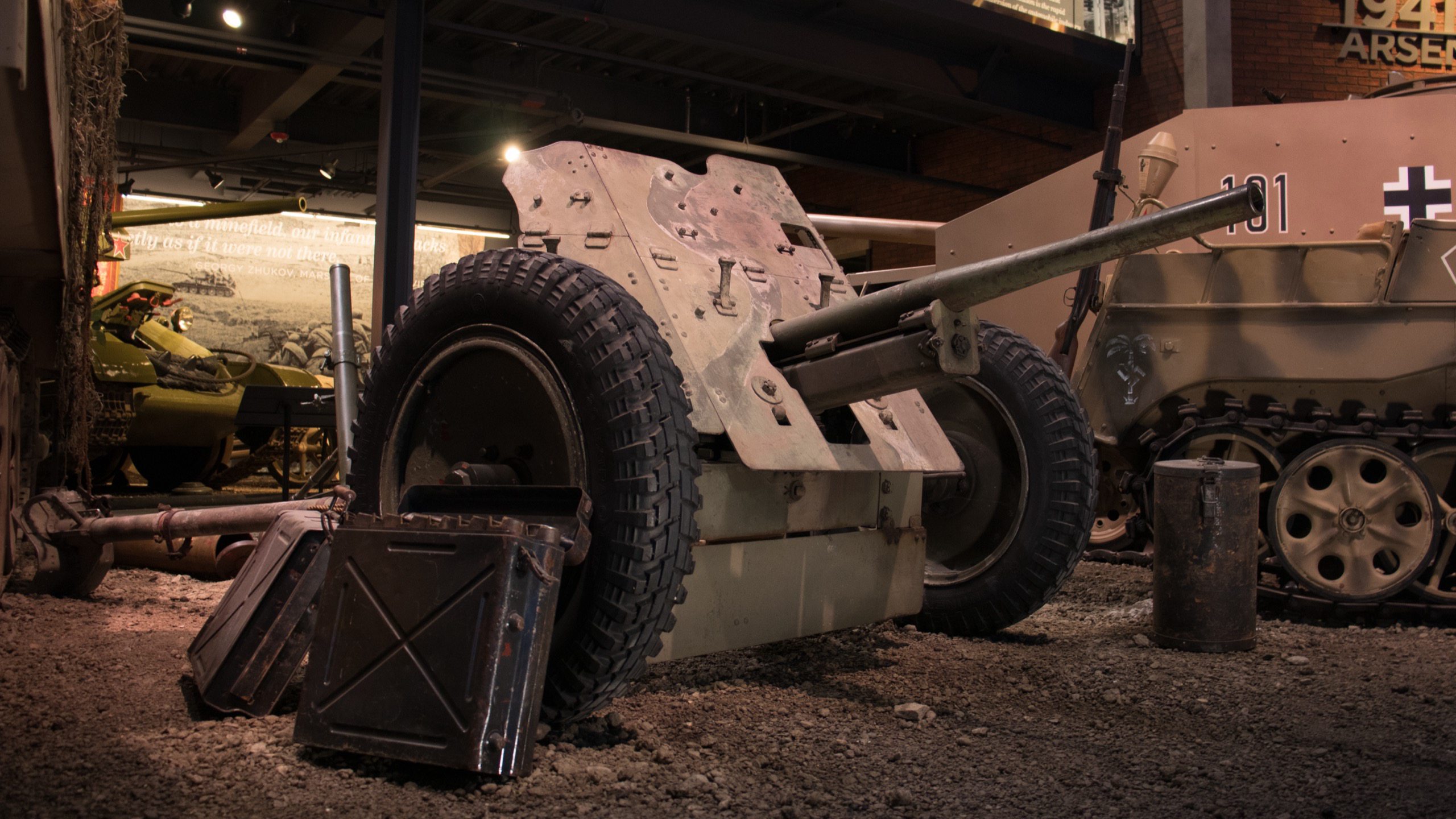
The German 3.7cm Panzerabwehrkanone 35/36 (Pak 35/36) was the standard anti-tank gun of the German Army at the outbreak of World War II. Developed by Rheinmetall during the 1920s and modernized during the 1930s, this lightweight 37mm cannon was designed to provide infantry formations with mobile protection against enemy armored vehicles.
Weighing approximately 730 pounds, the Pak 35/36 featured a low-profile gun shield, split-trail carriage, and pneumatic tires that allowed it to be towed by vehicles or maneuvered short distances by its crew. Its high-velocity armor-piercing ammunition proved effective against the lightly armored tanks encountered during Germany’s early military campaigns in Poland and France.
However, during Operation Barbarossa, Germany’s invasion of the Soviet Union in June 1941, the Pak 35/36 encountered a formidable new challenge. Although effective against older Soviet T-26 and BT-series light tanks, its 37mm projectiles struggled to penetrate the thick armor of the KV-1 and the sloped armor of the revolutionary T-34 medium tank.
German soldiers sarcastically nicknamed the weapon “Heeresanklopfgerät,” or “Army Door Knocker,” because its shells often struck Soviet tanks without causing significant damage.
In an effort to extend its usefulness, German engineers introduced the Stielgranate 41, an oversized shaped-charge projectile fitted over the gun’s muzzle. Although capable of penetrating substantial armor, its extremely short effective range exposed crews to considerable danger.
The Pak 35/36 was gradually replaced by the more powerful 5cm Pak 38 and 7.5cm Pak 40, although surviving guns continued serving in secondary roles throughout the war.
Displayed in the American Heritage Museum’s Eastern Front Gallery, the Pak 35/36 illustrates the rapid evolution of armored warfare and the increasingly desperate struggle between anti-tank weapons and Soviet tank technology during World War II.