Artifacts
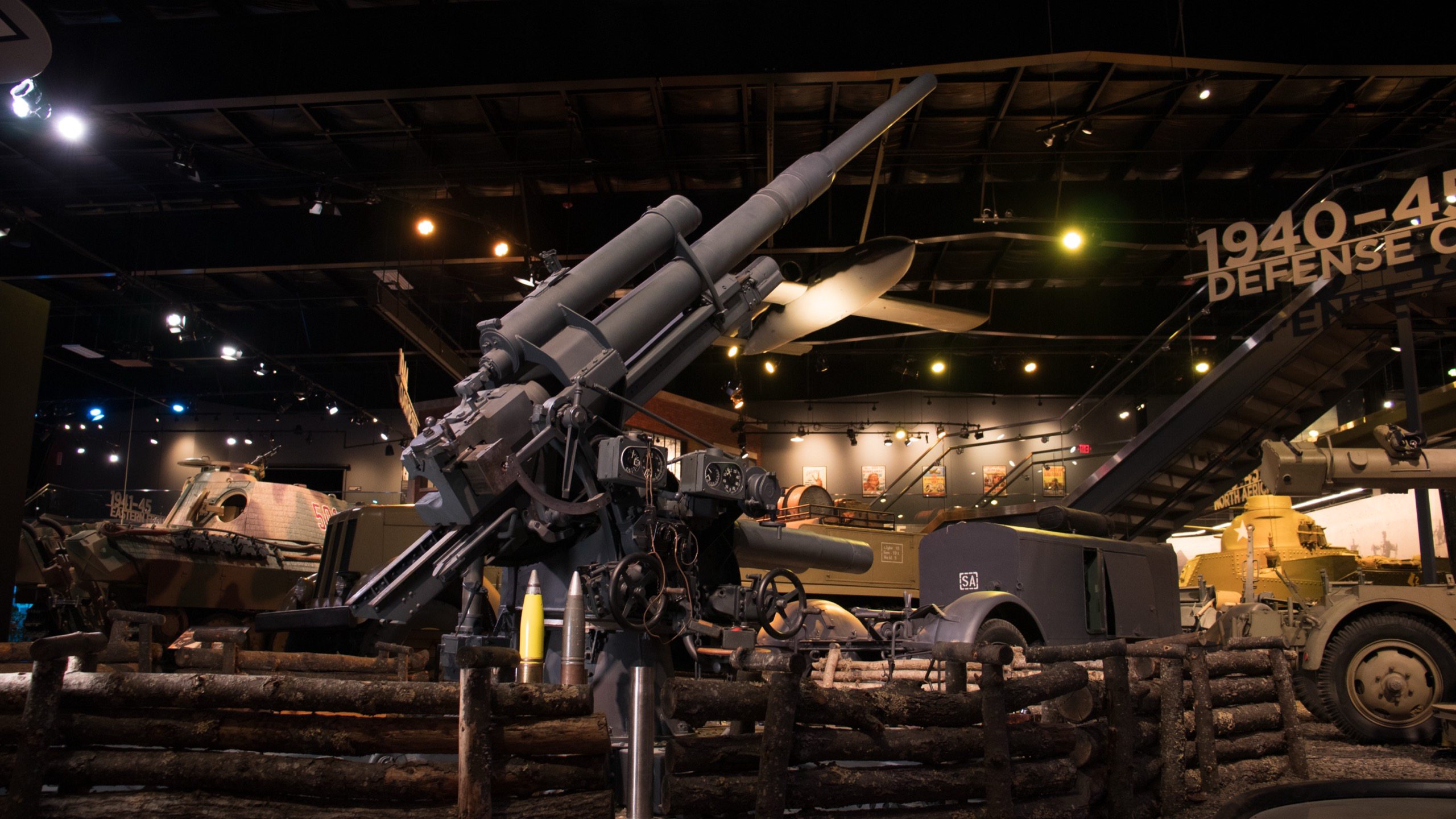
8.8 cm (88mm) Flugabwehrkanone Flak 37
Germany | 1930s–1945 | World War II – Defense of the Reich
| General Information | |
|---|---|
| Model | 8.8 cm Flugabwehrkanone Flak 37 |
| Class | Artillery |
| Type | Anti-Aircraft Gun |
| Use | Military |
| Era | 1940-1945 |
| Gallery Focus | WWII European Theater |
| Manufacturer | Krupp, Rheinmetall |
| Year | 1943 |
| Country | Germany |
| Ownership | CF Inc. |
| Gallery Location | Defense of the Reich |
| Status | Operational, Offline |
Additional Photos
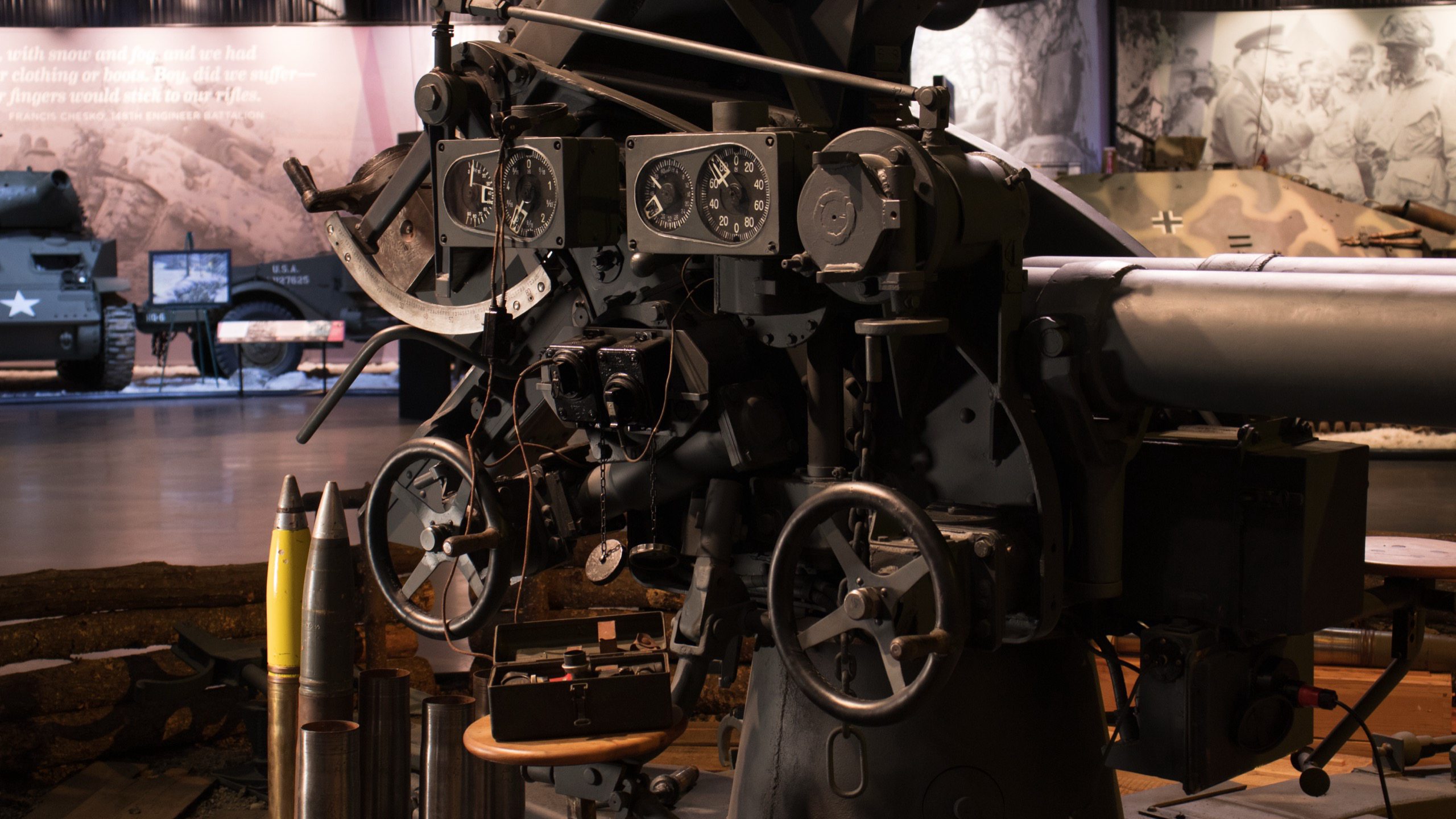
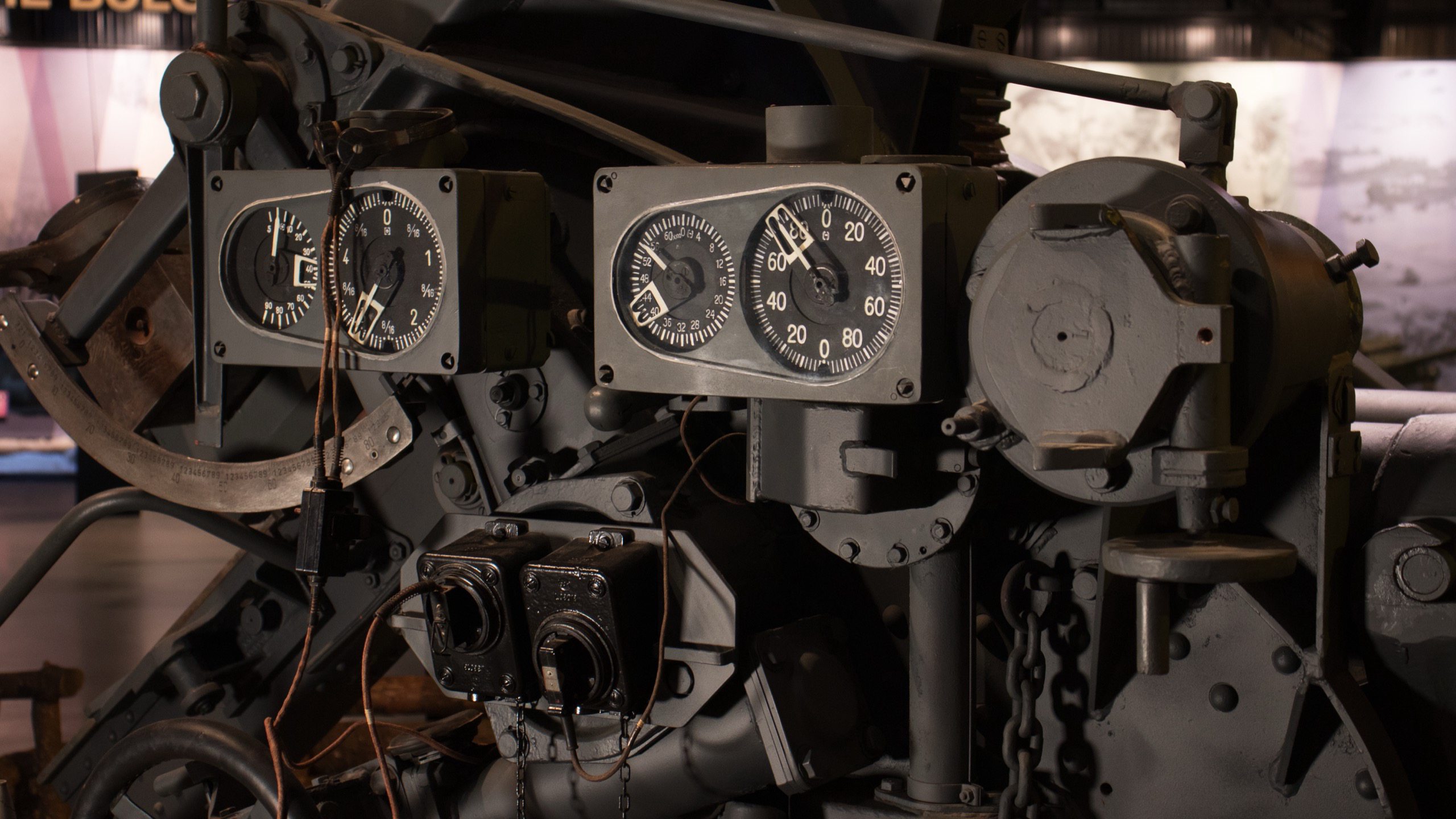
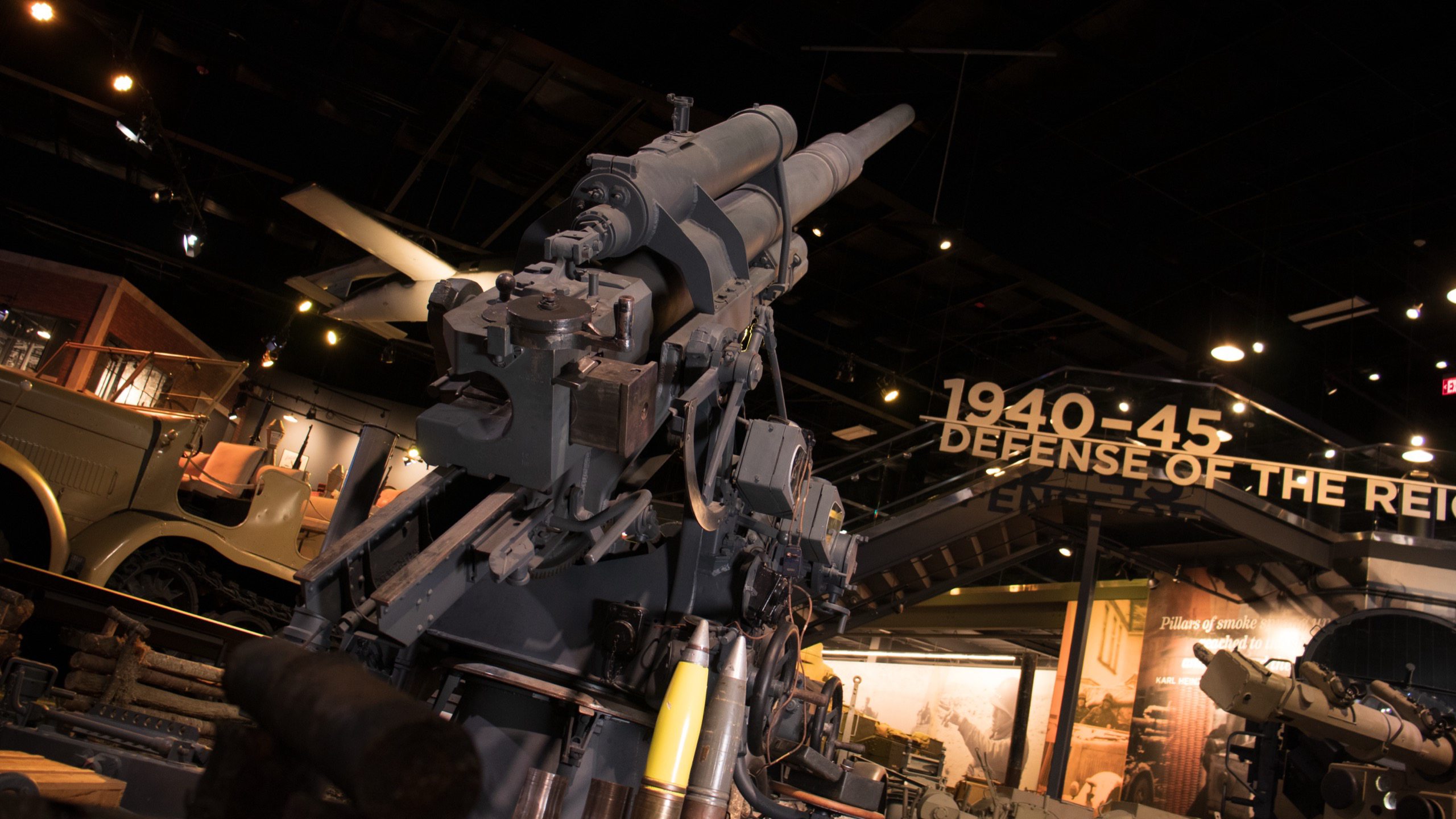
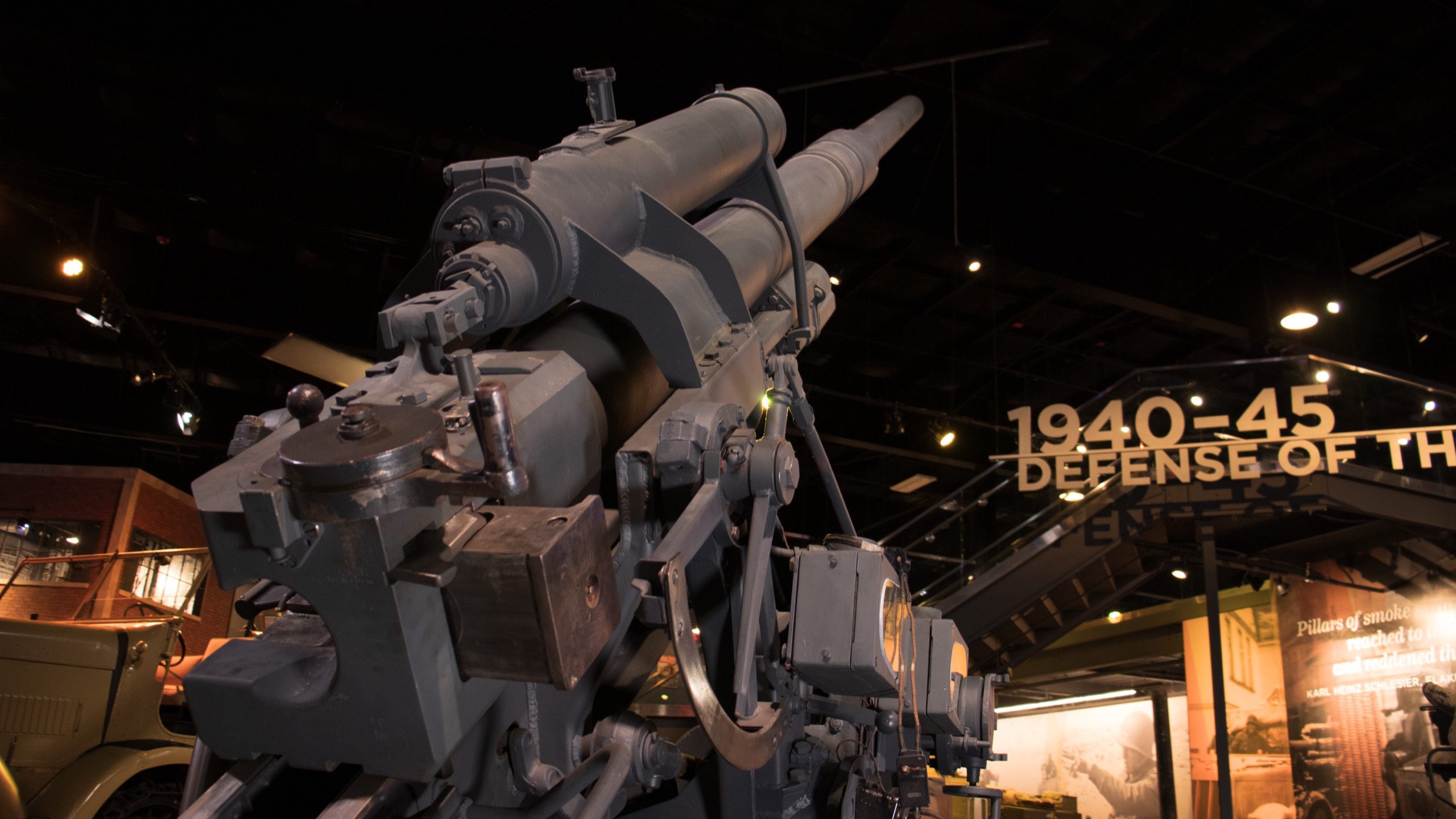
The German 8.8cm Flugabwehrkanone 37 (FlaK 37), commonly known as the legendary “88,” was one of the most recognizable and effective artillery weapons of World War II. Originally developed to defend against enemy aircraft, its powerful 88mm cannon became equally feared for its ability to destroy armored vehicles. During the Allied strategic bombing campaigns against Nazi Germany, the FlaK 37 played a central role in defending cities, industrial facilities, and military installations from aerial attack.
Developed from the earlier FlaK 18 and FlaK 36 designs, the improved FlaK 37 incorporated an updated electrical data transmission system that allowed gun crews to receive targeting instructions from a centralized fire-control director. Its high-velocity cannon could fire approximately 15–20 rounds per minute, with an effective anti-aircraft ceiling approaching 26,000 feet. Mounted on a versatile cruciform platform, the gun could traverse 360 degrees and engage targets approaching from any direction.
During the Defense of the Reich, German heavy anti-aircraft batteries formed an extensive defensive network against American and British bombers. The U.S. Eighth Air Force conducted massive daylight raids using B-17 Flying Fortresses and B-24 Liberators, while Britain’s Royal Air Force Bomber Command attacked primarily at night.
FlaK 37 batteries used high-explosive shells fitted with timed fuzes, designed to detonate at calculated positions near approaching aircraft. These explosions created deadly bursts of steel fragments capable of severely damaging bombers flying in formation.
Accurately targeting high-altitude aircraft required sophisticated coordination. Optical rangefinders, mechanical fire-control computers, radar, and searchlights worked together to detect, track, and engage enemy bombers. The Kommandogerät 40 calculated the necessary firing angles and fuze settings, transmitting instructions to the gun crews. At night, powerful searchlights helped illuminate and track aircraft, assisting anti-aircraft batteries and German night fighters.
Although increasingly sophisticated, Germany’s anti-aircraft defenses could not prevent the devastating Allied bombing campaigns. Nevertheless, the concentrated firepower of heavy FlaK batteries remained a significant threat to Allied aircrews throughout the war.
Displayed in the American Heritage Museum’s Defense of the Reich Gallery, this 8.8cm FlaK 37 is accompanied by an original Kommandogerät 40 fire-control director and a 150cm Flakscheinwerfer 34 searchlight with its 24kW generator.
Together, these artifacts recreate essential elements of a German heavy anti-aircraft battery, allowing visitors to understand the remarkable technological complexity of World War II air defense and the extraordinary dangers faced by Allied bomber crews over Germany.