Artifacts
7.5 cm Leichtes Infanteriegeschütz 18
Germany | 1932–1945 | World War II – Early European Campaigns
| General Information | |
|---|---|
| Model | 7.5 cm Leichtes Infanteriegeschütz 18 |
| Class | Artillery |
| Type | Infantry Support Gun |
| Use | Military |
| Era | 1940-1945 |
| Gallery Focus | WWII European Theater |
| Manufacturer | Rheinmettal-Borsig |
| Year | 1932 |
| Country | Germany |
| Ownership | CF Inc. |
| Gallery Location | War Clouds |
| Status | Static Only |
Additional Photos
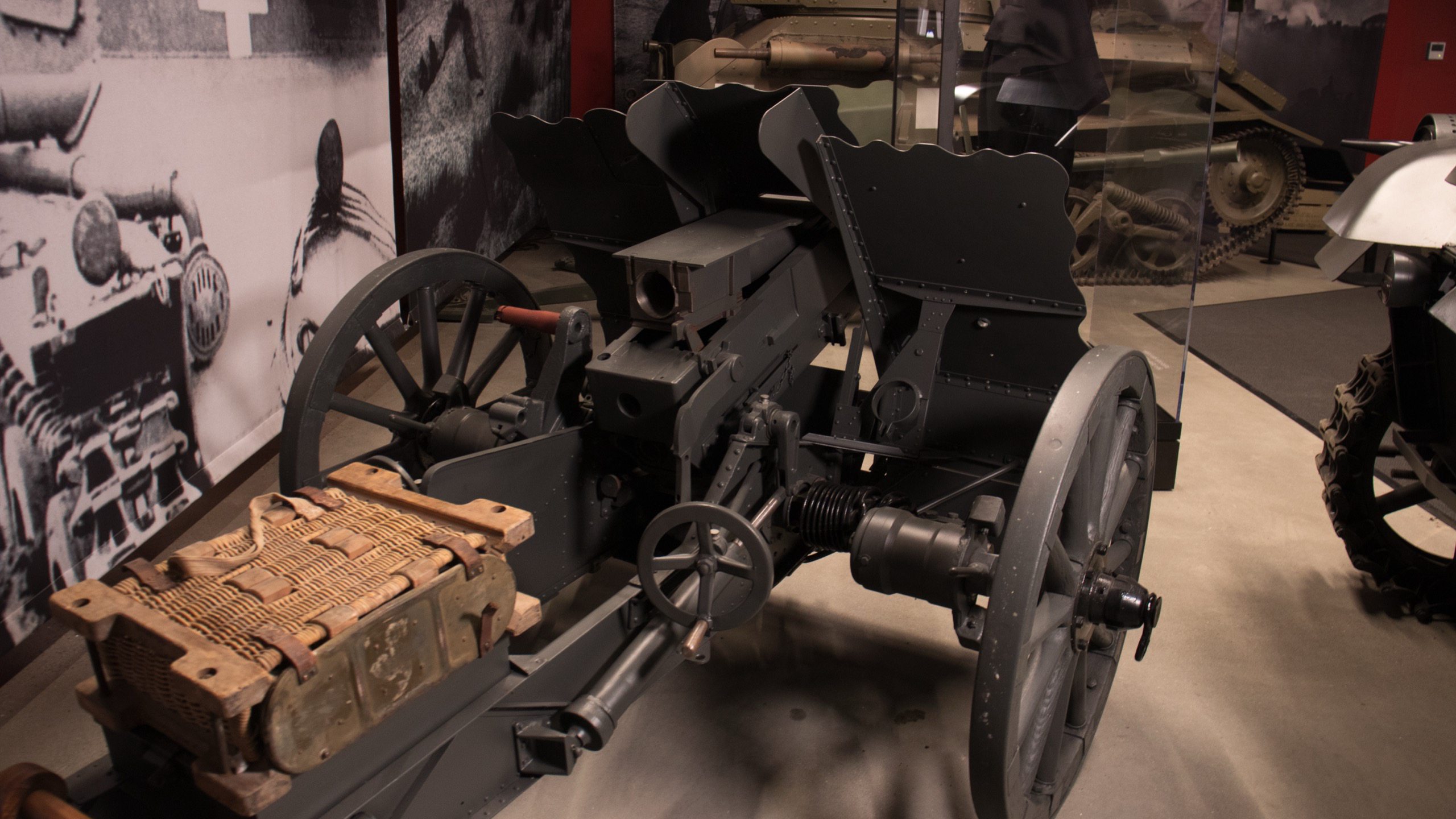
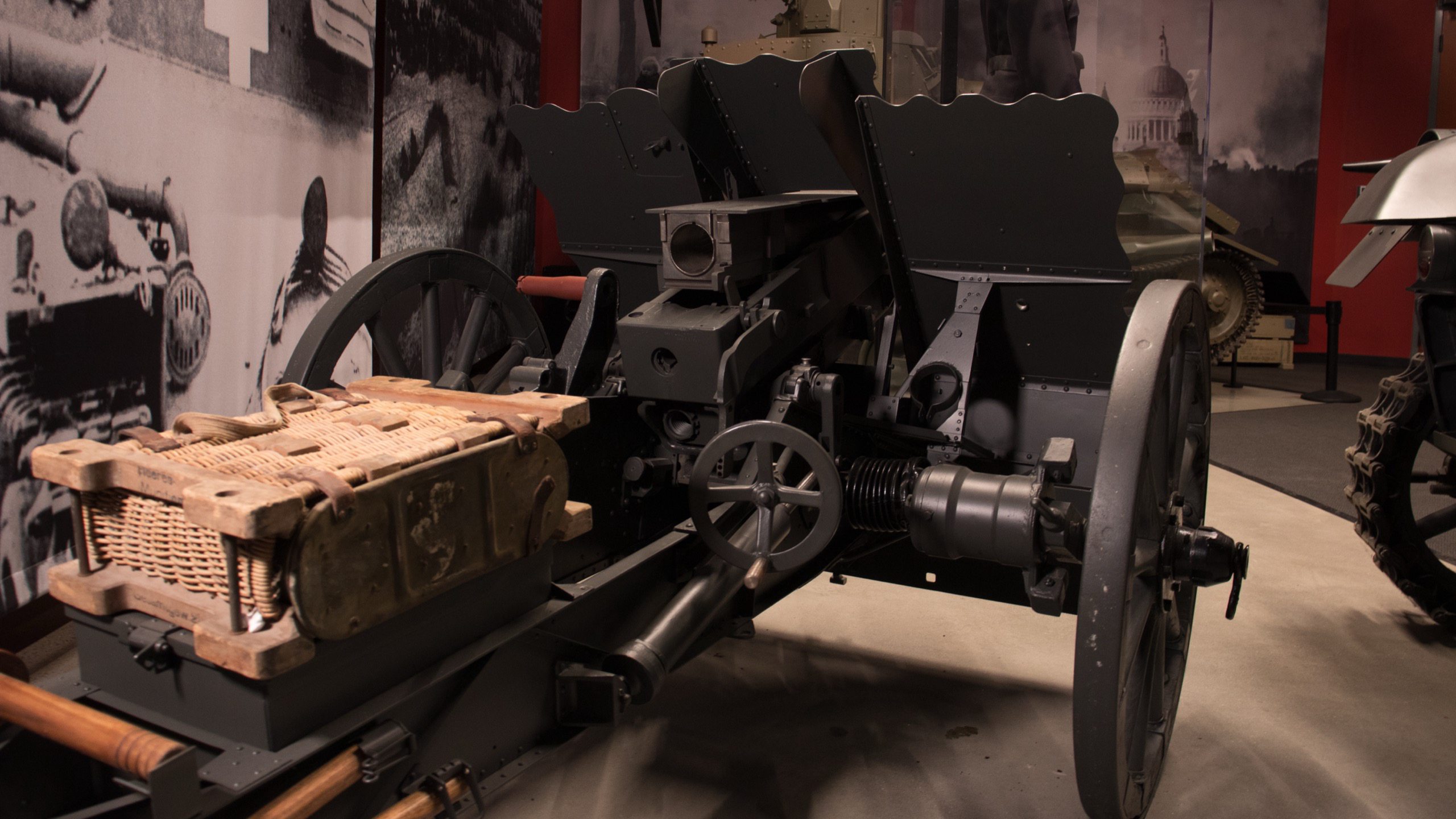
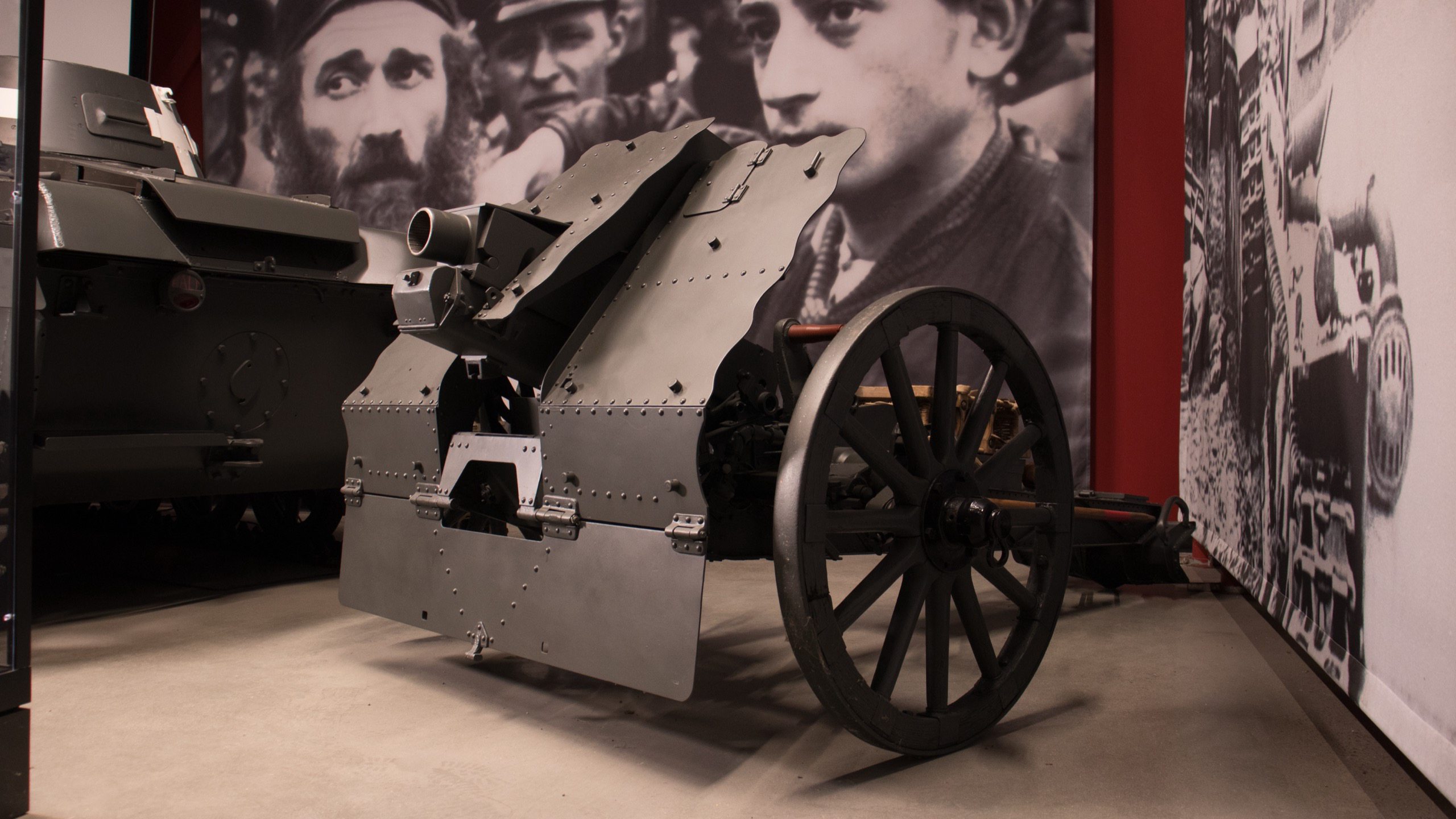
The German 7.5cm leichtes Infanteriegeschütz 18 (le.IG 18), meaning “Light Infantry Gun 18,” was an important infantry support weapon employed by German forces throughout World War II. Developed during the interwar period, the gun reflected Germany’s growing emphasis on mobile warfare and the need to provide advancing infantry with immediate artillery support.
Designed by Rheinmetall beginning in 1927 and introduced into service in 1932, the le.IG 18 was a compact, short-barreled 75mm gun capable of delivering powerful high-explosive shells against enemy infantry, machine-gun nests, and fortified positions. Unlike conventional long-range artillery, the weapon was assigned directly to infantry formations, allowing commanders to rapidly engage targets obstructing their advance.
Weighing approximately 880 pounds, the gun featured a protective steel shield, a hydropneumatic recoil system, and an unusual breech mechanism that tilted upward for loading. Its high elevation capability allowed crews to fire shells over obstacles and into concealed positions. With a maximum range of approximately 2.2 miles, the le.IG 18 could fire 8–12 rounds per minute. It could be transported by horse teams or motorized vehicles, while specialized mountain and airborne variants were developed for difficult terrain.
During Germany’s invasions of Poland in 1939 and France in 1940, le.IG 18 guns provided essential close-range fire support as infantry advanced alongside armored formations. The weapon subsequently saw extensive service during the 1941 invasion of the Soviet Union and remained in German use through the war’s conclusion.
Displayed in the American Heritage Museum’s War Clouds Gallery, the le.IG 18 illustrates the evolution of German infantry tactics, the military rearmament of the 1930s, and the growing destructive power that characterized the opening campaigns of World War II.