Artifacts
Pz.Kpfw V Panther Ausf. A
German Medium Tank | World War II (1943–1945)
| General Information | |
|---|---|
| Model | Panzerkampfwagen (Pz.Kpfw) V – Panther Ausf. A |
| Class | Armor |
| Type | Medium Tank |
| Use | Military |
| Era | 1940-1945 |
| Gallery Focus | WWII European Theater |
| Manufacturer | MAN, Daimler-Benz, MNH |
| Year | 1943 |
| Country | Germany |
| Ownership | CF Inc. |
| Gallery Location | Clash of Steel |
| Status | Operational, Offline |
Additional Photos
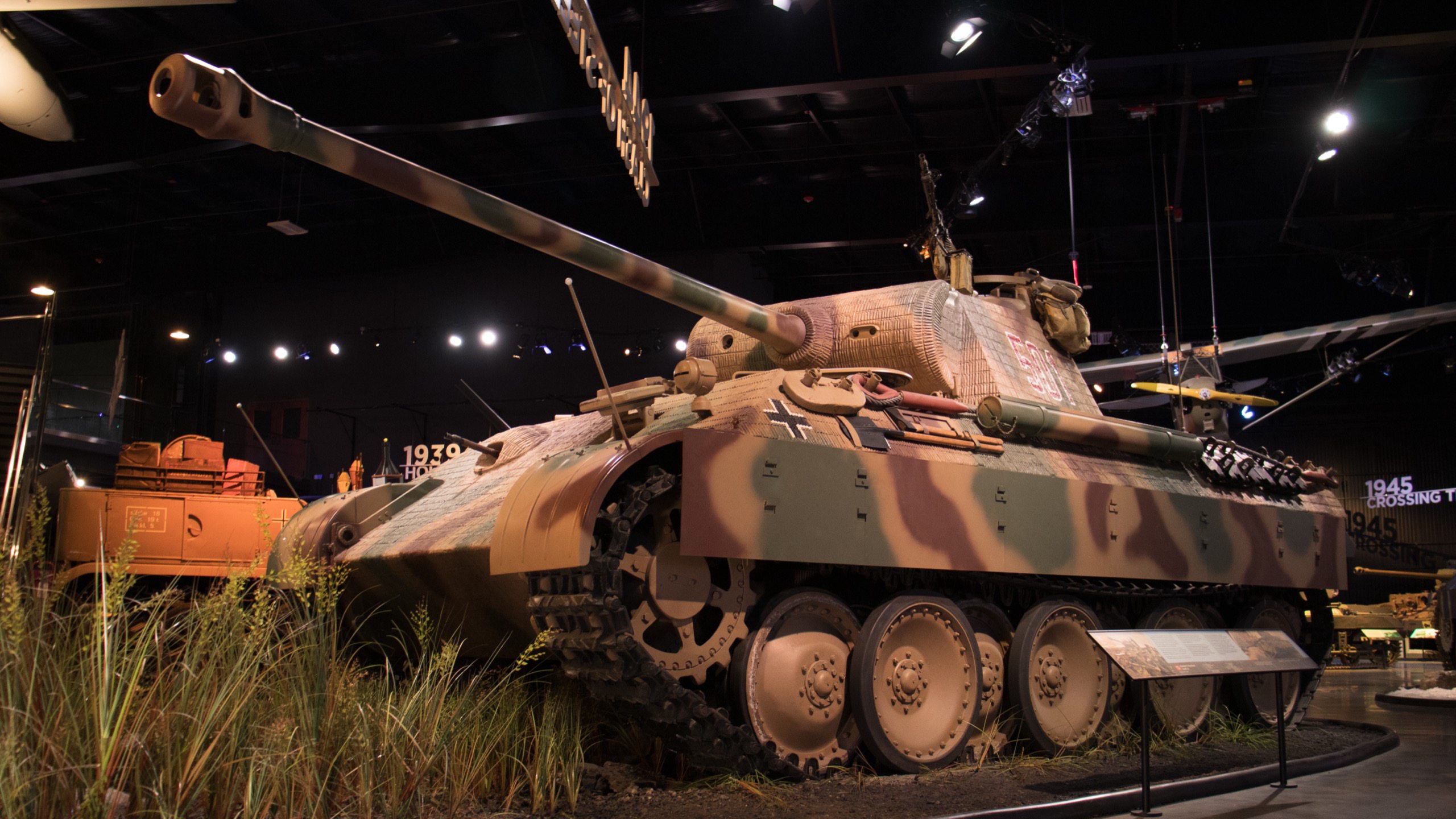
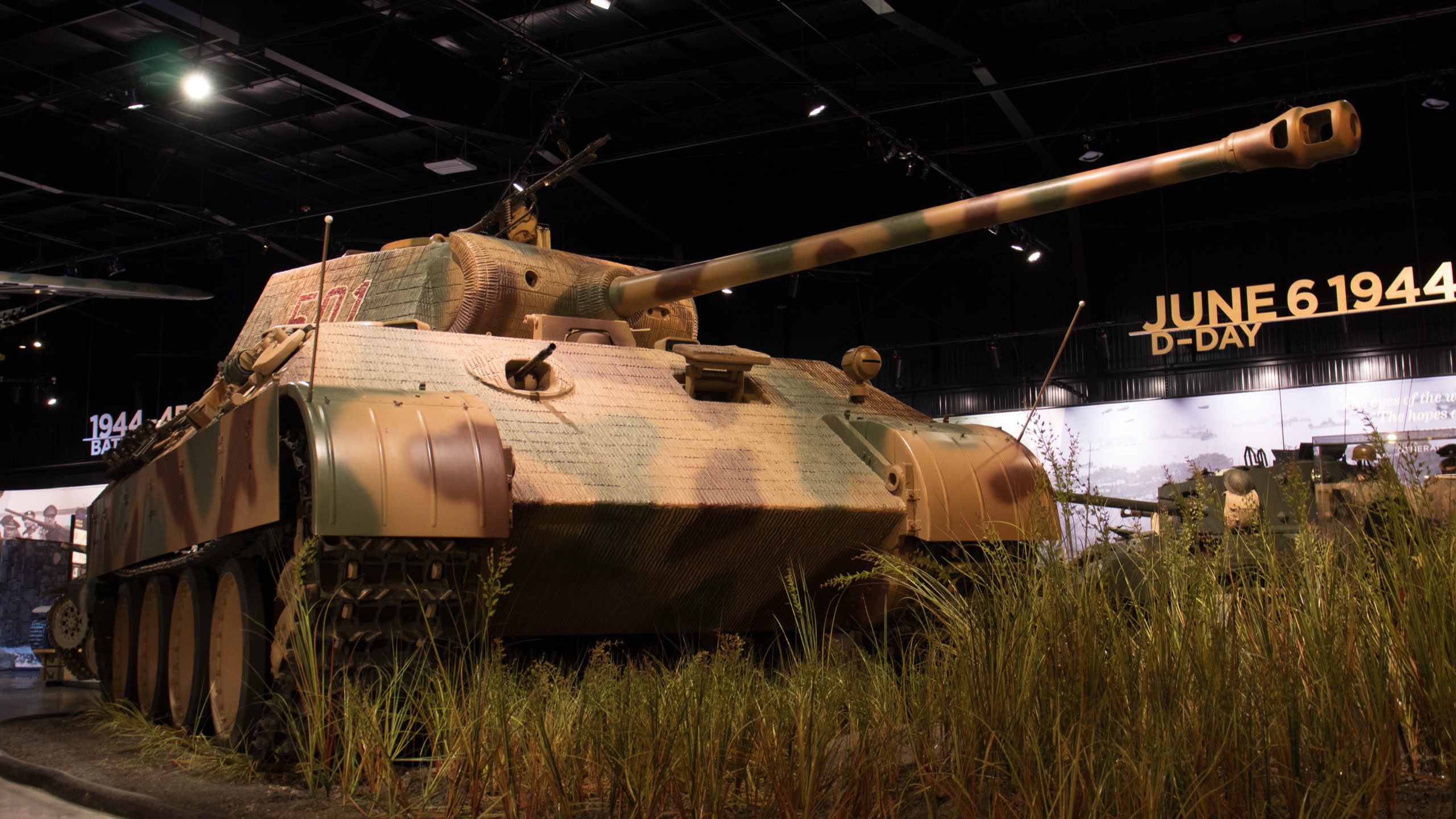
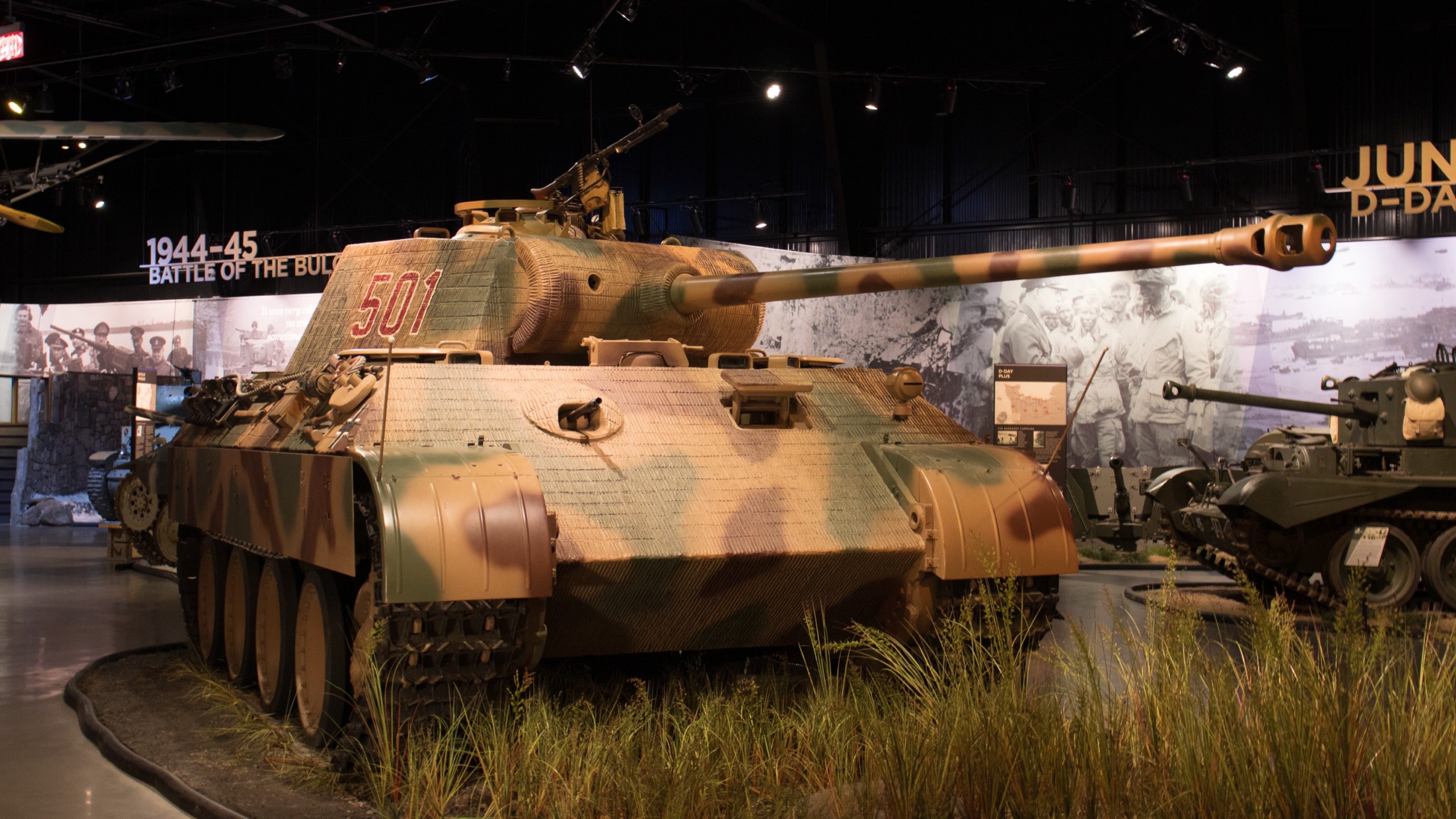
The Panzerkampfwagen V Panther was one of the most formidable German tanks of World War II, combining powerful armament, advanced sloped armor, and impressive battlefield mobility. Developed in response to Germany’s encounters with the Soviet T-34 during the 1941 invasion of the Soviet Union, the Panther represented a significant advancement in German armored warfare and became one of the most feared tanks on both the Eastern and Western Fronts.
Designed in 1942, the Panther first entered combat during the Battle of Kursk in July 1943. The improved Ausführung A (Ausf. A) variant entered production later that year, incorporating modifications to address deficiencies in earlier models. Improvements included a redesigned commander’s cupola, enhanced turret mechanisms, improved engine cooling, and strengthened mechanical components. Approximately 2,000 Panther Ausf. A tanks were manufactured between August 1943 and May 1944.
The Panther’s primary weapon was the powerful 7.5cm KwK 42 L/70 high-velocity cannon, capable of penetrating the armor of most Allied tanks at considerable distances. Two 7.92mm MG 34 machine guns provided additional protection against infantry. Its heavily sloped frontal armor, measuring 80mm on the upper hull and approximately 100mm on the turret front, provided exceptional protection against incoming fire.
Powered by a 690-horsepower Maybach HL230 V12 gasoline engine, the approximately 45-ton Panther could reach speeds approaching 34 mph. Its wide tracks and sophisticated suspension provided good cross-country mobility, although its relatively thin side armor made it vulnerable to flanking attacks and close-range engagements.
Despite its impressive combat capabilities, the Panther was plagued by mechanical difficulties. Early vehicles suffered from engine overheating, fuel and oil leaks, transmission failures, and unreliable final-drive assemblies. Although improvements increased reliability, the tank remained mechanically complex and maintenance-intensive. Allied bombing, shortages of replacement parts, and Germany’s deteriorating industrial capacity further limited its effectiveness. Approximately 6,000 Panthers of all variants were produced between 1943 and 1945.
On the Eastern Front, Panthers frequently confronted Soviet T-34 tanks, including the improved T-34/85 introduced in 1944. While the Panther generally possessed superior frontal armor and long-range firepower, the T-34 offered greater mechanical simplicity and could be manufactured in substantially larger numbers. These contrasting approaches to armored warfare reflected the growing technological and industrial competition between Germany and the Soviet Union.
The Panther Ausf. A displayed at the American Heritage Museum is an exceptionally rare operational survivor. Recovered from the Czarna Nida River in Poland, it underwent an extensive restoration by Jacques Littlefield’s Military Vehicle Technology Foundation and is believed to be the only operational Panther in North America.
Displayed directly opposite a Soviet T-34/85 in the museum’s Clash of Steel Gallery, the Panther forms the centerpiece of an immersive multimedia presentation examining the brutal tank battles of the Eastern Front and the technological rivalry that helped shape the outcome of World War II.