Artifacts
7.5 cm Panzerabwehrkanone Pak 97/38
Germany / France | 1942–1945 | World War II – Eastern Front
| General Information | |
|---|---|
| Model | 7.5 cm Panzerabwehrkanone Pak 97/38 |
| Class | Artillery |
| Type | Anti-Tank Gun |
| Use | Military |
| Era | 1940-1945 |
| Gallery Focus | WWII European Theater |
| Manufacturer | Rheinmetall-Borsig |
| Year | 1942 |
| Country | Germany |
| Ownership | CF Inc. |
| Gallery Location | Eastern Front |
| Status | Static Only |
Additional Photos
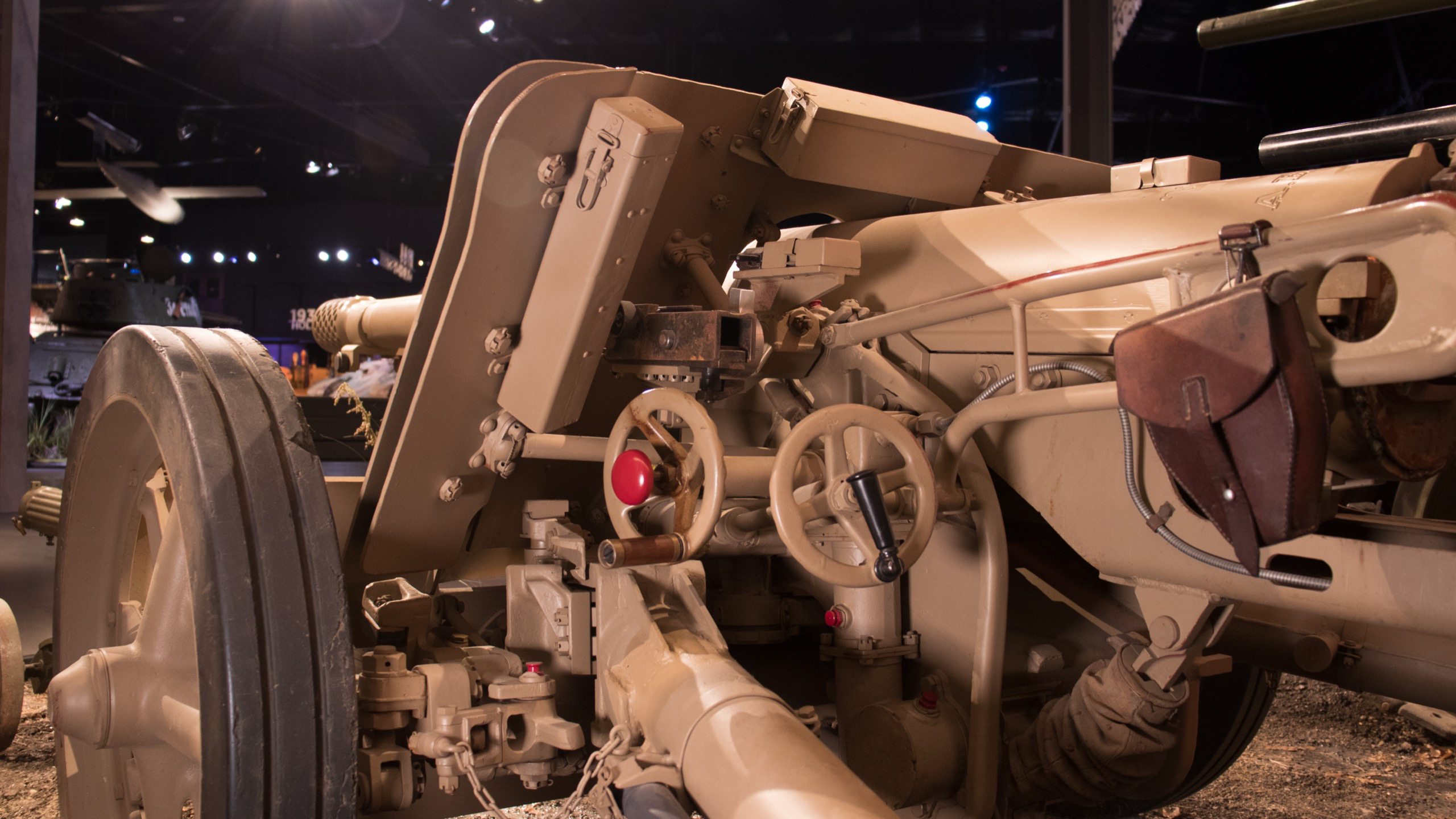
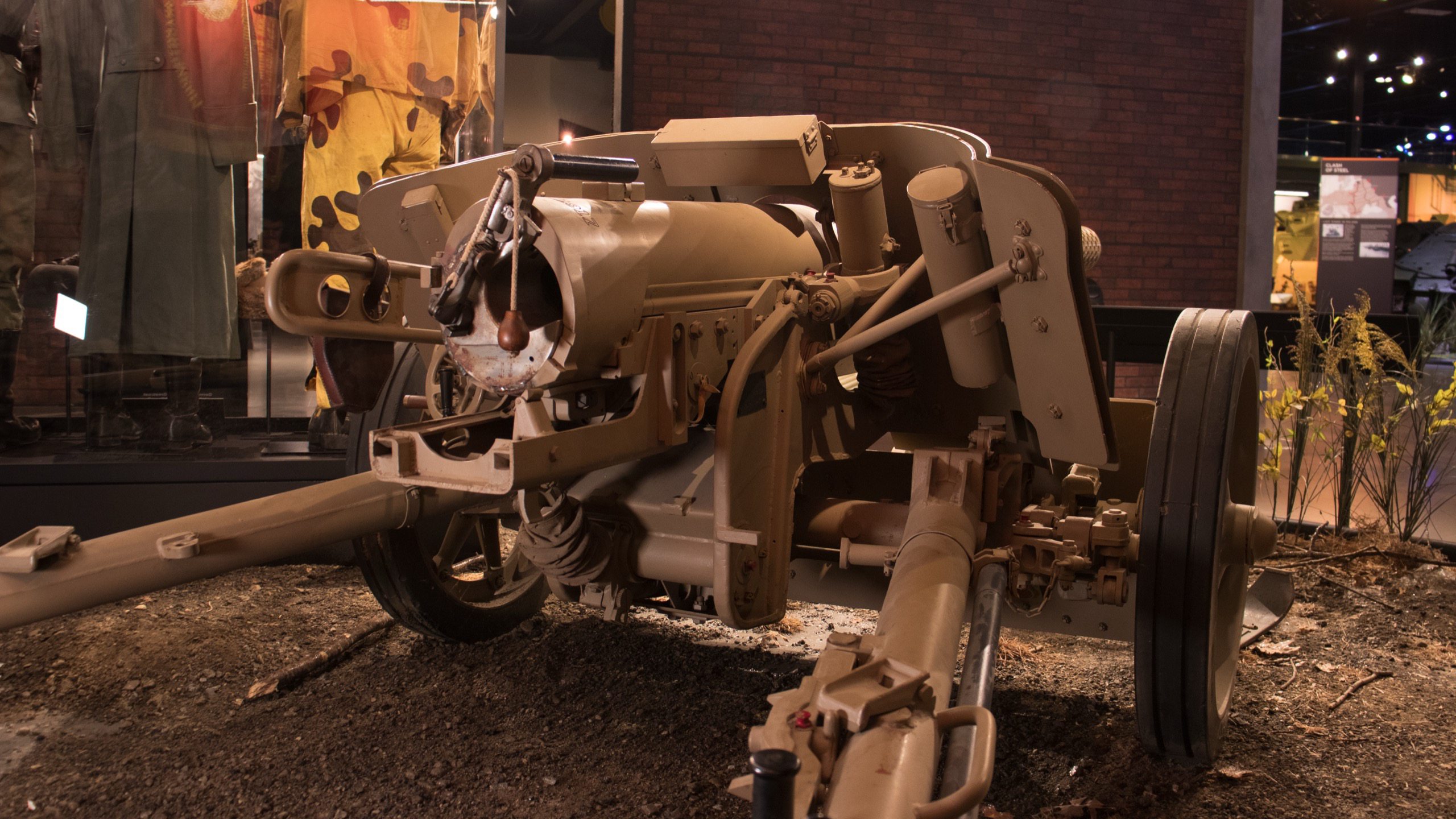
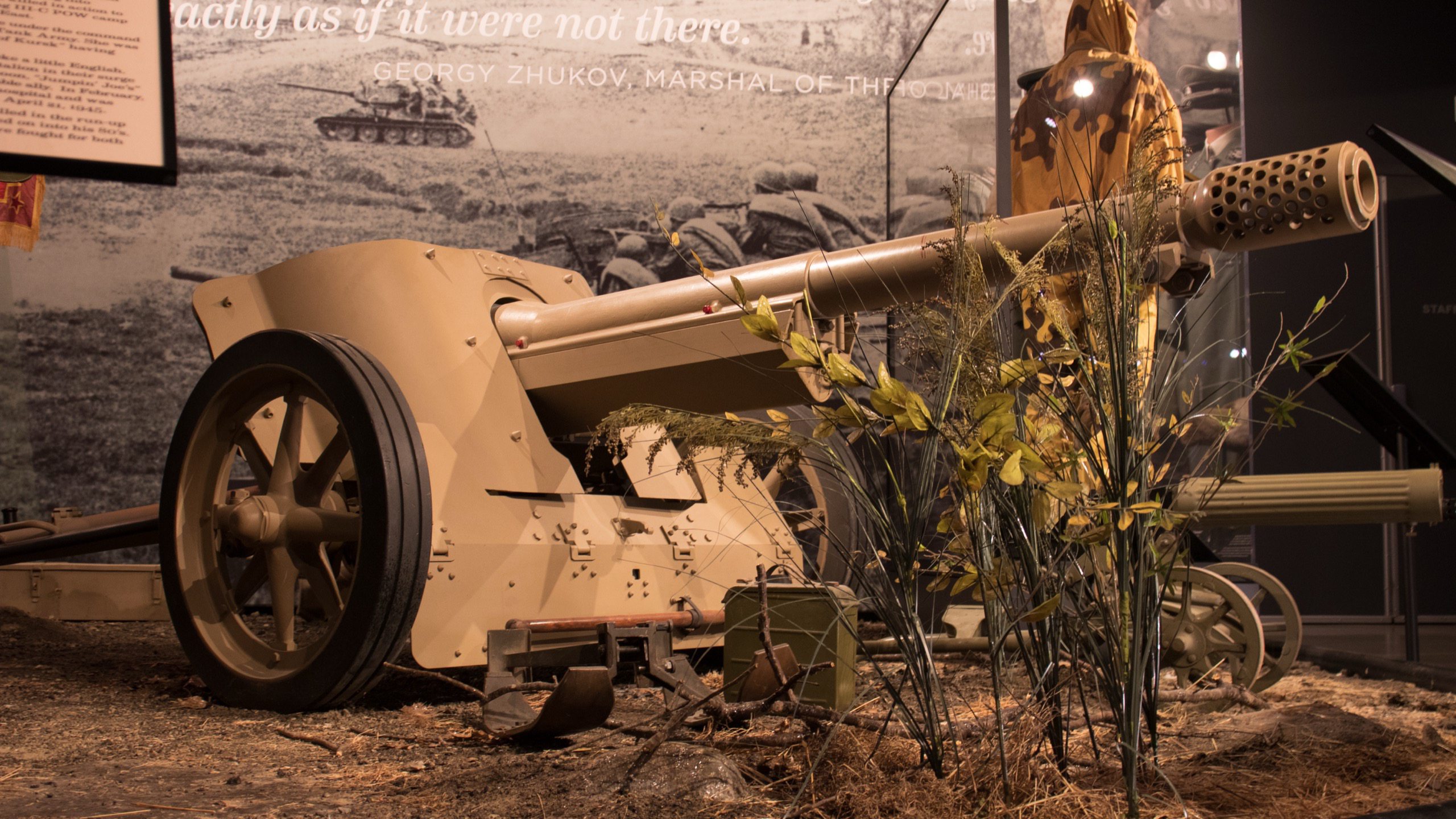
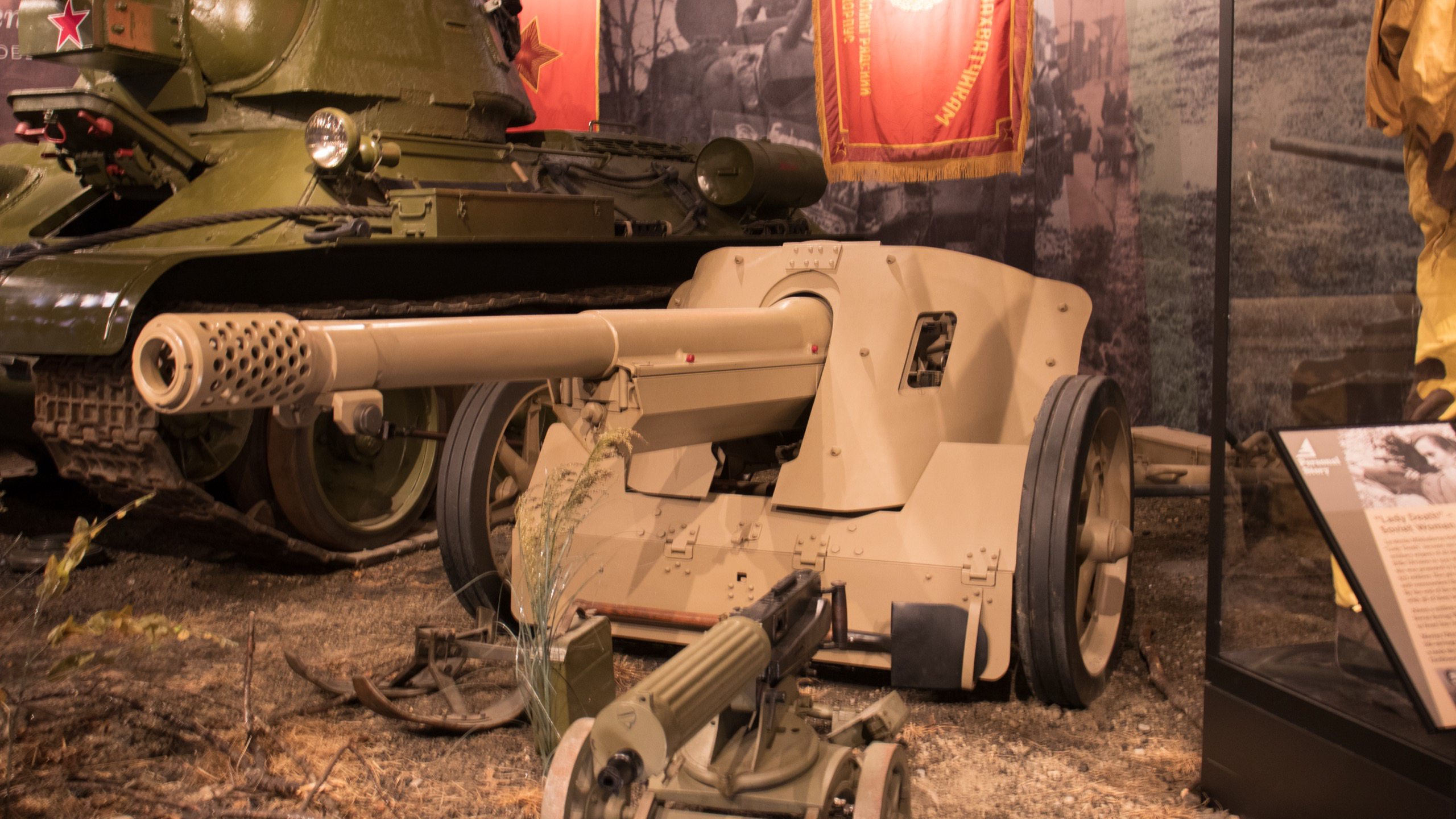
The German 7.5cm Panzerabwehrkanone 97/38 (Pak 97/38) was an ingenious adaptation of captured French artillery, developed to counter the increasingly powerful Soviet tanks encountered during World War II. Combining a World War I-era French cannon with a modern German carriage, the weapon demonstrated Germany’s urgent need for more effective anti-tank defenses during the Eastern Front campaign.
When Germany invaded the Soviet Union in June 1941, its standard 3.7cm and 5cm anti-tank guns struggled against the heavily armored Soviet T-34 and KV-series tanks. With more powerful weapons in short supply, German engineers turned to captured French Canon de 75 modèle 1897 field guns, obtained during the invasions of Poland and France.
The resulting Pak 97/38 mounted the French 75mm barrel and recoil mechanism on the lightweight, split-trail carriage of the German 5cm Pak 38. A distinctive muzzle brake helped reduce recoil, while the improved carriage provided greater mobility and a wider firing arc.
Introduced in 1942, the gun employed high-explosive anti-tank (HEAT) ammunition capable of penetrating substantial armor at relatively short ranges. Unlike conventional armor-piercing projectiles, HEAT rounds relied upon a shaped explosive charge rather than velocity to penetrate armor. However, the gun’s relatively low muzzle velocity, violent recoil, and limited long-range accuracy reduced its overall effectiveness.
Approximately 3,700 Pak 97/38 guns were converted during 1942–1943. Although increasingly replaced by the more powerful 7.5cm Pak 40, the weapon continued serving German and allied forces through the final stages of World War II.
Displayed in the American Heritage Museum’s Eastern Front Gallery, the Pak 97/38 illustrates the evolving struggle between tank armor and anti-tank weaponry, as well as the improvisation demanded by the immense scale and destructive intensity of warfare on the Eastern Front.