Artifacts
Kommandogerät 40
Germany | 1941–1945 | World War II – Defense of the Reich
| General Information | |
|---|---|
| Model | Kommandogerät 40 |
| Class | Artillery |
| Type | Fire Control Computer |
| Use | Military |
| Era | 1940-1945 |
| Gallery Focus | WWII European Theater |
| Manufacturer | Zeiss Ikon |
| Year | 1943 |
| Country | Germany |
| Ownership | CF Inc. |
| Gallery Location | Defense of the Reich |
| Status | Operational, Offline |
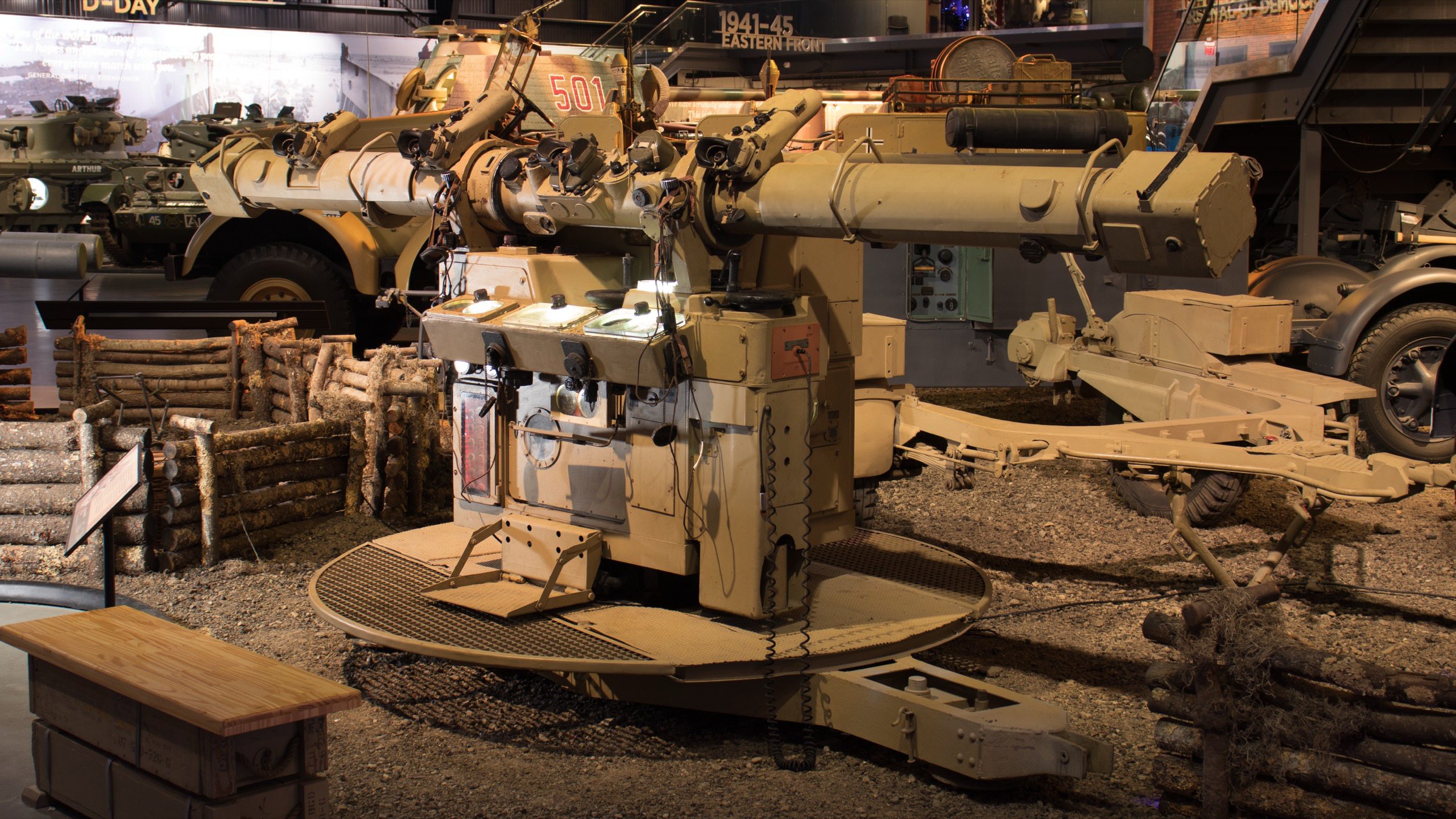
The German Kommandogerät 40 was one of the most sophisticated mechanical fire-control computers developed during World War II. Designed to direct heavy anti-aircraft artillery, this remarkable optical and mechanical instrument played an important role in Germany’s efforts to defend its cities, industrial centers, and military installations against increasingly devastating Allied bombing raids.
Developed by Zeiss Ikon in Dresden and entering widespread service in 1941, the Kommandogerät 40 combined a powerful four-meter stereoscopic rangefinder with an intricate mechanical analog computer. Its five-man crew continuously tracked approaching aircraft, measuring their distance, altitude, direction, and speed. Using a complex arrangement of gears, cams, and mechanical calculating mechanisms, the director predicted the aircraft’s future position and determined the precise gun elevation, azimuth, and ammunition fuze settings required to engage the target.
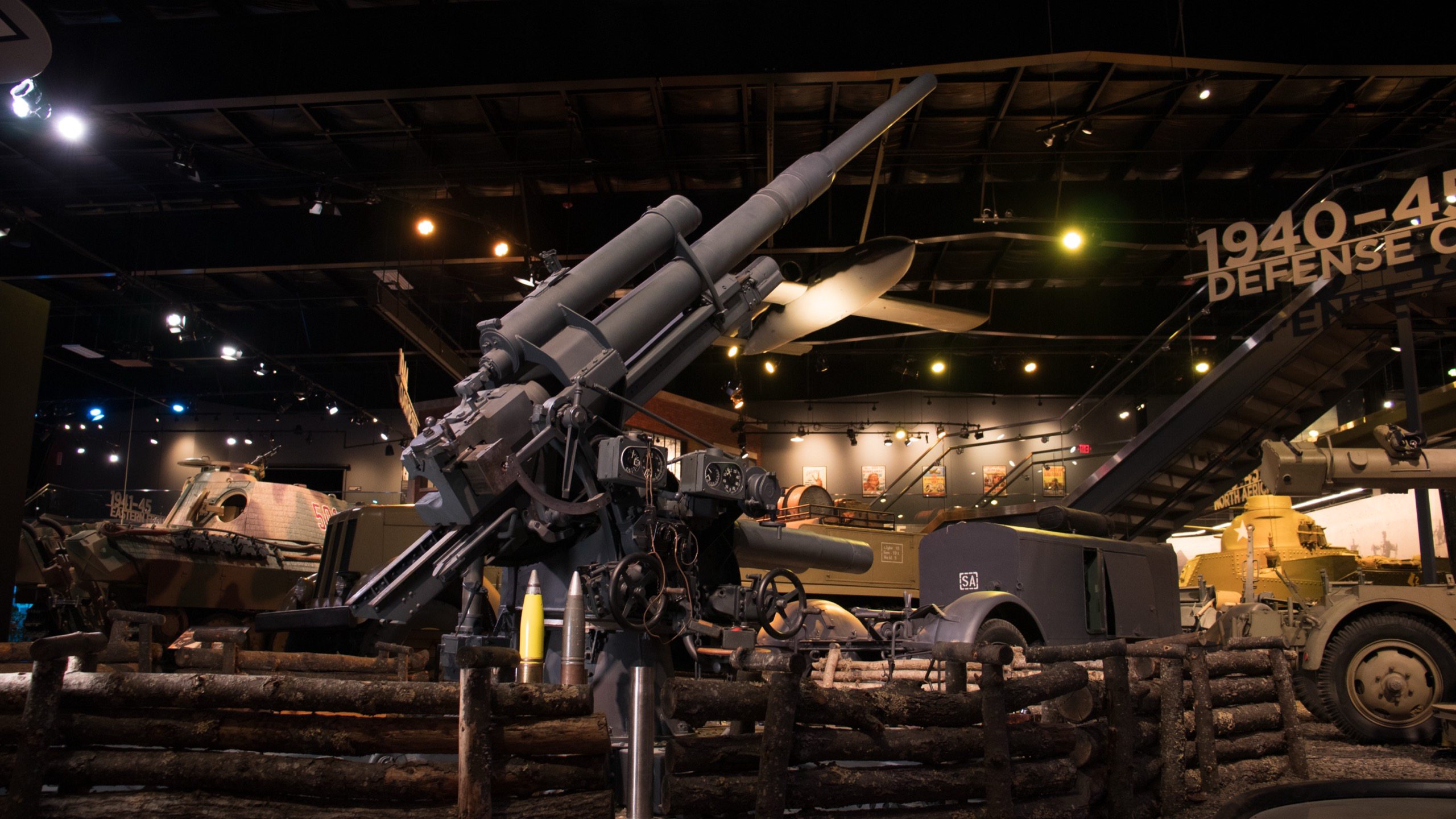
These calculations were transmitted electrically to the crews operating nearby anti-aircraft guns, including the famous German 8.8cm FlaK 37. Gun crews matched their weapons to the director’s continuously updated instructions, allowing multiple guns to deliver coordinated fire against approaching aircraft.
The Kommandogerät 40 could measure targets at distances approaching 18 kilometers (11.2 miles) and altitudes up to approximately 39,000 feet. Its sophisticated mechanisms could also account for aircraft changing altitude or direction, making it considerably more capable than earlier German fire-control systems.
During the Allied strategic bombing campaigns of 1943–1945, coordinated heavy anti-aircraft batteries became essential components of Germany’s air defenses. The Kommandogerät 40 helped these batteries concentrate their fire against formations of American B-17 Flying Fortresses, B-24 Liberators, and British RAF bombers.
The Kommandogerät 40 displayed at the American Heritage Museum is an exceptionally rare surviving example. According to the museum’s collection history, this director continued serving with Finnish air-defense forces until 1969, demonstrating the enduring utility of its sophisticated mechanical design.
Displayed alongside an 8.8cm FlaK 37 anti-aircraft gun and a 150cm Flakscheinwerfer 34 Searchlight with its 24kW generator, the Kommandogerät 40 forms the calculating centerpiece of the American Heritage Museum’s recreated German anti-aircraft battery.
Together, these remarkable artifacts illustrate the complex integration of target detection, optical tracking, mechanical computation, and artillery firepower that characterized Germany’s increasingly desperate Defense of the Reich during World War II.