Artifacts
V-1 Flying Bomb / Fieseler Fi 103
| General Information | |
|---|---|
| Model | V-1 Flying Bomb / Fieseler Fi 103 (JB-2 Loon) |
| Class | Missile |
| Type | Cruise Missile |
| Use | Military |
| Era | 1940-1945 |
| Gallery Focus | WWII European Theater |
| Manufacturer | Fieseler |
| Year | 1943 |
| Country | Germany |
| Ownership | CF Inc. |
| Gallery Location | Defense of the Reich |
| Status | Static Only |
Additional Photos
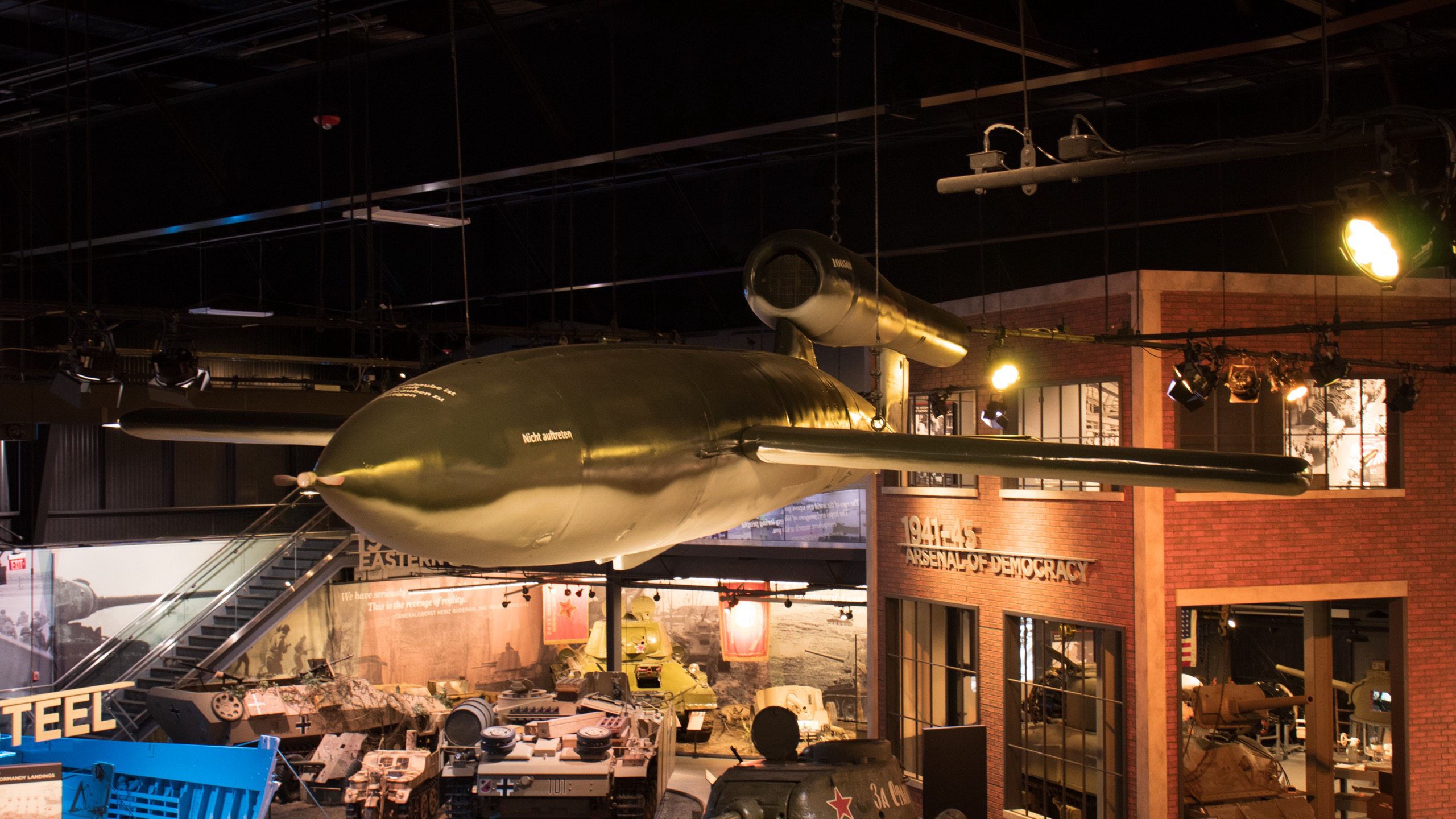
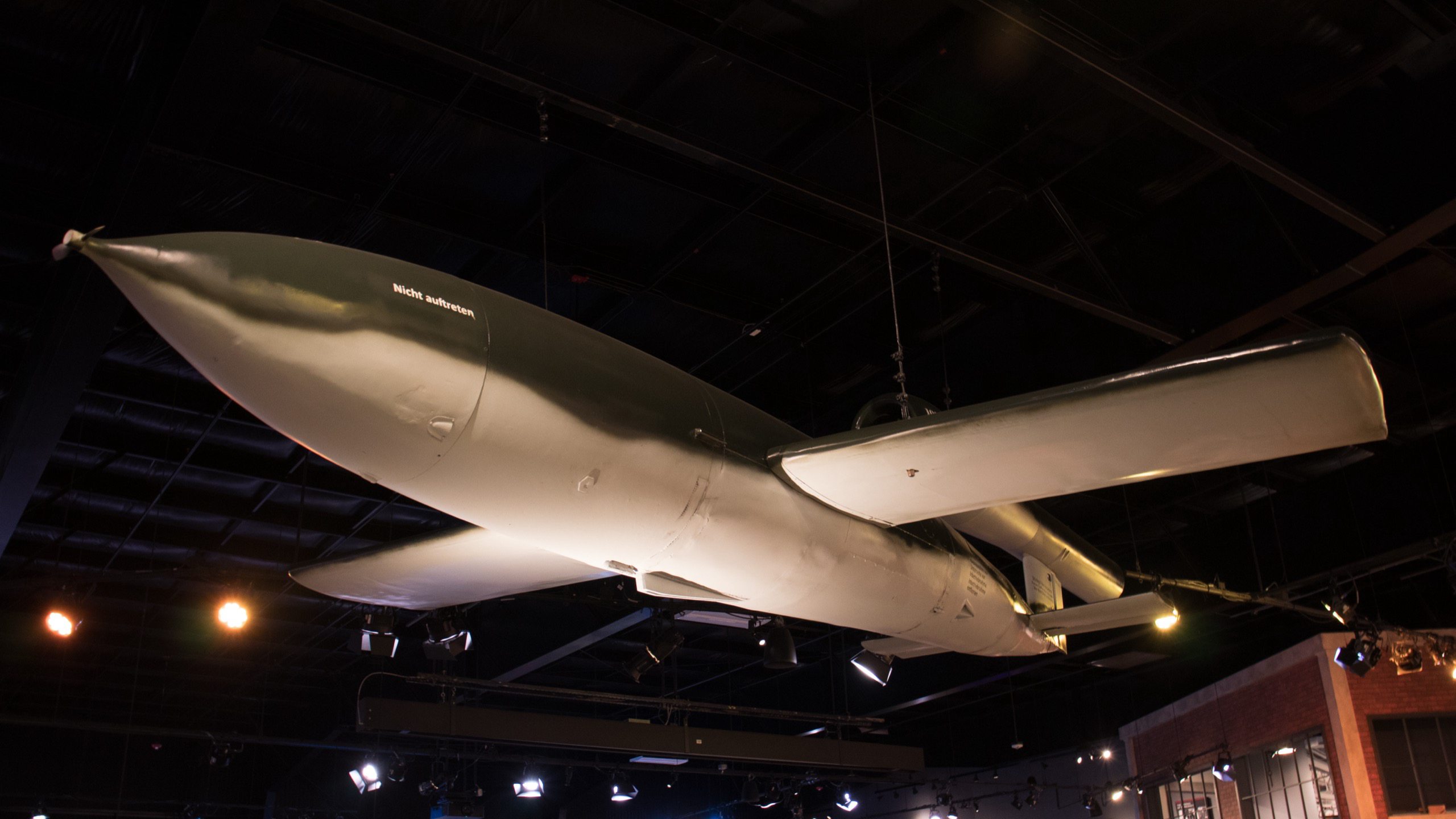
The German V-1 Flying Bomb, officially designated the Fieseler Fi 103, was the world’s first operational cruise missile and one of Nazi Germany’s most feared weapons during the final year of World War II. Known to the Allies as the “Buzz Bomb” or “Doodlebug,” the V-1 was powered by a distinctive pulsejet engine that produced a loud, pulsating drone. When the engine suddenly stopped, civilians below knew an explosion could follow within moments.
Germany began launching V-1 missiles against Britain on June 13, 1944, just one week after the Allied invasion of Normandy. Launched from ramps in occupied Europe and later from modified aircraft, the pilotless weapons carried nearly one ton of explosives over distances approaching 150 miles. Their primitive guidance systems made precision targeting impossible, but thousands were directed toward London, Antwerp, and other Allied cities. The attacks killed thousands of civilians and caused widespread destruction.
Allied forces responded with fighter interceptions, anti-aircraft artillery, barrage balloons, and intensive bombing of German launch sites. Despite these countermeasures, V-1 attacks continued into March 1945.
The artifact displayed at the American Heritage Museum is an American-built JB-2 Loon, a nearly identical copy of the German V-1 developed through reverse engineering of captured components. First tested in October 1944, the JB-2 was never employed in combat but contributed significantly to America’s postwar cruise missile development.
Painted to represent a German V-1 and suspended in the American Heritage Museum’s Defense of the Reich Gallery, this historic artifact illustrates both Nazi Germany’s desperate employment of advanced weapons technology and the emergence of modern guided missile warfare.