Artifacts
Churchill Mk.VII Crocodile (A22)
British Flamethrower Infantry Tank | World War II (1944–1945)
| General Information | |
|---|---|
| Model | Churchill Mk VII (A22) "Crocodile" |
| Class | Armor |
| Type | Infantry Tank, Flame Tank |
| Use | Military |
| Era | 1940-1945 |
| Gallery Focus | WWII European Theater |
| Manufacturer | Vauxhall Motors, Royal Electrical and Mechanical Engineers (REME) |
| Year | 1944 |
| Country | United Kingdom |
| Ownership | CF Inc. |
| Gallery Location | D-Day |
| Status | Operational, Offline |
Additional Photos
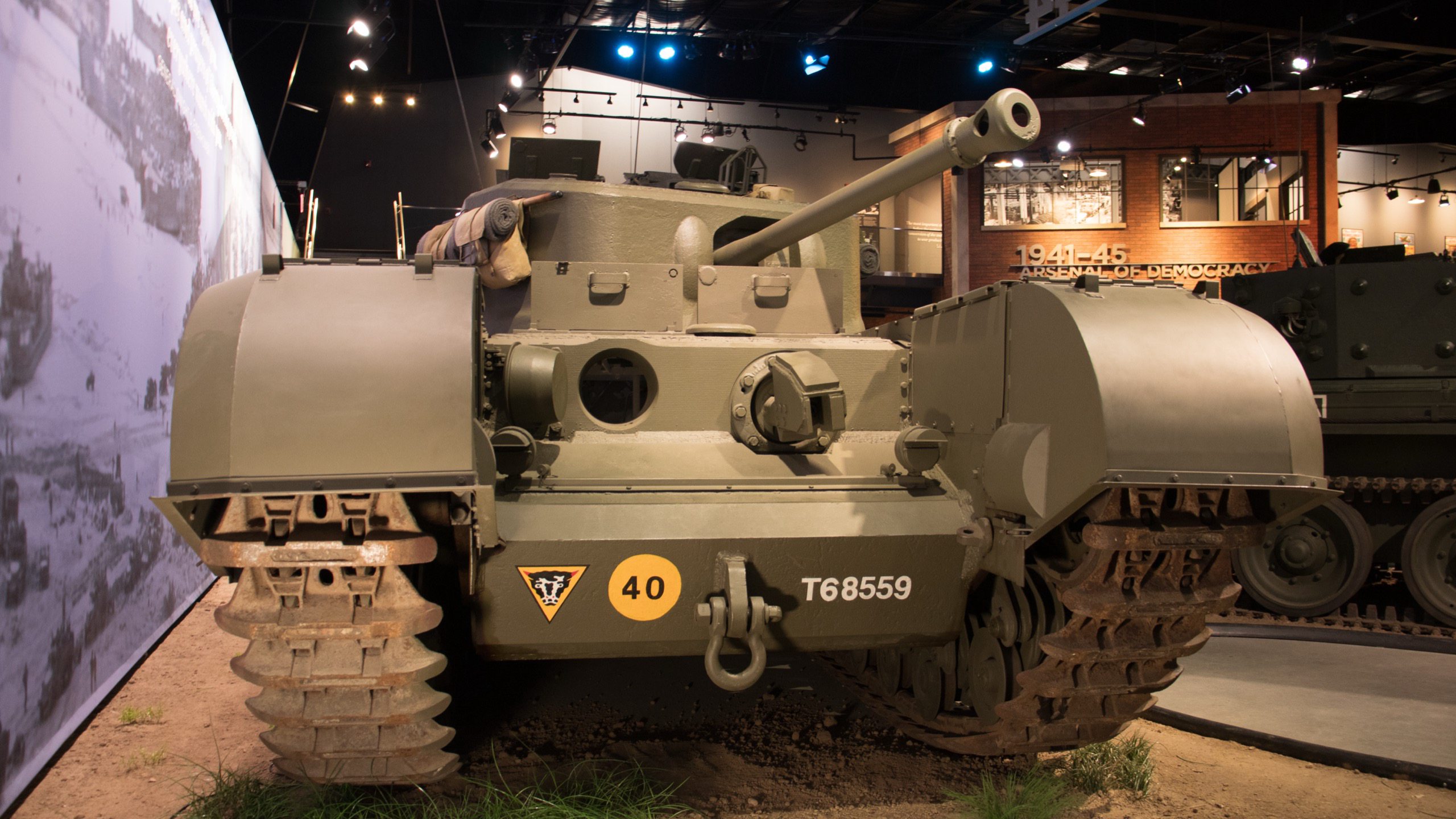
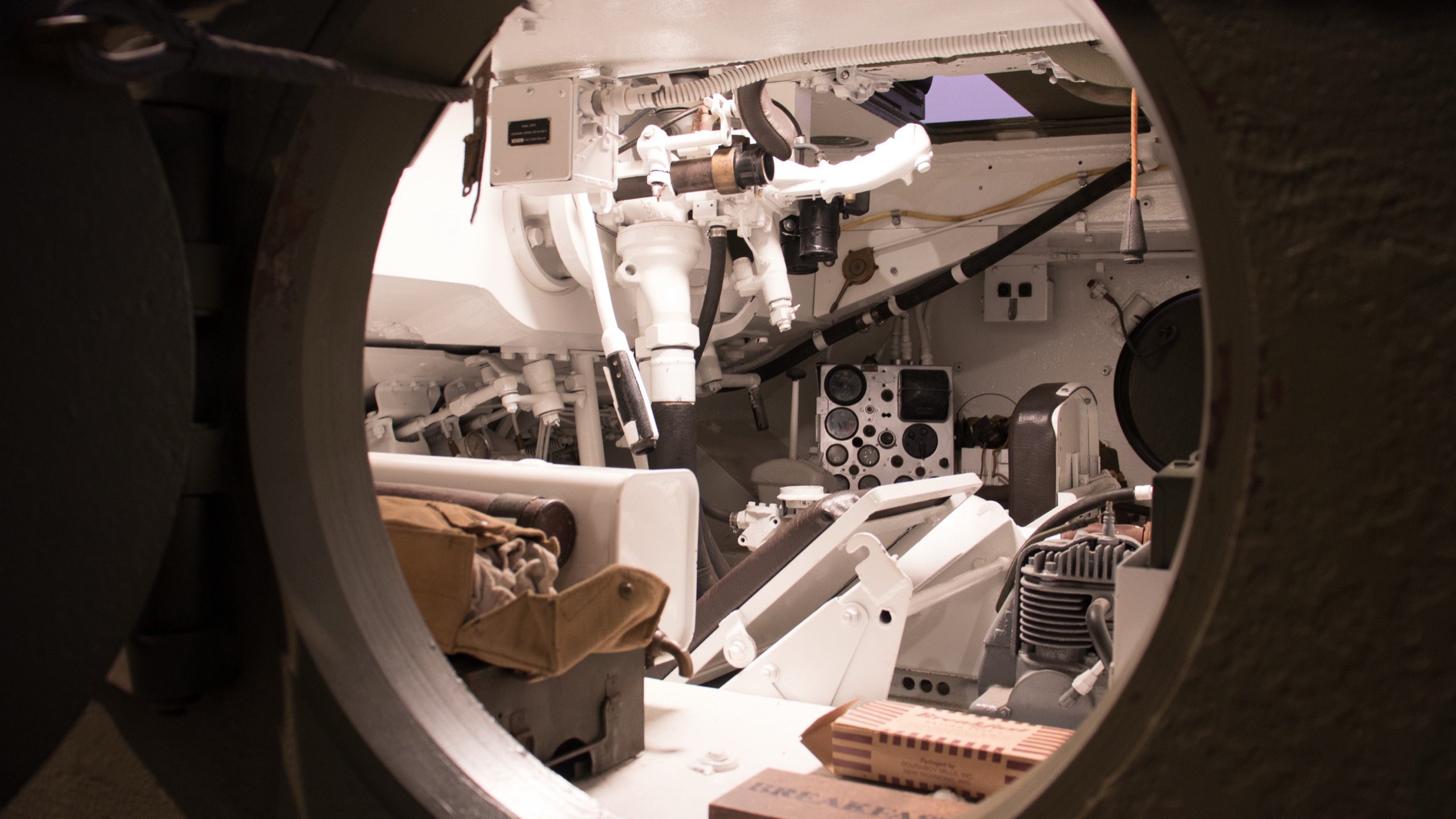
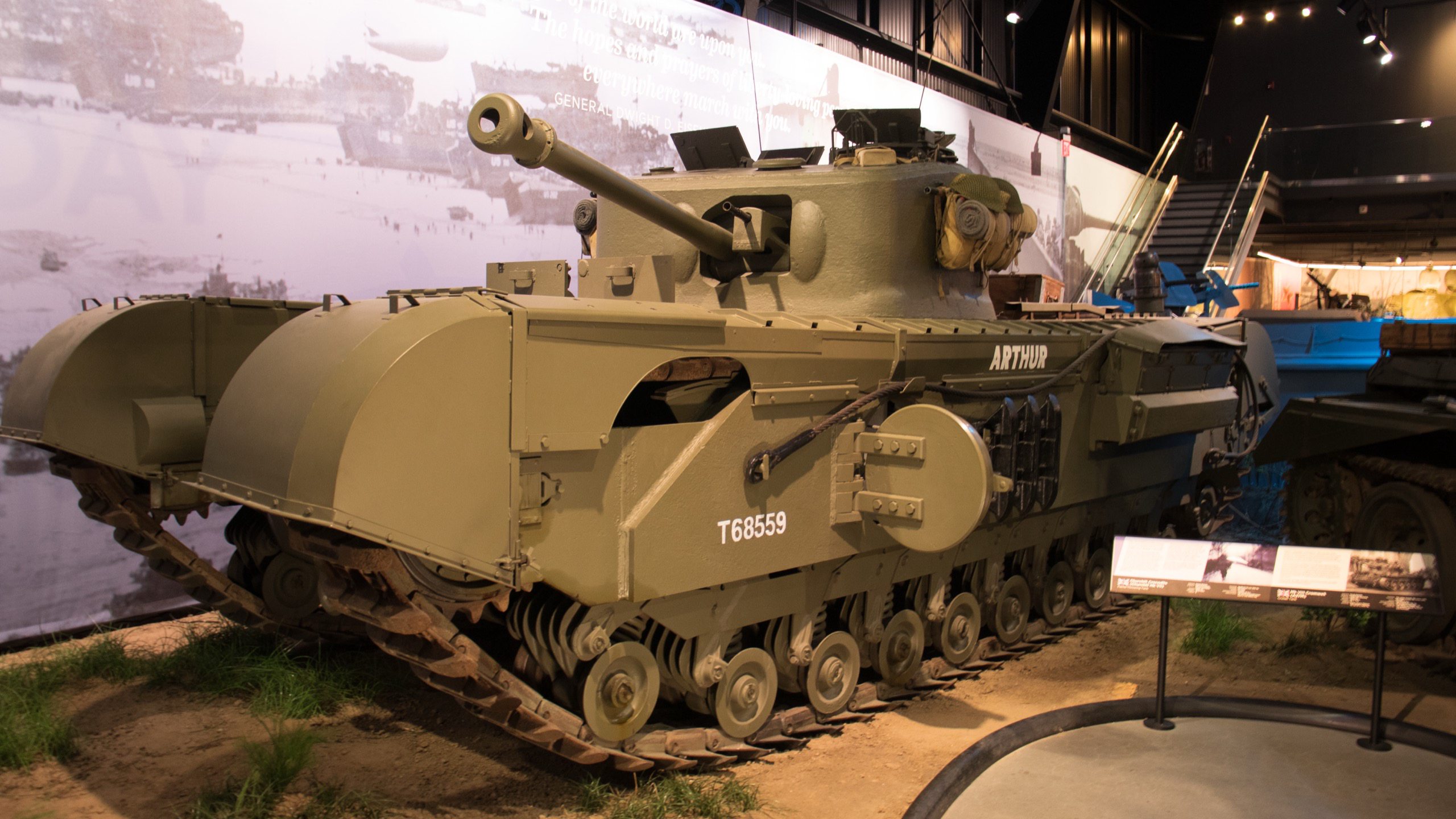
The Churchill Crocodile was one of the most formidable and psychologically devastating armored vehicles employed by Allied forces during World War II. Developed by the British Army to overcome heavily fortified German defensive positions, this specialized flamethrower tank combined the exceptional armor protection of the Churchill infantry tank with a powerful incendiary weapon capable of forcing enemy troops from bunkers, trenches, and concrete fortifications.
Based on the heavily armored Churchill Mk VII, the Crocodile was among the specialized assault vehicles developed under Major-General Percy Hobart for the British 79th Armoured Division. Collectively nicknamed “Hobart’s Funnies,” these innovative vehicles were designed to overcome the formidable obstacles and defenses anticipated during the Allied invasion of Normandy.
Unlike earlier flamethrower tanks, the Crocodile retained its conventional turret-mounted 75mm main gun and coaxial machine gun, allowing it to engage enemy armor and fortified positions. Its hull-mounted machine gun was replaced with a flame projector connected through an armored pipeline beneath the tank to a two-wheeled, 6.5-ton armored trailer.
The trailer carried approximately 400 Imperial gallons (480 U.S. gallons) of thickened incendiary fuel, along with compressed nitrogen cylinders used to propel the burning liquid toward its target. The flamethrower could project fire as far as 120 yards under favorable conditions, although its typical effective range was closer to 80 yards. Its fuel supply permitted approximately 80 one-second bursts of flame. If damaged or emptied, the trailer could be released from inside the tank, allowing the Crocodile to continue operating as a conventional fighting vehicle.
The Crocodile’s greatest advantage was often psychological. German soldiers defending bunkers and strongpoints sometimes surrendered at the mere threat of its flamethrower, making it particularly effective during assaults against fortified positions. Its terrifying reputation also placed Crocodile crews at considerable risk if captured.
Churchill Crocodiles first entered combat during the D-Day landings on June 6, 1944, when a small number landed on Gold Beach. Throughout the Normandy Campaign, they supported British and American forces in clearing stubborn German resistance. They subsequently participated in operations across Western Europe, including the liberation of Brest and attacks against Germany’s heavily defended Siegfried Line. Crocodiles also served in Italy and later saw action during the Korean War.
The rare surviving Churchill Crocodile displayed in the American Heritage Museum’s D-Day Gallery represents the remarkable engineering innovations that helped Allied forces overcome German defenses and secure victory in Europe.