Artifacts
Sonderkraftfahrzeug Sd.Kfz. 251/1
Germany | 1943–1945 | World War II – Eastern Front
| General Information | |
|---|---|
| Model | Sonderkraftfahrzeug Sd.Kfz. 251/1 Ausf. D |
| Class | Military Vehicle |
| Type | Half-Track |
| Use | Military |
| Era | 1940-1945 |
| Gallery Focus | WWII European Theater |
| Manufacturer | Hanomag |
| Year | 1943 |
| Country | Germany |
| Ownership | CF Inc. |
| Gallery Location | Eastern Front |
| Status | Operational, Offline |
Additional Photos
Video
The German "Hanomag" – Sd.Kfz. 251 Full Tour
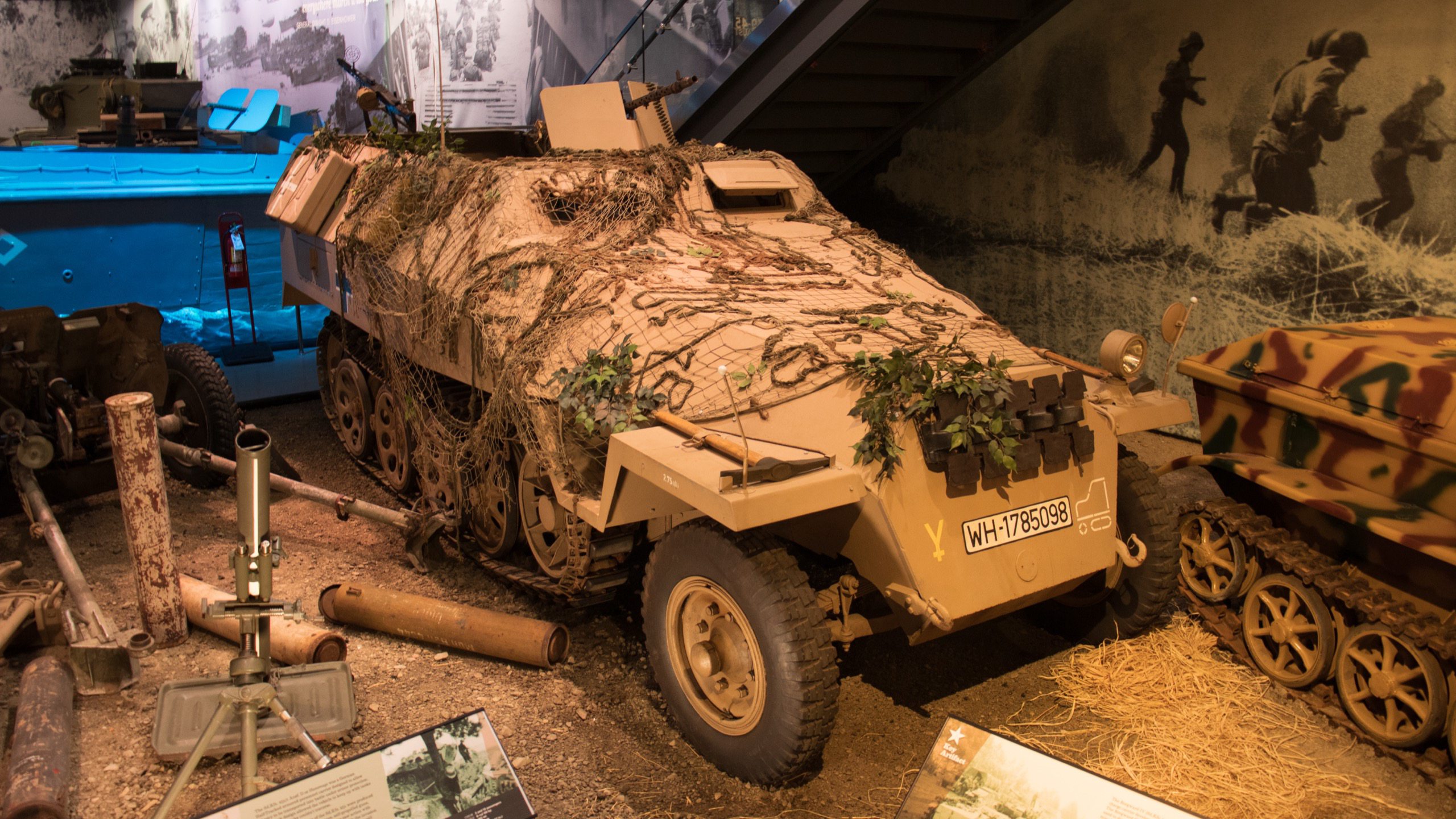
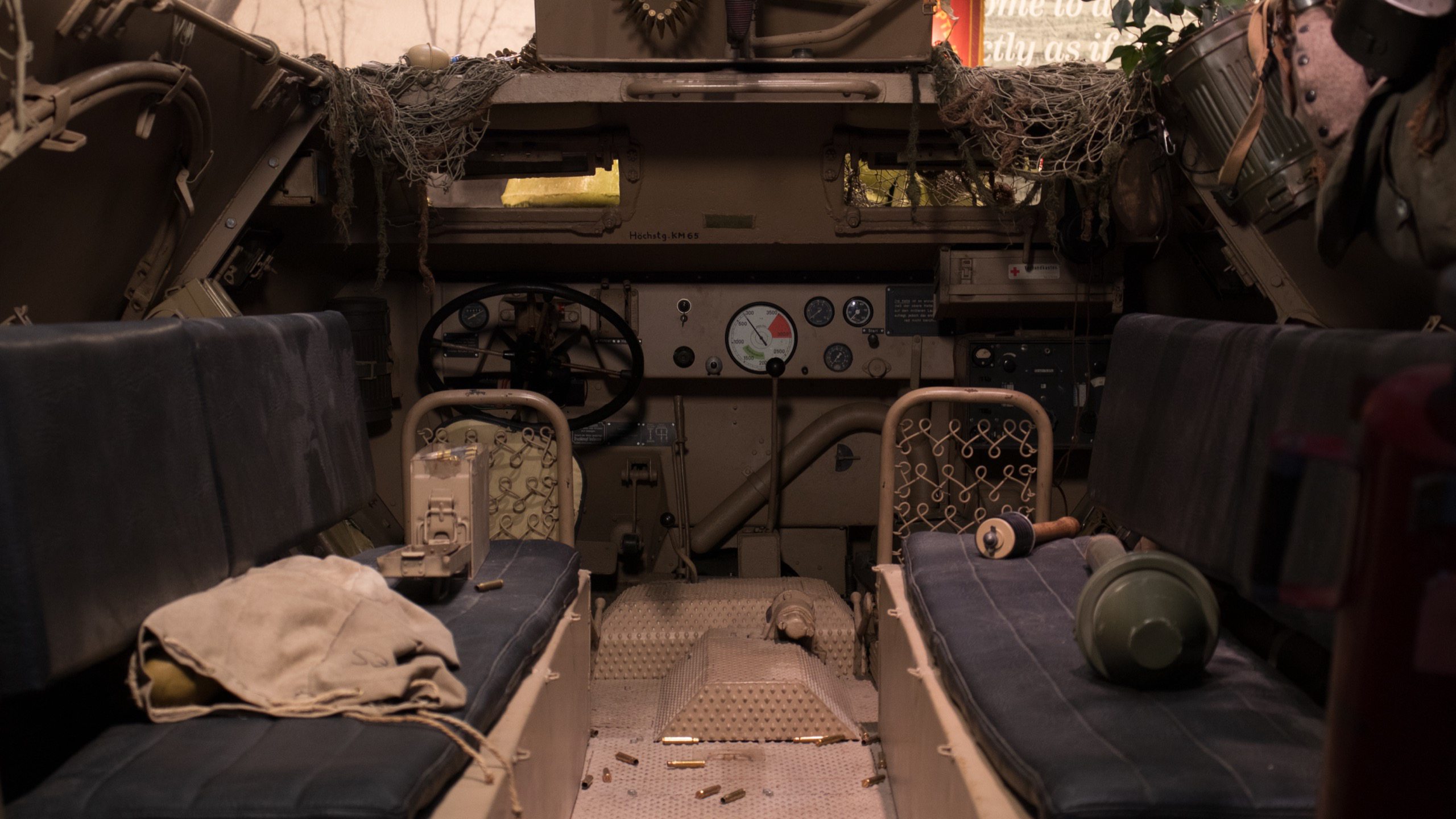
The German Sonderkraftfahrzeug 251/1 Ausführung D (Sd.Kfz. 251/1 Ausf. D), commonly known as the “Hanomag,” was one of the most recognizable armored personnel carriers of World War II. Designed to transport mechanized infantry, known as Panzergrenadiers, into battle alongside German tanks, the Sd.Kfz. 251 played a vital role in Germany’s mobile warfare operations, particularly during the fierce fighting on the Eastern Front.
Developed by Hanomag and introduced in 1939, the Sd.Kfz. 251 combined conventional front wheels with rear tracks, providing greater cross-country mobility than ordinary military trucks. Powered by a Maybach six-cylinder engine producing approximately 100 horsepower, the vehicle could reach speeds approaching 32 mph. Its sloped armor offered protection against small-arms fire and shell fragments, while its open-topped fighting compartment accommodated a two-man crew and ten infantrymen. Typically armed with one or two 7.92mm MG34 or MG42 machine guns, the carrier could provide covering fire as troops dismounted to engage the enemy.
The improved Ausf. D, introduced in 1943, featured a simplified armored body, redesigned rear compartment, and improved external storage. These changes reduced manufacturing complexity and accelerated production as Germany struggled to replace mounting battlefield losses.
On the Eastern Front, Sd.Kfz. 251 half-tracks supported German armored formations during offensives, defensive operations, and counterattacks against Soviet forces. Their tracked mobility was particularly valuable across the region’s vast distances and difficult terrain, where mud, snow, and damaged roads frequently hindered conventional vehicles. However, thin armor and an exposed passenger compartment left crews vulnerable to artillery, grenades, and anti-tank weapons.
More than 15,000 Sd.Kfz. 251 vehicles were manufactured in numerous configurations, including troop carriers, ambulances, mortar carriers, command vehicles, and self-propelled weapons. Approximately 10,600 were the simplified Ausf. D model, making it the most extensively produced version.
Displayed in the American Heritage Museum’s Eastern Front Gallery, this rare surviving Sd.Kfz. 251/1 Ausf. D illustrates the evolution of German mechanized warfare and the essential relationship between infantry and armored forces during some of the largest and most destructive battles of World War II.