Artifacts
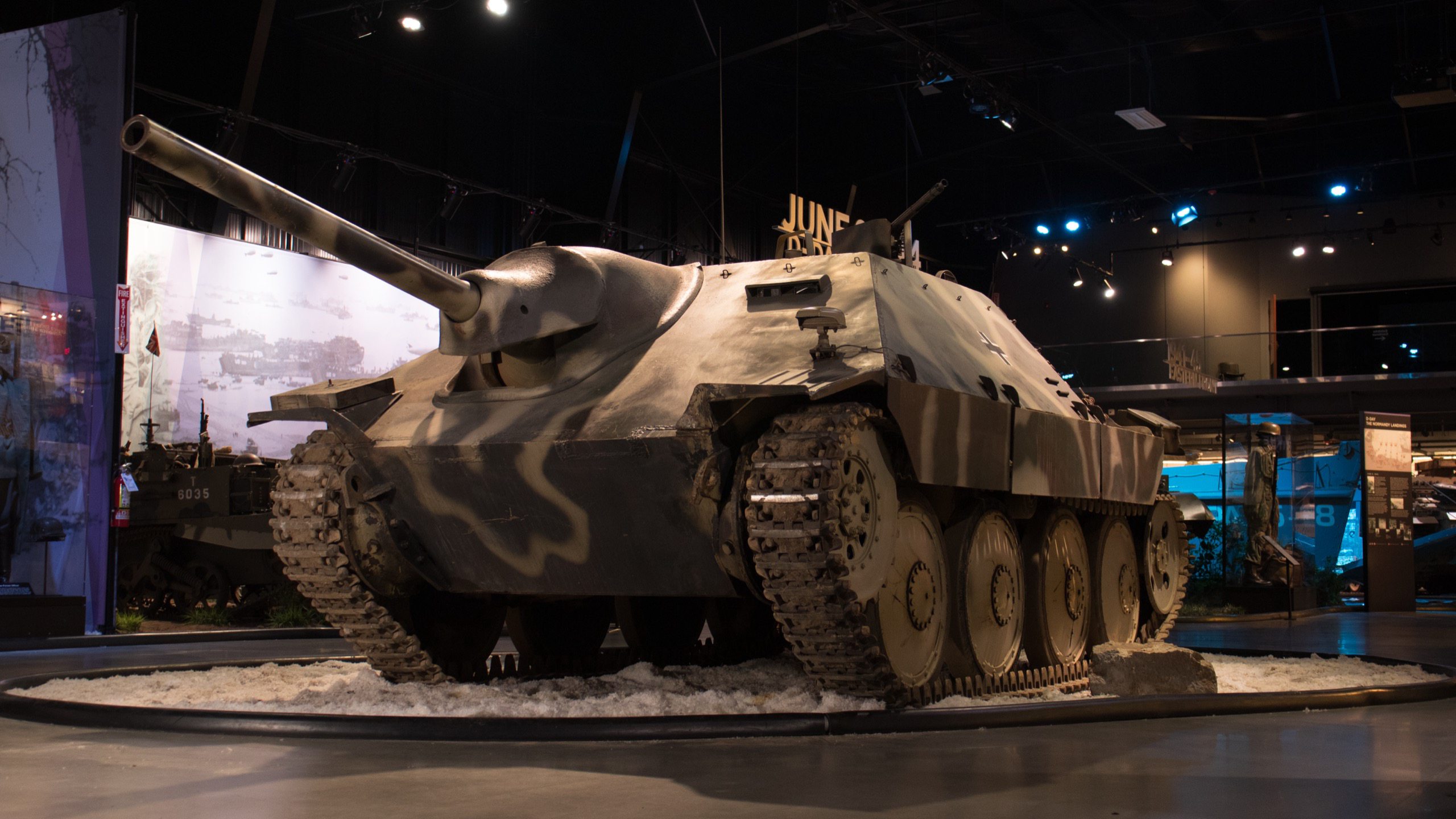
Sd.Kfz. 138/2 Jagdpanzer 38(t) Hetzer
Germany / Czechoslovakia | 1944–1945 | World War II – Battle of the Bulge
| General Information | |
|---|---|
| Model | Leichter Panzerjäger 38(t) Sd.Kfz. 138/2 Jagdpanzer 38 Hetzer |
| Class | Armor |
| Type | Tank Destroyer |
| Use | Military |
| Era | 1940-1945 |
| Gallery Focus | WWII European Theater |
| Manufacturer | Böhmisch-Mährische Maschinenfabrik (ČKD), Škoda |
| Year | 1944 |
| Country | CzechoslovakiaGermany |
| Ownership | CF Inc. |
| Gallery Location | Battle of the Bulge |
| Status | Operational, Online |
Additional Photos
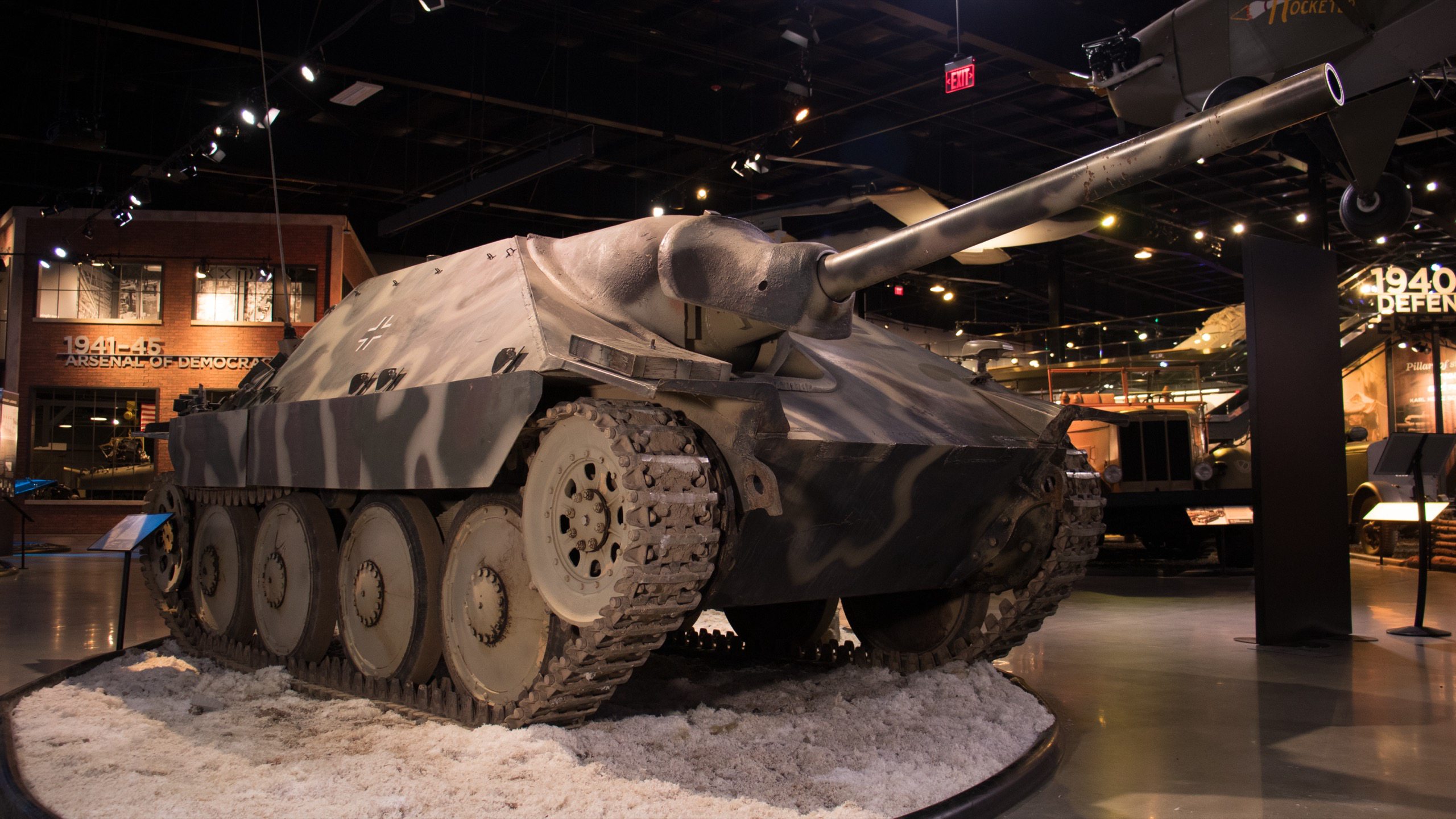
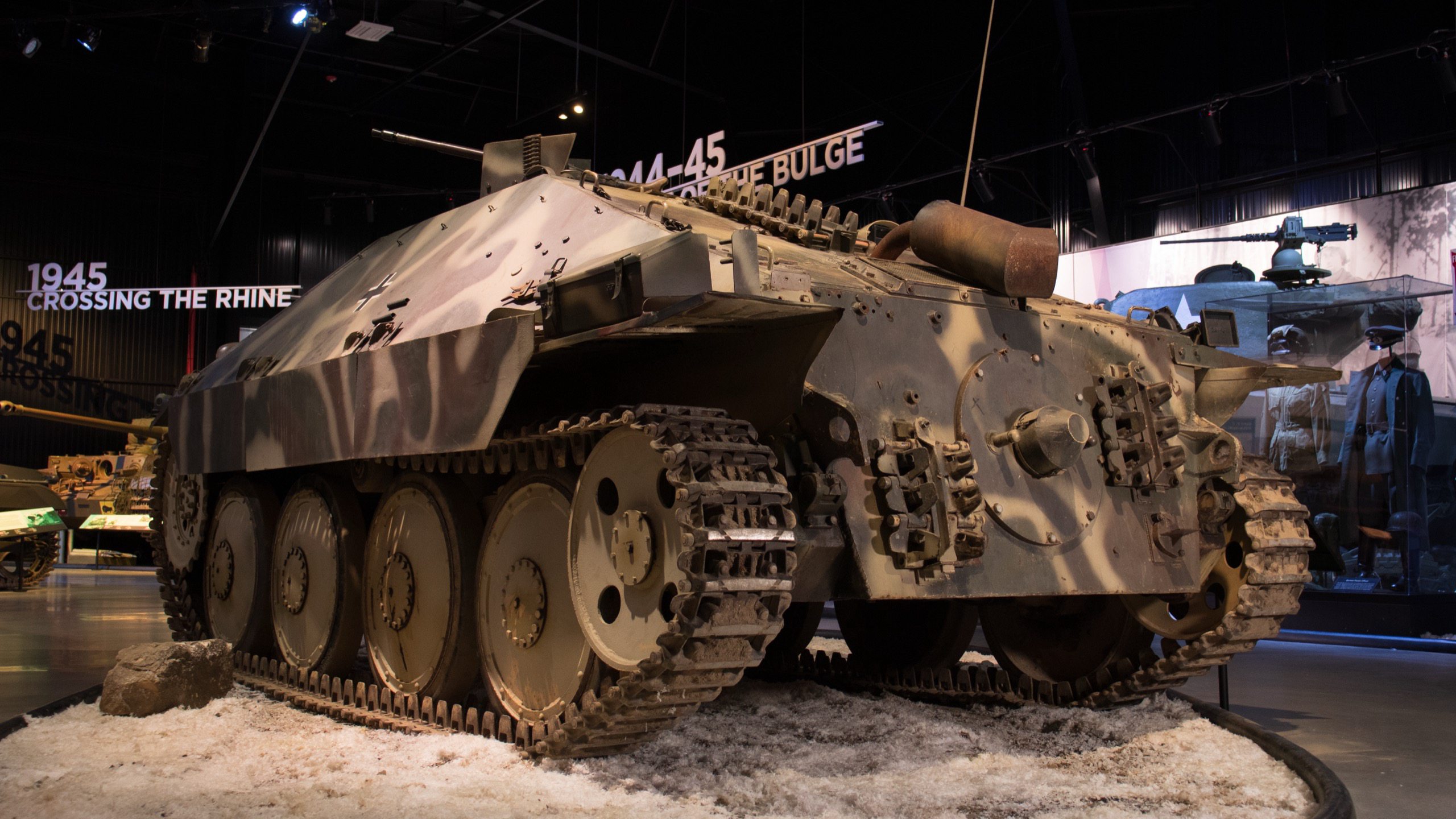
The German Jagdpanzer 38(t), commonly known as the “Hetzer,” was one of the most distinctive tank destroyers developed during the final years of World War II. Combining a low silhouette, sharply sloped armor, and a powerful 75mm anti-tank cannon, it was designed to provide German infantry formations with an affordable and effective defense against advancing Allied tanks.
Developed in German-occupied Czechoslovakia, the Jagdpanzer 38 entered service in July 1944. Its design was based upon a substantially modified chassis of the Czech-built Panzer 38(t) light tank, incorporating proven mechanical components that helped simplify production. Manufactured primarily by BMM and Škoda, approximately 2,800 vehicles were produced before Germany’s surrender in May 1945.
Unlike conventional tanks, the Hetzer had no rotating turret. Its 75mm PaK 39 L/48 cannon was mounted in a fixed, fully enclosed armored superstructure, capable of penetrating the armor of many Allied tanks at typical combat distances.
The vehicle’s greatest defensive advantage was its exceptionally low profile and heavily sloped frontal armor. Although only 60mm thick, the sharply angled front plate provided substantially greater effective protection against incoming projectiles. Its compact dimensions also made the Hetzer difficult to detect when concealed among trees, buildings, or prepared defensive positions.
Powered by a 158-horsepower Praga gasoline engine, the approximately 16-ton vehicle could reach speeds approaching 26 mph. Its four-man crew operated in extremely cramped conditions, with limited visibility and little room for ammunition or equipment.
The Hetzer was particularly effective when used in ambushes. Crews could conceal their vehicles, identify approaching enemy armor, and deliver a powerful first shot before relocating. However, its narrow gun traverse required the driver to reposition the entire vehicle when engaging targets outside the cannon’s limited firing arc, potentially exposing its thin side armor to enemy fire.
The Battle of the Bulge
During Germany’s desperate Ardennes Offensive, beginning December 16, 1944, Jagdpanzer 38 tank destroyers accompanied German infantry formations attempting to break through American defensive lines.
The dense forests, narrow roads, and winter conditions of the Ardennes provided opportunities for concealed anti-tank positions. Hetzer crews could exploit these conditions to threaten American Sherman tanks and other armored vehicles. Nevertheless, Germany’s declining manpower, fuel shortages, logistical difficulties, and determined Allied resistance ultimately doomed the offensive.
The Museum’s Historic Vehicle
The Jagdpanzer 38 displayed at the American Heritage Museum is a postwar Czechoslovak-built G-13 variant, manufactured for service with the Swiss Army. This direct descendant of the German wartime tank destroyer retained its characteristic armored hull and overall engineering design, although Swiss vehicles incorporated modifications to their armament and equipment.
Following its Swiss military service, the vehicle was acquired by Jacques Littlefield’s Military Vehicle Technology Foundation in December 1993 and subsequently became part of the American Heritage Museum collection.
Displayed in the museum’s Battle of the Bulge Gallery, the Hetzer illustrates Germany’s efforts to develop compact, economical tank destroyers capable of challenging Allied armored superiority during the final months of World War II.