Artifacts
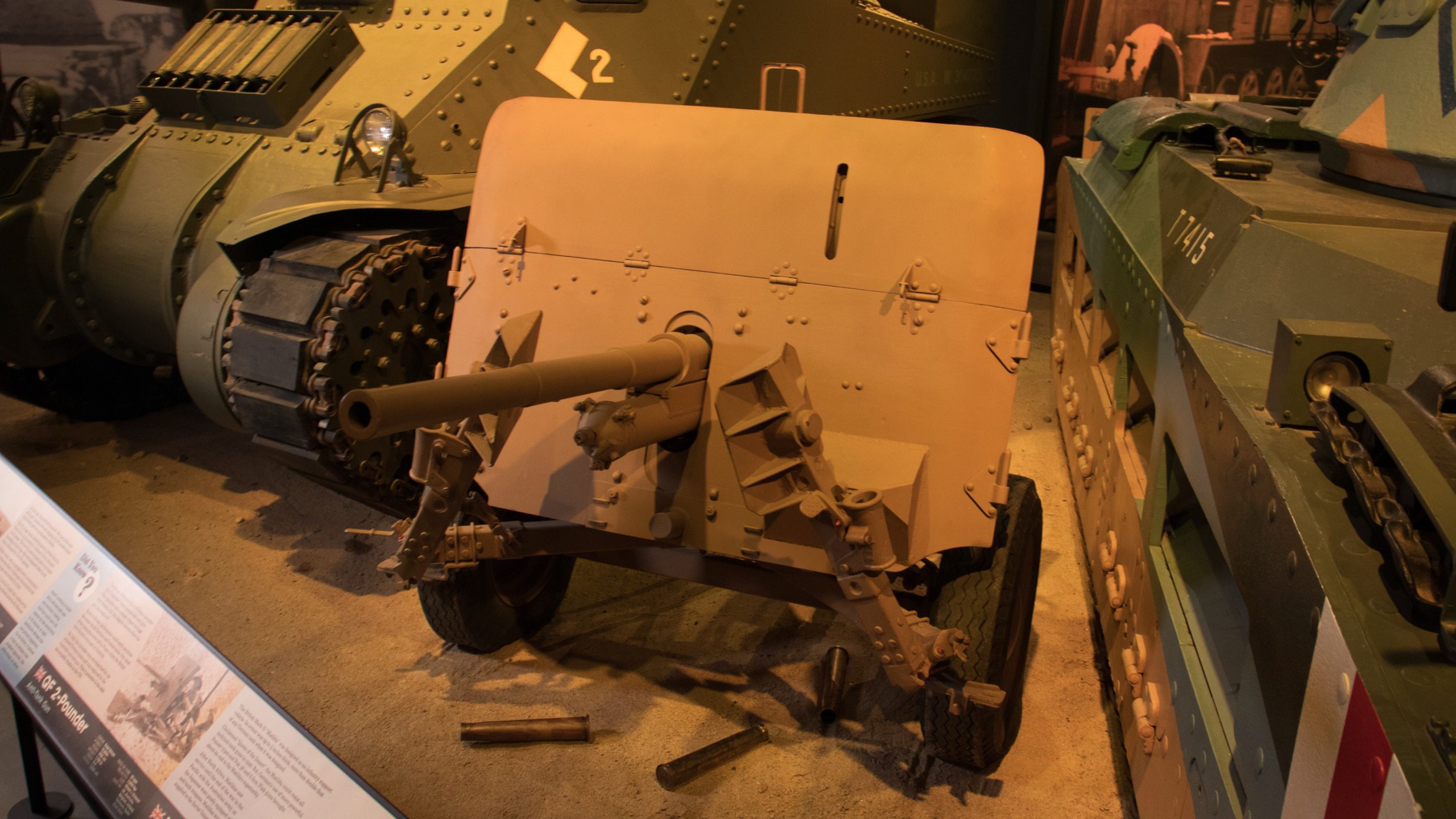
Ordnance Quick-Firing QF 2-pounder
| General Information | |
|---|---|
| Model | Ordnance Quick-Firing QF 2-pounder |
| Class | Artillery |
| Type | Anti-Tank Gun |
| Use | Military |
| Era | 1940-1945 |
| Gallery Focus | WWII European Theater |
| Manufacturer | Vickers-Armstrongs |
| Year | 1940 |
| Country | United Kingdom |
| Ownership | CF Inc. |
| Gallery Location | North Africa |
| Status | Operational, Offline |
Additional Photos
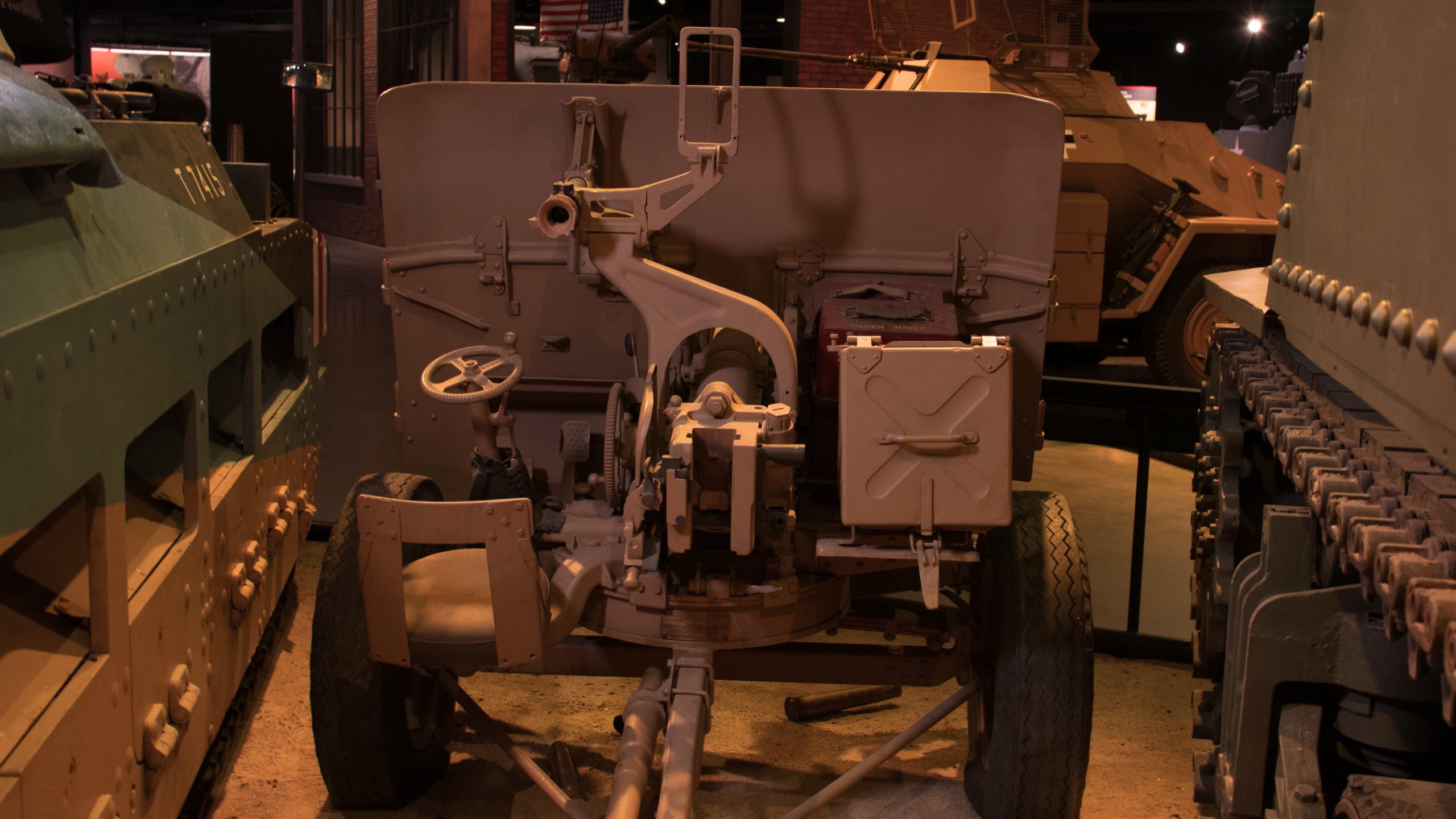
The British Ordnance QF 2-Pounder was one of the most important Allied anti-tank weapons during the early years of World War II, playing a significant role in the North African Campaign. Introduced in 1936, this 40mm quick-firing gun became a mainstay of British and Commonwealth forces battling Italian and German armored formations across the deserts of Egypt and Libya.
During the Western Desert Campaign of 1940–1942, the 2-Pounder provided essential protection against enemy tanks. Its high-velocity armor-piercing ammunition proved effective against Italian armored vehicles and early German Panzers. The gun’s innovative carriage allowed 360-degree traverse, enabling crews to engage enemy armor approaching from multiple directions.
The harsh desert environment presented considerable challenges. To improve mobility, British forces developed the portee system, transporting guns on trucks and sometimes firing directly from their vehicles. During the fierce fighting around Tobruk and Operation Crusader in 1941, 2-Pounder crews played a vital role in confronting German armored offensives.
Despite its early success, the weapon’s effectiveness diminished as German tanks received thicker armor. Its lack of readily available high-explosive ammunition also limited its usefulness against infantry and fortified positions. By 1942, the more powerful 57mm QF 6-Pounder began replacing it on the front lines.
The 2-Pounder remains an important symbol of the resourcefulness and determination of British and Commonwealth soldiers who fought against formidable odds in North Africa.