Artifacts
Piper L-4H "Rosie the Rocketer"
United States | 1944–1945 | World War II – Western Front
| General Information | |
|---|---|
| Model | L-4H Grasshopper "Rosie the Rocketer" |
| Class | Aircraft |
| Type | Liasion |
| Use | Military |
| Era | 1940-1945 |
| Gallery Focus | WWII European Theater |
| Manufacturer | Piper |
| Year | 1943 |
| Country | United States |
| Ownership | CF Trust |
| Gallery Location | Battle of the Bulge |
| Status | Operational, Online |
Additional Photos
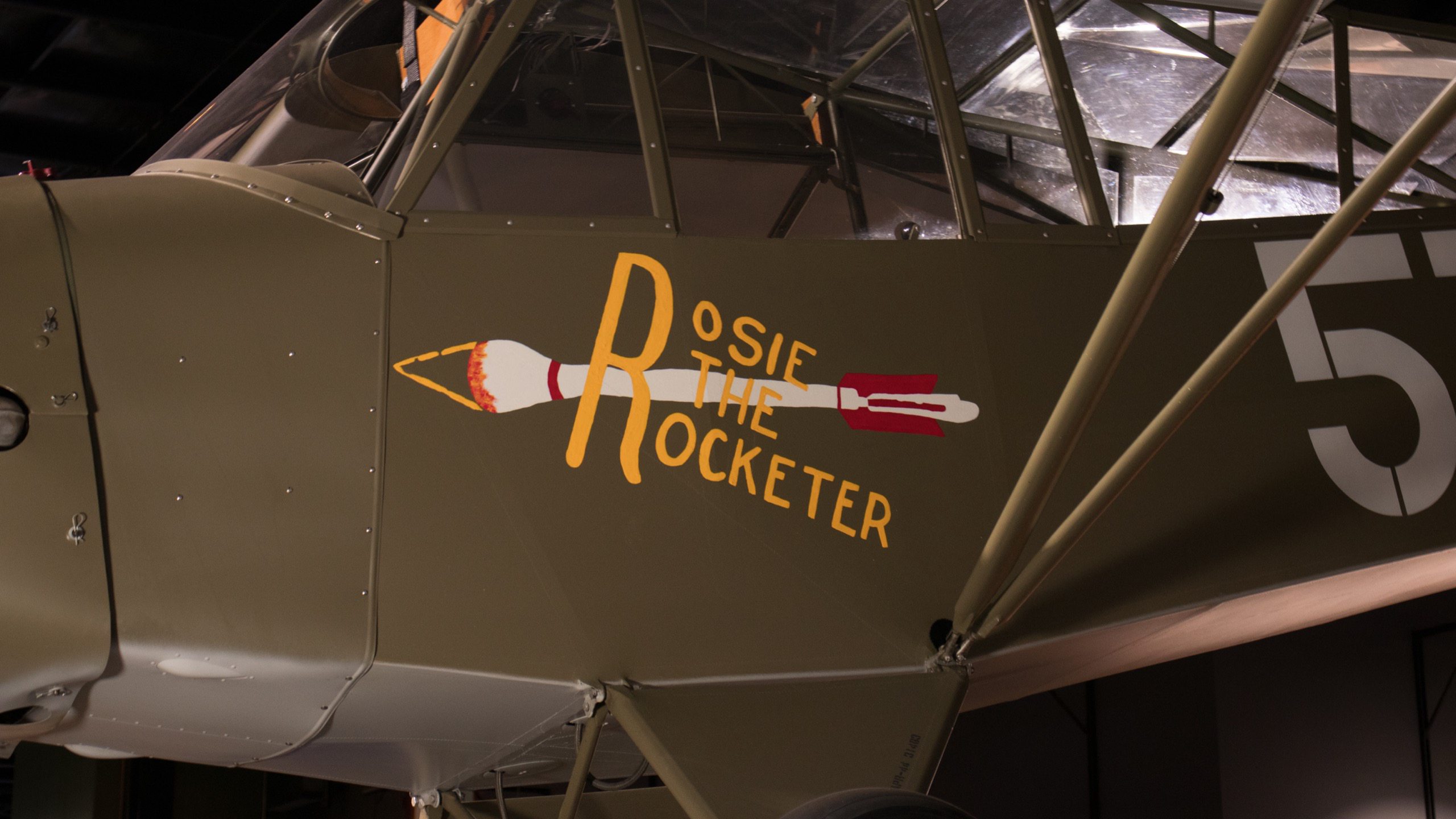
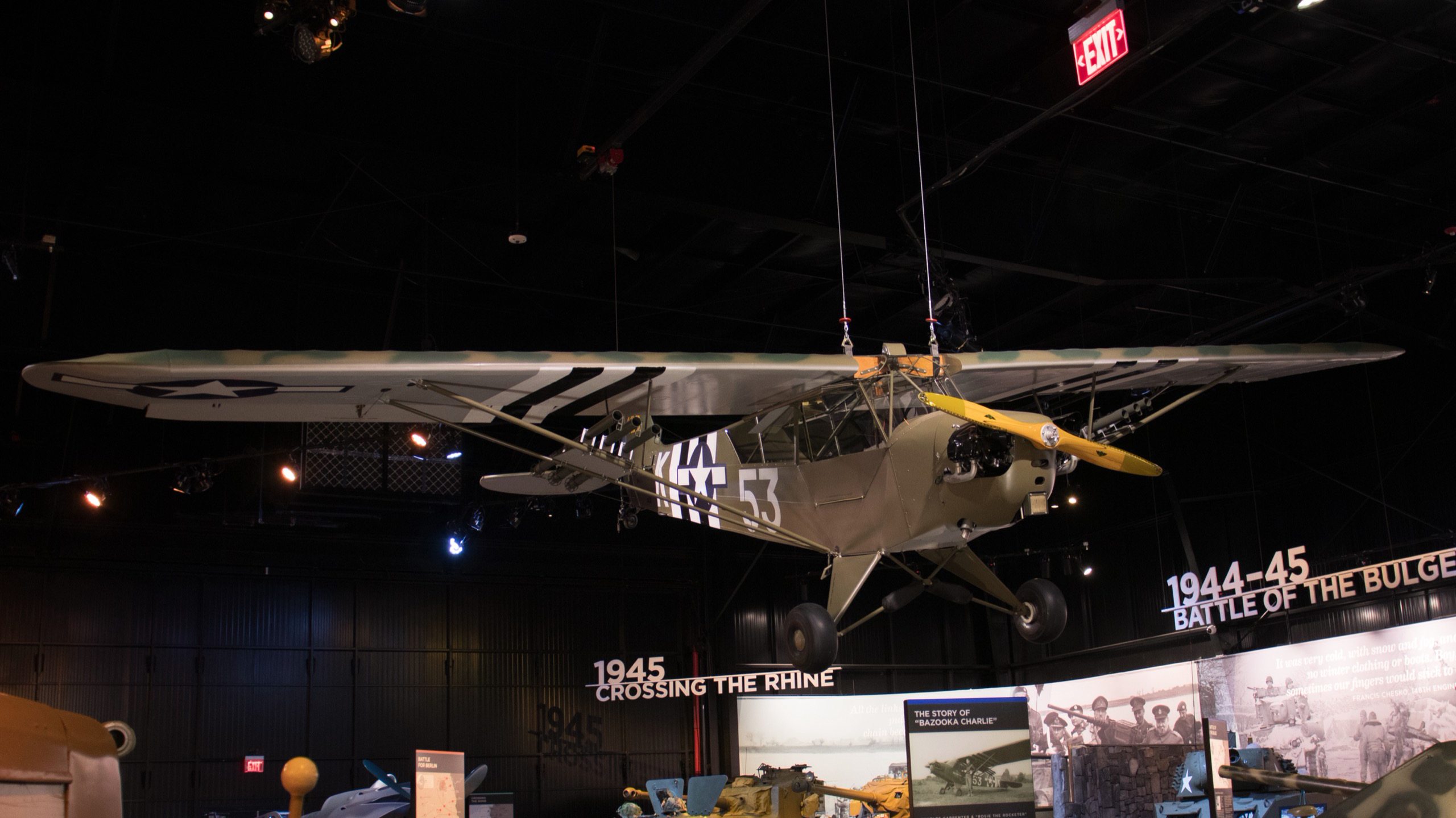
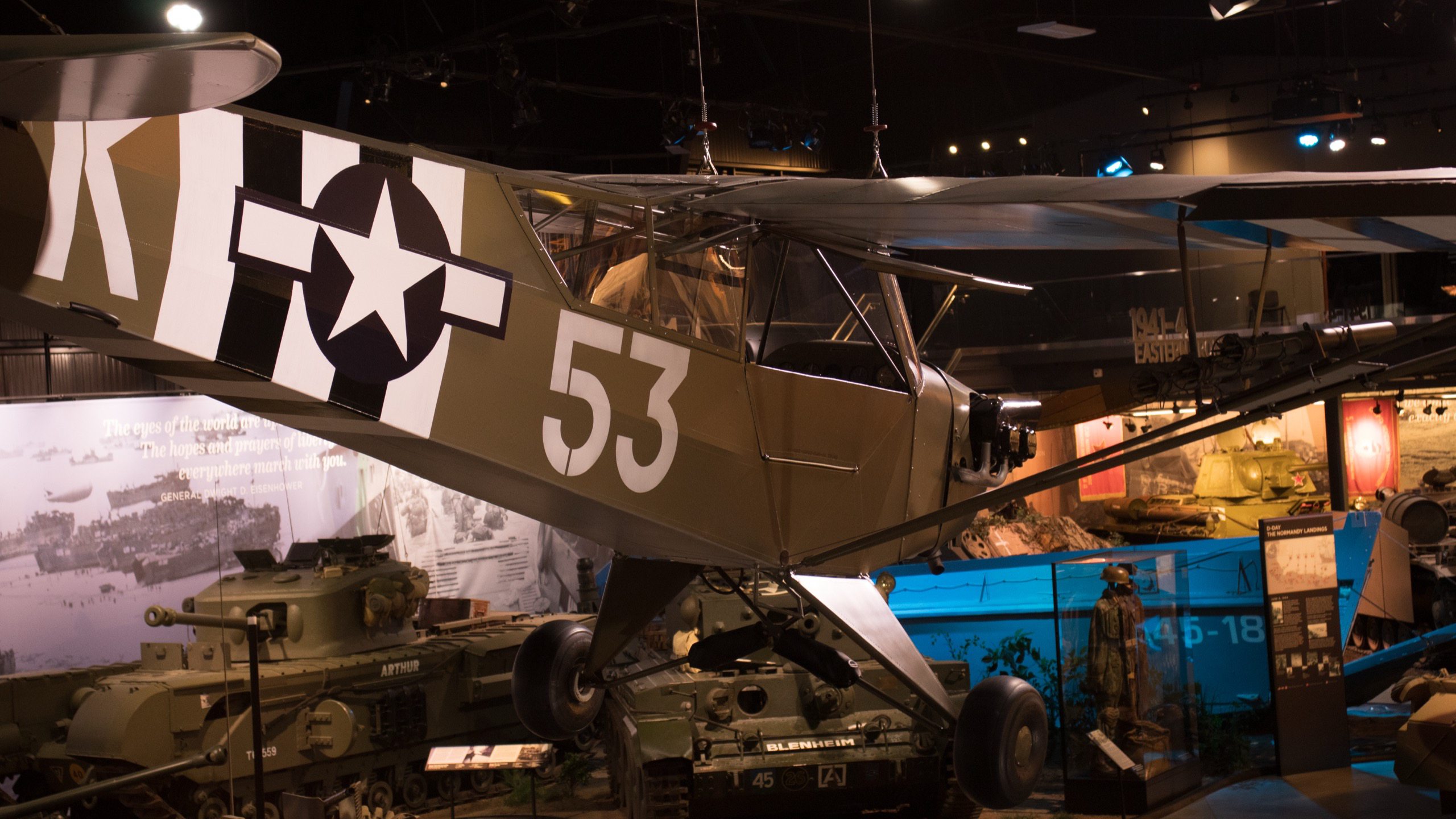
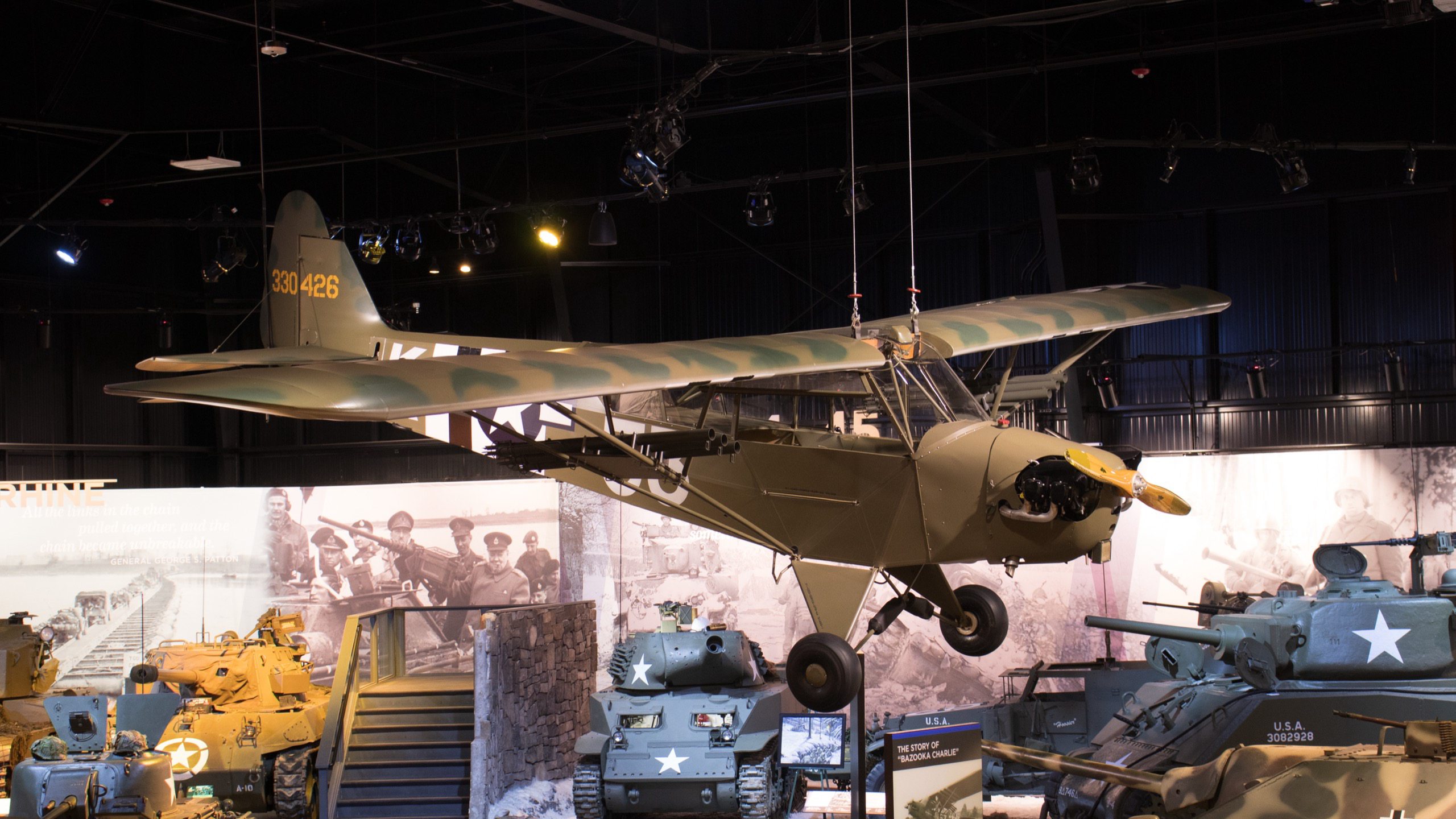
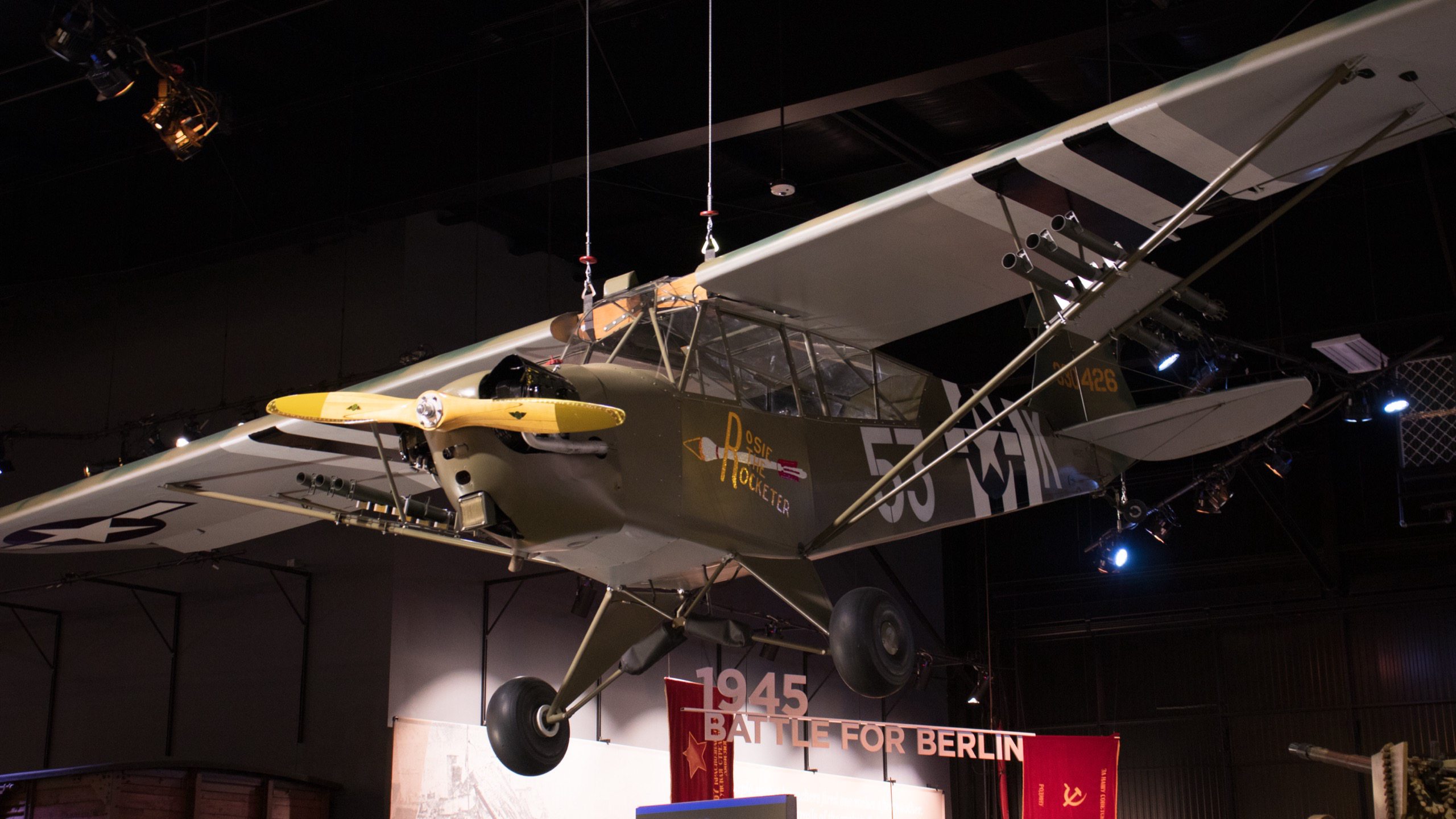
Few aircraft illustrate the ingenuity and determination of American servicemen during World War II quite like the Piper L-4H Grasshopper known as “Rosie the Rocketer.” Originally designed as an unarmed observation aircraft, this lightweight Piper Cub became an unlikely tank destroyer in the hands of Major Charles “Bazooka Charlie” Carpenter, who mounted six rocket launchers beneath its wings and took the fight directly to German armored forces.
The Piper L-4 Grasshopper was the military adaptation of the popular civilian Piper J-3 Cub. Powered by a 65-horsepower Continental engine, the fabric-covered aircraft featured exceptional low-speed handling and short-field performance. Thousands served with American forces during World War II, performing artillery observation, reconnaissance, liaison, and courier missions. Their ability to operate from improvised airstrips near the front lines made them invaluable to advancing ground forces.
The American Heritage Museum’s L-4H, serial number 43-30426, was manufactured in April 1944 at Piper’s Lock Haven, Pennsylvania, factory. Assigned to Major Charles Carpenter in support of the U.S. Army’s 4th Armored Division under General George S. Patton’s Third Army, the aircraft initially served as an artillery observation platform during the Allied advance across France.
A former high school history teacher, Carpenter grew frustrated with his inability to engage enemy forces directly. With assistance from ground personnel, he modified his Grasshopper to carry six M1A1 bazookas, three beneath each wing. These launchers fired armor-piercing rockets capable of damaging German tanks, particularly when striking their thinner upper armor. Carpenter christened his aircraft “Rosie the Rocketer,” honoring the American women working in wartime factories.
During the Battle of Arracourt in September 1944, Carpenter and Rosie achieved legendary status. On September 20, German armored formations threatened American positions near Nancy, France. Carpenter repeatedly attacked German tanks and armored vehicles from low altitude, reportedly flying three sorties and firing at least sixteen rockets. His attacks helped disrupt the German advance and allowed an endangered American support crew to escape.
By the end of his combat service, Carpenter was credited with destroying six German tanks, reportedly including two Tiger tanks, along with additional armored vehicles. His extraordinary exploits earned him the nickname “Bazooka Charlie” and recognition as one of the war’s most unconventional combat aviators.
Rosie’s survival is nearly as remarkable as her combat history. Sold as military surplus after the war, the aircraft operated in Switzerland and Austria before entering an aviation museum in Graz. In 2017, aviation researcher Joe Scheil traced the aircraft’s serial number, confirming that the forgotten Piper Cub was Carpenter’s original wartime aircraft.
Acquired by the Collings Foundation in 2018, Rosie underwent an extensive restoration by Colin Powers in Oregon, returning to flying condition in 2020. Remarkably, restorers uncovered original factory markings and surviving bullet damage from wartime combat. Carpenter’s granddaughter, Erin Pata, personally recreated the distinctive nose art.
Today, this extraordinary survivor honors the courage, resourcefulness, and unconventional thinking of the American soldiers who helped secure victory in Europe.
Exhibit Location: “Rosie the Rocketer” is suspended in a dramatic attack configuration above the Crossing the Rhine Gallery in the American Heritage Museum’s World War II in Europe exhibition. Restored to flying condition, the aircraft also participates in select living history events.