Artifacts
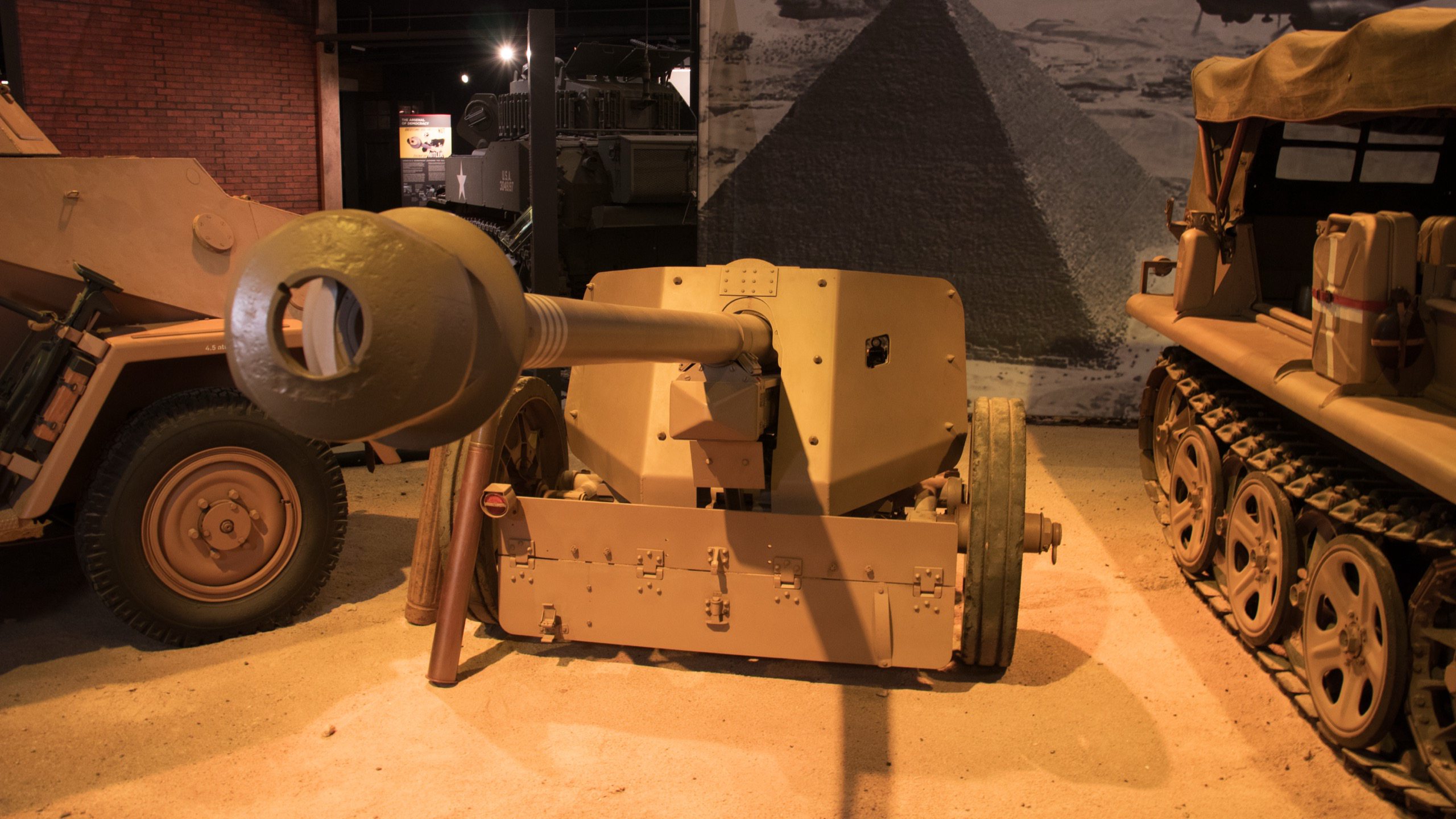
7.5 cm Panzerabwehrkanone Pak 40
Germany | 1942–1945 | World War II – North African Campaign
| General Information | |
|---|---|
| Model | 7.5 cm Panzerabwehrkanone Pak 40 |
| Class | Artillery |
| Type | Anti-Tank Gun |
| Use | Military |
| Era | 1940-1945 |
| Gallery Focus | WWII European Theater |
| Manufacturer | Rheinmetall-Borsig AG |
| Year | 1942 |
| Country | Germany |
| Ownership | CF Inc. |
| Gallery Location | North Africa |
| Status | Static Only |
Additional Photos
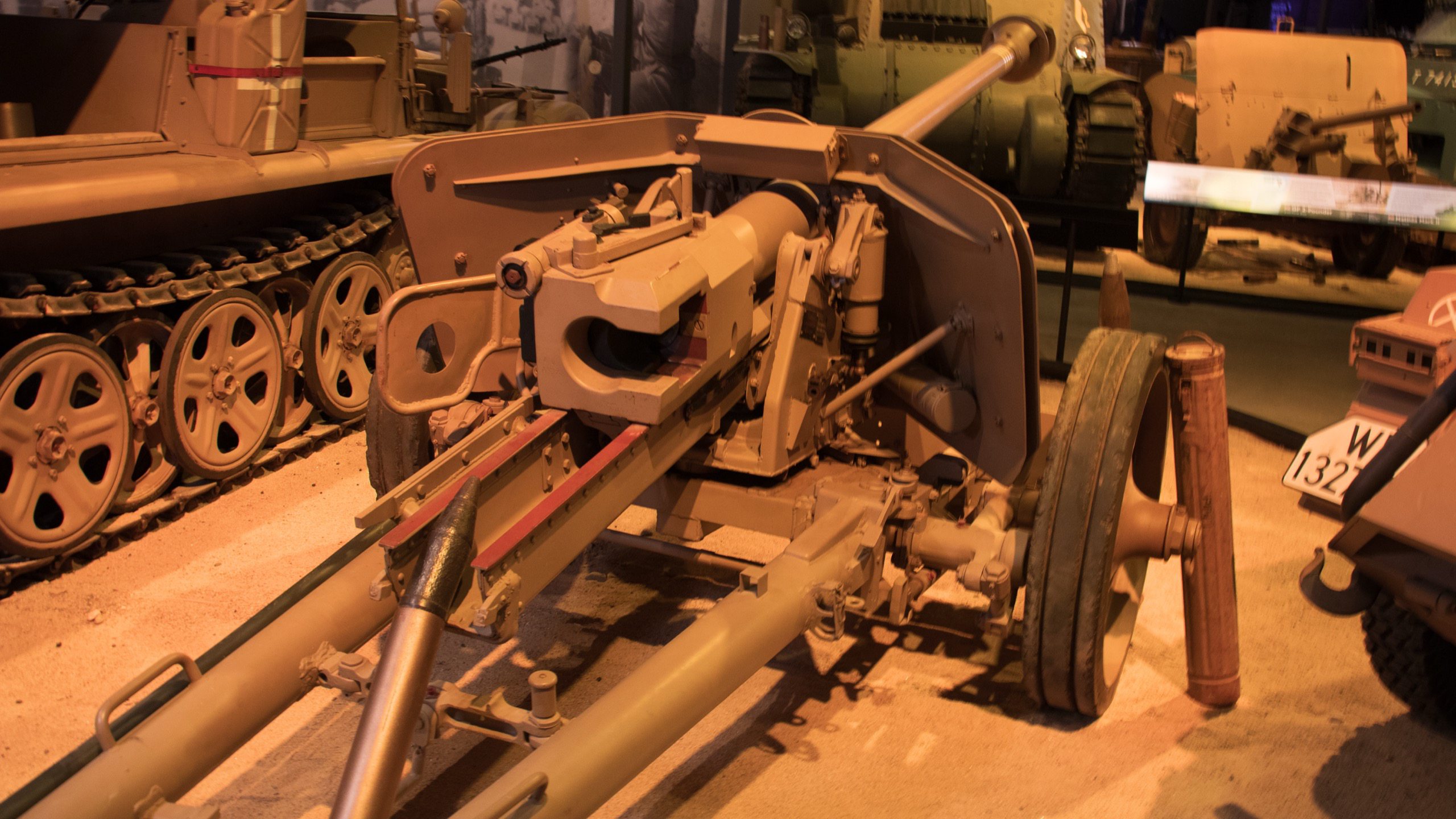
The German 7.5cm Panzerabwehrkanone 40 (Pak 40) was one of the most powerful and widely employed anti-tank guns of World War II. Developed by Rheinmetall-Borsig, the Pak 40 entered service in 1942 as German forces confronted increasingly heavily armored Allied tanks. Its high-velocity 75mm cannon became the backbone of German anti-tank defenses for the remainder of the war.
Originally developed before Germany’s invasion of the Soviet Union, the Pak 40 received renewed urgency when German troops encountered the formidable Soviet T-34 and KV-series tanks in 1941. Its long barrel, powerful ammunition, and distinctive double-baffle muzzle brake allowed it to penetrate the armor of most Allied tanks at considerable distances.
During the North African Campaign of 1942–1943, Pak 40 guns were deployed with German anti-tank units fighting British and American armored formations. Particularly during the Tunisian Campaign, these weapons provided formidable defensive firepower against Allied tanks, including the American M4 Sherman. Crews frequently positioned their guns in concealed emplacements, using the open desert terrain to engage approaching armor at long range.
The Pak 40 could fire approximately 14 rounds per minute, with armor-piercing projectiles traveling at nearly 2,600 feet per second. However, weighing more than 3,100 pounds, the gun was difficult to reposition without a truck or half-track artillery tractor, particularly across soft desert sand.
More than 23,000 Pak 40 guns were manufactured during World War II, making it Germany’s principal towed anti-tank weapon from 1943 onward.
Displayed in the American Heritage Museum’s North Africa Gallery, the Pak 40 illustrates the escalating competition between tank armor and anti-tank firepower, and the deadly challenges faced by Allied armored forces during the desert war.