Artifacts
Wright Model EX "Vin Fiz" (Replica)
United States | 1900–1913 | Early Civilian Aviation
| General Information | |
|---|---|
| Model | Model EX "Vin Fiz" (Replica) |
| Class | Aircraft |
| Type | Biplane |
| Use | Civilian |
| Era | 1900-1913 |
| Gallery Focus | Early Aviation |
| Manufacturer | Wright |
| Year | 1911 |
| Country | United States |
| Ownership | CF Inc. |
| Gallery Location | Hangar |
| Status | Static Only |
In 1911, just eight years after the Wright brothers’ first powered flight, aviator Calbraith Perry “Cal” Rodgers set out to accomplish something many considered impossible: fly an airplane across the United States. His aircraft, a Wright Model EX nicknamed the “Vin Fiz,” would make aviation history and demonstrate both the promise and extraordinary challenges of long-distance flight.
Rodgers had learned to fly only months earlier at the Wright brothers’ flying school in Dayton, Ohio. Childhood scarlet fever had left him severely hearing impaired, preventing him from pursuing a naval career, but it did not diminish his determination. After winning an endurance competition at a Chicago aviation meet, he turned his attention to a $50,000 prize offered by newspaper publisher William Randolph Hearst for the first coast-to-coast flight completed within 30 days.
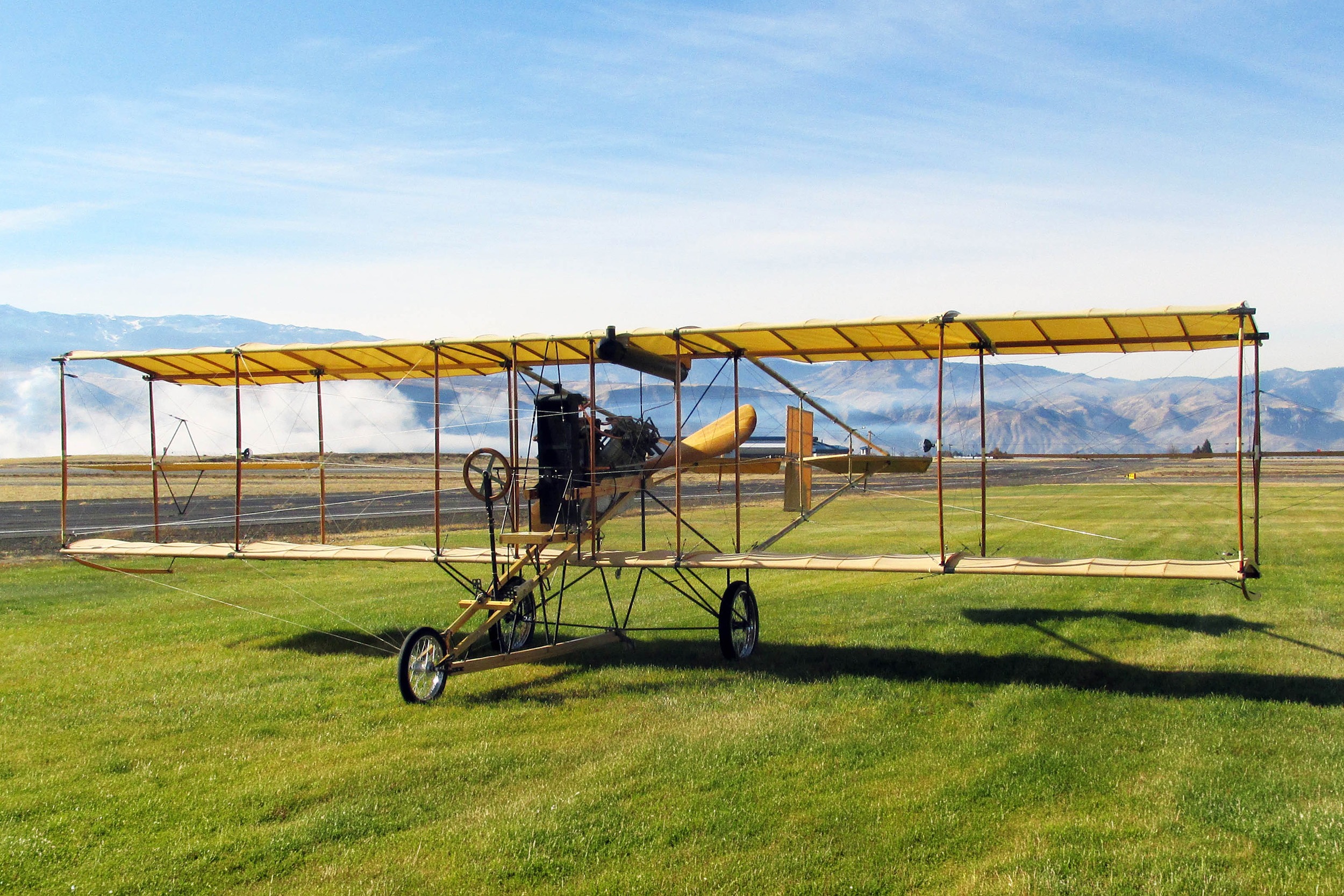
Rodgers selected the Wright Model EX, a smaller, single-seat version of the Wright Model B built for exhibition flying. Its lightweight wood-and-fabric airframe carried a 35-horsepower four-cylinder engine driving two rear-mounted pusher propellers through chains. With a maximum flight endurance of approximately three and a half hours, crossing the continent would require many stops.
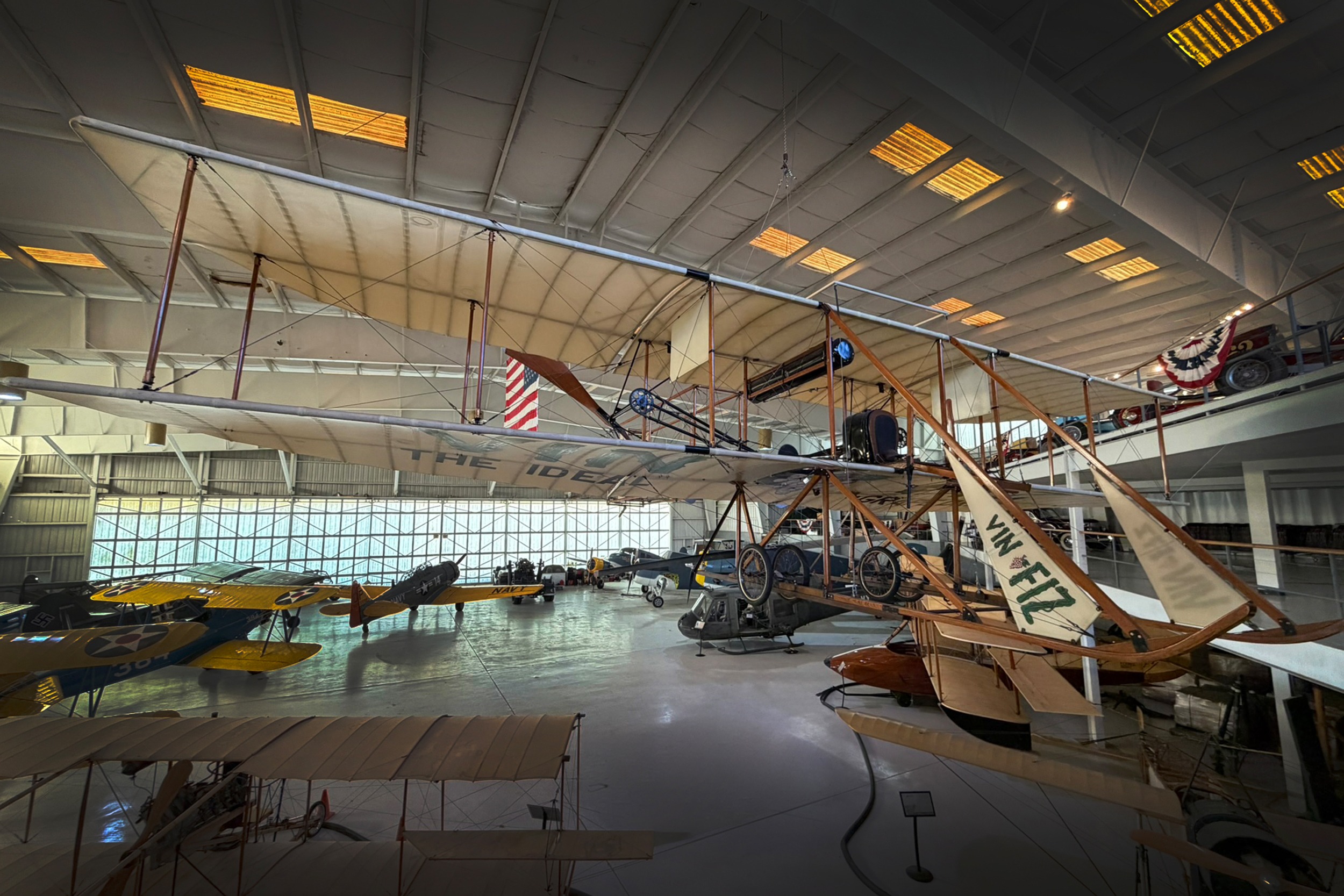
To finance the expedition, Rodgers secured sponsorship from Chicago’s Armour Company, which was promoting a new grape-flavored soft drink called “Vin Fiz.” The aircraft carried the drink’s name across its wings, making the journey a pioneering example of aviation advertising. A specially equipped train, the “Vin Fiz Special,” followed his route, carrying mechanics, replacement parts, and supplies. Among the support crew was Charles Taylor, the Wright brothers’ longtime mechanic.
Rodgers departed Sheepshead Bay, New York, on September 17, 1911. The journey brought repeated mechanical failures, forced landings, crashes, and extensive repairs. Although he missed Hearst’s deadline, he persisted, reaching Pasadena, California, on November 5, after 49 days. On December 10, he reached Long Beach and the Pacific Ocean, completing the historic coast-to-coast journey. Across the expedition, Rodgers covered approximately 4,321 miles in just 82 hours and four minutes of actual flying time.
Tragically, Rodgers was killed on April 3, 1912, when a different aircraft, a Wright Model B, crashed near Long Beach. His pioneering flight nevertheless established an important milestone in American aviation.
The American Heritage Museum’s “Vin Fiz” is a replica constructed using methods representative of the original Wright aircraft. Displayed as a static exhibit, it preserves the appearance of the machine that helped prove the feasibility of transcontinental air travel.
Exhibit Location: The replica is housed in the Museum’s seasonal Storage Hangar Annex, accessible to visitors only during select special event weekends in the summer and fall. Consult the Museum’s event calendar for viewing opportunities.